

P0638 on 2011-2014 Kia Sedona: Throttle Control Causes and Fixes
On a 2011-2014 Kia Sedona, code P0638 is almost always caused by carbon buildup in the throttle body and/or outdated engine software. The primary fix is a specific dealer procedure to clean the throttle and update the ECM, as outlined in Kia Service Action SA153.
- Do not immediately replace the throttle body for code P0638 on this vehicle.
- The most likely fix is a dealer-performed software update and a special internal motor cleaning as per Kia Service Action SA153.
- If the TSB has been performed and the code returns, or if live data shows erratic TPS voltage, the throttle body assembly is the next likely culprit.
- A DIY throttle body cleaning or replacement requires a specific 'relearn' procedure afterwards, which can be done without a scan tool in some cases.
- Before replacing expensive parts, always inspect the wiring and main engine grounds, as electrical issues can mimic component failure.
What's Unique About the 2011-2014 Kia Sedona
The 2011-2014 Sedona with its 3.5L V6 engine is specifically known for this issue. Kia acknowledged the problem by issuing Service Action SA153 (TSB-ENG133R2), which applies to Sedonas built between March 2010 and July 2013. Unlike many other vehicles where P0638 points to a failed part, the official fix is a software update and a special cleaning procedure. This procedure uses the dealer's diagnostic tool (GDS) to cycle the throttle motor, cleaning the internal motor brushes and commutator, not just surface carbon on the throttle plate. Kia explicitly warns dealers not to replace parts for this code unless this procedure fails.
Diagnostic Flowchart
Tap your situation to follow the diagnostic path that matches what you're seeing on this vehicle.
Symptoms You May Notice
- Check Engine Light is on
- Vehicle enters 'limp mode' (reduced engine power)
- Poor or delayed acceleration
- Rough idle
- Engine may stall unexpectedly
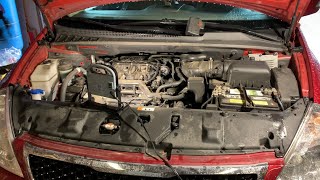
- Intermittent, complete loss of throttle response for several seconds, which may not initially set a code. 🎬 Watch: Real-world example of a Sedona with no throttle response.
- Replacing the accelerator pedal position (APP) sensor. While the APP sensor is part of the throttle control system, P0638 specifically points to a problem with the throttle body's actuator or its range of motion, not the pedal sensor.
Most Likely Causes
- Carbon Buildup in Throttle Body & Internal Motor 🔴 High Probability → Shop Fuel Injection Throttle Body This is a known issue acknowledged by Kia through Service Action SA153. The TSB clarifies the issue is often not just carbon on the throttle plate, but buildup on the internal electric motor's brushes and commutator, impeding its movement.
How to confirm: Visually inspect the throttle bore for carbon. However, confirming internal motor contamination requires performing the dealer-level cleaning procedure and seeing if the code is resolved.
Typical fix: Perform the specific Electronic Throttle Control (ETC) motor cleaning and ECM update procedure outlined in Kia TSB ENG133R2. This is a dealer-level service that uses a GDS tool to cycle the motor for internal cleaning. A standard DIY throttle body spray cleaning may not be sufficient.
Est. part cost: $10-$25 for cleaning supplies - Outdated Engine Control Module (ECM) Software 🔴 High Probability → Shop Engine Control Module (ECM) Kia issued a service action (SA153) to update the ECM logic to better handle minor variations in throttle response and prevent this code from setting incorrectly.
How to confirm: A Kia dealership or a shop with advanced diagnostic tools can check the current software (ROM ID) against the latest version available in the TSB.
Typical fix: Reprogram the ECM to the latest software version. This is mandated by Kia to be done in conjunction with the ETC motor cleaning procedure.
Est. part cost: $0 (labor cost only) - Failed Throttle Body Assembly 🟡 Medium Probability → Shop Fuel Injection Throttle Body If cleaning and a software update do not resolve the issue, the internal motor, gears, or position sensor of the throttle body may have failed. Damage can also be induced if the throttle plate is forced open manually during a DIY cleaning.
How to confirm: After performing the TSB procedures, if the code returns, the throttle body is the likely point of failure. A technician can also monitor sensor data to check for erratic readings.
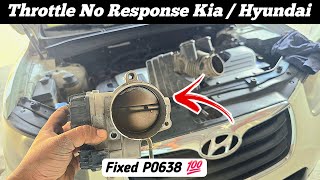
Typical fix: Replace the entire throttle body assembly. 🎬 Watch this DIY walkthrough for replacing the throttle body assembly.
Est. part cost: $150-$400
Rare But Worth Checking
- Wiring or Connector Issue: Damage or corrosion in the wiring harness or connector to the throttle body can disrupt the signal. This is worth checking before replacing an expensive part.
- Failed Throttle Position Sensor (TPS) Only: → Shop Fuel Injection Throttle Body In some instances, the TPS can fail intermittently on its own, causing a sudden loss of throttle response without the entire throttle body assembly being faulty. One owner reported successfully fixing the issue by replacing only the TPS.
- Powertrain Control Module (PCM) Malfunction: → Shop Engine Control Module (ECM) This is very rare, but a faulty PCM can incorrectly set this code. All other possibilities should be exhausted before considering PCM replacement.
Diagnosis Steps
- Check with a Kia dealer if Service Action SA153 or SA174 has been performed on your vehicle's VIN.
- If the service has not been done, have the dealer perform the ECM update and ETC motor cleaning procedure as described in TSB-ENG133R2.
- If the service has been done or does not fix the issue, inspect the throttle body for heavy carbon buildup. WARNING: Do not force the throttle plate open manually; this can damage the internal gears and cause this code.
- If cleaning the throttle plate, use a dedicated throttle body cleaner.
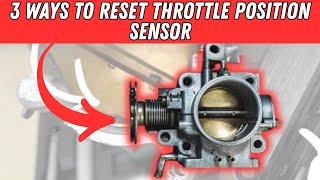
- After cleaning or replacement, perform a throttle relearn procedure. A DIY method can be attempted: Turn the ignition to ON (engine off) for 15 seconds, then OFF for 5 seconds. Repeat this cycle 5 times. 🎬 See this video for more tips on resetting your TPS.
- Inspect the wiring harness and connector at the throttle body for any signs of damage, corrosion, or loose pins.
- If the code persists after these steps, the throttle body assembly is likely faulty and should be replaced.
Parts You'll Likely Need
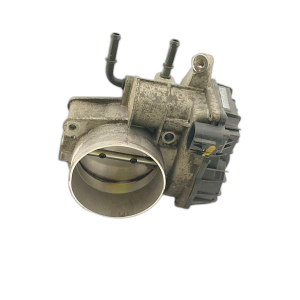
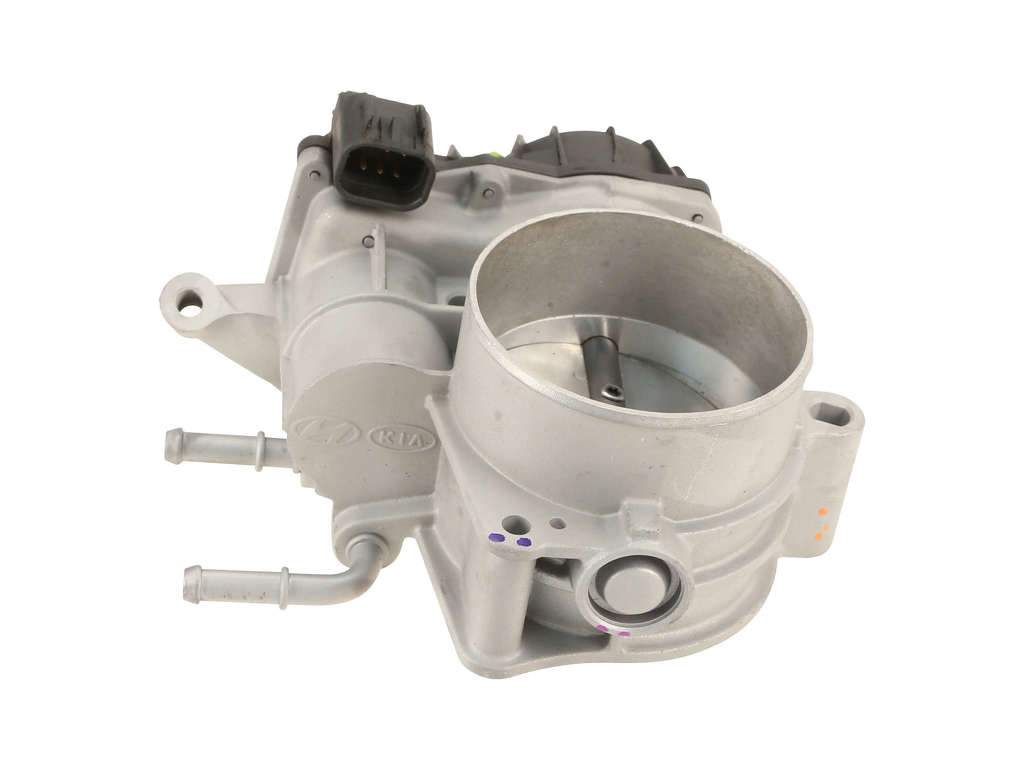
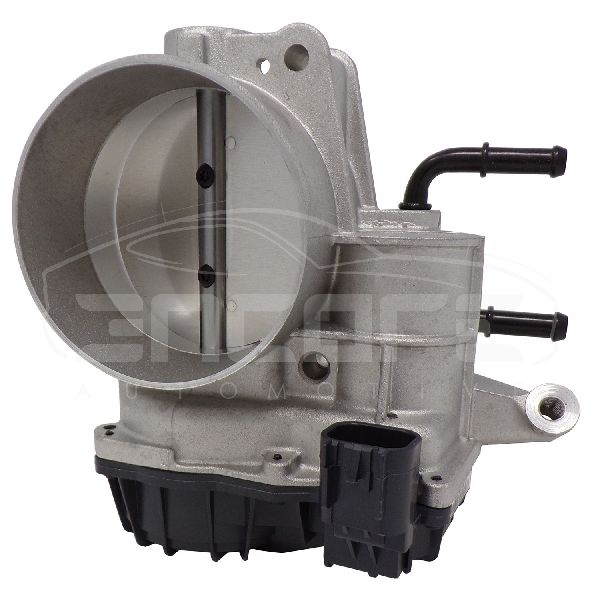
- Throttle Body Assembly
(OEM #35100-3C700)— This part is needed if the official Kia service action (cleaning and software update) does not resolve the code, indicating a mechanical or electronic failure within the unit itself. It is shared with the 2011-2013 Kia Sorento 3.5L.
Trusted brands: Kia (Genuine OEM), Bosch
OEM price range: $300-$450
Aftermarket price range: $150-$250
Related Codes That Often Appear With This One
- P2106 — P2106 means 'Throttle Actuator Control System - Forced Limited Power'. The ECM sets this code to put the vehicle into 'limp mode' as a safety precaution when it detects the P0638 performance issue.
- P1295 — This is another throttle-related code that is sometimes seen in conjunction with P0638 and P2106, further indicating a fault within the electronic throttle control system.
Technical Service Bulletins (TSBs) & Recalls
- TSB #SA153 / TSB-ENG133R2: ECM Upgrade – MIL ON with DTC P0638 and ETC Motor Cleaning. This bulletin is the primary source for the recommended fix and applies to both the Sedona and Sorento.
- Service Action SA174: A related service action number for the same issue on 2011-2013 Sorentos, also applicable to the Sedona problem.
Platform-Specific Known Issues
- Kia issued Technical Service Bulletin SA153 / TSB-ENG133R2 for the 2011-2014 Sedona 3.5L, instructing technicians to perform an ECM software upgrade and a special ETC motor cleaning to resolve P0638.
- The TSB explicitly warns against replacing parts for this code unless the cleaning and reflash procedure fails to fix the problem, and notes that unnecessarily replaced parts are subject to chargeback.
- The cleaning procedure detailed in the TSB is not a simple spray-and-wipe of the throttle plate; it uses the Kia GDS diagnostic tool to cycle the internal motor to clean its brushes and commutator.
Mechanic-Grade Diagnostic Values
- Throttle Position Sensor (TPS) Voltage at Idle — expected: 0.5V - 1.0V. Failure: Voltage is erratic or fluctuates wildly (e.g., 0.3V to 4.9V) when the throttle is not being moved.
- TPS Voltage at Wide-Open Throttle (WOT) — expected: ~4.8V. Failure: Voltage does not reach the expected level or is unstable.
- ECM Fault Trigger Condition — expected: Difference between target and actual throttle position < 4.5°. Failure: The ECM detects a difference of more than 4.5 degrees between the commanded throttle position and the actual position reported by the TPS.
- ETC Motor Coil Resistance — expected: Approximately 15-18 Ohms (based on similar Kia models). Failure: Resistance is significantly higher, lower, or shows an open circuit (infinite resistance).
Scan Tool Commands That Help
- Kia GDS (Global Diagnostic System): Resetting Adaptive Values — This function must be used after replacing the ETC assembly, replacing the ECM, or upgrading the ECM software. It erases the old learned throttle positions and forces the ECM to relearn the new component's range. Failure to do this will likely cause P0638 or P2110 to be set immediately.
- Kia GDS (Global Diagnostic System): ETC Motor Cleaning Procedure (Actuator Test) — As specified in TSB-ENG133R2, this function cycles the internal throttle motor rapidly to clean carbon and debris from the motor's brushes and commutator, which is a primary cause of this code on this vehicle.
Wiring & Ground Locations
- Engine Block to Chassis Ground Strap — Typically a braided metal strap connecting the engine block (often near the starter or alternator) to the vehicle's chassis/firewall.. A poor or corroded main engine ground can cause a voltage drop across the entire engine's electrical system, leading to erratic sensor readings and actuator malfunctions that can incorrectly trigger P0638.
- Intake Manifold Ground — A ground wire is often bolted directly to the metal intake manifold.. The throttle body is bolted to the intake manifold. A dedicated ground on the manifold ensures a stable reference for the throttle body's sensors and motor. A loose or corroded ground here can cause intermittent signal issues.
- Throttle Body Connector — The 6-pin electrical connector plugged directly into the electronic throttle body assembly.. This is the single point of connection for power, ground, and signal wires for both the throttle motor and the throttle position sensors. Check for bent pins, corrosion, or damaged wires at this connector first when diagnosing.
Real Owner Repair Stories
- AliExpress Review (2012 Kia Rio 1.6L) — Engine would surge at idle (750 to 900 RPM), delayed acceleration from a stop.
❌ Tried (didn't work) Ruled out vacuum leaks and air intake issues by inspecting hoses.
✅ What actually fixed it The owner diagnosed a faulty throttle body by observing erratic TPS voltage (0.3V-4.9V at idle) on a scanner. They replaced the entire throttle body assembly with an aftermarket part from AliExpress, which resolved all symptoms and cleared the P0638 code.
When the Usual Fixes Don't Work
- While the official Kia TSB is the recommended first step for professionals, some DIY owners have successfully resolved the P0638 code by directly replacing the throttle body assembly, especially when live scan tool data shows clearly erratic voltage from the integrated Throttle Position Sensor. This indicates that in cases of a definitive internal electronic failure of the sensor, bypassing the cleaning procedure and going straight to replacement can be a valid and successful repair path.
OEM Part Supersession History
35100-3C700→No supersession found.— This part number appears to be consistent for the specified vehicle range.
Heads up: This part is also used on other Hyundai and Kia models with the 3.5L and 3.8L V6 engines, such as the Sorento, Azera, and Santa Fe, confirming it is a shared platform component.
Model Year Variations Within This Range
- 2011-2013: The primary TSB (ENG133R2) for the ECM update and cleaning procedure specifically covers vehicles built up to July 2013. This suggests that 2014 model year Sedonas may have come from the factory with the updated ECM software and/or a revised throttle body design, making them less susceptible to this specific failure mode.
Helpful Videos
Used OEM Parts in Stock
New Aftermarket Parts Available



The information in this article is provided for general reference and educational purposes only. Vehicle specifications, procedures, and part compatibility can vary by production date, trim level, and region. Always consult your vehicle's factory service manual and verify part numbers before purchasing or performing repairs. Safety-critical components such as airbags, seat belts, and braking systems should be installed by a qualified professional.
- Kia SEDONA:
- 🧭 Diagnostic Flowchart
- 🎬 Helpful Videos
- 🛍️ Shop This Part
- What's Unique About the 2011-2014 Kia Sedona
- Symptoms You May Notice
- Most Likely Causes
- Rare But Worth Checking
- Diagnosis Steps
- Parts You'll Likely Need
- Related Codes That Often Appear With This One
- Technical Service Bulletins (TSBs) & Recalls
- Platform-Specific Known Issues
- Mechanic-Grade Diagnostic Values
- Scan Tool Commands That Help
- Wiring & Ground Locations
- Real Owner Repair Stories
- When the Usual Fixes Don't Work
- OEM Part Supersession History
- Model Year Variations Within This Range
- 🎟️ Get 5% Off