

P0638 on 2011-2013 Kia Sorento 3.5L: Throttle Actuator Control Causes and Fixes
On a 2011-2013 Sorento with the 3.5L V6, code P0638 is most often caused by a dirty throttle body or outdated engine computer software. A specific Kia Technical Service Bulletin (TSB-ENG133R2) addresses this exact issue, recommending an ECM software update and a special cleaning procedure before replacing any parts. This TSB is the first and most critical step in diagnosis.
- For a 2011-2013 Kia Sorento 3.5L, P0638 is a very specific issue addressed by Kia TSB-ENG133R2.
- Before replacing any parts, the first step should be to have a Kia dealer perform the ECM software update and ETC motor cleaning procedure outlined in the TSB.
- This code will almost always appear with P2106 and P2110, which confirm the vehicle is in a safety 'limp mode' with reduced power.
- If the TSB procedures don't work, the most likely cause is a failed throttle body assembly.
- Do not replace the throttle body without first investigating the software update, as this is a common misdiagnosis.
What's Unique About the 2011-2013 Kia SORENTO
For the 2011-2013 Sorento with the 3.5L V6 engine, this code is uniquely tied to a known issue acknowledged by Kia. The manufacturer issued a Technical Service Bulletin (TSB-ENG133R2, also known as Service Action SA153) that directly links P0638 to 🎬 Watch: A short explanation of the P0638 fault code. the need for an Engine Control Module (ECM) software update and a specific cleaning procedure for the Electronic Throttle Control (ETC) motor. The TSB clarifies that the "ETC motor cleaning" is not about cleaning carbon from the throttle bore, but a specific GDS-driven procedure to clean the internal electric motor brushes at the commutator. This makes it a very platform-specific diagnosis that should not be mistaken for a simple dirty throttle plate.
Diagnostic Flowchart
Tap your situation to follow the diagnostic path that matches what you're seeing on this vehicle.
Symptoms You May Notice
- Check Engine Light is on
- Vehicle enters 'limp mode' (reduced engine power)
- Poor or delayed acceleration
- Engine hesitates or stumbles
- Rough or unstable idle
- Inability to rev the engine past a certain RPM
- Automatic transmission may not shift properly.
- Replacing the throttle body without first performing the ECM update and cleaning procedure specified in TSB-ENG133R2. The TSB explicitly warns that unnecessarily replaced parts may be subject to chargeback under warranty, indicating this is a common mistake.
Most Likely Causes
- Outdated Engine Control Module (ECM) Software 🔴 High Probability → Shop Engine Control Module (ECM) Kia issued a specific Technical Service Bulletin (TSB-ENG133R2 / SA153) to address this code with a software update for the 3.5L MPI engine. The original software logic may be too sensitive or have parameters that lead to this fault, especially in combination with minor contamination on the internal throttle motor brushes.
How to confirm: A Kia dealership or a qualified shop with access to Kia's GDS (Global Diagnostic System) can check the current software (ROM ID) against the tables in TSB-ENG133R2 to determine if an update is available. The repair status for a specific VIN can also be checked on Kia's WebDCS.
Typical fix: Reprogramming the ECM with the updated software. This must be done by a dealer or a properly equipped independent shop using a GDS tool. The TSB mandates this is done in conjunction with the ETC motor cleaning procedure.
Est. part cost: $0 - Dirty or Sticking Electronic Throttle Body 🔴 High Probability → Shop Fuel Injection Throttle Body The same TSB that calls for a software update also mandates an "ETC motor cleaning" procedure. The TSB explicitly states this procedure is designed to clean the electric motor brushes at the commutator inside the throttle body, not just carbon on the throttle plate. Failure to perform this specific electronic cleaning can result in the code returning. Separately, carbon buildup around the throttle plate can also cause sticking and trigger this code.
How to confirm: The internal motor brush issue is confirmed by the persistence of the code and the applicability of the TSB. Physical carbon buildup can be confirmed by visually inspecting the throttle bore and plate for a black, sooty layer.
Typical fix: Perform the GDS-based "ETC Motor Cleaning" procedure which takes about 10 minutes. If heavy carbon is also present on the plate, manually clean the throttle plate and bore with a dedicated throttle body cleaner and a soft, lint-free cloth. Do not spray cleaner directly into the intake.
Est. part cost: $10-$20 - Failed Throttle Body Assembly 🟡 Medium Probability → Shop Fuel Injection Throttle Body If the software update and cleaning procedures do not resolve the issue, the electronic throttle actuator motor or the integrated position sensors may have failed internally. This is a common failure point for electronic throttle bodies in general, and the TSB warns against replacing it unnecessarily before performing the software update.
How to confirm: After performing the TSB procedures, if the code returns immediately, the throttle body is the next logical suspect. A mechanic can monitor sensor data with a scan tool to check for erratic readings or a complete lack of response. In some cases, a used replacement part may also be faulty.
Typical fix: Replacement of the entire throttle body assembly. A new gasket should be used, and an ETC adaptive value reset/relearn procedure must be performed after installation.
Est. part cost: $300-$450
Rare But Worth Checking
- Wiring or Connector Issues: Damage or corrosion in the wiring harness or connector pins leading to the throttle body can cause intermittent signal loss, triggering the code. A thorough check for looseness, poor connection, bending, or corrosion should be performed before replacing an expensive throttle body.
- Failing Powertrain Control Module (PCM): → Shop Engine Control Module (ECM) In rare cases, after all other possibilities (TSB, throttle body, wiring) have been exhausted, the PCM itself may be faulty and unable to correctly interpret or control the throttle body. One owner on a forum reported that replacing the PCM ultimately fixed the issue after a new throttle body did not.
Diagnosis Steps
- Scan the vehicle for all fault codes. Note the presence of P0638 along with P2106, P2110, and/or P1295.
- Using the vehicle's VIN, check with a Kia dealer or use a professional database to determine if Service Action SA153 (related to TSB-ENG133R2) is open or has been completed for your vehicle.
- If the service action has not been performed, this is the primary repair. Have the dealer or a qualified shop perform the ECM software upgrade and the GDS-based ETC motor cleaning procedure as described in the TSB.
- After the TSB procedure, clear all codes. Perform the ETC Initialization by turning the ignition OFF for 10 seconds, then ON for 10 seconds (without starting), then OFF again.
- If the TSB has already been performed or does not resolve the issue, inspect the throttle body wiring harness and connector for any signs of damage, corrosion, or loose pins.
- Remove the air intake hose and visually inspect the throttle plate and bore for heavy carbon buildup. If dirty, clean it using throttle body cleaner and a soft cloth. Do not force the plate open aggressively.
- If the code persists after all the above steps, the throttle body assembly has likely failed and should be replaced.
- After replacing the throttle body, use a new gasket and perform the ETC adaptive value reset/relearn procedure.
- After any repair, clear all DTCs and perform a test drive to ensure the fault does not return.
Parts You'll Likely Need
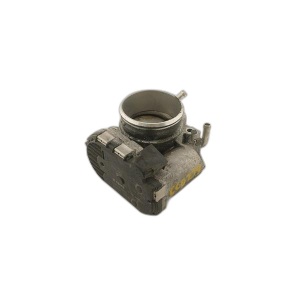
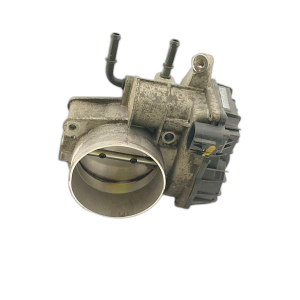
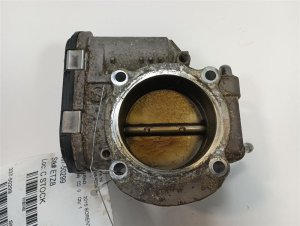
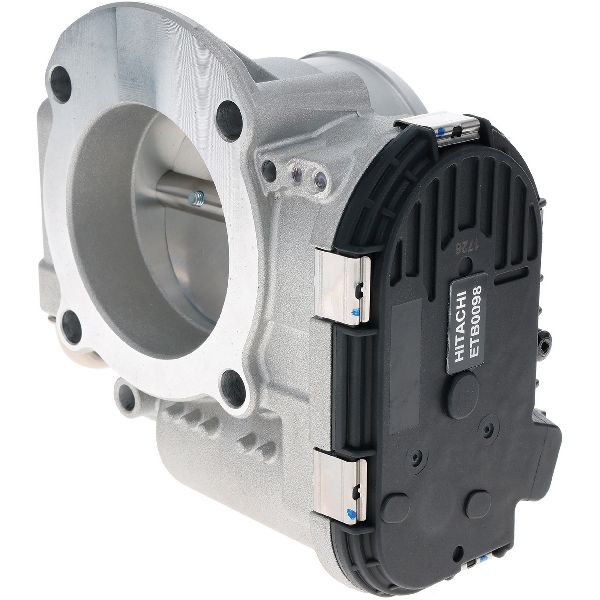
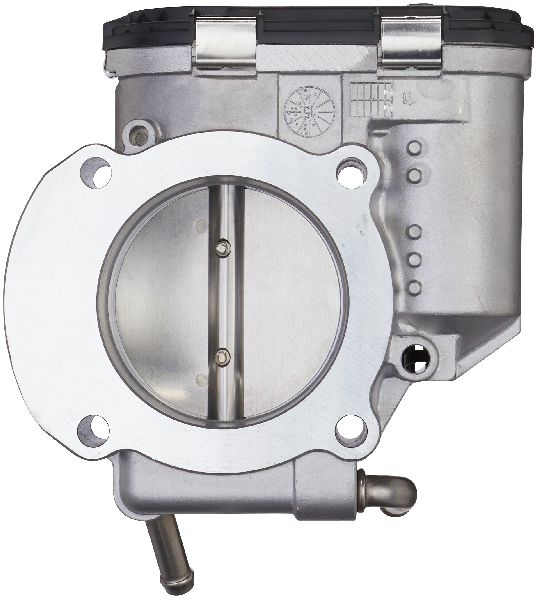
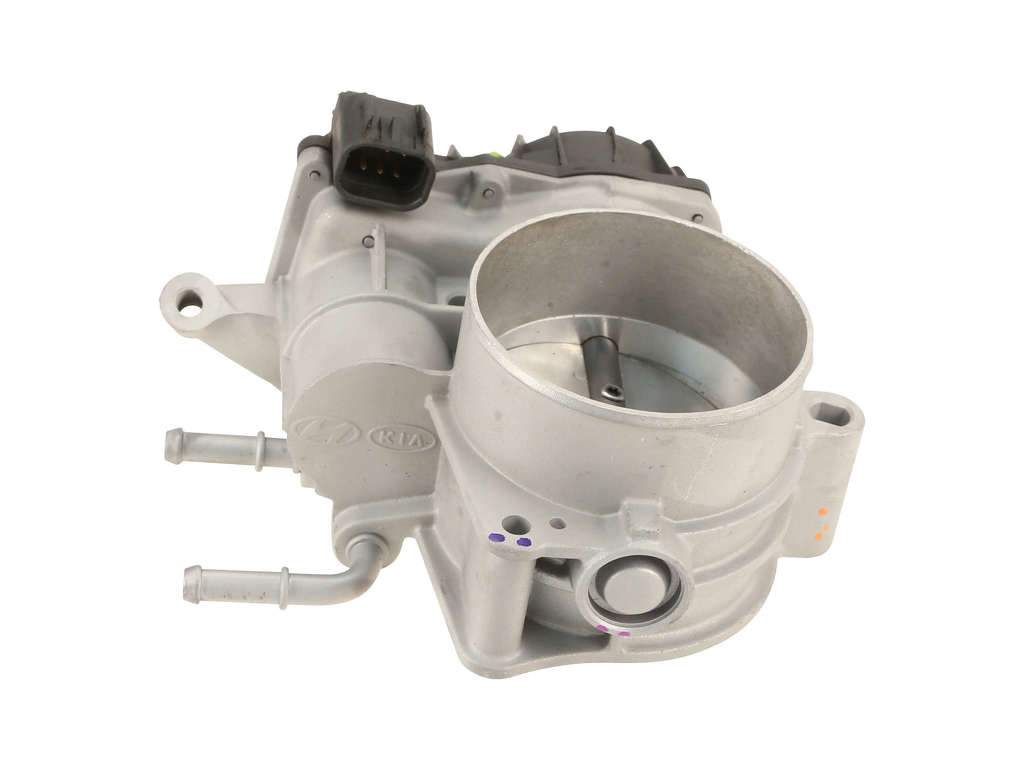
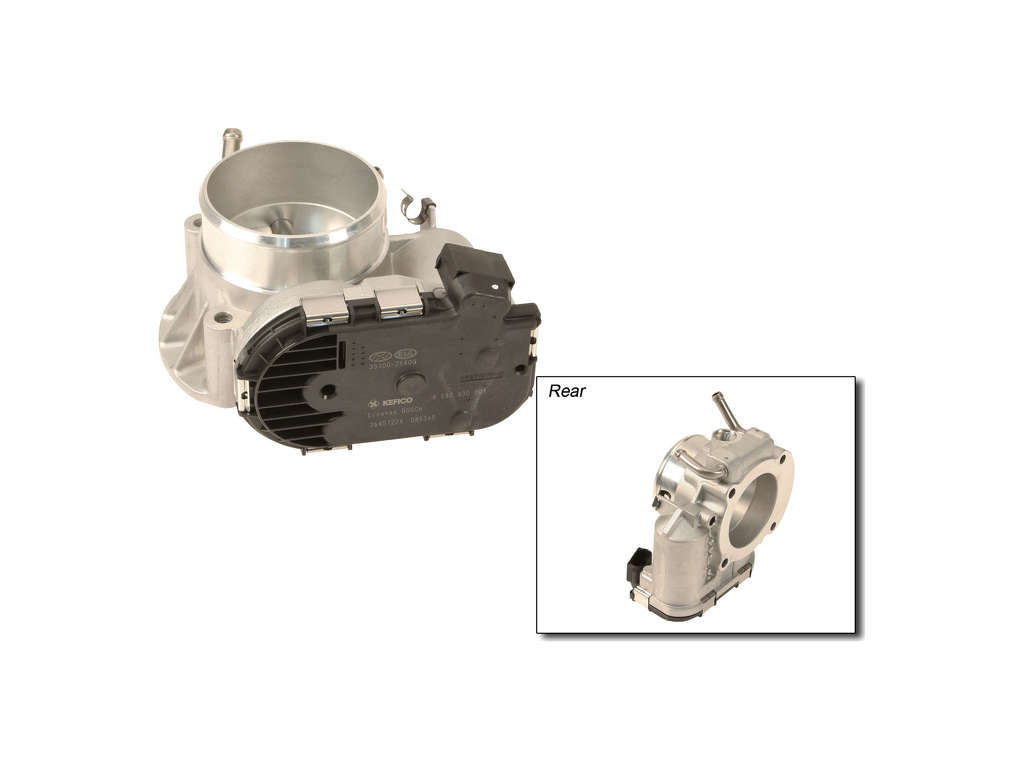
- Electronic Throttle Body Assembly
(OEM #35100-3C400)— This is the primary hardware component that fails if software updates and cleaning do not resolve the P0638 code. It contains the actuator motor and position sensors that are the source of the fault.
Trusted brands: Genuine Hyundai/Kia
OEM price range: $300-$450
Aftermarket price range: $150-$250 - Throttle Body Gasket
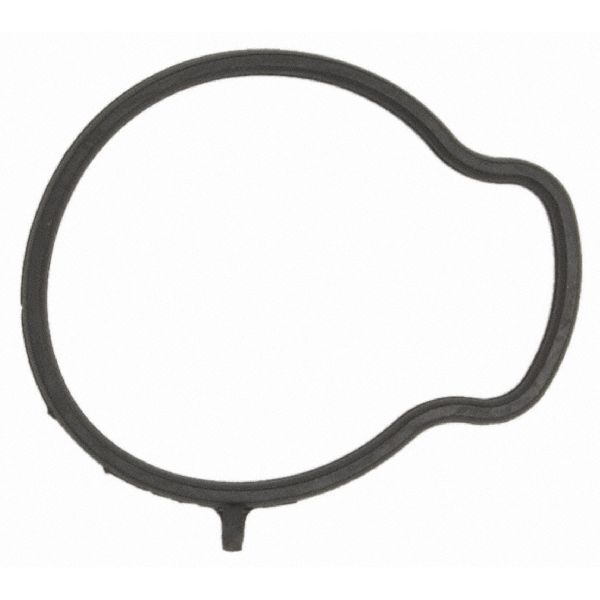
(OEM #35101-3C400)— The gasket should always be replaced when the throttle body is removed to prevent vacuum leaks. Part number is confirmed to fit various Kia/Hyundai V6 models.
Trusted brands: Genuine Hyundai/Kia
OEM price range: $5-$15
Aftermarket price range: $3-$10
Related Codes That Often Appear With This One
- P2106 — This code means 'Throttle Actuator Control System - Forced Limited Power'. It is an informational code indicating the ECM has intentionally put the vehicle in 'limp mode' as a direct result of the fault detected by P0638.
- P2110 — This code means 'Throttle Actuator Control System - Forced Limited RPM'. Similar to P2106, it confirms the ECM is actively limiting engine speed due to the throttle control system malfunction identified by P0638.
- P1295 — This code for 'ETS System Malfunction - Power management mode engaged' is also frequently seen alongside P0638 and P2106 on related Hyundai/Kia platforms, confirming the power management system has been activated due to the throttle fault.
Technical Service Bulletins (TSBs) & Recalls
- TSB-ENG133R2 (also referenced as Service Action SA153): Addresses MIL on with DTC P0638 by providing an ECM software upgrade and instructions for an ETC motor cleaning procedure for 2011-2013 Sorento 3.5L MPI vehicles.
- Service Action SA174: A similar service action was issued for 2011-2013 Kia Sedona models with the same 3.5L engine, for
Platform-Specific Known Issues
- A known issue for 2011-2013 Sorento models with the 3.5L MPI engine is documented in Kia TSB-ENG133R2. It requires an ECM software update and a special ETC motor cleaning procedure to fix DTC P0638. Owner complaints filed with the NHTSA confirm this code appearing alongside limp-mode codes P2106 and P2110.
- The TSB explicitly warns service technicians: 'DO NOT replace any parts related to the DTCs mentioned above unless proven to be the cause for the DTC AFTER the reflash has been performed.' This highlights how common misdiagnosis is.
Mechanic-Grade Diagnostic Values
- Throttle Position Sensor (TPS) 1 Voltage at Idle (Key On, Engine Off) — expected: 0.3V - 0.9V (300-900 millivolts). Failure: Voltage is outside the specified range, or does not change smoothly when the throttle is opened.
- Throttle Position Sensor (TPS) 1 Voltage at Wide Open Throttle (WOT) — expected: ~4.8V. Failure: Voltage does not reach the expected level or shows spikes/drops while opening the throttle.
- Accelerator Position Sensor (APS) 1 & 2 Correlation — expected: APS2 voltage should be approximately half of APS1 voltage as the pedal is depressed.. Failure: The voltage ratio between the two sensors is incorrect or signals are erratic.
- Throttle Actuator Motor Wires Voltage (at connector, Key On Engine Off) — expected: Near 0V. Failure: Significant voltage present on the motor wires when no command is active.
Scan Tool Commands That Help
- Kia GDS: ETC Motor Cleaning — This is a mandatory step in TSB-ENG133R2. It runs a 10-minute cycle to clean the internal electric motor brushes. It should be performed after the ECM reflash to resolve P0638 before replacing any parts.
- Kia GDS: Active Test - ETC Motor — To functionally check the throttle motor. The GDS can command the throttle plate to open and close, allowing a technician to hear the motor and observe its movement on the live data screen to check for sticking or hesitation.
- Kia GDS: Resetting Adaptive Values — After cleaning or replacing the throttle body, this function in the 'Vehicle S/W Management' menu resets the learned values, forcing the ECM to relearn the new closed-throttle position.
- Generic OBD-II Scanner: ETC Initialization / Throttle Relearn — After cleaning or replacing the throttle body and clearing codes, a manual relearn is required. Turn the ignition ON for 10 seconds (without starting), then OFF for 10 seconds. This allows the ECM to learn the new throttle plate position.
Wiring & Ground Locations
- Throttle Body Connector — Connected directly to the electronic throttle body assembly at the engine's air intake.. This is the primary connection point for all power, ground, and signal wires for the throttle actuator motor and position sensors. Corrosion or a loose connection here will directly cause P0638. The two thicker wires are for the actuator motor.
- Engine Block Ground — A primary ground strap connecting the engine block to the chassis.. A poor engine ground can cause a host of electronic issues, including erratic sensor readings and actuator malfunctions. While not specific to P0638, ensuring this ground is clean and tight is a fundamental step in diagnosing any electronic fault.
- ECM Connector — The main wiring harness connectors at the Engine Control Module (ECM).. All signals from the throttle body are processed by the ECM. A pin-fit issue or corrosion at the ECM connector for the TPS or throttle motor circuits can mimic a component failure.
Real Owner Repair Stories
- NHTSA Owner Complaint (2013 Kia Sorento) — Check engine light on with codes P0638, P2106, and P2110. The codes would reappear randomly after being cleared.
❌ Tried (didn't work) Clearing the codes with an OBD2 meter.
✅ What actually fixed it The owner's report aligns perfectly with the symptoms described in Kia's Technical Service Bulletin TSB-ENG133R2, which prescribes an ECM software update and an ETC motor cleaning procedure as the definitive fix. - Reddit user on r/MechanicAdvice (2016 Kia Sorento V6) — Codes P2106, P2110, and P0638. Vehicle still runs but requires more throttle input than usual.
✅ What actually fixed it The accepted advice was that the codes indicate a problem with the throttle body. The recommended fix was to first attempt a thorough cleaning. If cleaning did not resolve the issue, the next step would be to replace the throttle body assembly due to a likely faulty internal position sensor or actuator motor.
OEM Part Supersession History
35100-3C400→35100-3CAA0— Part number evolution and potential design revision by the manufacturer.
Heads up: While they may be physically interchangeable, it is critical to verify the correct part number for your vehicle's specific VIN with a Kia dealer, as internal electronics may differ. Using the wrong part can cause persistent codes.
Model Year Variations Within This Range
- 2011-2013: The TSB for the ECM update and ETC motor cleaning (SA153) specifically covers Sorento 3.5L MPI vehicles produced from October 25, 2009, through January 31, 2013. Vehicles produced after this date likely have the updated software from the factory.
Helpful Videos
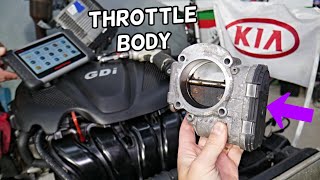

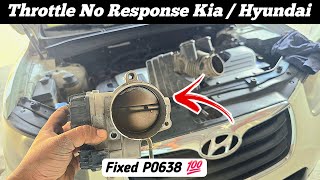
Used OEM Parts in Stock
New Aftermarket Parts Available


The information in this article is provided for general reference and educational purposes only. Vehicle specifications, procedures, and part compatibility can vary by production date, trim level, and region. Always consult your vehicle's factory service manual and verify part numbers before purchasing or performing repairs. Safety-critical components such as airbags, seat belts, and braking systems should be installed by a qualified professional.
- Kia SORENTO:
- 🧭 Diagnostic Flowchart
- 🎬 Helpful Videos
- 🛍️ Shop This Part
- What's Unique About the 2011-2013 Kia SORENTO
- Symptoms You May Notice
- Most Likely Causes
- Rare But Worth Checking
- Diagnosis Steps
- Parts You'll Likely Need
- Related Codes That Often Appear With This One
- Technical Service Bulletins (TSBs) & Recalls
- Platform-Specific Known Issues
- Mechanic-Grade Diagnostic Values
- Scan Tool Commands That Help
- Wiring & Ground Locations
- Real Owner Repair Stories
- OEM Part Supersession History
- Model Year Variations Within This Range
- 🎟️ Get 5% Off