

P0651 on 2014-2019 Cadillac CTS: Understanding the Sensor Voltage 'B' Circuit Fault
On this Cadillac, P0651 often appears with code P06DE. This combination strongly points to a mechanical issue in the engine's oiling system, such as failed piston oil squirters (common on the 2.0L LTG engine), rather than a simple sensor failure. Diagnosis must start with the oil system, not just the wiring, per GM TSB PIP5247A.
- On a 2014-2019 Cadillac CTS, P0651 is a serious code that almost always points to more than just a bad sensor.
- Always check for code P06DE. If it is present, the root cause is likely a mechanical problem with the engine's oiling system, especially on the 2.0L LTG engine.
- Per GM TSB PIP5247A, the cause is very often broken piston oil squirters, requiring oil pan removal to find plastic/metal debris and confirm the diagnosis.
- Do not simply replace sensors; proper diagnosis starting with a mechanical oil pressure test is critical to avoid unnecessary expense and to fix the underlying, potentially catastrophic, engine problem.
- This is not a beginner-friendly DIY repair. It requires dropping the oil pan and working on internal engine components, a job best left to experienced technicians.
What's Unique About the 2014-2019 Cadillac CTS
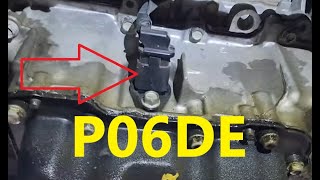
For this specific generation of Cadillac CTS and other GM vehicles with the 2.0L LTG or 2.5L LCV/LKW engines, P0651 is rarely a standalone code. It is frequently accompanied by code P06DE ('Engine Oil Pressure Control Circuit Stuck On'). A GM Technical Service Bulletin (TSB PIP5247A and its predecessors) directs technicians to investigate the cause of P06DE first. 🎬 Watch: Diagnosing P06DE and oil pressure issues on GM engines. This is often a mechanical failure in the oiling system, like broken piston oil nozzles (squirters) that fall into the oil pan, causing a loss of oil pressure. Therefore, P0651 on this car is often a secondary symptom of a more serious mechanical problem, not just a simple wiring issue.
Diagnostic Flowchart
Tap your situation to follow the diagnostic path that matches what you're seeing on this vehicle.
Symptoms You May Notice
- Check Engine Light (Service Engine Soon lamp) is on.
- Message on dash: "Engine Power is Reduced".
- Engine enters a reduced power or 'limp' mode.
- Rough running, engine hesitation, or stalling, particularly at idle after highway driving.
- If related to low oil pressure, you may hear engine knocking or timing chain rattle.
- Inaccurate or fluctuating oil pressure reading on the gauge cluster.
- Potential no-start condition.
- Replacing the oil pressure sensor without checking for code P06DE and performing the TSB-guided mechanical checks. Many owners replace the sensor multiple times only for the code to return because the root cause is mechanical.
- Assuming the issue is purely electrical because P0651 is an electrical circuit code, thereby ignoring the mechanical failure (broken oil squirters) that is the true origin of the problem on this platform.
Most Likely Causes
- Internal Engine Oiling System Fault (per TSB PIP5247A) 🔴 High Probability A known issue documented by GM where internal parts of piston oil nozzles (squirters) can break off. These plastic or metal fragments fall into the oil pan, get sucked into the oil pickup tube, and restrict oil flow, causing a drop in pressure that triggers P06DE and, consequently, P0651. This is most common on the 2.0L LTG and 2.5L LCV/LKW engines.
How to confirm: Follow TSB diagnostics for P06DE. First, verify oil pressure with a mechanical gauge. If pressure is low, the next step is to remove the engine oil pan and inspect for small, distinct plastic and/or metal pieces that are the internal components of a failed oil squirter. The balance shaft oil pump module must be removed to inspect the squirters directly.
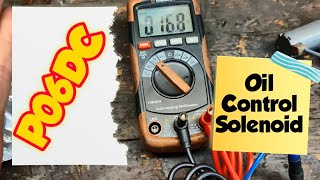
Typical fix: Replace the single broken piston oil nozzle(s). This requires removing the oil pan and balance shaft oil pump module for access. 🎬 See this walkthrough for installing the oil pump control solenoid. It is critical to clean all debris from the oil pan and oil pump pickup tube.
Est. part cost: $50-$150 - Faulty Sensor on the 5V Reference 'B' Circuit 🟡 Medium Probability The oil pressure sensor is a primary component on this reference circuit. An internal short or failure in this sensor can cause the voltage to go out of range, triggering P0651. This is a more likely cause if P0651 appears *without* P06DE.
How to confirm: With a multimeter, check for 5 volts at the sensor's reference wire. Disconnect sensors on the circuit one by one; if the 5V reference returns to normal after disconnecting a specific sensor, that sensor is faulty. With the engine off, a scan tool should show 0 PSI; if it shows any pressure, the sensor is likely bad.
Typical fix: Replace the identified faulty sensor (e.g., the oil pressure sensor).
Est. part cost: $40-$100 - Damaged Wiring or Connector ⚪ Low Probability Wiring to the oil pressure sensor or other components on the circuit can be damaged by heat, oil saturation, or physical abrasion, leading to a short or open circuit.
How to confirm: Visually inspect the wiring harness going to the sensors on the 'B' circuit for any signs of chafing, melting, or corrosion. Check for continuity and shorts using a multimeter. Pay close attention to the harness near the oil filter housing and catalytic converter.
Typical fix: Repair the damaged section of the wire or replace the corroded connector.
Est. part cost: $10-$50
Rare But Worth Checking
- Faulty Engine Oil Pump / Control Solenoid: → Shop Engine Oil Pump The oil pump assembly contains the pressure control solenoid that is the subject of code P06DE. TSB PIP5676A notes that foreign material can get stuck in the pump's checkball, or the solenoid itself can fail. In some cases, the entire oil pump/balance shaft assembly needs replacement.
- Faulty Engine Control Module (ECM): → Shop Engine Control Module (ECM) This is very uncommon. The ECM should only be considered after all other possibilities (wiring, sensors, and TSB-related mechanical issues) have been thoroughly ruled out.
Diagnosis Steps
- Scan the ECM for all stored trouble codes. Note if P06DE is present with P0651, which is highly likely.
- If P06DE is present, immediately prioritize the diagnostic procedure outlined in TSB PIP5247A.
- Check the engine oil level and condition. Ensure the correct oil type (ACDelco dexos1) and a quality oil filter are being used.
- Measure engine oil pressure with a mechanical gauge to verify if it is below specification, especially when the engine is hot.
- If oil pressure is confirmed to be low, remove the engine oil pan. Carefully inspect the bottom of the pan and the oil pump pickup tube screen for small black or metallic debris. These are the internal parts of a broken piston oil squirter.
- If debris is found, the balance shaft/oil pump module must be removed to access and replace the failed piston oil nozzle(s).
- If P0651 is present alone (unlikely), begin electrical diagnosis. Use a scan tool to monitor the 5-volt reference 'B' voltage.
- Consult a wiring diagram to identify all sensors on the 'B' reference circuit (primarily the oil pressure sensor, but can also include the crankshaft position sensor and others).
- Disconnect each sensor on the circuit one at a time, checking if the 5-volt reference returns to normal. The sensor that restores the voltage when disconnected is the faulty component.
- If no sensor is at fault, inspect the entire wiring harness for shorts to ground, shorts to power, or open circuits.
- If all wiring, sensors, and mechanical checks per the TSB are good, the final step is to consider a faulty ECM.
Parts You'll Likely Need
- Piston Oil Nozzle / Squirter
(OEM #12677449)— This is the most likely culprit when P0651 is accompanied by P06DE on the 2.0L LTG engine, as per TSB PIP5247A.
Trusted brands: ACDelco, GM Genuine
OEM price range: $20-$40 per nozzle
Aftermarket price range: $15-$30 per nozzle - Engine Oil Pressure Sensor
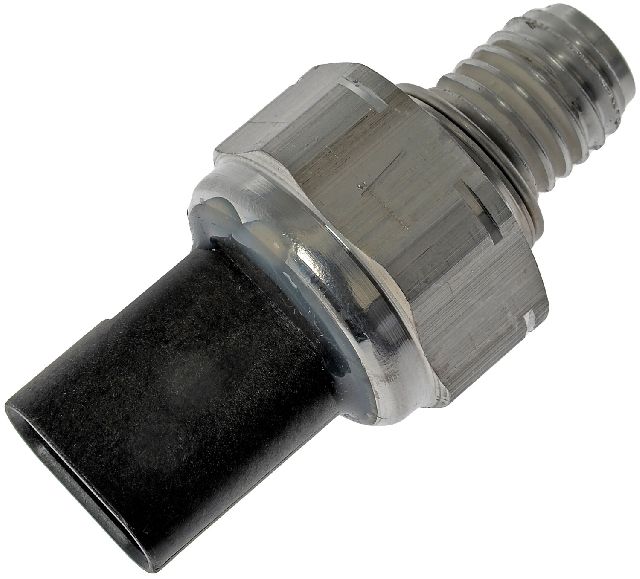
(OEM #12677836)— If the cause is a faulty sensor on the reference circuit (especially if P06DE is not present), the oil pressure sensor is the primary candidate. Note: Part number fitment can vary; always verify with VIN.
Trusted brands: ACDelco, GM Genuine
OEM price range: $60-$90
Aftermarket price range: $30-$60 - Engine Oil Pump / Balance Shaft Module — The oil pump assembly, which includes the pressure control solenoid, can fail or become clogged with debris, causing the P06DE/P0651 code combination. Per TSB PIP5676A, if debris is found in the pump's checkball, the pump may need replacement.
Trusted brands: ACDelco, Melling
OEM price range: $250-$400
Aftermarket price range: $150-$250
Related Codes That Often Appear With This One
- P06DE — This code for 'Engine Oil Pressure Control Circuit Stuck On' is the primary code. GM Technical Service Bulletin PIP5247A explicitly states that P0651 may be set along with P06DE, and that diagnostics for P06DE should be performed first 🎬 Watch: A quick guide to common causes and fixes for P06DE. as it points to a mechanical fault.
- P0521 — This code for 'Engine Oil Pressure Sensor/Switch Range/Performance' can also appear, as the underlying low oil pressure condition affects the sensor's readings.
Technical Service Bulletins (TSBs) & Recalls
- PIP5247A: The primary TSB. States that P0651 may set with P06DE and directs diagnosis to start with P06DE, which can be caused by broken piston oil nozzles found in the oil pan. Affects 2.0L (LTG) and 2.5L (LCV, LKW) engines across many GM models including the CTS.
- PIP5676A: A secondary TSB for a persistent P06DE code. Suggests inspecting the oil pump's cold start checkball for foreign debris if other diagnostics fail, and potentially replacing the oil pump assembly.
Platform-Specific Known Issues
- TSB PIP5247A: Piston Oil Squirter Failure: This TSB is the key to this issue on 2.0L and 2.5L GM engines. It documents that codes P06DE and P0651 can be triggered by broken piston oil nozzles. Technicians are instructed to check for debris in the oil pan if oil pressure is low. The debris are the internal components of the nozzle itself.
- TSB PIP5676A: Debris in Oil Pump: → Shop Engine Oil Pump A related TSB that addresses P06DE. It suggests that if diagnostics for the squirters don't resolve the issue, foreign material may be stuck in the oil pump's cold start checkball and seat, requiring pump inspection or replacement.
Mechanic-Grade Diagnostic Values
- 5-Volt Reference 'B' Circuit Voltage — expected: Approximately 5.0 V ± 0.5 V. Failure: Voltage significantly above or below this range indicates a short or open circuit.
- Engine Oil Pressure Control Solenoid Resistance — expected: 10 to 30 Ω. Failure: A reading outside this range indicates a faulty solenoid.
- Engine Oil Pressure (Live Data) — expected: Should vary with RPM (e.g., 30-60 PSI). Failure: Pressure that is static, too low, or does not respond to RPM changes.
Scan Tool Commands That Help
- GDS2 (or equivalent professional scan tool): Oil Pressure Control Solenoid ON/OFF Command — This bidirectional test is used to manually command the solenoid to switch between its high and low-pressure states. It helps determine if the solenoid is mechanically stuck or electrically unresponsive, isolating the fault between the solenoid itself, wiring, or the ECM.
Wiring & Ground Locations
- G101 — Located at the lower front of the engine block.. This is a primary ground for the Engine Control Module (ECM). A poor connection here can cause erratic ECM behavior and various faulty sensor readings, including those on the 5V reference circuit.
- G104 / G105 — G104 is on the front of the right cylinder head (3.6L V6) or lower rear of the cylinder head (I4 engines). G105 is also a primary engine ground, often on the right side of the engine compartment.. These are main engine ground points. A corroded or loose ground can introduce electrical noise or a voltage offset into sensor circuits, potentially causing false P0651 codes.
- ECM Connectors (X1, X2, X3) — On the Engine Control Module, typically in the engine bay. On the 3.6L LFX, the connectors can be identified by the color of their Terminal Position Assurance (TPA) clips.. Knowing which connector is which (e.g., X1-Blue, X2-Black, X3-Gray for LFX) is critical for accurately testing pins for the 5V reference circuit, sensor signals, and grounds directly at the ECM.
Real Owner Repair Stories
- Reddit user 'CadiTech' on r/Cadillac (2015 Cadillac ATS 2.0T (shares LTG engine and P06DE issue)) — DTC P06DE was present. Oil pressure was reading in the mid-50s PSI at idle.
❌ Tried (didn't work) Clearing the code (it may or may not return immediately)., Considering unrelated fluid changes like transmission or differential.
✅ What actually fixed it The expert user advised that if the oil pressure changes between idle and 1,800 RPM, the fix is to replace the Engine Oil Pressure Control Solenoid. If the code was set, even if it doesn't return immediately, replacing the valve is the recommended course of action.
OEM Part Supersession History
12677449→25203326— Unknown, but part number changes often indicate a revision for improved durability or to address a known failure mode.
Model Year Variations Within This Range
- 2016-2019: For 2016, the 3.6L LFX V6 was replaced by the updated 3.6L LGX V6. The LGX engine features a different design, including an improved Variable Valve Timing (VVT) system and a variable displacement oil pump. While the P0651/P06DE codes can still occur, the underlying oiling system components are different from the LFX.
Helpful Videos


We Have This Part in Stock


The information in this article is provided for general reference and educational purposes only. Vehicle specifications, procedures, and part compatibility can vary by production date, trim level, and region. Always consult your vehicle's factory service manual and verify part numbers before purchasing or performing repairs. Safety-critical components such as airbags, seat belts, and braking systems should be installed by a qualified professional.
- Cadillac CTS:
- 🧭 Diagnostic Flowchart
- 🎬 Helpful Videos
- 🛍️ Shop This Part
- What's Unique About the 2014-2019 Cadillac CTS
- Symptoms You May Notice
- Most Likely Causes
- Rare But Worth Checking
- Diagnosis Steps
- Parts You'll Likely Need
- Related Codes That Often Appear With This One
- Technical Service Bulletins (TSBs) & Recalls
- Platform-Specific Known Issues
- Mechanic-Grade Diagnostic Values
- Scan Tool Commands That Help
- Wiring & Ground Locations
- Real Owner Repair Stories
- OEM Part Supersession History
- Model Year Variations Within This Range
- 🎟️ Get 5% Off