

P0651 on 2017-2019 Chevrolet Traverse: Sensor Voltage 'B' Circuit Fault & Oil Pressure Link
On a 2017-2019 Traverse, P0651 is almost always accompanied by code P06DE. This points to a problem with the engine's oil pressure control system. The most common fix is replacing the oil pressure control solenoid, but diagnosis is critical as it can also be caused by low oil, internal engine damage, or wiring faults.
- P0651 on a 2017-2019 Traverse is a serious code that almost always appears with P06DE, pointing to an oil pressure system fault.
- Do not ignore this code. Immediately check your engine oil level and seek professional diagnosis.
- The most likely cause is a faulty oil pressure control solenoid, but wiring damage and serious internal engine mechanical failures are also possibilities.
- DIY repair is not recommended due to the complexity of the diagnosis and the risk of severe engine damage if the root cause is mechanical.
What's Unique About the 2017-2019 Chevrolet TRAVERSE
What makes the P0651 code unique on the Traverse and its platform mates is its strong association with code P06DE ('Engine Oil Pressure Control Circuit Stuck On'), as documented in GM Technical Service Bulletin #PIP5247A. This isn't just a simple sensor fault; it points directly to a problem with the variable displacement/two-stage oil pump system. This system uses a solenoid to switch between low-pressure and high-pressure modes to improve fuel efficiency. A failure in this solenoid or its circuit pulls down the 5V reference line, triggering P0651. The cause can range from a faulty oil pressure control solenoid (GM Part No. 12678786) to severe mechanical issues like debris from broken piston oil squirters clogging oil passages, making a correct diagnosis essential to avoid major engine repairs.
Diagnostic Flowchart
Tap your situation to follow the diagnostic path that matches what you're seeing on this vehicle.
Generation note: The 2017-2019 year range covers the end of the first generation (2017, Lambda platform) and the start of the second generation (2018-2019, C1XX platform). The relevant Technical Service Bulletins (like PIP5247A and PIP5676) apply to both generations, indicating this is a known issue across these model years tied to the 3.6L engine's oiling system rather than the chassis. RepairPal data indicates a significant difference in the cost of replacing the oil pressure sensor between the 2017 and 2018 models, likely due to changes in component location and labor time between generations.
Symptoms You May Notice
- Check Engine Light illuminated
- Reduced Engine Power message displayed and vehicle enters 'limp mode'
- Engine may run rough, hesitate, or stall
- Low oil pressure warning light may be on
- Engine noises like timing chain rattle or knocking in severe cases
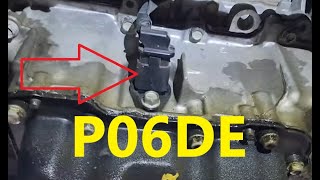
- Replacing other sensors on the 5V reference circuit (like the throttle position or accelerator pedal sensor) without first addressing the associated P06DE code 🎬 Watch: Understanding the P06DE code and how to fix it and investigating the oil pressure system.
- Replacing the ECM when the fault is in the wiring or a connected component.
Most Likely Causes
- Faulty Oil Pressure Control Solenoid 🔴 High Probability → Shop Transmission Clutch Pressure Control Solenoid This solenoid (GM Part No. 12678786) controls the two-stage oil pump. It can get stuck or fail electrically, disrupting the 5V reference circuit it's on. This is the most common failure point when P06DE and P0651 are present together.
How to confirm: A technician will use a scan tool to monitor oil pressure commands vs. actual pressure. The solenoid's resistance can also be tested; it should be between 10 and 30 Ω. It is often diagnosed after ruling out oil level/condition issues.
Typical fix: Replace the oil pressure control solenoid. This part is located in the oil pan, requiring the pan to be removed for access.
Est. part cost: $40-$100 - Damaged or Shorted Wiring Harness 🟡 Medium Probability The wiring for the oil pressure sensor/solenoid runs near hot or moving components. Wires can become chafed, melted, or pinched, especially after previous engine or transmission repairs.
How to confirm: Visually inspect the wiring harness leading to the oil pressure sensor and control solenoid. Check for continuity and shorts to ground using a multimeter. A common failure point is the harness being pinched between the engine and transmission after a repair.
Typical fix: Repair the damaged section of the wiring harness and ensure it is properly routed and secured.
Est. part cost: $5-$50 - Low or Incorrect Engine Oil 🟡 Medium Probability The P06DE code that accompanies P0651 is directly related to oil pressure. Low levels or using the wrong viscosity oil can prevent the system from building the pressure the ECM expects, causing the control circuit to fault.
How to confirm: Check the engine oil level on the dipstick and review service records to confirm the correct oil type (e.g., ACDelco dexos approved) is being used.
Typical fix: Top off or change the engine oil and filter with the manufacturer-specified grade.
Est. part cost: $50-$100
Rare But Worth Checking
- Debris in Oil Pump or Oil Passages: → Shop Engine Oil Pump TSB #PIP5247A warns that pieces of broken internal piston oil squirters can get into the oil pan and pickup tube. TSB #PIP5676 notes that foreign material (often very small) can get stuck in the oil pump's cold start checkball. Another TSB mentions a dislodged pressure relief valve (PRV) cup plug in the oil pump, especially on low-mileage vehicles in cold climates. All are serious mechanical failures requiring extensive repair.
- Faulty Engine Oil Pressure Sensor: The oil pressure sensor itself (GM Part No. 12673134, which supersedes older numbers) 🎬 See this walkthrough on replacing the oil pressure switch can fail, causing a short on the 5V reference circuit. A small filter screen is located underneath the sensor and can become clogged, causing incorrect readings. While less common than the solenoid, it's a key component to test.
- Faulty Engine Control Module (ECM): → Shop Engine Control Module (ECM) While possible, a failing ECM is rare. All other possibilities, including wiring, sensors, and mechanical issues, should be exhaustively ruled out before condemning the ECM.
Diagnosis Steps
- Verify the presence of P0651 and check for P06DE and P0521. The diagnosis must address all codes together, prioritizing P06DE.
- Check the engine oil level and condition. If low, dirty, or the wrong type, correct this first, clear codes, and re-test.
- Follow GM TSB #PIP5247A and #PIP5676. This involves using a scan tool to monitor commanded vs. actual oil pressure.
- If diagnostics lead to low oil pressure, the oil pan must be removed to inspect for debris from broken piston oil squirters (per PIP5247A) and to inspect the oil pump's checkball for foreign material (per PIP5676).
- If oil pressure appears to be a sensor/electrical issue, identify all sensors on the 5V reference 'B' circuit using a wiring diagram. The oil pressure control solenoid and oil pressure sensor are the primary suspects. On some GM models, the Crankshaft Position Sensor and Brake Pedal Position Sensor share the 5V reference 'B' circuit.
- Disconnect sensors on the circuit one by one, clearing codes and checking if P0651 returns. If the code disappears when a specific sensor is unplugged, that sensor is likely shorted internally. 🎬 Watch: How to diagnose the 5V reference circuit fault
- Thoroughly inspect the wiring harness for the 5V reference circuit for any signs of damage, corrosion, or pinching, particularly around the oil pressure sensor and where the harness passes between the engine and transmission.
- If all sensors and wiring are confirmed to be good, the final step is to consider a faulty ECM, though this is highly unlikely.
Parts You'll Likely Need
- Engine Oil Pressure Control Solenoid Valve
(OEM #12678786)— This is the most common component to fail electrically or become stuck, directly causing codes P06DE and P0651. Access requires removing the oil pan.
Trusted brands: ACDelco (GM Genuine), Dorman
OEM price range: $60-$120
Aftermarket price range: $40-$80 - Engine Oil Pressure Sensor
(OEM #12673134 (supersedes 12621234, 12596951))— Can fail and short the 5V reference circuit. It's a critical part of the system and is often replaced during an oil pressure-related repair.
Trusted brands: ACDelco (GM Genuine), Delphi
OEM price range: $30-$50
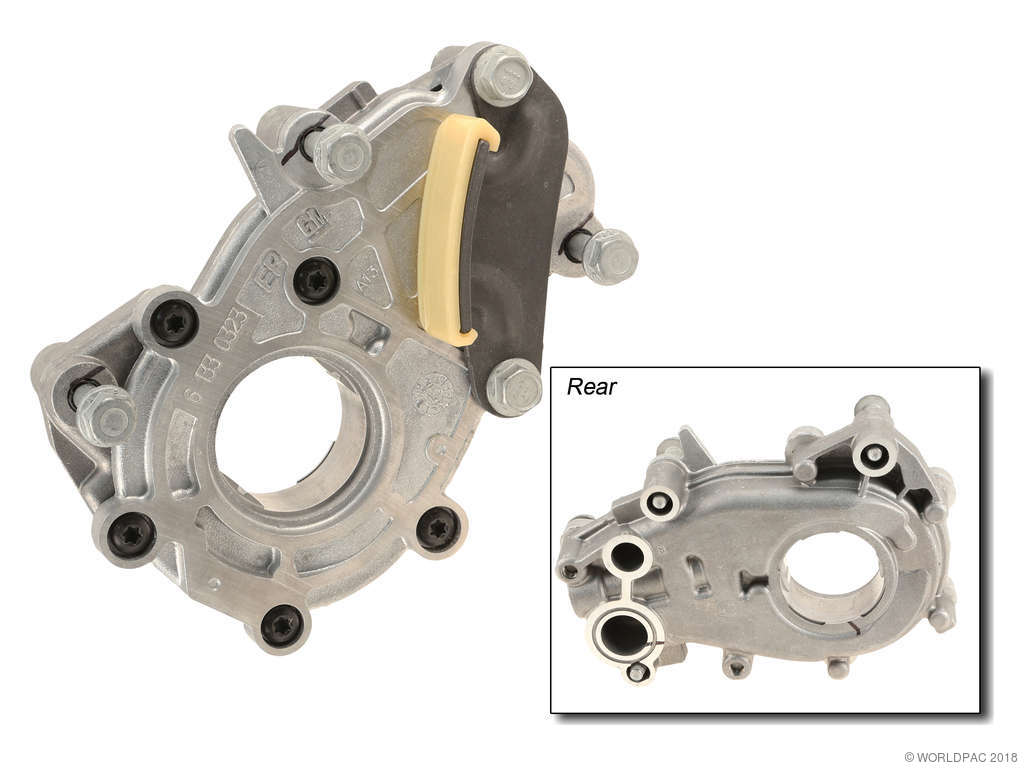
Aftermarket price range: $20-$40 - Engine Oil Pump Assembly — If diagnostics find debris in the oil pump's checkball that cannot be cleaned, or if the pump itself has failed, the entire assembly often needs to be replaced.
Trusted brands: ACDelco, Melling
OEM price range: $250-$400
Aftermarket price range: $150-$300
Related Codes That Often Appear With This One
- P06DE — Engine Oil Pressure Control Circuit Stuck On. This is the primary related code. The oil pressure control solenoid is on the same 5-volt reference 'B' circuit, making this the root cause of the P0651 code in most cases for this vehicle.
- P0521 — Engine Oil Pressure Sensor Performance. This code can also appear alongside P06DE and P0651, indicating the oil pressure reading is out of its expected range. TSBs confirm it is often set in conjunction with the primary P06DE fault.
Technical Service Bulletins (TSBs) & Recalls
- PIP5247A: Links P0651 with P06DE and points to potential internal engine damage (broken piston oil squirters) as a cause.
- PIP5676: Provides diagnostics for the related P06DE code, pointing to possible foreign material in the oil pump checkball.
Platform-Specific Known Issues
- TSB #PIP5247A: Notes that P0651 can be set with P06DE. Instructs technicians to inspect for broken piston oil nozzles (squirters) if oil pressure is low, as debris can be found in the oil pan. This requires removing the oil pan and balance shaft/oil pump module to inspect.
- TSB #PIP5676: Addresses code P06DE, which can be caused by foreign material getting stuck in the cold start checkball inside the oil pump assembly. Technicians are advised to inspect the checkball closely for tiny debris. If found, it can be cleaned; if not, the oil pump assembly should be replaced.
Mechanic-Grade Diagnostic Values
- Engine Oil Pressure Control Solenoid Valve Resistance — expected: 10 to 30 Ω. Failure: A reading outside this range indicates a faulty solenoid.
- Engine Oil Pressure Sensor Low Reference Circuit to ECM Continuity — expected: Less than 10 Ω. Failure: A higher resistance reading indicates a problem in the wiring harness between the sensor and the ECM.
- Engine Oil Pressure at Idle (Mechanical Gauge) — expected: Above 5 psi (34.5 kPa). Failure: Pressure at or below 5 psi at idle strongly suggests a mechanical failure within the oil pump, such as a dislodged PRV cup plug.
Scan Tool Commands That Help
- GDS2 (GM Dealer Scan Tool): Engine Oil Pump Screening Test — This is a specific GM procedure used to trigger latent faults in the oil pressure system. The technician cycles the engine RPM between idle, 2,000, and 4,000 RPM ten times to see if codes P0521, P06DD, or P06DE will set, which would confirm a fault requiring oil pump replacement.
- GDS2 (GM Dealer Scan Tool): Oil Pump Control Solenoid Command ON/OFF — This bidirectional control allows a technician to manually switch the oil pump between its high-pressure (solenoid OFF) and low-pressure (solenoid ON) states while monitoring a mechanical gauge to verify the solenoid and pump are responding correctly.
Wiring & Ground Locations
- Harness Pinch Point — Between the engine and transmission bell housing.. A wiring harness can become crushed or pinched in this location during a transmission replacement or other major service, causing a short or open on the 5V reference circuit that triggers P0651.
- G103 — On the cowl at the left rear of the engine compartment, often above the brake booster.. This is a major ground point for multiple components, including the Body Control Module (BCM), Instrument Panel Cluster (IPC), and Data Link Connector (DLC). While not a direct ground for the ECM's 5V reference, a poor connection here can cause widespread electrical issues that could be misdiagnosed.
- ECM Connector X1, Terminal 23 — On the Engine Control Module (ECM).. This is the specific pin for the oil pressure sensor's low reference circuit. Testing for continuity between this pin and the sensor connector is a key step in diagnosing a wiring fault.
Real Owner Repair Stories
- YouTube user 'Diesel Dan' (Unknown GM vehicle, likely a truck or SUV.) — P0651 code present, vehicle would not run correctly.
❌ Tried (didn't work) Initial visual inspection did not reveal the problem.
✅ What actually fixed it The wiring harness was found crushed between the engine and transmission from a previous transmission replacement. A specific gray 5V reference wire was severed. The fix involved separating the engine and transmission slightly to access the harness, repairing the broken wire, and rerouting the harness to prevent it from being pinched again.
Model Year Variations Within This Range
- 2017 vs 2018-2019: The labor cost to replace the oil pressure sensor is significantly different between the first-generation (2017) and second-generation (2018+) Traverse. RepairPal estimates a much higher labor cost for the 2014-2017 models compared to the 2018-2023 models, suggesting the sensor's location is harder to access on the first-generation platform.
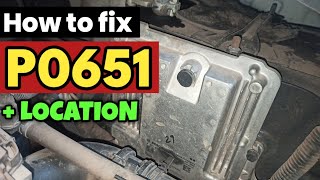
Helpful Videos
We Have This Part in Stock



The information in this article is provided for general reference and educational purposes only. Vehicle specifications, procedures, and part compatibility can vary by production date, trim level, and region. Always consult your vehicle's factory service manual and verify part numbers before purchasing or performing repairs. Safety-critical components such as airbags, seat belts, and braking systems should be installed by a qualified professional.
- Chevrolet TRAVERSE:
- 🧭 Diagnostic Flowchart
- 🎬 Helpful Videos
- 🛍️ Shop This Part
- What's Unique About the 2017-2019 Chevrolet TRAVERSE
- Symptoms You May Notice
- Most Likely Causes
- Rare But Worth Checking
- Diagnosis Steps
- Parts You'll Likely Need
- Related Codes That Often Appear With This One
- Technical Service Bulletins (TSBs) & Recalls
- Platform-Specific Known Issues
- Mechanic-Grade Diagnostic Values
- Scan Tool Commands That Help
- Wiring & Ground Locations
- Real Owner Repair Stories
- Model Year Variations Within This Range
- 🎟️ Get 5% Off