

OBD-II Code P0652: Sensor Reference Voltage 'B' Circuit Low
The Ultimate Guide to What P0652 Means, Why It Triggers, and How to Fix It
- Code P0652 indicates the PCM's 5-volt 'B' reference circuit has dropped below 4.5 volts, starving critical engine sensors of power.
- A shorted wiring harness or a single internally shorted sensor causes 80% of P0652 codes; do not replace the PCM without testing these first.
- Diagnose this code by unplugging sensors on the 'B' circuit one by one; if the multimeter jumps back to 5 volts, the last unplugged sensor is the culprit.
- Driving with P0652 risks a sudden engine stall, and running rich destroys a $1,500 catalytic converter within months.
What Does P0652 Mean?
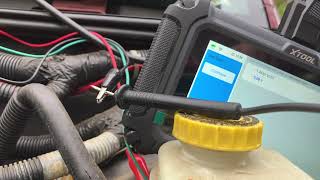
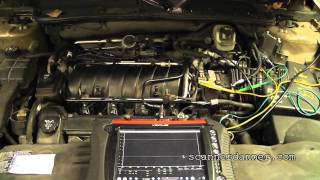
Your car's Powertrain Control Module (PCM) sends a precise 5-volt reference signal 🎬 Watch: A master tech explains how 5V reference circuits work. to multiple sensors. Code P0652 means the PCM detects voltage on the 'B' circuit is below the required threshold. This low voltage forces sensors on that circuit to send bad data, causing severe engine performance and drivability issues.
Technical definition: The SAE/OBD-II definition is "Sensor Reference Voltage 'B' Circuit Low". The PCM or another control module detects the 5-volt reference circuit 'B' is below its specified threshold (typically 4.5 volts). This fault indicates a short-to-ground condition, 🎬 See how to test for a 5V circuit short to ground. an internally shorted sensor, or a poor connection pulling the circuit voltage down.
Can I Drive With P0652?
Yes, But With Caution. You can drive, but we strongly advise against it for long distances. The fault causes the engine to run poorly, stall unexpectedly in traffic, or fail to start. The vehicle often enters a reduced power 'limp mode'. Prolonged driving forces an improper air-fuel mixture that destroys the catalytic converter, a repair costing $800 to $2,500.
Common Causes
- Shorted or damaged wiring harness (Very Common) — This is the most frequent cause. Wires in the engine bay rub against metal parts, melt from exhaust heat, or corrode over time. This creates a short to ground that pulls the reference voltage down.
- Faulty sensor on the 'B' circuit (Common) — A sensor connected to the 'B' reference circuit fails internally and creates a short. This single bad sensor pulls down the voltage for all other sensors on the same circuit.
- Corroded connectors or water intrusion (Common) — Moisture from rain, snow, or engine washing seeps into sensor or PCM connectors. This creates corrosion that resists electrical flow or bridges pins, causing a voltage drop or short circuit.
- Loose or corroded ground wires (Less Common) — Control modules and sensors require a solid ground connection. A loose or rusted engine or chassis ground wire causes severe electrical instability, triggering a P0652 code.
- Improperly installed aftermarket accessories (Rare) — Aftermarket alarms, remote starters, or audio equipment tapped incorrectly into sensor circuits cause a voltage drain. This is usually discovered immediately after a recent installation.
- PCM software glitch (Rare) — Corrupted calibration data causes the PCM to misinterpret a normal voltage as low. A software re-flash by a dealer or qualified shop resolves the issue.
- Faulty Powertrain Control Module (PCM) (Rare) — The PCM's internal voltage regulator that supplies the 5-volt reference breaks. Consider this only after exhaustively ruling out all wiring and sensor possibilities.
Symptoms
- Check Engine Light is on — This is the first and sometimes only symptom you notice.
- Engine runs rough, stalls, or misfires — Fuel and ignition sensors lack correct voltage, causing the engine to run poorly, hesitate during acceleration, or stall unexpectedly.
- Reduced engine power ('Limp Mode') — The vehicle feels sluggish and struggles to accelerate as the computer limits engine power to prevent damage.
- Engine won't start — The voltage drop is severe enough to prevent the engine from starting entirely.
- Transmission shifting issues — If a sensor shared by the transmission (like the throttle position sensor) is affected, you experience harsh or erratic shifting.
- Intermittent loss of electrical accessories — If the 'B' circuit is managed by the Body Control Module (BCM), you experience intermittent failures of power windows, door locks, or climate control.
- Decreased fuel economy (also visible on scanner) — Sensors provide incorrect data, forcing an inefficient air-fuel mixture that burns excess fuel.
Common Fixes & Costs
- Repairing a damaged wiring harness — Parts: $10-$50, Labor: $150-$450, ~1.0-3.0 hr book time (Intermediate)
- Replacing a faulty sensor
— Parts: $40-$200, Labor: $75-$150, ~0.5-1.0 hr book time
(DIY)
Chevrolet / GMC Silverado / Sierra with Duramax Diesel (2006-2010): OEM [{'brand': 'ACDelco (GM)', 'number': '18754-05405010'}, {'brand': 'GM', 'number': '12708493'}] (Alt: {"brand": "Bosch", "number": "0281002971", "price_comparison": "~$145"})
Ford Ranger (2011-2015): OEM [{'brand': 'Ford / Motorcraft', 'number': 'YS4Z-9B989-BB'}, {'brand': 'Ford (Pedal Assembly)', 'number': 'YL54-9725-AA'}] (Alt: {"brand": "Walker Products", "number": "200-1189", "price_comparison": "~$30-$50"}, {"brand": "Duralast", "number": "TPS4275", "price_comparison": "~$40"})
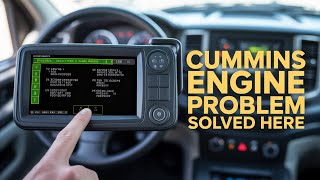
Dodge / Ram with Cummins Diesel (2007-2012): 🎬 Watch this specific P0652 repair walkthrough for Ram Cummins owners. OEM [{'brand': 'Cummins', 'number': '5698455'}, {'brand': 'Mopar', 'number': '68453737AA'}] (Alt: {"brand": "Standard Motor Products", "number": "AS415", "price_comparison": "~$90-$120"}) - Cleaning or repairing corroded connectors — Parts: $5-$20, Labor: $75-$150, ~0.5-1.0 hr book time (DIY)
- Updating or re-flashing PCM software — Parts: $0, Labor: $150-$200, ~1.0-1.5 hr book time (Professional)
- Replacing a faulty PCM — Parts: $600-$900, Labor: $200-$300 (plus programming), ~1.5-2.5 hr book time (Professional)
DIY vs Professional
- Repairing a damaged wiring harness — Beginner: no
Tools: Multimeter, wiring diagrams, wire strippers, crimpers, heat shrink tubing, soldering iron. - Replacing a faulty sensor — Beginner: yes
Tools: Basic hand tools (socket set, wrenches). - Cleaning or repairing corroded connectors — Beginner: yes
Tools: Electrical contact cleaner, small brush, dielectric grease. - Updating or re-flashing PCM software — Beginner: no
Tools: OEM-specific scan tool and a subscription to the manufacturer's service information portal. - Replacing a faulty PCM — Beginner: no
Tools: Hand tools, plus specialized programming equipment to code the new module to the vehicle's VIN and security system.
Used vs. New Parts: Buying Guide
When a used part is worth it: Buying used is cost-effective for simple, non-calibrated sensors on older, high-mileage vehicles where new OEM parts are cost-prohibitive.
Donor-vehicle mileage cap: roughly under 80000 miles for the part to have meaningful remaining life.
Donor quality checklist:
- Verify the exact part number matches; identical-looking sensors have different internal calibrations.
- Inspect connectors for corrosion, bent pins, or damage.
- Choose parts from vehicles scrapped for collision damage, not engine fires or floods.
Decision logic:
- If The part is a simple sensor and the vehicle is over 10 years old → A used part is a reasonable choice to save money.
- If The part is a critical sensor like an accelerator pedal or fuel pressure sensor → Buy new (OEM or high-quality aftermarket) to ensure safety and reliability.
- If The part is an electronic control module (PCM) → Buy new or professionally remanufactured units with a warranty; used electronics have a high failure risk.
Warranty tradeoff: Used parts typically include a 30-90 day part-only warranty. New aftermarket parts offer 1-year to limited lifetime warranties. OEM parts offer 1-2 year warranties.
Worst-case if a used part fails: $150-$400 if a used sensor fails, requiring repeat labor costs and a new replacement part.
Cost of Not Fixing It
- 0-1 month: Noticeable drop in fuel economy (5-15%), poor engine performance, and high risk of stalling in traffic. (Added cost: Negligible, other than increased fuel costs.)
- 1-6 months: Incorrect air/fuel mixture from bad sensor data overheats and destroys the catalytic converter. (Added cost: $1200-$2800 for catalytic converter replacement.)
- 6+ months: Sustained poor running conditions cause internal engine damage, fouled spark plugs, and carbon buildup. A critical sensor failure leads to a complete no-start condition. (Added cost: $200-$500 for tune-up and carbon cleaning, or $2000+ for engine repairs.)
Diagnosis Steps
- Check for Other Codes
Use an OBD-II scanner to read all stored trouble codes. P0652 is usually accompanied by codes for specific sensors on the 'B' circuit (e.g., APP, MAP, or Fuel Pressure sensors). These codes identify which sensor or harness section is causing the problem.
Tools: OBD-II Scanner (Beginner) - Visual Inspection
Inspect the engine's wiring harness for frayed, melted, or pinched wires. Check common chafe points near the alternator, A/C compressor, and sharp engine bends. Verify all sensor and module connectors are tight and free of green or white corrosion.
Tools: Flashlight (Beginner) - Check Battery and System Voltage
Ensure the battery is fully charged (12.4+ volts with engine off) and the alternator outputs 13.6-14.8 volts when running. Low system voltage triggers confusing electrical faults and invalidates further testing.
Tools: Multimeter (Beginner) - Identify the 'B' Circuit Sensors
Use a vehicle-specific wiring diagram to identify the exact sensors on the 'B' reference circuit. Common sensors include the accelerator pedal position (APP), A/C pressure, fuel rail pressure (FRP), or oil pressure sensors.
Tools: Repair manual or online service information (Intermediate) - Isolate the Faulty Component
With the key on and engine off, unplug the sensors on the 'B' circuit one by one. Check the reference voltage at the disconnected harness connector. If the voltage jumps back to 5 volts after unplugging a specific sensor, that sensor is internally shorted and must be replaced.
Tools: Multimeter, Repair manual (Intermediate) - Test the Wiring for a Short to Ground
If unplugging all sensors doesn't restore the 5-volt reference, the wiring harness is shorted. Disconnect the PCM and all sensors on the circuit. Measure resistance (Ohms) between the reference voltage wire and a chassis ground. Any reading other than infinite resistance (OL) confirms a short to ground in the harness.
Tools: Multimeter, Repair manual (Advanced) - Pro Tip: Perform a 'Wiggle Test'
Have a helper watch the multimeter's voltage reading while you gently flex the wiring harness at various points, especially around connectors and chafe areas. If the voltage fluctuates or drops to zero during the wiggle test, you have pinpointed the exact location of the intermittent short.
Tools: Multimeter or OBD-II Scanner with Live Data (Advanced) - Advanced: Check Live Data PIDs
Monitor the live data PIDs for the sensors on the 'B' circuit using a scan tool. A healthy 5V circuit allows sensors to report plausible values (e.g., APP sensor at 0% at rest). If multiple sensors on the 'B' circuit show flatline, zero, or irrational readings, it confirms the shared reference voltage circuit is dead.
Tools: Advanced OBD-II Scanner with Live Data (Advanced) - Advanced: Measure Exact Voltage Thresholds
With the key on, engine off, back-probe the 5V reference wire at an accessible sensor. A healthy circuit reads 4.8V to 5.2V. A reading of 0V indicates a dead short to ground or an open circuit. A reading between 0V and 4.5V indicates a partial short or high resistance.
Tools: Multimeter, Back-probe kit, Wiring diagram (Advanced) - Pro Tip: Advanced Waveform Analysis
Back-probe the reference voltage wire with an oscilloscope while the engine runs. A healthy circuit shows a perfectly flat line at 5 volts. A faulty circuit shows excessive 'noise' or sudden dropouts, indicating interference or an intermittent short a multimeter cannot catch.
Tools: Oscilloscope, Repair manual (Professional)
When This Code Triggers (Freeze-Frame Conditions)
- Engine Coolant Temp: 180-210°F (Fully warmed up)
- RPM: 1500-2500 (Cruise / steady throttle)
- Engine Load: 30-60% (During steady driving or light acceleration)
- Vehicle Speed: 35-65 mph (City or highway driving)
Related Codes
- P0642 — Identical fault ('Sensor Reference Voltage 'A' Circuit Low') for the 'A' circuit. Seeing both codes together points to a larger PCM or main grounding issue affecting multiple reference outputs.
- P0653 — The opposite fault: 'Sensor Reference Voltage 'B' Circuit High'. It indicates voltage is above 5 volts due to a short to power. P0652 is a short to ground; P0653 is a short to power.
- Any sensor-specific low voltage code (e.g., P0122, P0107) — Codes like P0122 (TPS Circuit Low) are symptoms of P0652. If the 5V supply to the sensor is low, the sensor's output signal is also low. Always diagnose the reference circuit code (P0652) first.
- U0100 — 'Lost Communication With ECM/PCM'. Set alongside P0652 if the voltage problem disrupts the computer's ability to communicate on the CAN bus. Always repair the P0652 voltage fault before chasing a U-code.
Climate & Environmental Factors
- High Humidity & Rain: Moisture is a primary catalyst for corrosion. Water seeps into connectors with failing seals or cracked wire insulation, creating high resistance or shorts that trigger P0652.
- Cold Climates & Road Salt: Salty winter road spray creates a highly corrosive environment for under-vehicle wiring. This accelerates the deterioration of wiring harnesses and ground connections, making shorts-to-ground highly common.
- Extreme Heat: High engine bay temperatures cause plastic conduit and wire insulation to become brittle and crack. Wires melt if they contact hot exhaust components, leading to an immediate short circuit.
How to Clear the Code After You Fix It
- Reconnect battery (if disconnected for repair)
- Use an OBD-II scan tool to clear all fault codes.
- Perform a complete OBD-II drive cycle to allow readiness monitors to run.
Drive cycle (~30 minutes): Cold start (sit for 8+ hours). Idle for 2-3 minutes with accessories on. Drive for 15 minutes with mixed city/highway speeds (up to 55 mph). Perform several steady cruises and coast-downs. Allow vehicle to cool down.
Readiness monitors affected: Catalyst monitor, O2 sensor monitor, EVAP system monitor, Misfire monitor
Before emissions retest: drive at least 50-100 miles to fully set monitors.
Watch out for:
- Clearing the code does not fix the underlying electrical fault; the code returns immediately if the repair failed.
- Disconnecting the battery clears codes but resets all readiness monitors to 'not ready', causing an instant emissions test failure.
- A generic drive cycle is not sufficient for all vehicles; follow manufacturer-specific procedures to set all monitors.
Will This Fail Emissions / State Inspection?
Yes — this code typically fails an OBD-II emissions inspection.
- California: An active P0652 code is an automatic failure. After repair, all readiness monitors must be 'Ready'. A drive cycle of 50-100 miles is required before re-testing.
- New York: The NYS DMV emissions inspection includes an OBD-II scan. The presence of a P0652 trouble code results in an immediate test failure.
- Texas: Vehicles fail the OBD-II inspection if the Check Engine Light is on with code P0652 stored.
Most Commonly Affected Vehicles
- Chevrolet / GMC Silverado / Sierra with Duramax Diesel (2006-2010) — The wiring harness chafes near the alternator bracket and A/C compressor, shorting the 5-volt reference circuit for the fuel rail pressure sensor. TSB #07-06-04-019E addresses this.
- Ford Ranger / Mazda BT-50 (2011-2015) — This code is frequently caused by high resistance at the B+ terminal on the back of the alternator, not a sensor fault. Common on vehicles with high-draw accessories.
- Volkswagen Jetta TDI (2004-2006) — On the 1.9L BEW TDI engine, P0652 points directly to a faulty Intake Manifold Pressure Sensor (G31) or its wiring.
- Chevrolet Cruze (2011-2016) — Triggered by a short in various sensors sharing the reference circuit, including the accelerator pedal. The negative battery cable is also a known failure point.
- Dodge / Ram / Chrysler Trucks with Cummins Diesel (2007-2012) — The engine wiring harness rubs through near the engine block and valve cover. The affected circuit powers the Fuel Rail Pressure, A/C Pressure, MAP, and Camshaft Position sensors.
- Hyundai Santa Fe (CM), H-1 (2006-2012) — Triggered when the sensor reference voltage drops below 4.7V for more than 0.1 seconds. Frequently points to a short in the Throttle Position Sensor (TPS) circuit.
- BMW 3 Series, various models with GDI engines (2007-2015) — Gasoline Direct Injection (GDI) vehicles are highly sensitive to voltage fluctuations. P0652 appears due to issues with high-pressure fuel system sensors on the 'B' circuit.
- Kia Various Models (2008-2016) — On some Kia models, P0652 specifically indicates a CAN communication failure with the Steering Angle Sensor Module, requiring a completely different diagnostic path.
Manufacturer-Specific Notes
- GM (Chevrolet/GMC): On Duramax diesels (2006-2010), a chafed wire near the alternator bracket is a highly common cause. See TSB #07-06-04-019E. Inquire with a dealer about potential assistance based on this TSB.
- Ford: On Ranger and Mazda BT-50 trucks, P0652 is frequently caused by a high-resistance voltage drop at the alternator's main power cable (B+ terminal), not a sensor fault.
- Volkswagen: On 1.9L TDI engines (code BEW), P0652 specifically points towards a problem with the Intake Manifold Pressure Sensor (G31) or its wiring.
- Chrysler / Dodge / Ram: On Cummins diesel applications, the harness is susceptible to rubbing through near the valve cover. The affected circuit powers the Fuel Rail Pressure, MAP, and Camshaft Position sensors simultaneously.
Frequently Asked Questions
Can I fix P0652 myself?
If you are comfortable using a multimeter and reading a wiring diagram, you can diagnose and fix this issue. The most common fixes involve repairing a wire or replacing a sensor, which are DIY-friendly. Stop and consult a professional shop if the problem requires PCM replacement or software updates.
Will clearing the code make it go away?
No. Clearing the code only turns the Check Engine Light off temporarily. The PCM will detect the low voltage again and the code will return within seconds of starting the car.
What is the most common misdiagnosis for P0652?
The biggest mistake is immediately replacing a sensor just because its code appears alongside P0652. The root cause is usually a different sensor on the same circuit or a wiring short. Never replace the expensive PCM without exhaustively testing the wiring and all connected sensors first.
What is the difference between the 'A', 'B', and 'C' reference circuits?
They are different 5-volt power supply circuits originating from the PCM to group sensors and limit the impact of a single failure. A short on the 'B' circuit won't affect sensors on the 'A' or 'C' circuits. You must use a vehicle-specific wiring diagram to identify which sensors belong to the 'B' circuit.
Can a bad battery cause a P0652 code?
A weak battery doesn't typically cause a P0652 code in isolation, as this code points to a specific fault on one 5-volt reference circuit. However, always ensure your battery and charging system are healthy first. A stable 12.4+ volt baseline is required for accurate electrical testing.
How much does it cost to diagnose a P0652 code?
Most repair shops charge a diagnostic fee equivalent to one to one-and-a-half hours of labor. Expect to pay between $120 and $200 for a professional diagnosis that goes beyond just reading the code.
What is a 'wiggle test' and why is it useful?
A 'wiggle test' involves physically moving sections of a wiring harness while monitoring voltage on a multimeter. It helps find intermittent faults, like a wire that only shorts to ground when the engine vibrates. If the voltage drops when you wiggle a specific part of the harness, you have pinpointed the short.
Key Takeaways
- Code P0652 indicates the PCM's 5-volt 'B' reference circuit has dropped below 4.5 volts, starving critical engine sensors of power.
- A shorted wiring harness or a single internally shorted sensor causes 80% of P0652 codes; do not replace the PCM without testing these first.
- Diagnose this code by unplugging sensors on the 'B' circuit one by one; if the multimeter jumps back to 5 volts, the last unplugged sensor is the culprit.
- Driving with P0652 risks a sudden engine stall, and running rich destroys a $1,500 catalytic converter within months.
Helpful Videos

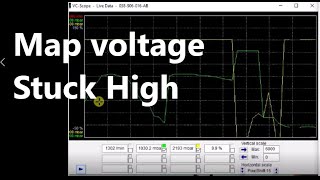
Shop the Parts Behind P0652
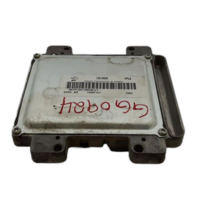
Below are the parts most often responsible for code P0652, ranked by how frequently each one is the actual culprit (per the diagnosis above). Tap any to see what we have for your vehicle.

The information in this article is provided for general reference and educational purposes only. Vehicle specifications, procedures, and part compatibility can vary by production date, trim level, and region. Always consult your vehicle's factory service manual and verify part numbers before purchasing or performing repairs. Safety-critical components such as airbags, seat belts, and braking systems should be installed by a qualified professional.
- 🎬 Helpful Videos
- 🛍️ Shop This Part
- What Does P0652 Mean?
- Can I Drive With P0652?
- Common Causes
- Symptoms
- Common Fixes & Costs
- DIY vs Professional
- Used vs. New Parts: Buying Guide
- Cost of Not Fixing It
- Diagnosis Steps
- When This Code Triggers (Freeze-Frame Conditions)
- Related Codes
- Climate & Environmental Factors
- How to Clear the Code After You Fix It
- Will This Fail Emissions / State Inspection?
- Most Commonly Affected Vehicles
- Manufacturer-Specific Notes
- Frequently Asked Questions
- Can I fix P0652 myself?
- Will clearing the code make it go away?
- What is the most common misdiagnosis for P0652?
- What is the difference between the 'A', 'B', and 'C' reference circuits?
- Can a bad battery cause a P0652 code?
- How much does it cost to diagnose a P0652 code?
- What is a 'wiggle test' and why is it useful?
- Key Takeaways
- 🎟️ Get 5% Off