

OBD-II Code P0658: Actuator Supply Voltage 'A' Circuit Low
The Ultimate Guide to Diagnosing and Fixing P0658
- Code P0658 indicates the 'A' actuator supply circuit voltage dropped below 9V, typically disabling transmission shift solenoids or body control modules.
- Always test the battery (needs 12.4V+), inspect transmission fuses, and perform a wiring 'wiggle test' before replacing expensive solenoids.
- Driving with an active P0658 code risks catastrophic internal transmission damage, easily escalating a $150 wiring repair into a $3,500 rebuild.
- On 2007-2014 GM 6-speed vehicles, this code frequently points to a failed internal TEHCM requiring a $600-$1,200 replacement and professional programming.
What Does P0658 Mean?

The Powertrain Control Module (PCM) detected the voltage in the 'Actuator Supply Voltage A Circuit' is below the manufacturer's threshold. This circuit acts as a power supply for critical actuators—components that make physical adjustments based on computer commands. Depending on the vehicle, this circuit powers transmission shift solenoids, transfer case actuators, or body control features like power windows. Low voltage prevents these parts from functioning, triggering limp mode or electrical failures.
🎬 Watch: Understanding why your car enters limp mode and how to troubleshoot it.Technical definition: SAE/ISO J2012 defines P0658 as "Actuator Supply Voltage 'A' Circuit Low". The PCM, Transmission Control Module (TCM), or Body Control Module (BCM) detected circuit voltage dropping below a pre-programmed threshold (typically under 9V on a 12V system) for a specified duration.
Can I Drive With P0658?
Yes, but not recommended Do not drive the vehicle for extended distances. You risk sudden harsh shifting, loss of power, or the transmission defaulting to 'limp mode' (stuck in a single gear). Continuing to drive escalates a $150 wiring repair into a $3,500+ transmission rebuild due to internal mechanical damage from incorrect hydraulic pressures.
Common Causes

- Damaged Wiring or Connectors (Corrosion, Shorts, Fraying) (Very Common) — Moisture, road salt, and vibration cause wires to corrode, fray, or short to the chassis. This creates high resistance or leaks voltage to ground, dropping the power before it reaches the actuator.
- Blown Fuse or Failing Power Supply Relay (Common) — A blown fuse protecting the actuator circuit immediately cuts voltage and strongly indicates an underlying short circuit. A failing relay causes intermittent voltage drops.
- Poor Ground Connection (Common) — A loose or corroded ground wire for the control module or actuator circuit causes a floating voltage. All circuits require a solid chassis ground to maintain 12V power.
- Weak Battery or Failing Alternator (Common) — A failing alternator or weak battery lowers system voltage overall. If base voltage drops below 12V, sensitive actuator circuits are the first to trigger low-voltage codes.
- Faulty Actuator or Transmission Solenoid (Less Common) — The actuator itself can develop an internal short, drawing excessive current and pulling the entire circuit's voltage down.
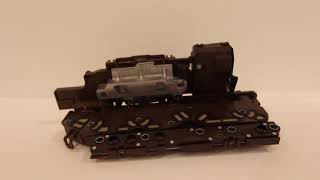
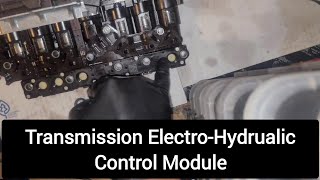
- Internal TEHCM/Valve Body Failure (GM Specific) (Uncommon) — On many GM 6-speed transmissions, the driver circuit is integrated into the internal Transmission Electro-Hydraulic Control Module (TEHCM). A failure here requires replacing the entire internal assembly. 🎬 See this guide on TEHCM and TCM replacements for 6-speed transmissions.
- Software or Firmware Glitch (Rare) — Outdated firmware causes the control module to misinterpret normal voltage readings as low. This frequently occurs after a battery replacement or jump-start.
- Faulty Control Module (PCM/TCM) (Very Rare) — The control module providing and monitoring the voltage can fail internally. This is the absolute last item to consider after exhaustively testing all wiring and grounds.
Symptoms

- Transmission Stuck in Limp Mode — The transmission defaults to a single gear (usually 2nd or 3rd) to prevent internal damage, causing poor acceleration and high RPMs.
- Erratic or Harsh Transmission Shifting — Delayed shifts, violent gear engagement, or a feeling that the transmission is slipping during acceleration.
- Check Engine Light is On — The Malfunction Indicator Lamp (MIL) illuminates immediately upon detecting the voltage drop.
- Engine Stalling or No-Start Condition — If the code relates to a critical powertrain component, the low voltage prevents the engine from starting or causes stalling at idle.
- Inoperable Convenience Features (Euro Models) — On BMW, VW, or Audi vehicles, this code affects body actuators, causing malfunctioning power windows, door locks, or flickering interior lights.
- Failure to Engage 4WD — Inability to switch between two-wheel drive, four-wheel drive, or selectable drive modes.
Diagnostic Flowchart

Tap your situation to follow the diagnostic path that matches what you're seeing on this code.
Common Fixes & Costs
- Replace Blown Fuse or Faulty Relay
— Parts: $5-$30, Labor: $0-$50, ~0.1 hr book time
(DIY)
Honda Accord (2017+): OEM Generic 10A ATO Blade Fuse (Alt: Available at any auto parts store) - Repair Damaged Wiring or Connectors — Parts: $10-$50, Labor: $150-$350, ~1.5 hr book time (Intermediate)
- Replace Faulty Actuator/Solenoid
— Parts: $50-$300, Labor: $150-$450, ~2.5 hr book time
(Intermediate)
Ford F-150 (6R80 Trans): OEM AL3Z-7G276-D (Alt: Dorman 609-040) - Replace Control Module (TEHCM/PCM)
— Parts: $200-$800, Labor: $150-$300, ~4 hr book time
(Professional)
Chevrolet/GMC (6L80/6L90 Trans): OEM Varies by VIN (e.g., 24256524) (Alt: Sonnax GM6L-TEHCM-C6) - Control Module Reprogramming — Parts: $0, Labor: $150-$250, ~1 hr book time (Professional)
- Professional Diagnostic Service — Parts: $0, Labor: $150-$200, ~1 hr book time (Professional)
DIY vs Professional
- Repair Damaged Wiring or Connectors 🟢 Beginner
Tools: Multimeter, wire strippers, crimping tool, heat shrink tubing. - Replace Faulty Actuator/Solenoid 🟢 Beginner
Tools: Jack stands, socket set, torque wrench, drain pan, transmission fluid. - Replace Blown Fuse or Faulty Relay 🟢 Beginner
Tools: Fuse puller or small pliers. - Replace Control Module (TEHCM/PCM) 🟢 Beginner
Tools: Professional programming tools, transmission tools.
Used vs. New Parts: Buying Guide
When a used part is worth it: Used parts make sense for simple, external solenoids on high-mileage vehicles. For complex internal modules (TEHCM/PCM), buy new or professionally remanufactured units with warranties.
Donor-vehicle mileage cap: roughly under 60000 miles for the part to have meaningful remaining life.
Donor quality checklist:
- Verify exact part numbers; electronic modules are VIN-specific.
- Avoid parts from flood-damaged vehicles.
- Ensure remanufactured units include updates for common failure points.
Decision logic:
- If The part is an external solenoid and the vehicle is high-mileage → A used part from a low-mileage donor is a budget-friendly choice.
- If The part is an internal transmission component (TEHCM/valve body) → Buy new OEM or high-quality remanufactured. High labor costs make unverified used parts too risky.
Warranty tradeoff: Used parts offer 30-90 day warranties, which may not reveal heat-related failures. Remanufactured parts offer 1-year to lifetime warranties.
Worst-case if a used part fails: $600-$1200 if a used internal part fails, requiring you to pay the high labor cost twice.
What Happens If You Wait — Timeline
- 0-4 weeks: Code sets, MIL illuminates. Occasional hard shifts or hesitation occur but may be intermittent. (MPG impact: 0-2%% · Added cost: $0)
- 1-3 months: Vehicle enters limp mode frequently. Harsh shifting is consistent, and fuel economy drops due to inefficient operation. (MPG impact: 5-10%% · Added cost: $50-$150 (Wasted fuel, towing))
- 3-6 months: Incorrect fluid pressures cause clutches to slip and overheat. The electrical fault causes physical transmission damage. (MPG impact: 10-15%% · Added cost: $500-$1,500 (Solenoid pack or valve body replacement))
- 6+ months: Catastrophic internal transmission failure. Clutches or bands fail completely, and the vehicle stops moving. (MPG impact: 15-25%+% · Added cost: $2,500-$5,000+ (Full transmission rebuild))
Cost of Not Fixing It
- Short-Term (Weeks to Months): Inconsistent drivability, harsh shifting, stalling, and getting stranded if the vehicle enters limp mode. (Added cost: $50-$200 (Towing, wasted fuel))
- Medium-Term (Several Months): Accelerated wear on transmission clutches due to repeated harsh shifting and incorrect fluid pressures. (Added cost: $500-$1,500 (Solenoid pack or valve body replacement))
- Long-Term (6+ Months): Catastrophic internal transmission failure requiring a complete rebuild. (Added cost: $2,500-$5,000+ (Transmission replacement))
Diagnosis Steps
- Verify Code and Battery Health
Use a scanner to confirm P0658 and record freeze frame data. Note if P0700 is present (indicating a TCM fault). Test the battery with a multimeter; it must read above 12.4V off and 13.5V-14.5V running. Low system voltage triggers false P0658 codes.
Tools: OBD-II Scanner, Digital Multimeter (Beginner) - Inspect Fuses and Relays
Locate the fuses and relays for the transmission control system and actuator circuits. Test fuses for continuity. Swap the relevant relay with a known-good one (like the horn relay) to test for a faulty unit.
Tools: Owner's Manual, Multimeter, Fuse Puller (Beginner) - Visual Inspection & Wiggle Test
Inspect the wiring harness and connectors for the affected circuit. Look for frayed wires, corrosion, or chafing against the frame. With the engine running, gently wiggle the harness while an assistant watches the scanner live data. If voltage fluctuates, you found the physical break.
Tools: Flashlight, Assistant, OBD-II Scanner (Intermediate) - Test Circuit Voltage at the Actuator
Identify the power supply wire at the actuator connector using a wiring diagram. With the key on, engine off, back-probe the connector. A reading below 9V confirms the low voltage condition.
Tools: Digital Multimeter, Vehicle-Specific Wiring Diagram (Intermediate) - Perform a Voltage Drop Test
With the circuit energized, place one multimeter lead on the positive battery terminal and the other on the actuator's power pin. A reading over 0.5V indicates excessive resistance in the power wiring. Repeat on the ground side; readings over 0.1V indicate a bad ground.
Tools: Digital Multimeter (Advanced) - Check for Shorts to Ground
Disconnect the actuator and control module. Measure resistance (Ohms) between the power wire and a clean chassis ground. Any reading other than open (OL) confirms a short to ground that must be repaired.
Tools: Digital Multimeter (Advanced) - Test Actuator Resistance
Measure the resistance across the power and ground terminals of the disconnected actuator. Compare to factory specs (typically 20-40 Ohms for a solenoid). Readings significantly higher or lower mean the actuator failed internally.
Tools: Digital Multimeter, Service Manual (Advanced) - Command Actuator via Bi-Directional Scanner
Use a high-end scanner to command the suspect actuator on and off while monitoring the live voltage PID. A stable voltage that plummets only when engaged points to a faulty actuator drawing excessive current.
Tools: Bi-Directional Scan Tool (Advanced)
When This Code Triggers (Freeze-Frame Conditions)
- Engine Coolant Temp: 170-210°F (Faults often trigger once the engine reaches normal operating temperature and electrical resistance increases.)
- RPM: 1200-2500 (Occurs during light to moderate acceleration, not typically at idle.)
- Vehicle Speed: 30-60 mph (Appears during cruise conditions when the transmission attempts to shift or maintain gear.)
Related Codes
- P0657 — Actuator Supply Voltage 'A' Circuit/Open. Indicates a complete break in the wire, whereas P0658 indicates high resistance or a short to ground.
- P0659 — Actuator Supply Voltage 'A' Circuit High. The opposite of P0658, indicating a short to a power source rather than a ground.
- P0700 — Transmission Control System Malfunction. A generic code telling the PCM that the TCM has stored a specific fault (like P0658).
Climate & Environmental Factors
- Road Salt (Cold Climates): Salt spray accelerates corrosion on wiring harnesses and ground points, creating the high resistance that triggers P0658.
- High Humidity: Traps moisture in unsealed electrical connectors, leading to pin corrosion and intermittent low voltage.
- Extreme Cold: Makes wire insulation brittle and reduces battery efficiency, contributing to system-wide low voltage.
How to Talk to a Mechanic About This Code
Say this: "I have a P0658 code causing harsh shifting and limp mode. I need a diagnostic focused on the 'A' actuator circuit. Please perform voltage drop tests on the wiring and check grounds before recommending any part replacements."
Signals you understand P0658 is a circuit code. It directs the technician to perform proper electrical diagnosis instead of immediately quoting an expensive solenoid or module.
Avoid saying:
- My check engine light is on, can you look at it?
- My transmission is acting weird.
- Just fix whatever's wrong.
Questions to ask before authorizing the repair:
- Did you find the low voltage condition, and where in the circuit was it?
- What were the readings from the voltage drop test on the power and ground sides?
- Is there a Technical Service Bulletin (TSB) for this code on my vehicle?
- If a part needs replacement, what tests confirmed the original part failed?
Where to Take It: Dealer vs Independent vs Chain
- Dealer:
Recommended for in-warranty vehicles or known, complex module failures.
Best for: Vehicles under powertrain warranty., Vehicles with known manufacturer issues (Ford lead frame, GM TEHCM) covered by warranty extensions., Complex jobs requiring module replacement and brand-specific programming.
Downsides: Highest labor rates., May default to replacing large assemblies when a wiring repair suffices. (Typical cost: +50% vs. baseline) - Independent Shop:
Best overall fit for out-of-warranty P0658 issues, provided you vet their electrical diagnostic capabilities.
Best for: Out-of-warranty vehicles needing cost-effective wiring diagnosis.
Downsides: Requires finding a shop with strong electrical and transmission diagnostic skills (ASE certified)., May lack brand-specific programming tools. (Typical cost: +0% vs. baseline) - Chain Shop:
AVOID. This code requires specialized electrical skills beyond the scope of chain shops.
Best for: Checking basic battery and alternator health.
Downsides: Technicians are rarely equipped for in-depth electrical circuit tracing., High pressure to sell parts leads to misdiagnosis. (Typical cost: -10% vs. baseline)
When to Walk Away From the Repair
If the estimated repair cost exceeds 40-50% of the car's private-party value, seriously consider selling the car as-is.
- Car worth $4000, fix is $1800: Walk away. The repair is 45% of the car's value. Sell as-is to a 'mechanic special' buyer.
- Car worth $15000, fix is $750: Fix it. The repair is 5% of the value and necessary to maintain drivability.
- Car worth $3000, fix is $350: Fix it. A wiring repair at this cost restores full value and function.
What Scan Tool You Need for This Code
Minimum: A scanner that reads live data PIDs for voltage and accesses transmission control module (TCM) codes.
A $20 code reader only shows the code. Diagnosing P0658 requires seeing real-time circuit voltage to isolate wiring vs. component issues.
Budget: BlueDriver Pro (~$100) — Reads engine/transmission codes, provides freeze frame data, and graphs live data streams for actuator supply voltage.
Mid-range: Foxwell NT510 Elite / Autel MaxiCOM MK808S (~$150-400) — Offers bi-directional control to command the suspect solenoid on/off while watching live voltage data, instantly isolating the fault.
Professional: Autel MaxiCheck MX900 (~$500-1200) — Provides OEM-level diagnostics, advanced bi-directional control, and module programming capabilities for new TEHCMs.
Rent vs buy: Buy a scanner with live data or bi-directional control. Diagnosing P0658 requires multiple tests and drive cycles that rental scanners can't support.
How to Clear the Code After You Fix It
- Use an OBD-II scanner to clear all fault codes.
- Perform a complete drive cycle to run readiness monitors.
- Re-scan to ensure P0658 does not return.
Drive cycle (~20 minutes): Cold start, idle for 3 minutes, followed by 15-20 minutes of mixed city/highway driving (30-60 mph) with steady cruising and gentle acceleration.
Readiness monitors affected: Comprehensive Component Monitor, Catalyst Monitor, Oxygen Sensor Monitor
Before emissions retest: drive at least 50 miles to fully set monitors.
Watch out for:
- Disconnecting the battery clears the code but resets monitors to 'Not Ready', causing an automatic emissions failure.
- If the electrical fault isn't repaired, the code returns within the first few minutes of driving.
Will This Fail Emissions / State Inspection?
Yes — this code typically fails an OBD-II emissions inspection.
- California: An active P0658 is an automatic failure. All readiness monitors must be 'Ready' after repairs.
- New York: An illuminated Check Engine Light automatically fails the OBD-II inspection. Clearing codes without repairing causes a 'Not Ready' failure.
- Texas: Active codes cause automatic failure. For 2001+ models, only one monitor can be 'Not Ready'.
Most Commonly Affected Vehicles
- Chevrolet/GMC Silverado, Sierra, Yukon, Malibu (2007-2014) — Common failure of the internal high-side driver within the non-serviceable TEHCM, requiring complete unit replacement.
- Ford F-150, Explorer, Mustang (2009-2014) — Caused by a faulty molded lead frame inside the 6R80 transmission. Addressed by Ford Customer Satisfaction Program 19N01.
- Honda Accord (2017-2023) — Tied to the TCM power supply. Start by checking fuse A10 and verifying voltage at pin 15 of TCM connector A.
- BMW 3-Series, 5-Series (2006-2013) — Points to the Footwell Module (FRM) or BCM, causing flickering lights or inoperative windows rather than transmission issues.
- Volkswagen/Audi Jetta, Golf, A4 (2010-2018) — Related to a fault in the BCM or J519 module, causing low voltage to non-powertrain actuators.
Manufacturer-Specific Notes
- General Motors: On 6-speed automatics (6L80, 6T70), P0658 is almost always an internal fault within the TEHCM, requiring the entire internal assembly to be replaced and reprogrammed.
- Ford: On 6R80 transmissions, this code is heavily tied to the molded lead frame. Ford extended warranties for this specific part under program 19N01.
- BMW / VW / Audi: P0658 frequently points to body electrical modules (FRM, BCM, J519) affecting lighting and windows, completely unrelated to the powertrain.
Real Owner Stories
2010 Ford F-150 FX4 with 1,500 miles
Check engine and wrench light appeared randomly, causing the transmission to stick in 3rd gear. Cycling the ignition temporarily restored shifting.
What they tried:
- First dealer recommended disassembling the transmission.
- Owner took it to a second dealer who flashed the control module firmware.
Outcome: The firmware flash completely resolved the issue for over 70,000 miles.
Lesson: A P0658 code on a low-mileage vehicle is often a software glitch. Always check for TSBs and firmware updates before approving mechanical disassembly.
Ford Expedition with intermittent P0658
Truck entered limp mode with P0658 on startup. Resetting the TCM fixed it temporarily.
What they tried:
- Visually checked cables and connectors.
- Discovered waiting for electrical systems to 'wake up' before cranking prevented the code.
Outcome: The issue was a weak battery causing an inrush current that pulled circuit voltage too low during startup.
Lesson: If P0658 only appears on startup, check battery health and clean main grounds. Low system voltage at crank mimics circuit faults.
2018 Toyota Prius with aftermarket radio
Owner reseated interior fuses while fixing a radio, triggering the Check Engine Light and P0658.
What they tried:
- Purchased a scanner and fuse tester to check all fuses.
Outcome: Reseating fuses caused a momentary power surge detected as a fault. Clearing the code resolved it.
Lesson: Modern electrical systems are highly sensitive. If a code appears immediately after DIY electrical work, retrace your steps before assuming a part failed.
How to Prevent This Code From Triggering
- Apply Dielectric Grease to Connectors (During electrical repairs or every 3 years for exposed connectors.) — Seals connectors from moisture and salt, preventing the corrosion that causes high resistance and voltage drops.
- Clean Battery Terminals and Main Grounds (Annually, before winter.) — Corrosion acts as a resistor, limiting electrical energy and causing low system voltage that triggers P0658.
- Inspect Wiring Harnesses (During every oil change.) — Catching physical damage early prevents wires from chafing through insulation and shorting to ground.
- Avoid High-Pressure Engine Washing (Always.) — High-pressure water forces past connector seals, causing immediate shorts and long-term corrosion.
Frequently Asked Questions
Can a bad battery cause a P0658 code?
Yes, a weak battery or failing alternator causes system-wide voltage drops that trigger P0658. Always verify your battery reads above 12.4V and the alternator outputs 13.5V-14.5V before diagnosing complex circuits.
What does the 'A' in 'Actuator Supply Voltage A Circuit' mean?
The 'A' is a manufacturer-specific designation for a particular power supply group, not a universal component. On a Ford, it usually controls transmission solenoids, while on a BMW, it often powers body electronics. Consult a vehicle-specific wiring diagram to identify your 'A' circuit.
What is the most common misdiagnosis for P0658?
The most common mistake is replacing an expensive transmission solenoid or control module without testing the wiring first. P0658 is a circuit code, meaning the fault is usually high resistance from corrosion or a short to ground in the harness.
I replaced the solenoid, but the code came back. What now?
This confirms the solenoid was not the root cause and the issue lies in the circuit wiring. You must perform voltage drop and ground tests on the harness to locate the high resistance or short.
What is a TEHCM on a GM vehicle?
TEHCM stands for Transmission Electro-Hydraulic Control Module, combining the TCM, valve body, and solenoids into one internal unit. On many GM vehicles, P0658 indicates an internal TEHCM fault requiring complete assembly replacement.
What's the difference between a 'short to ground' and an 'open circuit'?
An open circuit is a complete break in the wire (often triggering P0657), stopping all electrical flow. A short to ground occurs when bare wire touches the metal chassis, leaking voltage and causing the low voltage condition of P0658.
How much does it cost to fix a P0658 code?
Costs range from $20 for a fuse to $150-$350 for wiring repairs. Replacing a transmission solenoid or TEHCM module runs $400 to over $1,500 including programming. Expect a professional diagnostic fee of $150-$200.
Key Takeaways
- Code P0658 indicates the 'A' actuator supply circuit voltage dropped below 9V, typically disabling transmission shift solenoids or body control modules.
- Always test the battery (needs 12.4V+), inspect transmission fuses, and perform a wiring 'wiggle test' before replacing expensive solenoids.
- Driving with an active P0658 code risks catastrophic internal transmission damage, easily escalating a $150 wiring repair into a $3,500 rebuild.
- On 2007-2014 GM 6-speed vehicles, this code frequently points to a failed internal TEHCM requiring a $600-$1,200 replacement and professional programming.
Helpful Videos




Shop the Parts Behind P0658
Below are the parts most often responsible for code P0658, ranked by how frequently each one is the actual culprit (per the diagnosis above). Tap any to see what we have for your vehicle.
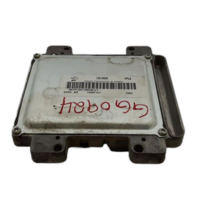



The information in this article is provided for general reference and educational purposes only. Vehicle specifications, procedures, and part compatibility can vary by production date, trim level, and region. Always consult your vehicle's factory service manual and verify part numbers before purchasing or performing repairs. Safety-critical components such as airbags, seat belts, and braking systems should be installed by a qualified professional.
- 🧭 Diagnostic Flowchart
- 🎬 Helpful Videos
- 🛍️ Shop This Part
- What Does P0658 Mean?
- Can I Drive With P0658?
- Common Causes
- Symptoms
- Common Fixes & Costs
- DIY vs Professional
- Used vs. New Parts: Buying Guide
- What Happens If You Wait — Timeline
- Cost of Not Fixing It
- Diagnosis Steps
- When This Code Triggers (Freeze-Frame Conditions)
- Related Codes
- Climate & Environmental Factors
- How to Talk to a Mechanic About This Code
- Where to Take It: Dealer vs Independent vs Chain
- When to Walk Away From the Repair
- What Scan Tool You Need for This Code
- How to Clear the Code After You Fix It
- Will This Fail Emissions / State Inspection?
- Most Commonly Affected Vehicles
- Manufacturer-Specific Notes
- Real Owner Stories
- 2010 Ford F-150 FX4 with 1,500 miles
- Ford Expedition with intermittent P0658
- 2018 Toyota Prius with aftermarket radio
- How to Prevent This Code From Triggering
- Frequently Asked Questions
- Can a bad battery cause a P0658 code?
- What does the 'A' in 'Actuator Supply Voltage A Circuit' mean?
- What is the most common misdiagnosis for P0658?
- I replaced the solenoid, but the code came back. What now?
- What is a TEHCM on a GM vehicle?
- What's the difference between a 'short to ground' and an 'open circuit'?
- How much does it cost to fix a P0658 code?
- Key Takeaways
- 🎟️ Get 5% Off