

OBD-II Code P0665: Intake Manifold Tuning Valve Control Circuit High (Bank 2)
The Ultimate 2026 Guide to Diagnosing and Fixing P0665
- P0665 indicates a high voltage short (>5V) in the Bank 2 intake manifold tuning valve control circuit, usually caused by melted wiring or a failed actuator.
- Symptoms include an illuminated Check Engine Light, a 5-15% drop in fuel economy, and noticeable hesitation during acceleration.
- Never replace the actuator without first testing the wiring harness for a short to 12V power and verifying the actuator's internal resistance (typically 5-50 Ohms).
- Driving with a stuck IMT valve forces the engine to run rich or lean, risking $800 to $2,500 in catalytic converter damage if ignored for more than 6 months.
What Does P0665 Mean?
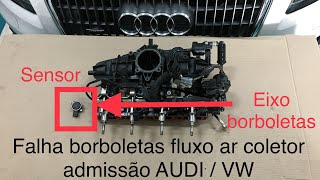
P0665 means the Powertrain Control Module (PCM) detects abnormally high voltage in the Bank 2 Intake Manifold Tuning (IMT) Valve control circuit. This valve (also called an IMRC valve) changes the intake runner length to optimize airflow at different engine speeds. The PCM uses a low-voltage signal to control the valve; a 'high' signal confirms a short to a 12V power source, an internally shorted actuator, or melted wiring.
Technical definition: The SAE/OBD-II definition is "Intake Manifold Tuning Valve Control Circuit High Bank 2". The PCM triggers this fault when it detects voltage on the IMT control line exceeding the specified range (typically >5V when commanded low). This confirms a hard electrical fault, usually a direct short to battery voltage.
Can I Drive With P0665?
Yes, But With Caution. You can drive, but limit it to short trips. Expect reduced power, poor acceleration, and a 5-15% drop in fuel economy. Prolonged driving with a stuck valve causes excessive carbon buildup and forces the engine to run rich, risking $800 to $2,500 in catalytic converter damage over time.
Common Causes
- Damaged or Shorted Wiring/Connectors (Very Common) — The IMT valve wiring harness sits exposed to intense engine heat and vibration. Wires frequently melt, fray, or suffer rodent damage, creating a direct short against a 12V power source or losing their ground connection.
- Faulty Intake Manifold Tuning (IMT) Actuator (Common) — The electronic actuator motor fails internally, creating a short circuit that spikes the voltage reading. The internal plastic gears also strip, seizing the motor and placing severe electrical stress on the circuit.
- Carbon Buildup on Valve Flaps (Common) — Oil deposits from the PCV system bake onto the intake manifold flaps. This buildup binds the flaps, overloading the actuator motor until it suffers an electrical failure and triggers the P0665 code.
- Broken Internal Manifold Linkage (Uncommon) — The plastic runner flaps or the connecting rod break inside the manifold. This jams the valve assembly, causing the actuator motor to short out as it struggles against the stuck components.
- Outdated Software or Faulty PCM (Rare) — The vehicle's original software calibration is sometimes too sensitive, misinterpreting normal voltage fluctuations as a fault (fixable via TSB updates). Rarely, the PCM's internal driver circuit fails entirely.
Symptoms
- Check Engine Light is On — The light illuminates immediately after the PCM logs the high-voltage P0665 fault.
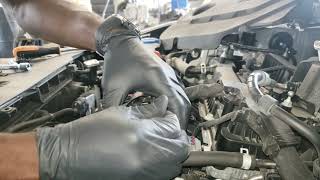
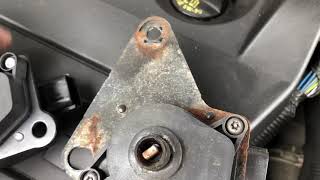
- Reduced Engine Power and Acceleration — A stuck IMT valve prevents optimized airflow, resulting in sluggish acceleration and a noticeable 🎬 Watch: How to replace the intake runner motor to fix acceleration. 'flat spot' in the power band.
- Decreased Fuel Economy — The inefficient air-fuel mixture forces the engine to consume more fuel, dropping MPG by 5-15%.
- Rough or Unstable Idle — Incorrect airflow at low speeds causes the engine to idle poorly, fluctuate in RPM, or stall.
- Loud Clicking or Rattling from Intake — A distinct buzzing or rattling sound indicates a struggling actuator motor or broken internal runner flaps.
- Engine Misfire — Disrupted airflow at low RPMs alters the air-fuel mixture enough to trigger a misfire, especially during cold starts. 🎬 Watch: Diagnosing intake manifold failures and engine misfires.
Diagnostic Flowchart
Tap your situation to follow the diagnostic path that matches what you're seeing on this code.
Common Fixes & Costs
- Repair Damaged Wiring Harness/Connector — Parts: $15 - $60, Labor: $120 - $250, ~1.5 hr book time (Intermediate)
- Replace IMT Valve Actuator — Parts: $70 - $250, Labor: $100 - $300, ~1.0 hr book time (DIY)
- Replace Entire Intake Manifold Assembly — Parts: $250 - $700, Labor: $200 - $550, ~2.5 hr book time (Professional)
- Clean Intake Manifold (Walnut Blasting) — Parts: $20 - $50, Labor: $300 - $600, ~3.5 hr book time (Professional)
- Update or Replace PCM — Parts: $600 - $1,200, Labor: $150 - $300, ~1.5 hr book time (Professional)
DIY vs Professional
- Repair Damaged Wiring — Beginner: no
Tools: Digital Multimeter, Wire Strippers, Crimpers, Heat Shrink Tubing, Soldering Iron - Replace Actuator Only — Beginner: yes
Tools: Basic Socket Set, Wrenches, Pliers - Replace Entire Intake Manifold — Beginner: no
Tools: Extensive Socket Set, Torque Wrench, Fuel Line Disconnect Tools, Gasket Scrapers - Clean Intake Manifold — Beginner: no
Tools: Socket Set, Gasket Scrapers, Walnut Blasting Equipment - Replace PCM — Beginner: no
Tools: Socket Set, OEM-level Scan Tool
Used vs. New Parts: Buying Guide
When a used part is worth it: For a simple actuator replacement on a high-mileage vehicle (>150k miles) where budget is tight, a used OEM actuator from a low-mileage donor car is cost-effective.
Donor-vehicle mileage cap: roughly under 80000 miles for the part to have meaningful remaining life.
Donor quality checklist:
- Verify the part number matches exactly; superseded parts use different logic.
- Inspect plastic linkages for brittleness or stress cracks.
- Ensure the donor vehicle was not scrapped due to engine fire or electrical failure.
Decision logic:
- If The entire intake manifold requires replacement → Buy new. A used manifold carries a massive risk of hidden carbon buildup, brittle plastics, or bad gaskets, making the labor a huge gamble.
- If The vehicle is less than 10 years old and a new actuator costs under $200 → Buy new. The minor savings on a used part do not justify the risk of premature failure.
- If The vehicle is known for repeated actuator failures (e.g., Hyundai/Kia) → Buy a new, updated OEM revision. The original design in the salvage yard is inherently flawed.
Warranty tradeoff: Salvage yard parts offer a 30-90 day part-only warranty. New aftermarket parts offer 1-year to lifetime warranties. New OEM parts carry a 1-year/12,000-mile warranty.
Worst-case if a used part fails: $300-600 if a used part fails, primarily due to repeated labor costs.
What Happens If You Wait — Timeline
- 0-2 weeks: Check Engine Light illuminates. The driver notices slight hesitation during acceleration. (MPG impact: 0-5%% · Added cost: $0)
- 2 weeks - 3 months: Performance degradation becomes consistent. A noticeable 'flat spot' in acceleration and a rough idle develop. (MPG impact: 5-10%% · Added cost: $30 - $80 in wasted fuel)
- 3-8 months: The engine runs with an incorrect air-fuel mixture. The catalytic converter runs excessively hot, beginning thermal degradation. (MPG impact: 10-15%% · Added cost: $200 - $400 (early catalytic converter damage))
- 8+ months: Catastrophic catalytic converter failure. The internal monolith melts, causing severe exhaust restriction, limp mode, and P0420 codes. (MPG impact: 15-25%% · Added cost: $800 - $2,500)
Cost of Not Fixing It
- 0-1 Month: Noticeable 5-15% drop in fuel economy and poor acceleration. The vehicle is safe to drive but performance is compromised. (Added cost: $20 - $60 (in wasted fuel))
- 1-6 Months: The engine runs persistently rich or lean. The catalytic converter overheats and begins to degrade internally. (Added cost: $0 (damage is internal and not yet a failed part))
- 6+ Months: Catastrophic catalytic converter failure. The internal substrate melts, causing severe exhaust restriction, limp mode, and P0420/P0430 codes. (Added cost: $800 - $2,500)
Diagnosis Steps
- Read Codes and Review Freeze Frame Data
Use an OBD-II scanner to confirm P0665. Document companion codes (like P200A). Analyze the freeze frame data to pinpoint the exact RPM, load, and temperature when the fault occurred.
Tools: OBD-II Scanner (Beginner) - Check Technical Service Bulletins (TSBs)
Before touching a wrench, check a repair database for TSBs related to your specific year, make, and model. Manufacturers frequently release PCM software updates to fix overly sensitive IMT diagnostic parameters.
Tools: Internet Access, Repair Database (Beginner) - Perform a Visual Inspection of Wiring and Linkage
Locate the IMT valve on Bank 2. Inspect the wiring harness for melted insulation, chafing against hot brackets, or rodent damage. Check the connector for corrosion or bent pins.
Tools: Flashlight, Inspection Mirror (Beginner) - Test the Control Circuit for a Short to Power
Disconnect the IMT actuator. Turn the ignition ON (engine OFF). Place a multimeter's positive lead on the harness control pin and the negative lead on a chassis ground. A reading near 12.6V confirms a hard short to power in the wiring.
Tools: Digital Multimeter (Intermediate) - Measure Actuator Coil Resistance
With the actuator disconnected, measure the resistance (Ohms) between its terminals. Compare this to the factory spec (typically 5-50 Ohms). A reading near zero confirms an internal short, requiring actuator replacement.
Tools: Digital Multimeter (Intermediate) - Command the Actuator with a Bi-Directional Scanner
Reconnect the actuator. Use a bi-directional scan tool to command the valve open and closed. If you hear no clicking and see no movement, the actuator is dead. If it clicks but struggles, the internal flaps are binding.
Tools: Bi-directional Scan Tool (Advanced) - Check for Mechanical Binding Inside the Manifold
Remove the actuator and move the valve linkage by hand. It must move smoothly. If it feels stiff, gritty, or seized, the intake manifold requires deep cleaning (walnut blasting) or full replacement.
Tools: Socket Set, Wrenches (Advanced) - Perform Advanced Live Data and Waveform Analysis
For intermittent faults, backprobe the control wire with an oscilloscope. Start the engine and command the valve. You must see a clean square wave (20-250 Hz) dropping from battery voltage to near 0V. Erratic spikes confirm a failing PCM driver or hidden wiring short.
Tools: Oscilloscope, Backprobe Kit (Advanced)
When This Code Triggers (Freeze-Frame Conditions)
- Engine Coolant Temp: 180-210°F (The engine is fully warmed up to normal operating temperature.)
- RPM: 1500-3000 RPM (The fault triggers during light acceleration or steady cruising when the PCM commands a change in runner position.)
- Engine Load: 25-50% (Occurs under moderate load conditions, rarely at idle or full throttle.)
- Vehicle Speed: 30-60 mph (Sets during city or highway cruise conditions corresponding to the RPM ranges where the valve actively operates.)
Related Codes
- P0664 — The direct counterpart, 'Intake Manifold Tuning Valve Control Circuit Low Bank 2.' P0665 (High) confirms a short to power, while P0664 (Low) confirms an open circuit or short to ground.
- P0660, P0661, P0662 — Identical fault codes for Bank 1. Seeing faults on both banks simultaneously (e.g., P0662 and P0665) confirms a shared power/ground circuit failure or a bad PCM.
- P200A, P200B — Performance codes indicating the flaps failed to move. An electrical failure (P0665) directly causes the performance fault (P200A). Always diagnose the electrical code first.
- P0658, P0659 — Actuator Supply Voltage codes. If these appear with P0665, the PCM's shared 5V reference circuit is compromised, pointing to a broader wiring issue rather than an isolated IMT fault.
Climate & Environmental Factors
- High Humidity / Moisture: Accelerates corrosion on electrical connector pins and exposed copper wiring, creating high resistance or intermittent shorts in the IMT circuit.
- Extreme Cold: Turns plastic components (actuator gears, manifold runner flaps) brittle, drastically increasing the likelihood of mechanical breakage under stress.
- Road Salt (Winter Climates): Salt spray infiltrates the engine bay and severely accelerates corrosion of low-mounted wiring harnesses and connectors.
How to Talk to a Mechanic About This Code
Say this: "I have a P0665 code for the Intake Manifold Tuning Valve Control Circuit High on Bank 2. Please ensure the technician tests the control circuit for a short-to-power and measures the actuator's resistance before recommending parts."
This proves you understand P0665 is an electrical fault. It forces the technician to find the root cause (like melted wiring) rather than blindly replacing the actuator.
Avoid saying:
- 'My check engine light is on, can you just fix it?'
- 'My car feels sluggish, I think I need a new intake valve.'
- 'Just do whatever you think is best.'
Questions to ask before authorizing the repair:
- Did you find constant 12V power on the control wire when the actuator was unplugged?
- What was the Ohm reading across the actuator's terminals?
- Did you verify the valve linkage moves freely by hand?
- Can you show me the melted wiring or the failed part before proceeding?
Where to Take It: Dealer vs Independent vs Chain
- Dealer:
Best for: Vehicles under warranty or extended warranty (e.g., VW intake manifolds)., Vehicles requiring PCM software updates (e.g., Ford)., Complex electrical issues requiring factory wiring diagrams.
Downsides: Highest labor rates, often $180-$250 per hour., Defaults to replacing entire assemblies rather than repairing wiring. (Typical cost: +50% vs. baseline) - Independent Shop:
Best fit for most situations. A reputable independent shop correctly diagnoses wiring shorts, failed actuators, or seized manifolds at a fair price.
Best for: Out-of-warranty vehicles., Diagnosing common failures on popular vehicles., Wiring harness repairs, which save hundreds over full harness replacement.
Downsides: Diagnostic skill varies; require ASE certification in electrical systems., Lacks access to proprietary manufacturer programming tools. (Typical cost: +0% vs. baseline) - Chain Shop:
AVOID for diagnosis. Chain shops frequently misdiagnose wiring shorts, replacing the actuator only for the code to return immediately.
Best for: Simple, pre-diagnosed actuator swaps.
Downsides: Technicians lack deep electrical diagnostic experience., High pressure to meet sales targets leads to unnecessary parts replacement. (Typical cost: -10% vs. baseline)
When to Walk Away From the Repair
If the estimated repair cost exceeds 40-50% of the car's private-party value, sell or trade it in.
- Car worth $3500, fix is $1400: Walk away. A $1,400 repair for a full intake manifold replacement is 40% of the car's value. Other age-related repairs are imminent.
- Car worth $10000, fix is $450: Fix it. A $450 repair for a new actuator restores full function and is a routine maintenance cost.
- Car worth $2000, fix is $1500: Walk away. Spending $1,500 to fix a car worth $2,000 is a terrible financial decision.
What Scan Tool You Need for This Code
Minimum: A code reader displaying live data and freeze frame data.
A $20 reader only shows the code. Diagnosing P0665 requires commanding the actuator open and closed. Without bi-directional control, you are guessing between a bad actuator, melted wiring, or a mechanical jam.
Budget: BlueDriver Bluetooth Pro (~$100) — Reads P0665, provides freeze frame data, and graphs live data. Lacks bi-directional control but offers a database of verified fixes.
Mid-range: Innova 5610 or Foxwell NT510 Elite (~$180-350) — The sweet spot for DIY diagnosis. Offers bi-directional control to command the IMT valve actuator, definitively ruling out mechanical jams.
Professional: Autel MaxiCOM MK808Z (~$500-800) — Provides full bi-directional control, OEM-level diagnostics, and advanced data PIDs. Essential for ruling out complex PCM or wiring issues.
Rent vs buy: Rent a basic reader from AutoZone to confirm the code. Buy a mid-range bi-directional scanner if you plan to diagnose the root cause yourself.
How to Clear the Code After You Fix It
- Use an OBD-II scan tool to clear P0665 and any related fault codes.
- Start the engine and let it idle for 2-5 minutes to allow the system to stabilize.
- Perform a complete OBD-II drive cycle to run readiness monitors and confirm the fix.
Drive cycle (~30 minutes): Start with a cold engine. Idle for 3 minutes with the A/C on. Accelerate to 55 mph and hold steady for 5 minutes. Coast down to 20 mph without braking. Accelerate back to 60 mph and hold for 5 minutes. Finish with 10 minutes of stop-and-go city driving.
Readiness monitors affected: Comprehensive Component Monitor (CCM), Catalyst Monitor, EVAP System Monitor
Before emissions retest: drive at least 100 miles to fully set monitors.
Watch out for:
- Disconnecting the battery clears the code but erases all readiness monitors, guaranteeing an automatic emissions test failure.
- The code returns immediately upon startup if the underlying electrical short was not repaired.
- The EVAP monitor refuses to run if the fuel tank is below 15% or above 85% full.
Will This Fail Emissions / State Inspection?
Yes — this code typically fails an OBD-II emissions inspection.
- California: An illuminated Check Engine Light is an automatic failure. For 2001+ vehicles, only one monitor is allowed to be 'Not Ready'. Driving 100-200 miles is required to complete the drive cycle.
- New York: An active P0665 code results in an automatic failure. Clearing the code right before the test results in a failure due to incomplete readiness monitors.
- Texas: In the 17 emissions-testing counties, an active P0665 code causes an automatic OBD-II failure. The vehicle cannot pass until repaired and the code is cleared.
Most Commonly Affected Vehicles
- Hyundai / Kia Sonata, Optima, Sorento, Tucson (2011-2019) — Extremely common on the 2.4L GDI engine. The Variable Charge Motion (VCM) actuator strips its internal plastic gears or shorts out. Often sets P200A alongside P0665.
- Dodge / Chrysler / Jeep Charger, Magnum, 300, Grand Cherokee (2007-2012) — The 2.7L and 3.5L V6 engines suffer from IMRC valve failures. The actuator shorts out or the linkage rods pop off, jamming the valve.
- Volkswagen / Audi GTI, Jetta, Passat, A3, A4 (2.0T TSI/FSI) (2008-2016) — Notorious for intake runner flap failures. While P2015 is more common, electrical faults in the actuator control circuit manifest as P0665. The entire manifold requires replacement.
- Ford / Lincoln Fusion, Edge, MKZ (3.5L V6) (2007-2016) — The wiring harness frequently chafes near the back of the cylinder head. Always check for PCM software updates via TSBs before replacing parts.
- Nissan / Infiniti Maxima, Altima, Murano, G35 (V6) (2004-2015) — The VQ series V6 power valve actuator fails electrically or sticks due to heavy carbon buildup, triggering high circuit codes.
- Chevrolet / GM Cruze, Sonic, Aveo (1.8L) (2011-2018) — The plastic tuning valve runner arm breaks inside the intake manifold, causing a loud rattle and placing electrical stress on the actuator circuit.
- Subaru Legacy, Outback, Impreza (2010-2019) — Tumble Generator Valve (TGV) actuator motors fail electrically, often requiring replacement of the entire TGV assembly.
- Cadillac / GM CTS, SRX (3.6L V6) (2008-2015) — Carbon buildup on the intake valves and runner flaps causes binding, which burns out the actuator motor and triggers P0665.
Manufacturer-Specific Notes
- Hyundai / Kia: While Hyundai extended warranties for major internal engine failures (e.g., rod bearings), these extensions DO NOT cover bolt-on components like the IMT/VCM actuator. Owners pay for this repair out-of-pocket.
- Ford: Ford relies heavily on PCM software updates to fix drivability complaints. A P0665 code on a Ford V6 requires a mandatory TSB check before any parts are replaced.
- Volkswagen / Audi: VW issued an extended warranty (TSB VWP-20-03) covering the 2.0T TSI intake manifold for 10 years or 120,000 miles. Always check dealer coverage before paying for this repair.
- General Motors (GM): On the 1.8L and 3.6L engines, mechanical failure precedes electrical failure. A broken plastic arm jams the flaps, burning out the actuator motor. Listen for an intake rattle.
Real Owner Stories
2011 Hyundai Sonata 2.4L at 115K miles
Check Engine Light illuminated with codes P0665 and P200A. The car felt sluggish accelerating from a stop.
What they tried:
- Suspected a vacuum leak but found no cracked hoses.
- Researched and found the Variable Charge Motion Actuator (VCMA) is a known failure point.
- Commanded the actuator with a scan tool and heard zero movement.
Outcome: Replaced the VCMA (Part No. 28321-2GDA0). After clearing the codes, both P0665 and P200A vanished and power returned. Total cost: $90 for the part and 30 minutes of DIY labor.
Lesson: On Hyundai/Kia GDI engines, P0665 paired with P200A guarantees a failed actuator. It is an inexpensive, accessible DIY fix.
2008 Dodge Charger 3.5L at 140K miles
Rough idle, poor fuel economy, and a P0665 code. Low-end performance was terrible.
What they tried:
- A mechanic replaced the IMRC valve actuator, but the code returned instantly.
- A second shop disconnected the actuator and tested the control wire.
- The multimeter showed a constant 12V on the control wire, confirming a short to power.
Outcome: The wiring harness melted against a hot bracket near the cylinder head. The shop repaired the harness for $200 in labor. The original actuator was perfectly fine.
Lesson: Never replace the part without testing the circuit. P0665 means 'Circuit High,' which frequently points to melted wiring. Verifying voltage at the connector saves hundreds of dollars.
2012 Chevy Cruze 1.8L at 85K miles
A loud rattling noise from the engine bay accompanied a loss of power and a P0665 code.
What they tried:
- Tested the actuator motor, found it shorted internally, and replaced it.
- The new actuator burned out within a week, and the code returned.
- Removed the actuator and found the manifold linkage arm was impossible to move by hand.
Outcome: A broken plastic runner flap jammed the intake manifold assembly, overloading the actuator motor. The entire intake manifold required replacement. Cost: $350 for parts and 3 hours of labor.
Lesson: Mechanical failure causes electrical failure. Always check for mechanical binding by moving the linkage by hand. If it binds, replacing the actuator is a waste of money.
How to Prevent This Code From Triggering
- Install an Oil Catch Can (Once; empty every 5,000 miles) — Intercepts oil vapor from the PCV system before it enters the intake. This directly prevents the carbon buildup that binds runner flaps and destroys actuator motors.
- Use Top Tier Certified Gasoline (Every fill-up) — High detergent levels keep fuel injectors clean, ensuring complete combustion. This reduces soot in blow-by gases, lessening contaminants sent back into the intake.
- Replace PCV Valve (Every 50,000 miles) — A clogged PCV valve forces excess oil vapor into the intake manifold, accelerating carbon buildup on the runner flaps. It is a $20 part that prevents $500 manifold failures.
- Protect Wiring with High-Temp Loom (During any repair near the intake manifold) — Adding high-temperature wire loom to the actuator harness insulates it against engine heat, preventing the melted wires that trigger P0665.
Frequently Asked Questions
What are the most common misdiagnosis mistakes for P0665?
The most common mistake is replacing the IMT actuator without testing the circuit. P0665 indicates a high-voltage short, which frequently stems from melted wiring. Replacing the actuator without fixing the short instantly ruins the new part.
My car has P0665 and P200A. Which do I fix first?
Diagnose the electrical code (P0665) first. P0665 indicates a high voltage short, while P200A means the runner flaps are physically out of position. Fixing the electrical short or bad actuator causing P0665 almost always clears the P200A performance code.
Can I just clean the intake manifold tuning valve?
If the problem is purely mechanical binding from carbon buildup, walnut blasting solves the issue. However, cleaning cannot fix P0665 if the root cause is melted wiring or a burned-out actuator motor. Aerosol sprays are completely ineffective for this level of buildup.
What is 'Bank 2'?
On a V-shaped engine (V6, V8), Bank 1 is the side containing cylinder #1. Bank 2 is the opposite side. Inline engines only have one bank, so they only trigger Bank 1 codes like P0662.
What is the difference between an IMT valve and an IMRC valve?
They are different names for the exact same system. IMT (Intake Manifold Tuning) and IMRC (Intake Manifold Runner Control) both describe the manifold flaps that adjust air runner length to optimize torque. The terminology simply varies by manufacturer.
Can a vacuum leak cause a P0665 code?
No, not directly. A vacuum leak introduces unmetered air and triggers lean codes like P0171 or P0174. P0665 is strictly an electrical circuit fault indicating abnormally high voltage.
Is it safe to clear the code and keep driving?
You can clear the code, but if the electrical short remains, the Check Engine Light returns immediately upon the next key cycle. Ignoring the fault forces the engine to run inefficiently. This severely degrades performance and risks destroying the catalytic converter.
Key Takeaways
- P0665 indicates a high voltage short (>5V) in the Bank 2 intake manifold tuning valve control circuit, usually caused by melted wiring or a failed actuator.
- Symptoms include an illuminated Check Engine Light, a 5-15% drop in fuel economy, and noticeable hesitation during acceleration.
- Never replace the actuator without first testing the wiring harness for a short to 12V power and verifying the actuator's internal resistance (typically 5-50 Ohms).
- Driving with a stuck IMT valve forces the engine to run rich or lean, risking $800 to $2,500 in catalytic converter damage if ignored for more than 6 months.
Helpful Videos
Shop the Parts Behind P0665
Below are the parts most often responsible for code P0665, ranked by how frequently each one is the actual culprit (per the diagnosis above). Tap any to see what we have for your vehicle.

The information in this article is provided for general reference and educational purposes only. Vehicle specifications, procedures, and part compatibility can vary by production date, trim level, and region. Always consult your vehicle's factory service manual and verify part numbers before purchasing or performing repairs. Safety-critical components such as airbags, seat belts, and braking systems should be installed by a qualified professional.
- 🧭 Diagnostic Flowchart
- 🎬 Helpful Videos
- 🛍️ Shop This Part
- What Does P0665 Mean?
- Can I Drive With P0665?
- Common Causes
- Symptoms
- Common Fixes & Costs
- DIY vs Professional
- Used vs. New Parts: Buying Guide
- What Happens If You Wait — Timeline
- Cost of Not Fixing It
- Diagnosis Steps
- When This Code Triggers (Freeze-Frame Conditions)
- Related Codes
- Climate & Environmental Factors
- How to Talk to a Mechanic About This Code
- Where to Take It: Dealer vs Independent vs Chain
- When to Walk Away From the Repair
- What Scan Tool You Need for This Code
- How to Clear the Code After You Fix It
- Will This Fail Emissions / State Inspection?
- Most Commonly Affected Vehicles
- Manufacturer-Specific Notes
- Real Owner Stories
- 2011 Hyundai Sonata 2.4L at 115K miles
- 2008 Dodge Charger 3.5L at 140K miles
- 2012 Chevy Cruze 1.8L at 85K miles
- How to Prevent This Code From Triggering
- Frequently Asked Questions
- What are the most common misdiagnosis mistakes for P0665?
- My car has P0665 and P200A. Which do I fix first?
- Can I just clean the intake manifold tuning valve?
- What is 'Bank 2'?
- What is the difference between an IMT valve and an IMRC valve?
- Can a vacuum leak cause a P0665 code?
- Is it safe to clear the code and keep driving?
- Key Takeaways
- 🎟️ Get 5% Off