

P0689 on 2013-2017 Buick Enclave: ECM Power Relay Circuit Causes & Fixes
Code P0689 on a 2013-2017 Enclave usually indicates a problem with the Engine Control Module (ECM) power supply. The most common cause is not the ECM itself, but corrosion, arcing, or poor terminal tension at terminal 51 of the X3 connector in the underhood fuse box (UBEC). This is a widely documented issue in GM service bulletins for the Enclave and its platform mates.
- P0689 on a 2013-2017 Buick Enclave is almost always caused by an electrical issue, not a failed ECM.
- Before replacing any parts, your first step should be to disconnect the battery and physically inspect the connectors on the underside of the underhood fuse box for corrosion or burn marks.
- This code is frequently seen with P1682; their appearance together is a strong indicator of the known UBEC issue.
- The fix may be as simple as replacing a single wire terminal or as involved as replacing the entire fuse box, depending on the extent of the damage.
What's Unique About the 2013-2017 Buick ENCLAVE

On this generation of Buick Enclave and its GM Lambda platform siblings (Chevy Traverse and GMC Acadia), the underhood fuse box, or UBEC, is notoriously susceptible to moisture and vibration. This can cause poor terminal tension, arcing, and corrosion on the connector terminals underneath it. GM has issued specific technical service bulletins (19-NA-276, PIT5643) pointing directly to terminal 51 of the X3 connector as the root cause for P0689, often paired with P1682, making it a very platform-specific failure point to check first.
Diagnostic Flowchart

Tap your situation to follow the diagnostic path that matches what you're seeing on this vehicle.
Symptoms You May Notice
- Engine may stall, sometimes intermittently, including while driving.
- "Reduced Engine Power" message on the dashboard.
- Engine cranks but will not start.
- Check Engine Light is on.
- Vehicle may not turn off even when the key is removed.
- Traction control and Stabilitrak warning lights may illuminate.
- Replacing the Engine Control Module (ECM) without first inspecting the underhood fuse box (UBEC) connectors and wiring. The problem is far more likely to be in the UBEC than the ECM itself.
- Replacing the ignition switch, which is a more common cause for code P1682 when it appears alone, but less likely for the P0689/P1682 combination on this platform.
Most Likely Causes

- Corrosion/Arcing/Poor Tension at Underhood Fuse Box (UBEC) Connector 🔴 High Probability → Shop Fuse Box As documented in GM bulletins PIT5643 and 19-NA-276, the UBEC is prone to developing a poor connection at terminal 51 of the X3 connector due to poor terminal tension, leading to arcing and corrosion. This is the most likely cause on this specific vehicle, often exacerbated by engine vibration and moisture.
How to confirm: Disconnect the battery. Unbolt and carefully lift the underhood fuse box. Visually inspect the large X3 connector on the underside for signs of green/white corrosion or black, burnt-looking arc marks, specifically at terminal 51. The damage can be very subtle, appearing as a slightly duller or darker pin compared to its neighbors. Using a phone camera to zoom in can be helpful.
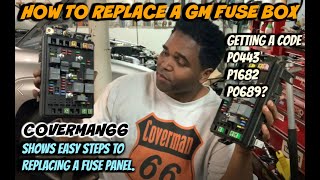
Typical fix: If damage is found, the affected female terminal in the harness connector must be replaced using a terminated lead (pigtail). The male pin on the UBEC should be cleaned if possible. In cases of severe damage to the UBEC pin, the entire underhood fuse box 🎬 See this walkthrough on how to replace the GM fuse box. must be replaced.
Est. part cost: $20-$400 - Faulty ECM/PCM Power Relay 🟡 Medium Probability
How to confirm: Locate the ECM/PCM power relay (often labeled PWR/TRN) in the underhood fuse box. Swap it with an identical relay from a non-critical system (like the horn or rear defogger relay) and see if the code disappears and symptoms resolve.
Typical fix: Replace the faulty relay with a new one.
Est. part cost: $10-$30 - Blown Fuse ⚪ Low Probability
How to confirm: Visually inspect all fuses related to the ECM and ignition circuits in both the underhood and interior fuse panels. Use a 🎬 Watch: How to locate all fuse boxes on this platform. multimeter to test for continuity if a visual inspection is inconclusive.
Typical fix: Replace the blown fuse. If the fuse blows again, there is an underlying short circuit that must be diagnosed.
Est. part cost: $1-$5
Rare But Worth Checking
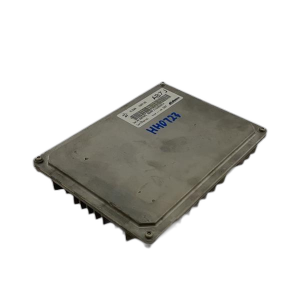
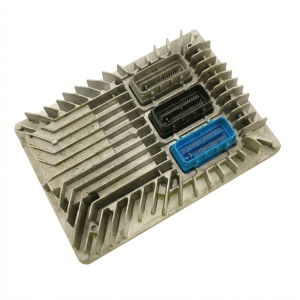
- Faulty Engine Control Module (ECM): → Shop Engine Control Module (ECM) This is a rare cause of P0689. The ECM should only be suspected after all other possibilities, especially the UBEC connector and wiring, have been thoroughly ruled out.
- Damaged Wiring Harness: A short or open circuit in the wiring between the UBEC and the ECM can cause this code. This would require tracing the harness and testing for continuity and shorts to ground.
Diagnosis Steps
- Scan the vehicle for all stored trouble codes. Note if P1682 is present along with P0689, as this strongly points to the common UBEC issue.
- Begin with the most likely cause. Disconnect the negative battery terminal.
- Remove the cover from the underhood fuse box (UBEC). Unbolt the UBEC (typically two 10mm bolts) and carefully lift it to access the connectors underneath. There are several plastic clips holding it in place.
- Thoroughly inspect connector X3, specifically looking at terminal 51 for any signs of corrosion (green or white powder) or arcing (black, burnt marks), as specified in TSB PIT5643. The damage may look like a subtle discoloration.
- If corrosion or damage is found, repair is necessary. This typically involves replacing the affected wire terminal using a special tool to de-pin the connector and splicing in the new terminated lead (GM Part #84757974). If the fuse box pin is damaged, the UBEC itself will need replacement.
- If no issues are found at the UBEC, locate the ECM/PCM power relay (PWR/TRN). Try swapping it with a known-good, identical relay from another circuit (e.g., horn) to see if the problem is resolved.
- Check all fuses related to the ECM and ignition circuits in both the underhood and interior fuse boxes.
- If all the above steps do not reveal the problem, the wiring harness between the UBEC and the ECM should be tested for shorts or open circuits.
- Only consider replacing the ECM as a final step after all other potential causes have been eliminated.
Parts You'll Likely Need

- Underhood Fuse Block (UBEC)
(OEM #23106752 (supersedes 22837018, 22949603, 22949602, 23106751))— This part is the most common point of failure due to its susceptibility to corrosion at the connector terminals, which directly causes code P0689 on this platform. Often replaced if the male pin at terminal 51 is burnt or corroded beyond cleaning.
Trusted brands: ACDelco (GM Genuine)
OEM price range: $250-$450
Aftermarket price range: $150-$300 - Terminated Wire Lead
(OEM #84757974 (supersedes 19301751, 19301767))— If the UBEC itself is undamaged, this part is used to repair the corroded female terminal (pin 51) in the wiring harness connector. This is the official GM-specified repair.
Trusted brands: ACDelco (GM Genuine)
OEM price range: $20-$40 - ECM/PCM Power Relay — A failing relay is a common cause for power-related circuit codes and is an easy and inexpensive part to replace during diagnosis.
Trusted brands: ACDelco, Standard Motor Products
OEM price range: $20-$40
Aftermarket price range: $10-$25
Related Codes That Often Appear With This One
- P1682 — This code relates to a discrepancy between two ignition voltage signals the ECM monitors. The root cause for P0689, such as a corroded UBEC terminal, often disrupts both power circuits simultaneously, causing both codes to be stored. GM service bulletins #19NA276 and #PIT5643 explicitly link these two codes together for this vehicle and its platform mates.
Technical Service Bulletins (TSBs) & Recalls

- Bulletin #19NA276: 'Potential Reduced Engine Power Message Displayed and/or Engine Stall with DTCs P1682 and/or P0689 Set.' This TSB identifies the cause as poor terminal tension on terminal 51 in the X3 connector of the underhood fuse block and instructs technicians to replace the terminal with a new terminated lead (Part No. 84757974).
- Bulletin #PIT5643: 'Intermittent Reduced Engine Power or Stall with P0689 and/or P1682.' This preliminary bulletin first identified arcing or corrosion on terminal 51 of the X3 connector at the UBEC as a likely cause and provided initial diagnostic steps. It has since been superseded by TSB 19-NA-276.
Platform-Specific Known Issues
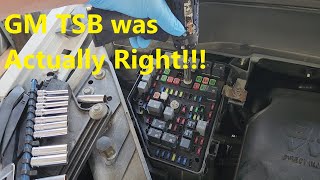
- A well-documented issue on 2013-2017 Enclaves (and related GM models) is corrosion and arcing at terminal 51 of the X3 connector on the underside of the underhood fuse box (UBEC). This specific failure is addressed by GM Technical Service Bulletin #19NA276 and Preliminary Information Bulletin #PIT5643, which guide technicians to inspect this area as a primary cause for P0689 and P1682, especially when accompanied by stalling or a 🎬 Watch: A real-world diagnosis of these specific codes and symptoms. "Reduced Engine Power" message. Owner forums and repair videos frequently cite this exact failure, with many DIY repairs successfully performed by replacing the terminal lead and/or the entire fuse block.
Mechanic-Grade Diagnostic Values
- ECM/PCM Power Relay Sense Circuit Voltage (Key ON) — expected: 12.0 - 13.5 V. Failure: Voltage is significantly lower than battery voltage, or below 11V.
- ECM/PCM Power Relay Coil Resistance — expected: 70 - 120 Ω. Failure: Resistance is outside of the specified range.
- Wiring harness continuity from relay to ECM — expected: Less than 0.1 Ω. Failure: Higher resistance indicates corrosion or a damaged wire.
- Scan Tool Data: Ignition 1 Signal vs. EC Ignition Relay Feedback — expected: Voltages should be nearly identical (within ~0.5V).. Failure: A discrepancy greater than a few volts (e.g., 11.8V vs 1.4V) indicates a fault in the low-reading circuit.
Scan Tool Commands That Help
- GDS2 / Tech2 (or equivalent professional scanner): Powertrain Relay ON/OFF Command — This bidirectional control is used to manually command the ECM/PCM power relay on and off to verify its function. The technician should be able to hear or feel the relay click with each command.
Wiring & Ground Locations
- X3 Connector, Pin 51 — On the underside of the Underhood Fuse Block (UBEC).. This specific terminal provides power to the ECM. It is the most common point of failure on this platform, as documented in GM TSBs #19NA276 and #PIT5643, causing codes P0689 and P1682.
- G101 — On the left side of the engine compartment, on the left frame rail. On some diagrams, noted at the lower front of the engine block.. This is a primary ground point for the Engine Control Module (ECM) and Transmission Control Module (TCM). A poor connection here can cause various unpredictable electrical issues, including power supply faults.
- G103 — On the left side of the engine compartment, on the inner fender panel, sometimes specified as being on the cowl above the brake booster.. This ground serves the Body Control Module (BCM) and other interior components. While not a direct ECM ground, BCM communication can influence ECM power-down cycles.
- G113 — Located on the left side of the engine, at a stud where the engine bolts to the transmission.. This is another critical engine ground point. A loose or corroded connection here can affect the ECM's ground reference.
Real Owner Repair Stories
- Chevy HHR Network forum user (2006 Chevrolet HHR 2.4L (Different vehicle, but same GM codes and common UBEC failure pattern)) — Cranks and dies immediately, codes P1682 and P0689 stored.
❌ Tried (didn't work) Replaced ECM, TCM, and BCM., Checked relays, grounds, and voltage at fuses., Replaced the underhood fuse box (UBEC) once.
✅ What actually fixed it The problem was finally resolved by replacing the underhood fuse box a second time (making it the third fuse box in the car). This suggests the first replacement part was also faulty or an incorrect version. - ALLDATA Tech Tip based on a repair shop case (2016 GMC Savana 2500 (Different vehicle, but same GM codes and common UBEC failure pattern)) — MIL on, engine cranks but will not start. Codes P0689 and P1682 present.
❌ Tried (didn't work) Initial diagnosis pointed towards a faulty PCM after checking powers and grounds.
✅ What actually fixed it The technician found weak power feeds (under 12V) at the PCM. A closer inspection of the underhood fuse box revealed corrosion on two fuse connectors. Cleaning the corroded fuse connectors and terminals in the fuse box resolved the issue, and the vehicle started normally.
OEM Part Supersession History
22837018, 22949602, 22949603, 23106751→23106752— Part revision and consolidation by the manufacturer.19301751, 19301767→84757974— Part revision for the terminated wire lead used for harness repair.
Model Year Variations Within This Range
- 2013-2017: The 2013 model year was a significant facelift for the Enclave. While the P0689 issue is common across the 2013-2017 range, the interior fuse panel location and layout changed slightly from the pre-facelift (2008-2012) models. The underhood fuse box (UBEC) which is central to this issue, however, remained largely the same in function and failure mode for the 2013-2017 model years.
Helpful Videos
We Have This Part in Stock

The information in this article is provided for general reference and educational purposes only. Vehicle specifications, procedures, and part compatibility can vary by production date, trim level, and region. Always consult your vehicle's factory service manual and verify part numbers before purchasing or performing repairs. Safety-critical components such as airbags, seat belts, and braking systems should be installed by a qualified professional.
- Buick ENCLAVE:
- 🧭 Diagnostic Flowchart
- 🎬 Helpful Videos
- 🛍️ Shop This Part
- What's Unique About the 2013-2017 Buick ENCLAVE
- Symptoms You May Notice
- Most Likely Causes
- Rare But Worth Checking
- Diagnosis Steps
- Parts You'll Likely Need
- Related Codes That Often Appear With This One
- Technical Service Bulletins (TSBs) & Recalls
- Platform-Specific Known Issues
- Mechanic-Grade Diagnostic Values
- Scan Tool Commands That Help
- Wiring & Ground Locations
- Real Owner Repair Stories
- OEM Part Supersession History
- Model Year Variations Within This Range
- 🎟️ Get 5% Off