

OBD-II Code P0692: Fan 1 Control Circuit High
What P0692 means, why it triggers, and how to fix it
- P0692 indicates excessively high voltage in the main cooling fan control circuit, causing the fan to run constantly or fail completely.
- A stuck cooling fan relay is the #1 cause of this code, followed by damaged wiring or a shorted fan motor.
- Do not drive if the fan is inoperative; an overheating engine causes catastrophic damage like warped cylinder heads costing upwards of $2,500.
- Swap the cooling fan relay with an identical non-critical relay (like the horn) to instantly diagnose a $20 relay failure before buying expensive parts.
- Always check for Technical Service Bulletins (TSBs) before replacing a PCM, as manufacturers like Honda often issue software updates to fix false P0692 triggers.
What Does P0692 Mean?
P0692 means your car's Powertrain Control Module (PCM) detects higher-than-expected voltage in the primary cooling fan (Fan 1) control circuit. The PCM expects near-zero volts when the fan is off (circuit grounded) and battery voltage when on. This code triggers when the PCM sees high voltage instead of low voltage, indicating the fan is stuck running or the computer lost control of it, creating a severe overheating risk.
Technical definition: The SAE/ISO definition for P0692 is "Fan 1 Control Circuit High". The PCM uses a relay to control the fan, grounding the control side to activate it. When the PCM stops grounding the relay (fan off), it expects a low voltage signal. Detecting voltage near battery level (above 10-12V) sets code P0692, indicating a short to power or an open control circuit preventing grounding.
Can I Drive With P0692?
Yes, But With Caution. Driving is possible for short distances but carries significant risk. If the fan is stuck on, it drains your battery, leaving you stranded. If the fan fails to activate, the engine quickly overheats, especially in traffic. Continuing to drive an overheating engine causes catastrophic damage, such as a warped cylinder head or complete engine failure, with repair costs ranging from $1,500 to over $5,000.
Common Causes
- Faulty Cooling Fan Relay (Very Common) — The relay's internal contacts weld together, getting stuck in the 'on' position. This creates a constant high voltage signal, making the fan run continuously. This is the most frequent point of failure.
- Shorted or Damaged Wiring (Common) — Wires in the fan control circuit fray, corrode, or short to a power source due to engine heat and vibration. This creates a persistent high voltage condition.
- Defective Cooling Fan Motor (Common) — An internal short circuit within the fan motor draws excessive current or sends high voltage back through the control circuit.
- Broken Wire in Fan Clutch Assembly (Less Common) — On vehicles with an electronic viscous fan clutch (common on trucks), the wiring running to the clutch breaks from stress. The PCM interprets this open circuit as a high voltage fault.
- Faulty Cooling Fan Control Module (Less Common) — Separate fan speed control modules fail internally, sending incorrect high voltage signals to the PCM or failing to regulate the fan relay.
- Defective or Incompatible Aftermarket Parts (Less Common) — Newly installed aftermarket fan assemblies or clutches are sometimes defective out of the box. An internal open circuit triggers P0692 immediately after installation.
- Poor Ground Connection (Rare) — A corroded engine or chassis ground strap shifts the PCM's reference voltage, making a normal circuit voltage appear 'high'.
- Malfunctioning Powertrain Control Module (PCM) (Rare) — The internal driver circuit within the PCM that grounds the fan relay fails. This prevents the circuit from pulling to low voltage. Suspect this only after exhausting all other possibilities.
Symptoms
- Cooling fan runs constantly — The fan stays on at full speed, even when the engine is cold or turned off, rapidly draining the battery.
- Engine overheats — The fault prevents the fan from turning on, causing engine temperature to spike quickly in stop-and-go traffic or at idle.
- Air conditioning (A/C) blows warm — The A/C system relies on the cooling fan to remove heat from the condenser. Without it, the A/C blows warm air when stationary.
- Reduced Fuel Economy — A constantly running fan places a high electrical load on the alternator, increasing mechanical drag on the engine and decreasing fuel efficiency.
- Check Engine Light is on (also visible on scanner) — The Malfunction Indicator Lamp (MIL) illuminates on your dashboard.
Diagnostic Flowchart
Tap your situation to follow the diagnostic path that matches what you're seeing on this code.
Common Fixes & Costs
- Replace Cooling Fan Relay — Parts: $15-$40, Labor: $50-$95, ~0.5 hr book time (DIY)
- Replace Cooling Fan Assembly (Motor) — Parts: $150-$600, Labor: $100-$400, ~2.5 hr book time (Intermediate)
- Repair Wiring or Connectors — Parts: $10-$50, Labor: $100-$250, ~1.5 hr book time (Intermediate)
- Replace Cooling Fan Control Module — Parts: $50-$250, Labor: $75-$150, ~1 hr book time (Intermediate)
- Replace Powertrain Control Module (PCM) — Parts: $800-$1500, Labor: $150-$300, ~1.5 hr book time (Professional)
Used vs. New Parts: Buying Guide
When a used part is worth it: For a complete cooling fan assembly, a used OEM part from a low-mileage donor vehicle is a cost-effective alternative to a new aftermarket part, especially for older vehicles.
Donor-vehicle mileage cap: roughly under 80000 miles for the part to have meaningful remaining life.
Donor quality checklist:
- Verify the donor vehicle was not involved in a front-end collision that damaged the fan.
- Check for rust or corrosion on the motor housing and connectors.
- Match the part number exactly. Connectors and mounting points vary even within the same model year.
Decision logic:
- If The failed part is just the relay. → Always buy new. The cost is low and the risk of a used relay failing is not worth the minimal savings.
- If Vehicle is over 10 years old and budget is the primary concern. → A used OEM fan assembly is a reasonable choice, but be aware of the limited warranty.
- If The vehicle is newer or you plan to keep it long-term. → Buy a new OEM or high-quality aftermarket assembly. The longer warranty and guaranteed compatibility provide better value.
Warranty tradeoff: Used parts from salvage yards typically offer a 30-90 day exchange-only warranty. New aftermarket parts often come with a 1-year to limited lifetime warranty. New OEM parts carry a 1-2 year warranty.
Worst-case if a used part fails: $200-$500 if a used fan assembly fails after installation, requiring repeat labor costs plus the price of another replacement part.
What Happens If You Wait — Timeline
- 0-1 month: Code is set. If the fan is stuck ON, the battery drains overnight. If the fan is OFF, the engine temperature spikes in traffic, and the A/C is ineffective when stationary. Check Engine Light is on. (MPG impact: 0-5%% · Added cost: $0-$200 (for a new battery or jump start services if fan drains it).)
- 1-3 months: Repeated instances of the engine running hot (20-40 degrees over normal) break down engine oil and stress seals and gaskets. If the fan is inoperative, you hear engine 'knocking' sounds when hot. (MPG impact: 5-10%% · Added cost: $200-$800 (for potential replacement of hoses, thermostat, or water pump stressed by excess heat).)
- 3-6 months: A significant overheating event (40-80 degrees over normal) becomes likely. This level of heat warps the aluminum cylinder head, leading to a blown head gasket. Coolant and oil mix, producing white exhaust smoke. (MPG impact: 10-15%% · Added cost: $1,500-$4,000 (for cylinder head resurfacing or replacement and a new head gasket).)
- 6+ months: Catastrophic engine failure. Extreme overheating cracks the engine block or causes pistons to expand and seize in the cylinders. The engine shuts down completely and refuses to restart. (MPG impact: N/A (vehicle likely inoperable)% · Added cost: $4,000-$7,000+ (for a complete used or rebuilt engine replacement).)
Cost of Not Fixing It
- 0-1 month: If the fan is stuck on, the battery drains overnight. If the fan is inoperative, the engine runs hot in traffic, and the A/C performs poorly. Fuel economy drops by 5-10%. (Added cost: $50-$200 for a new battery or jump start service.)
- 1-6 months: Repeated overheating incidents accelerate the breakdown of engine oil, coolant, and plastic/rubber components like hoses and gaskets. (Added cost: $200-$800 for replacing failed hoses, water pump, or thermostat.)
- 6+ months: Catastrophic engine damage becomes highly likely. A single severe overheating event warps the cylinder head or blows a head gasket. (Added cost: $2,500-$5,000+ for head gasket replacement or a complete engine rebuild.)
Diagnosis Steps
- Read Trouble Codes & Review Freeze Frame Data
Use an OBD-II scanner to confirm P0692 is active. Check for related codes (e.g., P0691, P0480, P0693). Review freeze frame data to see engine conditions when the code set. Clear the codes; if P0692 returns immediately, you have a hard fault.
Tools: OBD-II Scanner (Beginner) - Test Fuses and Relays (The 'Relay Swap' Trick)
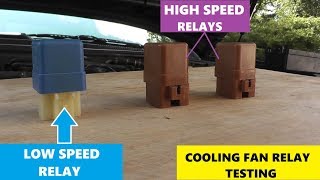
Locate the cooling fan relay in the under-hood fuse box. Swap it with an identical relay from a non-critical system, like the horn. If the fan works normally and the horn stops working, the relay is faulty. CAUTION: Match part numbers exactly to avoid computer damage.
Tools: Owner's Manual (for fuse box diagram) (Beginner) - Perform a Thorough Visual Inspection
Inspect the cooling fan assembly, wiring harness, and connectors. Look for melted plastic on connectors, corroded terminals, or wires rubbed through and touching hot exhaust components.
Tools: Flashlight (Beginner) - Test the Fan Motor Directly
Disconnect the fan's electrical connector. Using fused jumper wires, apply 12V power and ground directly from the battery to the fan motor terminals. If the fan fails to spin, the motor is dead. Also, check resistance across the motor terminals with a multimeter; an 'OL' reading confirms an internal open circuit.
Tools: Fused Jumper Wires, Digital Multimeter, Basic Hand Tools (Intermediate) - Use Scan Tool for Actuation Testing
With the key on and engine off, use a bidirectional scan tool to command the fan 'On'. You should hear the relay click and the fan run. Monitor the live data PID for 'Fan 1 Control Circuit'. When commanded off, voltage should be near 0V. When commanded on, it should be near battery voltage. If voltage remains above 10-12V regardless of the command, it confirms a circuit high fault.
Tools: Bi-directional OBD-II Scanner (Advanced) - Test the Control Circuit Voltage at the Relay Socket
Remove the relay. With the key on (engine off), use a multimeter to check voltage at the control circuit terminal (the pin the PCM grounds). On a typical low-side switched circuit, you should see battery voltage. Command the fan ON with a scan tool; the PCM should ground this pin, dropping voltage to near 0V. If voltage stays high, the PCM is not grounding the circuit, pointing to a wiring issue or internal PCM fault.
Tools: Digital Multimeter, Vehicle-specific wiring diagram, Bi-directional Scanner (Advanced) - Check for an Open in the Control Circuit
An open wire between the PCM and the fan relay prevents the PCM from grounding the circuit, causing it to 'float high'. With the key off, disconnect the PCM and the fan relay. Use a multimeter set to Ohms to check continuity on the control wire between the PCM connector and the relay socket. A reading of 'OL' indicates a broken wire.
Tools: Digital Multimeter, Vehicle-specific wiring diagram (Intermediate) - Perform a Ground Circuit Voltage Drop Test
Connect the black lead of your multimeter to the negative battery terminal. With the fan commanded ON and running, touch the red lead to the fan motor's ground connector pin. A reading above 0.2 volts (200mV) indicates excessive resistance in the ground path, such as a corroded chassis ground point.
Tools: Digital Multimeter (Advanced)
When This Code Triggers (Freeze-Frame Conditions)
- Engine Coolant Temp: 195-220°F (Engine at or above normal operating temperature, when fan activation is expected.)
- RPM: 650-1200 (At idle or in stop-and-go traffic, where airflow is low.)
- A/C Status: On (A/C compressor is engaged, which typically commands the cooling fan to run.)
- Vehicle Speed: 0-20 mph (Vehicle is stationary or moving at low speeds, requiring fan-forced airflow.)
Related Codes
- P0691 — The direct opposite code ('Fan 1 Control Circuit Low'). P0692 indicates a short to power or open circuit, while P0691 indicates a short to ground or blown fuse.
- P0480 — A general 'Fan 1 Control Circuit Malfunction'. P0480 sets when the PCM's command doesn't match the result. P0692 specifically identifies a 'Circuit High' condition.
- P0693 / P0694 — 'Fan 2 Control Circuit Low/High'. Points to a problem with the second fan's circuit. Having codes for both fans indicates a shared power/ground issue or faulty PCM.
- P0483 — 'Fan Rationality Check Malfunction'. Sets when the fan's actual operation doesn't match commands, often accompanying P0692 if the circuit fault causes irrational fan behavior.
Climate & Environmental Factors
- High Humidity & Road Salt: Accelerates corrosion of wiring harnesses and electrical connectors. Road salt spray creates electrical shorts to power or high resistance in ground paths.
- Extreme Heat: Places greater demand on the cooling system, causing the fan to run longer. This operational stress accelerates the failure of aging fan relays and motors.
How to Talk to a Mechanic About This Code
Say this: "I have an active P0692 code, and the fan is either running constantly or not at all. I'd like to schedule a diagnostic. Can you please start by testing the fan relay, checking the fan motor, and inspecting the control circuit wiring before recommending a full fan assembly replacement?"
This signals that you understand the most common and cheapest failure points (relay, wiring) versus the most expensive (fan assembly or PCM). It directs the mechanic to follow a logical diagnostic path instead of jumping to the most profitable replacement.
Avoid saying:
- 'My car is overheating, just fix it.'
- 'My check engine light is on, can you look at it?' (This is too vague and invites a broad, expensive diagnosis).
- 'I think I need a new fan.' (Don't diagnose it for them; you anchor them to an expensive and incorrect repair).
Questions to ask before authorizing the repair:
- Did you test the fan relay and motor separately? What were the results?
- Can you show me the damaged wiring or the failed component?
- If the fan motor needs to be replaced, is the new part OEM or aftermarket, and what is the warranty on the part and the labor?
- If you are recommending a PCM or TIPM, have you definitively ruled out all wiring, relay, and component faults first?
Where to Take It: Dealer vs Independent vs Chain
- Dealer:
Best for: Vehicles under warranty., Known manufacturer-specific issues like TIPM failures on Chrysler/Jeep/Dodge or PCM software updates on Honda models., Complex electrical issues on newer (under 5 years old) or German vehicles where proprietary tools and information are critical.
Downsides: Significantly higher labor rates., More likely to replace an entire assembly (e.g., TIPM module) rather than attempt a circuit-level repair. (Typical cost: +50% vs. baseline) - Independent Shop:
Best fit for most cases. An independent shop with strong electrical diagnostic skills efficiently handles the most common causes of P0692 (relay, wiring, fan motor) at a lower cost. However, if the issue is a known TIPM or PCM software problem, the dealer is the better choice.
Best for: Out-of-warranty vehicles where cost is a major factor., Diagnosing common faults like a bad relay, fan motor, or wiring damage., Vehicles older than 5 years.
Downsides: Shop quality and diagnostic skill vary greatly; look for ASE certifications and good reviews specifically mentioning electrical work., Lacks access to the very latest manufacturer technical bulletins or required software for module replacement. (Typical cost: +0% vs. baseline) - Chain Shop:
Avoid for diagnosis. P0692 requires true electrical diagnosis, not just code reading. A chain shop is likely to misdiagnose the issue or default to replacing expensive parts unnecessarily.
Best for: Simple part swaps like a visible, easily accessible relay if you have already diagnosed the problem yourself.
Downsides: Technician skill varies dramatically., Lacks the advanced diagnostic tools (bidirectional scanners) and experience for complex electrical circuit testing., High pressure to upsell leads to recommendations for unnecessary repairs. (Typical cost: -10% vs. baseline)
When to Walk Away From the Repair
If the estimated repair cost exceeds 50% of your car's private-party value, seriously consider selling or trading it in instead of repairing it. For older, high-mileage cars (over 150,000 miles), this threshold is lower, around 40%.
- Car worth $3000, fix is $1800: Walk away. The repair cost is 60% of the car's value. This is a classic 'money pit' scenario.
- Car worth $15000, fix is $600: Fix it. The repair cost is only 4% of the car's value and is a worthwhile investment in a reliable vehicle.
- Car worth $5000, fix is $2200: Borderline. The repair cost is 44% of the value. Get a second opinion before proceeding. If the fix is a guaranteed, long-term solution like a new PCM, it is worth it. If other major repairs are looming, walk away.
What Scan Tool You Need for This Code
Minimum: A bidirectional scan tool capable of performing 'actuation tests' or 'active tests'.
A basic $20-$50 code reader only tells you that code P0692 exists. It cannot command the fan or relay to turn on and off, which is a critical step for diagnosis. Without this function, you are just guessing at which part to replace.
Budget: Not Recommended (~$None) — Scanners in this price range are typically just code readers. While some Bluetooth dongles paired with apps claim advanced functions, reliable bidirectional control for fan circuits is not a guaranteed feature. Investing in a tool without this capability for P0692 is a waste of money.
Mid-range: Foxwell NT510 Elite / Thinkcar THINKSCAN 689BT (~$150) — These scanners provide the essential bidirectional control needed to command the cooling fan relay on and off. This allows you to confirm if the PCM is sending the signal and if the relay/fan is responding, which is the most important diagnostic step after a visual inspection.
Professional: Autel MaxiCOM MK808BT / Innova 5610 (~$450) — Offers full bidirectional control, reads manufacturer-specific codes from all modules (like a TIPM), displays live data streams with graphing, and includes guided diagnostics. This level of detail is crucial for diagnosing complex issues, like when P0692 is accompanied by other codes or on vehicles with known module problems.
Rent vs buy: Most auto parts stores offer a free loaner tool program, but their scanners are typically basic code readers that lack the bidirectional control needed for P0692. If this is a one-time repair, it is more cost-effective to pay a shop for a one-hour diagnostic fee than to buy a mid-range scanner. Buy a scanner only if you plan to do your own advanced diagnostics regularly.
How to Clear the Code After You Fix It
- Use an OBD-II scan tool to clear the P0692 trouble code.
- Reconnect the battery if it was disconnected during the repair.
- Perform a complete drive cycle to allow the vehicle's readiness monitors to run.
Drive cycle (~30 minutes): Start the engine from a cold soak (parked for 8+ hours). Let it idle for 2-3 minutes. Drive for 15 minutes in mixed city/highway conditions, including steady speeds around 55 mph for at least 5 minutes. Allow the vehicle to coast down without braking where possible. Let the engine idle for another 1-2 minutes before shutting down.
Readiness monitors affected: Catalyst Monitor, Evaporative System (EVAP) Monitor, O2 Sensor Monitor
Before emissions retest: drive at least 100 miles to fully set monitors.
Watch out for:
- Simply disconnecting the battery clears the code but resets all readiness monitors, leading to an automatic emissions test failure.
- The code returns immediately if the underlying electrical fault (e.g., a stuck relay or shorted wire) was not properly fixed.
- Not driving long enough or under the right conditions leaves monitors 'Not Ready', preventing you from passing an emissions test.
Will This Fail Emissions / State Inspection?
Yes — this code typically fails an OBD-II emissions inspection.
- California: An active P0692 code with the Check Engine Light on is an automatic failure of the smog check's OBD-II inspection. After repair, a full drive cycle must be completed to set all readiness monitors before a retest is possible.
- New York: A vehicle automatically fails the NYS emissions inspection if the Check Engine Light is illuminated. Clearing the code right before the test also results in failure because readiness monitors will not be 'Ready'.
- Texas: In counties requiring emissions testing, an illuminated Check Engine Light from code P0692 causes an automatic inspection failure.
Most Commonly Affected Vehicles
- Dodge/Ram Ram 1500/2500/3500 (2011-2018) — Often related to failures in the Totally Integrated Power Module (TIPM) or a broken wire inside the electronic fan clutch harness.
- Jeep Grand Cherokee (2005-2013) — Known for cooling fan relay failures. On some models, the relay is soldered into the TIPM, requiring a $900+ module replacement instead of a $20 relay swap.
- Chevrolet Cruze, Sonic, Trax (2011-2016) — Cruze and Sonic models frequently experience cooling fan relay and associated wiring failures.
- Ford F-250/F-350 Super Duty (2011-2017) — Problems often arise from a broken wire within the electronic fan clutch harness rubbing against the serpentine belt. This open circuit requires replacing the entire fan clutch assembly.
- Nissan Altima, Maxima, Murano (2002-2012) — Susceptible to fan relay and motor failures. Using an incorrect relay during diagnosis instantly damages the Intelligent Power Distribution Module (IPDM).
- Honda Accord, CR-V (2012-2017) — Intermittent P0692 codes are often resolved with a PCM software update (e.g., TSB 17-017) rather than hardware replacement.
- Subaru Legacy, Outback (2.5L Turbo M/T) (2005-2006) — A faulty original cooling fan relay (#2) creates an electrical surge that damages the ECM's fan control circuit (Service Campaign WVB-12).
- BMW 3-Series (E90), X-Series (F15) (2006-2018) — Issues stem from a break in the single LIN bus wire controlling the fan. The DME interprets this open circuit as a fault.
Manufacturer-Specific Notes
- Chrysler/Dodge/Jeep: Fan relays are integrated into the Totally Integrated Power Module (TIPM) and are not individually serviceable, turning a simple relay failure into a costly module replacement.
- Nissan: Swapping relays in the IPDM requires exact part number matching. Using a visually identical but electrically different relay instantly shorts the IPDM.
- General Motors (GM): Newer models use a dedicated feedback circuit to monitor control circuit voltage. A high voltage reading on this feedback line triggers the code even if the primary circuit is intact.
- Subaru: 2005-2006 Legacy/Outback models suffer from faulty original fan relays that send voltage spikes to the ECM, destroying the fan driver circuit.
- Honda: Always check for Technical Service Bulletins (TSBs) like 17-017 before replacing hardware, as software updates often correct faulty PCM logic triggering P0692.
Real Owner Stories
2013 Ford F-350 6.7L at 120K miles
A/C stopped working at idle and engine temps began to creep up when stopped in traffic. The cooling fan was not operating at all.
What they tried:
- Owner scanned the truck and found code P0692.
- Suspected a mechanical viscous fan clutch failure but wanted to rule out electronics first.
Outcome: Replaced the electronic fan clutch assembly. This resolved the code and all symptoms. The cause was a broken wire inside the fan clutch's own harness, which the PCM interprets as a high voltage fault.
Lesson: On trucks with electronic fan clutches, the fault is often in the clutch assembly's internal wiring itself, not just the main vehicle harness. An open circuit in the clutch harness presents as a 'Circuit High' code.
2012 Jeep Grand Cherokee 3.6L
Check Engine Light came on, and cooling fans immediately ran at high speed on every startup, even when the engine was cold.
What they tried:
- A shop plugged in an aftermarket fan assembly to test, but the condition remained.
- Technician inspected wiring to the TIPM (Totally Integrated Power Module) and found no issues.
Outcome: The problem was diagnosed as a failed fan relay inside the TIPM. Since the relay is integrated, the entire TIPM had to be replaced, a common and costly issue on these vehicles.
Lesson: On many Chrysler/Dodge/Jeep products, the fan relay is soldered into the TIPM. If a relay swap isn't possible, suspect an internal TIPM failure, which is a much more involved repair.
2011 Dodge Grand Caravan with multiple fan codes
Check Engine Light was on after purchase. Two shops failed to fix it. One shop replaced the fan assembly and high-speed relay, but the light remained. Symptoms included codes P0480, P0691, and P0692.
What they tried:
- First shop replaced fan assembly and one relay.
- Second shop claimed there was a broken wire they couldn't find.
- The final technician used a wiring diagram and a proper scan tool that reads all modules.
Outcome: The root cause was a faulty TIPM. The other shops used generic scan tools that only pulled the P0480 code from the engine computer, missing the specific high/low circuit codes stored in the TIPM itself. Replacing the TIPM resolved the issue.
Lesson: Using a basic code reader is misleading. A full-system scan tool that communicates with all modules (like the TIPM or BCM) is crucial for an accurate diagnosis.
How to Prevent This Code From Triggering
- Inspect and Clean Electrical Connectors (Every 1-2 years or during other cooling system service) — Corrosion on the fan motor, relay, and control module connectors increases resistance and causes intermittent signals or shorts. Clean with an electrical contact cleaner and apply dielectric grease.
- Secure Wiring Harnesses (Annually) — Engine vibration causes wiring harnesses to rub against hot or sharp metal components, leading to frayed wires and shorts. Use high-temperature wire loom or zip ties to secure loose wiring.
- Keep Radiator and Condenser Fins Clean (Annually) — Dirt and debris lodged in the radiator and A/C condenser fins restrict airflow. This forces the fan to run longer and more frequently, increasing wear on the fan motor and relay.
- Perform Regular Cooling System Flushes (Every 30,000 to 50,000 miles (or as per owner's manual)) — Degraded coolant causes the engine to run hotter, putting more stress on the entire fan control system and accelerating the failure of electrical components like the relay and motor.
Frequently Asked Questions
Can I just replace the fuse to fix P0692?
No. P0692 indicates a 'circuit high' condition, meaning there is too much voltage. A blown fuse causes a 'circuit low' or 'open circuit' condition (like P0691) by cutting off power. The problem is a short to power or a component stuck on.
My cooling fan is always on. Is this P0692?
It is highly likely. The most common cause for a fan running constantly is a failed cooling fan relay stuck in the 'on' position, which directly triggers the P0692 code.
How much does it cost to fix P0692?
Costs range from $65 for a simple relay replacement to $1,000+ for a new fan assembly or PCM. Wiring repairs typically cost $100-$250. Always diagnose the relay first to avoid unnecessary expenses.
Can a bad thermostat cause code P0692?
No, a bad thermostat is mechanical and will not directly trigger the electrical P0692 code. However, a stuck thermostat causes overheating, which stresses the cooling fan circuit and can lead to secondary electrical failures.
What are common mistakes when diagnosing P0692?
A frequent mistake is immediately replacing the expensive cooling fan assembly without testing it directly or checking the relay first. Another error is failing to inspect the wiring harness thoroughly for hidden shorts.
I replaced the fan assembly and the code is still there. What now?
The new aftermarket fan may be defective out of the box. More likely, the original problem was a faulty relay, damaged wiring, or a bad control module, requiring systematic circuit testing to pinpoint the high voltage source.
What is the difference between P0692 and P0480?
P0480 is a general 'Fan Control Circuit Malfunction' meaning the command failed. P0692 specifically means 'Fan Control Circuit High', pointing directly to excessive voltage caused by a short to power or an open control line.
Key Takeaways
- P0692 indicates excessively high voltage in the main cooling fan control circuit, causing the fan to run constantly or fail completely.
- A stuck cooling fan relay is the #1 cause of this code, followed by damaged wiring or a shorted fan motor.
- Do not drive if the fan is inoperative; an overheating engine causes catastrophic damage like warped cylinder heads costing upwards of $2,500.
- Swap the cooling fan relay with an identical non-critical relay (like the horn) to instantly diagnose a $20 relay failure before buying expensive parts.
- Always check for Technical Service Bulletins (TSBs) before replacing a PCM, as manufacturers like Honda often issue software updates to fix false P0692 triggers.
Helpful Videos

Shop the Parts Behind P0692
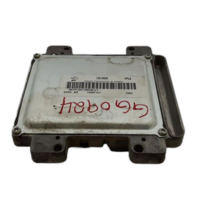
Below are the parts most often responsible for code P0692, ranked by how frequently each one is the actual culprit (per the diagnosis above). Tap any to see what we have for your vehicle.


The information in this article is provided for general reference and educational purposes only. Vehicle specifications, procedures, and part compatibility can vary by production date, trim level, and region. Always consult your vehicle's factory service manual and verify part numbers before purchasing or performing repairs. Safety-critical components such as airbags, seat belts, and braking systems should be installed by a qualified professional.
- 🧭 Diagnostic Flowchart
- 🎬 Helpful Videos
- 🛍️ Shop This Part
- What Does P0692 Mean?
- Can I Drive With P0692?
- Common Causes
- Symptoms
- Common Fixes & Costs
- Used vs. New Parts: Buying Guide
- What Happens If You Wait — Timeline
- Cost of Not Fixing It
- Diagnosis Steps
- When This Code Triggers (Freeze-Frame Conditions)
- Related Codes
- Climate & Environmental Factors
- How to Talk to a Mechanic About This Code
- Where to Take It: Dealer vs Independent vs Chain
- When to Walk Away From the Repair
- What Scan Tool You Need for This Code
- How to Clear the Code After You Fix It
- Will This Fail Emissions / State Inspection?
- Most Commonly Affected Vehicles
- Manufacturer-Specific Notes
- Real Owner Stories
- 2013 Ford F-350 6.7L at 120K miles
- 2012 Jeep Grand Cherokee 3.6L
- 2011 Dodge Grand Caravan with multiple fan codes
- How to Prevent This Code From Triggering
- Frequently Asked Questions
- Can I just replace the fuse to fix P0692?
- My cooling fan is always on. Is this P0692?
- How much does it cost to fix P0692?
- Can a bad thermostat cause code P0692?
- What are common mistakes when diagnosing P0692?
- I replaced the fan assembly and the code is still there. What now?
- What is the difference between P0692 and P0480?
- Key Takeaways
- 🎟️ Get 5% Off