

OBD-II Code P0694: Fan 2 Control Circuit High
What P0694 means, why it triggers, and the ultimate guide to fixing it
- P0694 indicates a high-voltage fault in the secondary cooling fan circuit, completely disabling the fan and risking severe engine overheating.
- Swap the cooling fan relay with an identical non-critical relay (like the horn) as your first diagnostic step; this solves the issue in over 40% of cases for under $50.
- Never drive more than 1-2 miles with an active P0694 code, as a warped cylinder head from overheating costs upwards of $3,000 to repair.
- On 2009-2018 Dodge, Chrysler, and Jeep vehicles, P0694 strongly points to a failed Totally Integrated Power Module (TIPM), requiring a $1,200+ replacement or specialized bypass kit.
What Does P0694 Mean?
P0694 indicates the Powertrain Control Module (PCM) detected a high voltage fault in the secondary cooling fan ('Fan 2') electrical circuit. This high voltage prevents the fan from activating, compromising engine cooling.
Technical definition: The PCM registered voltage in the electric cooling fan 2 control circuit more than 10% above the expected range. The PCM uses a low-current ground signal to activate the fan relay or module. If voltage fails to drop from high (near battery voltage) to low (near 0V) when commanded, P0694 triggers.
Can I Drive With P0694?
No — Do Not Drive. Driving short distances is possible but strongly discouraged. The inactive cooling fan creates a high risk of engine overheating, especially in traffic. Continuing to drive causes severe engine damage (warped cylinder head, blown head gasket), escalating repair costs by $2,000-$4,000+. Tow the vehicle for repair.
Common Causes
- Faulty Cooling Fan Relay (Very Common) — The relay fails internally, becoming stuck and causing a constant high voltage reading on the control side. This is the most frequent and cheapest cause to fix.
- Damaged Wiring or Connectors (Common) — Exposed to intense heat and vibration, wires fray, melt, or short to a power source. Corroded connectors disrupt the electrical signal, directly causing the high voltage fault.
- Defective Fan Control Module (Common) — Modern vehicles use a dedicated module to regulate fan speed via a Pulse Width Modulated (PWM) signal. A failed module sends an incorrect high voltage signal back to the PCM.
- Faulty Cooling Fan Motor (Common) — An internal short circuit or seized fan motor causes excessive electrical current draw, which the PCM interprets as a high voltage condition.
- Poor Ground Connection (Less Common) — A corroded or loose ground wire creates a voltage differential that the PCM reads as a high voltage fault.
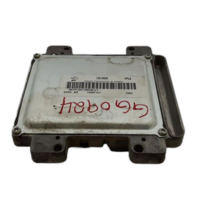
- Defective Powertrain Control Module (PCM) (Very Rare) — The internal driver circuit within the PCM that grounds the fan relay fails. Consider this only after exhaustively testing wiring, relays, and motors.
Symptoms
- Engine Overheating — The engine temperature gauge rises into the red zone, particularly when stationary or moving at low speeds.
- Cooling Fan Does Not Activate — Fan 2 fails to turn on when the engine reaches its trigger temperature or when the A/C is switched on.
- Air Conditioning (A/C) Blows Warm Air — Without the fan pulling air over the condenser, the PCM disables the A/C compressor to prevent system damage.
- Check Engine Light (MIL) is On — The PCM illuminates the dashboard warning light immediately upon detecting the fault.
- Cooling Fan Runs Continuously — A short-to-power in the control circuit sometimes permanently energizes the fan relay, draining the battery.
Diagnostic Flowchart
Tap your situation to follow the diagnostic path that matches what you're seeing on this code.
Common Fixes & Costs
- Replace Cooling Fan Relay
— Parts: $10-$50, Labor: $50-$150, ~0.5 hr book time
(DIY)
Dodge/Ram: OEM Mopar: 68094656AA (Alt: Standard Motor Products: RY-1757)
Chevrolet/GM: OEM ACDelco: 13500114 (Alt: Standard Motor Products: RY721)
Ford: OEM Motorcraft: F7TZ-14N089-AA (Alt: Standard Motor Products: RY612) - Repair or Replace Wiring Harness/Connector — Parts: $20-$150, Labor: $150-$700, ~2.5 hr book time (Intermediate)
- Replace Fan Control Module
— Parts: $50-$250, Labor: $100-$200, ~1.5 hr book time
(DIY To Intermediate)
Ford Focus/Escape: OEM Motorcraft: 1137328464 (Alt: Dorman: 902-209)
Volkswagen Jetta/Golf: OEM VAG: 1K0959455N (Alt: Meyle: 1009590010) - Replace Cooling Fan Assembly — Parts: $100-$600, Labor: $150-$450, ~2.0 hr book time (Intermediate)
- Replace Totally Integrated Power Module (TIPM)
— Parts: $400-$1200, Labor: $150-$300, ~2.0 hr book time
(Professional)
Dodge/Ram/Jeep: OEM Mopar: 68244852AB (Alt: Dorman TIPM Relay Repair Kit: 645-120) - Replace Powertrain Control Module (PCM) — Parts: $600-$1500, Labor: $200-$400, ~1.5 hr book time (Professional)
DIY vs Professional
- Replace Fuse or Relay — Beginner: Yes
Tools: Fuse puller or pliers, owner's manual. - Replace Fan Control Module — Beginner: Maybe
Tools: Basic hand tools (socket set, screwdrivers). - Replace Cooling Fan Assembly — Beginner: Maybe
Tools: Socket set, wrenches, drain pan, hose clamp pliers. - Repair Wiring Harness — Beginner: No
Tools: Multimeter, wire strippers, crimpers, soldering iron. - Replace TIPM / PCM — Beginner: No
Tools: Advanced diagnostic tools, scan tool with programming capabilities.
Used vs. New Parts: Buying Guide
When a used part is worth it: Used parts make sense for robust components like a complete fan assembly from a low-mileage vehicle. Avoid used electronic modules (Fan Control Module, TIPM) due to high failure rates.
Donor-vehicle mileage cap: roughly under 60000 miles for the part to have meaningful remaining life.
Donor quality checklist:
- Verify the part number is an exact match.
- Inspect connectors for corrosion, melting, or broken locking tabs.
- Spin used fan assemblies by hand to check for bearing noise.
- Prefer donors from regions without heavy road salt usage.
Decision logic:
- If The failed part is a simple relay or fuse → Buy new; cost savings are negligible.
- If The failed part is a Fan Control Module or TIPM → Buy new or professionally refurbished. Used modules carry a high risk of premature failure.
- If The failed part is the entire fan assembly → A used assembly from a low-mileage vehicle is a reasonable choice to save money.
Warranty tradeoff: Salvage yards offer 30-90 day warranties (parts only). New aftermarket parts offer 1-year to lifetime warranties. OEM parts provide 1-2 year warranties.
Worst-case if a used part fails: $200-$600 if a used electronic module fails shortly after installation, requiring repeat labor.
What Happens If You Wait — Timeline
- 0-1 week: Code sets, MIL illuminates. A/C blows warm at idle. Engine temperature climbs in traffic but cools at highway speeds. (MPG impact: 0-1%% · Added cost: $100-$300 (If stranded requiring a tow).)
- 1-4 weeks: A significant overheating event occurs (>240°F), causing thermal stress on the engine's head gasket. (MPG impact: 1-2%% · Added cost: $300 (Initial tow/diag) + risk of escalating damage.)
- 1-3 months: Repeated overheating warps the aluminum cylinder head, breaking the head gasket seal. Coolant leaks externally or into cylinders. (MPG impact: 5-15%% · Added cost: $1,500-$4,000 (Head gasket replacement and cylinder head machining).)
- 3+ months: Catastrophic failure. Coolant mixes with engine oil, destroying lubricating properties and seizing bearings. (MPG impact: N/A - Vehicle likely inoperable% · Added cost: $4,000-$8,000+ (Engine replacement).)
Cost of Not Fixing It
- Immediate (0-1 week): Engine overheats in traffic, leaving you stranded. A/C system fails to function. (Added cost: $100-$300 (for a tow and initial diagnostic))
- Short-Term (1-4 weeks): Repeated overheating causes thermal stress, leading to a warped cylinder head or blown head gasket. (Added cost: $1,500-$4,000)
- Long-Term (1+ month): Catastrophic engine failure. Coolant mixes with oil, destroying internal bearings and pistons. (Added cost: $4,000-$8,000+)
Diagnosis Steps
- Verify Code and Review Freeze Frame Data
Confirm P0694 is active. Review freeze frame data to see engine conditions (coolant temperature, vehicle speed, A/C status) at the exact moment the code set.
Tools: OBD-II Scanner (Beginner) - Test Fuses and Swap Relays
Swap the Fan 2 relay with an identical non-critical relay (like the horn). If the fan works and the horn stops, the relay is faulty. This is a quick, zero-cost diagnostic test.
Tools: Fuse Puller, Owner's Manual (Beginner) - Thorough Visual Inspection
Inspect the Fan 2 circuit for melted connector plastic at the relay, frayed wiring near the radiator, and loose ground straps on the chassis.
Tools: Flashlight, Inspection Mirror (Beginner) - Test the Fan Motor Directly
Disconnect the fan motor. Apply 12V battery power and ground directly to the terminals. If it doesn't spin at full speed or makes grinding noises, replace the motor.
Tools: Fused Jumper Wires, Basic Hand Tools (Intermediate) - Test the Control Circuit Voltage
Disconnect the fan relay. Check voltage on the PCM control wire. Command the fan 'On' with a scan tool; voltage must drop from ~12V to near 0V. If it stays high (>5V), suspect a short to power or faulty PCM.
Tools: Multimeter, Bidirectional Scan Tool (Advanced) - PRO TIP: Voltage Drop Test the Ground Circuit
Place the red lead on the negative battery terminal and black lead on the fan ground wire. Command the fan on. A reading above 0.2V (200mV) indicates excessive resistance requiring repair.
Tools: Multimeter (Advanced) - Analyze the PWM Signal
Back-probe the signal wire from the PCM to the fan control module. A flat line at 5V/12V or erratic pattern indicates wiring/PCM failure. A clean square wave with no fan operation confirms a faulty module.
Tools: Oscilloscope, Bidirectional Scan Tool, Back-probe Pins (Professional) - Isolate the PCM
If all wiring, grounds, relays, and motors test good, and control circuit voltage remains high at the PCM connector pin, the PCM internal driver failed. PCM replacement is required.
Tools: Multimeter, Vehicle-specific Wiring Diagram (Professional)
When This Code Triggers (Freeze-Frame Conditions)
- Engine Coolant Temp: 210-230°F (99-110°C) (Engine is at or above normal operating temperature, triggering fan command.)
- A/C Status: On (A/C compressor is engaged, which demands cooling fan operation.)
- Vehicle Speed: 0-15 mph (Vehicle is stationary or in slow-moving traffic, where airflow is minimal.)
- RPM: 650-900 (Engine is at idle or near-idle speed.)
Related Codes
- P0693 — The direct opposite: 'Fan 2 Control Circuit Low.' Indicates a short to ground or open circuit. Seeing both suggests an intermittently shorting wire.
- P0480 — General fault for 'Fan 1 Control Circuit.' If seen with P0694, it points to a systemic problem affecting both fans, like a shared ground or failing control module.
- P0481 — General fault for 'Fan 2 Control Circuit.' Seeing P0481 and P0694 together strongly confirms a hard electrical fault in the Fan 2 circuit.
- P0534 — Indicates 'A/C Refrigerant Charge Loss.' Appears alongside P0694 because a failed fan causes high A/C pressure, prompting the PCM to disable the compressor.
Climate & Environmental Factors
- High Heat Climates: Hot weather places heavy demand on the cooling system. Increased runtime accelerates wear on fans, relays, and modules.
- High Humidity / Heavy Rain: Moisture seeps into non-sealed connectors and relay sockets, causing corrosion that leads to high resistance or short circuits.
- Winter Climates (Road Salt): Road salt severely corrodes wiring, ground connections, and terminals, directly causing the high resistance faults that trigger P0694.
How to Talk to a Mechanic About This Code
Say this: "I have a P0694 code, 'Fan 2 Control Circuit High'. I need a diagnostic to pinpoint the electrical fault. Please start by testing the fan relay, the fan motor, and checking the wiring before recommending a larger assembly replacement."
Signals that you understand common, cheap failure points (relays) versus expensive ones (assemblies). Directs the technician to perform a logical diagnosis instead of replacing the most expensive part.
Avoid saying:
- 'My car is overheating.'
- 'My check engine light is on, can you look at it?'
- 'Just replace the cooling fan.'
Questions to ask before authorizing the repair:
- Did you test the fan motor by applying power directly to it?
- Was the fan relay tested by swapping it with a known good relay?
- What was the voltage reading on the control circuit at the relay socket when commanded on?
- If recommending a wiring repair, can you show me where the damage is?
Where to Take It: Dealer vs Independent vs Chain
- Dealer:
Use for warranty work or dealer-only module programming. Otherwise, an independent shop is more cost-effective.
Best for: Vehicles under warranty., Complex issues like a Dodge/Chrysler TIPM replacement or PCM programming.
Downsides: Significantly higher labor rates and parts costs., May default to replacing entire assemblies instead of individual components. (Typical cost: +40% vs. baseline) - Independent Shop:
Best fit for most P0694 scenarios. Efficiently diagnoses common electrical faults without dealer overhead.
Best for: Out-of-warranty vehicles., Diagnosing common causes: bad relays, wiring issues, or failed fan motors.
Downsides: Diagnostic skill varies; look for ASE-certified technicians specializing in electrical systems. (Typical cost: +0% vs. baseline) - Chain Shop:
AVOID. This code requires true electrical diagnostic skill, not just reading a code and guessing parts.
Best for: Simple part swaps like batteries or tires.
Downsides: Technicians often lack complex electrical diagnostic skills., High pressure to upsell unnecessary part replacements. (Typical cost: -10% vs. baseline)
When to Walk Away From the Repair
If the estimated repair cost exceeds 40-50% of your car's private-party value, seriously consider selling or trading it in.
- Car worth $10000, fix is $850: Fix it. This repair is well below the threshold and preserves vehicle safety.
- Car worth $4000, fix is $1800: Borderline. Get a second opinion. If the diagnosis is a complex module (like a TIPM), consider selling as-is.
- Car worth $2500, fix is $1800: Walk away. The repair cost is nearly 75% of the car's value.
What Scan Tool You Need for This Code
Minimum: A scan tool with bidirectional control (active test capability).
A basic $20 code reader cannot command the cooling fan to turn on or off. This command function is essential to determine if the fan, relay, and wiring respond to the computer.
Budget: KINGBOLEN Ediag Elite (~$80) — A Bluetooth dongle offering basic bidirectional controls to command the fan on/off, critical for this diagnosis.
Mid-range: XTOOL D7 (~$350) — Offers full bidirectional control and graphs live data from sensors, helping diagnose intermittent issues.
Professional: Autel MaxiCOM MK808 / MK900BT (~$500-700) — Provides full bidirectional control, extensive live data, and access to manufacturer-specific codes and guided diagnostics.
Rent vs buy: Free loaner tools from auto parts stores lack bidirectional control. Buying a tool with bidirectional capability is a worthwhile investment for electrical diagnostics.
How to Clear the Code After You Fix It
- Use an OBD-II scan tool to clear the P0694 code.
- Start the engine and let it idle.
- Turn the A/C on to its maximum setting to command the cooling fans on.
- Perform a test drive including stop-and-go traffic to allow the engine to reach full operating temperature.
Drive cycle (~20 minutes): Cold start the engine and idle for 3 minutes. Drive in stop-and-go traffic for 10 minutes. Drive for 5 minutes at a steady speed above 40 mph. Allow the engine to cool down completely.
Readiness monitors affected: Comprehensive Component Monitor, Evaporative System Monitor
Before emissions retest: drive at least 50 miles to fully set monitors.
Watch out for:
- Clearing the code does not fix the problem; it returns immediately if the electrical fault remains.
- Disconnecting the battery resets all readiness monitors, complicating emissions testing.
Will This Fail Emissions / State Inspection?
Yes — this code typically fails an OBD-II emissions inspection.
- California: An active P0694 code causes an automatic smog check failure. The Check Engine Light must be off.
- New York: The vehicle fails the OBD-II portion of the annual safety and emissions inspection if the MIL is on.
- Texas: In emissions-testing counties, P0694 results in a failed OBD-II test. Registration is blocked until repaired.
Most Commonly Affected Vehicles
- Dodge/Ram 1500, Grand Caravan (2009-2018) — Extremely common issue related to internal failures of the Totally Integrated Power Module (TIPM). Aftermarket TIPM relay repair kits are available.
- Chevrolet Cruze (2011-2016) — Often caused by a faulty cooling fan resistor or a melted pigtail connector.
- Ford Focus, Escape (2012-2018) — Failures of the radiator fan control module are common. The module is often integrated into the fan shroud, requiring full assembly replacement.
- Volkswagen Jetta, Golf (2005-2012) — Frequently caused by a failure of the fan control module, a known weak point.
- Hyundai/Kia Sonata, Optima (2015-2019) — Issues trace to the main cooling fan relay or the multi-fuse assembly.
- Subaru Outback, Forester (2005-2014) — Failures commonly trace to cooling fan relays located in the main under-hood fuse box.
- Chevrolet Malibu (2016-2019) — Known for damaged fan wiring harnesses due to routing too close to hot engine components.
- Fiat/Abarth 500 (2012-2017) — Often caused by a fried radiator fan resistor.
Manufacturer-Specific Notes
- Dodge, Chrysler, Jeep: Fan relays are soldered directly into the Totally Integrated Power Module (TIPM) and are not individually serviceable. Aftermarket companies sell relay bypass kits (e.g., Dorman 645-120) to avoid a $1,200 TIPM replacement.
- General Motors (Chevrolet, GMC): GM uses a variable speed fan control module. The wiring connector at this module frequently corrodes or melts. Always inspect connector pins when replacing the module.
- Nissan: Nissan uses relays that are physically identical but have different internal circuitry. Swapping the wrong relay instantly damages the PCM. Verify part numbers exactly.
- Ford: The fan control module mounts directly to the fan shroud. This location makes it susceptible to failure from vibration and heat, often requiring replacement of the entire fan assembly.
Real Owner Stories
2012 Dodge Grand Caravan at 115K miles
Check engine light came on with codes P0694 and P0480. The cooling fan was not turning on, causing overheating in traffic.
What they tried:
- Suspected a bad fan motor or relay.
- Mechanic diagnosed a failed Totally Integrated Power Module (TIPM).
Outcome: The TIPM, housing non-serviceable fan relays, failed. The dealer quoted over $2,000. An independent shop performed the repair for less.
Lesson: On Chrysler/Dodge/Jeep vehicles, fan codes are classic symptoms of TIPM failure. Research aftermarket relay repair kits to save thousands.
2015 Chevy Cruze at 80K miles
P0694 code appeared, A/C blew warm air, and the temperature gauge climbed at idle.
What they tried:
- Replaced the main cooling fan relay - no change.
- Tested the fan motor directly with 12V power - it worked.
- Visually inspected wiring and found a melted connector pigtail.
Outcome: Replaced the melted pigtail connector and cooling fan resistor. Total parts cost was under $50, permanently clearing the code.
Lesson: Always perform a thorough visual inspection. On the Chevy Cruze, the fan resistor and connector are known weak points that melt.
2013 Ford Focus at 95K miles
Intermittent P0694 code. The fan failed to turn on with the A/C, causing overheating in city driving.
What they tried:
- Replaced the fan relay, but the problem persisted.
- Mechanic checked wiring and found no faults.
- Fan motor tested functional.
Outcome: Traced to a failing fan control module mounted directly to the fan shroud. Replaced the entire fan assembly for $450, resolving the issue.
Lesson: Fan control modules mounted on the shroud fail frequently due to heat and vibration, causing intermittent symptoms before total failure.
How to Prevent This Code From Triggering
- Clean Engine Bay and Electrical Grounds (Every 1-2 years) — Road salt and grime corrode electrical ground points. Cleaning major ground straps prevents high resistance faults.
- Apply Dielectric Grease to Connectors (When replacing any related part) — Applying dielectric grease to fan motor and module connectors seals out moisture, preventing corrosion and shorts.
- Inspect and Secure Wiring Harnesses (Annually) — Vibration causes wiring harnesses to rub against hot engine components, melting insulation. Ensure harnesses are secured away from exhaust manifolds.
- Perform a Regular Coolant Flush (Per manufacturer's schedule (typically every 3-5 years)) — Maintaining the cooling system reduces overall thermal stress, preventing the fan from running excessively and prolonging component life.
Frequently Asked Questions
What exactly is 'Fan 2'?
In vehicles with two separate fans, Fan 2 is the secondary fan that activates under high load, like when the A/C is on. In vehicles with a single, two-speed fan, 'Fan 2' refers to the high-speed setting.
What is the most common misdiagnosis for P0694?
The most frequent mistake is replacing the expensive cooling fan assembly when the actual problem is a cheap relay or a corroded ground wire. Always test the simple electrical components first.
Can I fix a P0694 code myself?
Fixing a bad fuse or relay is an easy, inexpensive DIY job. Replacing a fan assembly is manageable for an intermediate DIYer. However, diagnosing complex wiring shorts or replacing a PCM requires professional tools.
Why does my A/C stop working when this code appears?
The A/C system releases heat through the condenser, requiring the cooling fan to pull air over it. If the fan fails, A/C pressure builds to unsafe levels. The PCM deactivates the compressor to prevent catastrophic failure.
How much does it really cost to fix P0694?
A relay replacement costs under $150 total. A wiring repair ranges from $150 to $700, while a fan assembly replacement costs $300 to $900. A Dodge/Ram TIPM replacement exceeds $1,200.
Will clearing the code make the fan work again?
No. Clearing the code only temporarily removes the Check Engine Light. The PCM re-runs its diagnostic tests immediately, and the code returns until the physical electrical fault is repaired.
Could a weak battery cause a P0694 code?
It is highly unlikely. P0694 is a 'circuit high' code, meaning voltage is stuck higher than expected. A weak battery causes low voltage issues.
Key Takeaways
- P0694 indicates a high-voltage fault in the secondary cooling fan circuit, completely disabling the fan and risking severe engine overheating.
- Swap the cooling fan relay with an identical non-critical relay (like the horn) as your first diagnostic step; this solves the issue in over 40% of cases for under $50.
- Never drive more than 1-2 miles with an active P0694 code, as a warped cylinder head from overheating costs upwards of $3,000 to repair.
- On 2009-2018 Dodge, Chrysler, and Jeep vehicles, P0694 strongly points to a failed Totally Integrated Power Module (TIPM), requiring a $1,200+ replacement or specialized bypass kit.
Shop the Parts Behind P0694
Below are the parts most often responsible for code P0694, ranked by how frequently each one is the actual culprit (per the diagnosis above). Tap any to see what we have for your vehicle.



The information in this article is provided for general reference and educational purposes only. Vehicle specifications, procedures, and part compatibility can vary by production date, trim level, and region. Always consult your vehicle's factory service manual and verify part numbers before purchasing or performing repairs. Safety-critical components such as airbags, seat belts, and braking systems should be installed by a qualified professional.
- 🧭 Diagnostic Flowchart
- 🛍️ Shop This Part
- What Does P0694 Mean?
- Can I Drive With P0694?
- Common Causes
- Symptoms
- Common Fixes & Costs
- DIY vs Professional
- Used vs. New Parts: Buying Guide
- What Happens If You Wait — Timeline
- Cost of Not Fixing It
- Diagnosis Steps
- When This Code Triggers (Freeze-Frame Conditions)
- Related Codes
- Climate & Environmental Factors
- How to Talk to a Mechanic About This Code
- Where to Take It: Dealer vs Independent vs Chain
- When to Walk Away From the Repair
- What Scan Tool You Need for This Code
- How to Clear the Code After You Fix It
- Will This Fail Emissions / State Inspection?
- Most Commonly Affected Vehicles
- Manufacturer-Specific Notes
- Real Owner Stories
- 2012 Dodge Grand Caravan at 115K miles
- 2015 Chevy Cruze at 80K miles
- 2013 Ford Focus at 95K miles
- How to Prevent This Code From Triggering
- Frequently Asked Questions
- What exactly is 'Fan 2'?
- What is the most common misdiagnosis for P0694?
- Can I fix a P0694 code myself?
- Why does my A/C stop working when this code appears?
- How much does it really cost to fix P0694?
- Will clearing the code make the fan work again?
- Could a weak battery cause a P0694 code?
- Key Takeaways
- 🎟️ Get 5% Off