

P0700 on 2007-2009 Cadillac SRX: Transmission Control System Malfunction Causes and Fixes
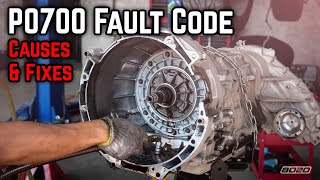
P0700 on a 2007-2009 Cadillac SRX means the transmission computer (TCM) has a problem. Before replacing parts, use a professional scan tool to read the specific codes from the TCM. A known issue is a faulty transmission wiring connector (X1), which can cause communication loss and multiple 'U' codes. Inspect this connector for corrosion or damage before suspecting the TCM itself.
- P0700 is a general code; the real problem is identified by other codes stored in the Transmission Control Module (TCM).
- You MUST use a scan tool that can read TCM codes to properly diagnose the issue.
- For the 2007-2009 SRX, the most likely cause, especially with communication codes, is a bad connection at the main transmission plug (X1) per TSB PIC4740E.
- Do not replace the TCM until all wiring, connectors, and individual components have been thoroughly checked.
What's Unique About the 2007-2009 Cadillac SRX
For the first-generation Cadillac SRX, the P0700 code is frequently associated with communication issues between various control modules. A specific Technical Service Bulletin (TSB #PIC4740E) points to a known problem with the transmission's main electrical connector (X1). This suggests that a wiring or connection fault is a more likely cause on this vehicle than on others, especially if seen with other communication codes like U0100 (Lost Communication with ECM/PCM) or U0073.
Diagnostic Flowchart
Tap your situation to follow the diagnostic path that matches what you're seeing on this vehicle.
Symptoms You May Notice
- Check Engine Light is on
- Harsh or erratic shifting
- Vehicle gets stuck in one gear (limp mode)
- Delayed engagement when shifting from Park to Drive or Reverse
- Decreased fuel economy
- Engine stalling when coming to a stop
- No communication with the TCM via a scan tool
- 'Service Transmission' message on the dashboard
- Replacing the entire transmission when only a single solenoid or wiring connection is at fault.
- Replacing the TCM without first ruling out wiring, connector, and component issues, especially the X1 connector cited in TSB PIC4740E.
- Attempting to diagnose the P0700 code itself, rather than using it as a pointer to read the more specific codes from the TCM.
- Replacing shift solenoids when the root cause is a worn valve body bore, causing the new solenoid to also report errors.
Most Likely Causes
- Poor Connection or Damaged Wiring at Transmission Connector X1 🔴 High Probability → Shop Transmission Assembly A manufacturer TSB (#PIC4740E) specifically identifies inspecting the transmission X1 connector as a primary diagnostic step when P0700 is present with other communication codes, indicating a known vulnerability. Forum users frequently report this connector as the culprit, often finding corrosion or unseated pins.
How to confirm: Visually inspect the transmission's main wiring harness connector (X1) for corrosion (often green), backed-out pins, or physical damage. The connector is located on the transmission; disconnect it by releasing the locking mechanism and rotating the latch. Test for continuity and voltage drops across the relevant wires with a multimeter.
Typical fix: Clean the connector pins with electrical contact cleaner, repair any damaged wires, and ensure the connector is securely seated with its lock engaged. In some cases, the connector pigtail or a section of the harness may need to be replaced.
Est. part cost: $10-$150 - Failed Shift Solenoid or Valve Body Issue 🟡 Medium Probability → Shop Transmission Valve Body The 5L40-E and 6L50 transmissions used in this SRX can experience solenoid failures over time. Wear in the valve body can also lead to solenoid performance codes.
How to confirm: A scan of the TCM will reveal specific solenoid-related codes (e.g., P0751 for Shift Solenoid 'A' Stuck Off). Resistance checks of the individual solenoids can confirm electrical failure. For the 6L50, on/off shift solenoids should read 20-40 ohms, while PWM solenoids (including pressure control) should be 3-8 ohms. Persistent codes after solenoid replacement may point to a worn valve body.
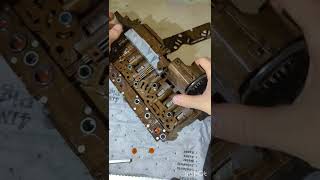
Typical fix: Replace the specific faulty solenoid. This requires draining the fluid and removing the transmission pan. Sometimes the entire valve body assembly, which includes solenoids, is replaced, especially if multiple solenoids fail or passages are clogged. On 6L50 models, the solenoids are part of the TEHCM (Transmission Electro-Hydraulic Control Module) and are replaced as a single unit.
Est. part cost: $50-$400 - Failed Transmission Control Module (TCM) ⚪ Low Probability → Shop Transmission Assembly While less common than wiring issues, the TCM is a complex electronic component that can fail. On models with the 6L50 transmission, the TCM is integrated into the valve body inside the transmission (as a TEHCM), exposing it to heat and vibration. On 5L40-E models, the TCM is a separate module.
How to confirm: This is a diagnosis of exclusion. If all wiring, connectors, sensors, and solenoids test good, and the TCM is unresponsive to a scan tool or consistently sets false codes, it is the likely cause. Ensure the TCM has proper power and ground before condemning it. A poor ground at G101 can affect the TCM.
Typical fix: Replace the TCM. This often requires programming by a dealer or a specialized shop to match the vehicle's VIN and software. Remanufactured, pre-programmed units are available from various suppliers.
Est. part cost: $300-$800 - Low or Dirty Transmission Fluid ⚪ Low Probability → Shop Transmission Assembly
How to confirm: Check the transmission fluid level and condition. The fluid should be bright red and not smell burnt. Note: These transmissions are 'sealed' and do not have a traditional dipstick, requiring a specific procedure involving a check/fill plug at a specific fluid temperature to verify the level. On the V8 models with the 6L50, the fill plug is a rubber plug on the passenger side of the transmission case, high up and difficult to see.
Typical fix: Perform a transmission fluid and filter change if the fluid is dirty or burnt. If low, top it off and inspect for leaks. Using the correct fluid (DEXRON-VI for the 6L50) is critical.
Est. part cost: $50-$250
Diagnosis Steps
- Obtain a scan tool capable of reading manufacturer-specific codes from the Transmission Control Module (TCM).
- Scan the TCM for all stored trouble codes. The P0700 in the ECM is just the starting point; the codes in the TCM are the real diagnostic clues.
- Record and prioritize diagnosis based on the specific codes found in the TCM.
- If multiple communication codes (U-codes) like U0100 are present with P0700, immediately refer to TSB #PIC4740E and prioritize inspection of the transmission's main electrical connector (X1).
- Locate and carefully inspect the X1 connector for any signs of corrosion, moisture, loose pins, or damaged wires. Disconnect it and check for bent or recessed pins. Gently tug each wire to ensure it's secure.
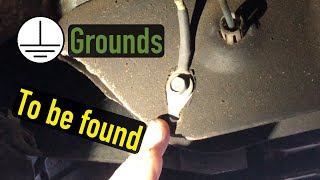
- Check for proper power and ground at the TCM. Ground G101, located at the front of the engine on the lower block, is a shared ground for the ECM and TCM and should be inspected for integrity.
- Check the transmission fluid level and condition following the correct procedure for a sealed transmission. The fluid should be at the correct level, red, and free of metal shavings or a burnt smell.
- If a specific component code (like P0751 for a shift solenoid) is present, follow the diagnostic procedure for that component, which typically involves checking wiring and testing the component's resistance with a multimeter. For a 6L50 transmission, expect 20-40 ohms for on/off solenoids and 3-8 ohms for PWM solenoids.
- After any repair, clear all codes from both the ECM and TCM and perform a test drive to ensure the fault does not return.
Parts You'll Likely Need
- Transmission Wiring Harness Connector Repair Kit — Per TSB #PIC4740E, the main transmission connector is a known weak point for corrosion and poor contact, causing P0700 and other communication codes.
Trusted brands: ACDelco, Dorman
OEM price range: $50-$120
Aftermarket price range: $30-$80 - Transmission Control Module (TCM)
(OEM #24239402 (for 2008 4.6L V8), 24239785 / 24239377 (for 2007 3.6L V6))— While less common, a failed TCM can be the root cause if all wiring and components test good. Replacement requires VIN programming.
Trusted brands: ACDelco, GM Genuine Parts
OEM price range: $500-$800
Aftermarket price range: $300-$600 - Shift Solenoid — A failing shift solenoid is a common internal transmission fault that will trigger a specific code in the TCM (like P0751), leading to the P0700.
Trusted brands: ACDelco, Bosch, Sonnax (for valve body repair kits)
OEM price range: $60-$120
Aftermarket price range: $40-$90
Related Codes That Often Appear With This One
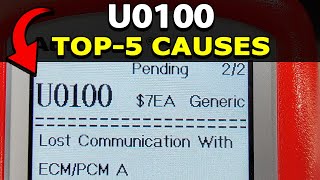
- U0073, U0100, U0121, U0140, etc. — These are communication (U-prefix) codes. Their presence alongside P0700 strongly supports the TSB's suggestion of a wiring harness or connector issue affecting multiple modules, most commonly the X1 connector.
- P07xx (e.g., P0751, P0741) — These are the specific transmission fault codes stored in the TCM that cause the P0700 to be set in the ECM. They point to the actual problem, such as a specific shift solenoid (P0751) or torque converter clutch issue.
Technical Service Bulletins (TSBs) & Recalls
- PIC4740E - Addresses multiple DTCs including P0700, P0856, U0073, U0100, and others, pointing to an inspection of the transmission X1 connector for unseated pins as the cause of communication loss.
Platform-Specific Known Issues
- TSB #PIC4740E documents an issue where multiple communication and module-related DTCs, including P0700, can be caused by a poor connection at the transmission X1 connector. The bulletin advises technicians to inspect this specific connector for unseated pins or corrosion.
- Owners on CadillacForums.com have shared experiences tracing P0700 and U-codes back to the X1 connector, sometimes finding green-colored corrosion inside the plug, which requires thorough cleaning or replacement of the connector end.
Mechanic-Grade Diagnostic Values
- 6L50 On/Off Shift Solenoid Resistance — expected: 20-40 Ohms. Failure: Reading outside this range indicates a failed solenoid.
- 6L50 PWM Solenoid Resistance (Line Pressure, TCC, etc.) — expected: 3-8 Ohms. Failure: Reading outside this range indicates a failed solenoid.
- 6L50 On/Off Shift Solenoid Current Draw — expected: 0.3-0.7 Amps at 12V. Failure: Incorrect amperage indicates a failed solenoid.
- 6L50 PWM Solenoid Current Draw — expected: 1.5-4.0 Amps at 12V. Failure: Incorrect amperage indicates a failed solenoid. (Note: This test should be performed quickly to avoid damage).
Scan Tool Commands That Help
- Tech 2 / GDS2: Solenoid Cleaning Procedure — After experiencing intermittent performance-related DTCs. The scan tool can cycle all solenoids in a specific sequence to flush debris from the solenoids and their hydraulic circuits. If the DTC returns after this procedure, the TEHCM may need replacement.
- Tech 2 / GDS2: Internal Mode Switch (IMS) Logic Display — When diagnosing range sensor-related codes (e.g., P182A). The scan tool can display the High/Low status of the four signal circuits (A, B, C, P) which can be compared against a logic chart to verify correct IMS operation as the shifter is moved through the gears.
Wiring & Ground Locations
- X1 Connector — The main 16-way electrical harness connector on the transmission case. To disconnect, a locking mechanism is released and a latch is rotated counter-clockwise.. This is the primary communication and power interface for the transmission. TSB #PIC4740E specifically calls out this connector for inspection due to known issues with corrosion and unseated pins causing P0700 and various U-codes.
- G101 — Located at the front of the engine, on the lower part of the engine block.. This is a primary engine ground that also serves the Transmission Control Module (TCM) and Engine Control Module (ECM). A poor connection here can cause a wide range of communication errors, including P0700 and U0100.
- G103 — On the front of the passenger side (right) cylinder head.. Provides a ground path for various engine components. While not the primary TCM ground, ensuring all major engine and body grounds are clean and tight is critical when diagnosing communication faults.
Real Owner Repair Stories
- Reddit user, r/MechanicAdvice (2010 Cadillac SRX 3.0L (Note: 2nd Gen, but demonstrates a relevant failure pattern)) — Sudden loss of power, Stabilitrak warning, Check Engine Light on. Codes U0100, P0700, U0073, U0101. Intermittent no-crank/no-start.
❌ Tried (didn't work) Checked fuses and relays, which were all okay.
✅ What actually fixed it The root cause was a failing alternator. The user noticed dash lights flickering the night before the failure. Measuring voltage with the engine running and accessories on showed a drop to 12.7V, indicating the alternator was not charging correctly. Replacing the alternator resolved all communication codes and drivability issues.
Model Year Variations Within This Range
- 2007-2009: The 3.6L V6 engine was paired with the Hydra-Matic 5L40-E 5-speed automatic transmission.
- 2007-2009: The 4.6L Northstar V8 engine was paired with the Hydra-Matic 6L50 6-speed automatic transmission. This transmission features an internal Transmission Electro-Hydraulic Control Module (TEHCM), where the TCM and solenoids are integrated into the valve body.
Helpful Videos



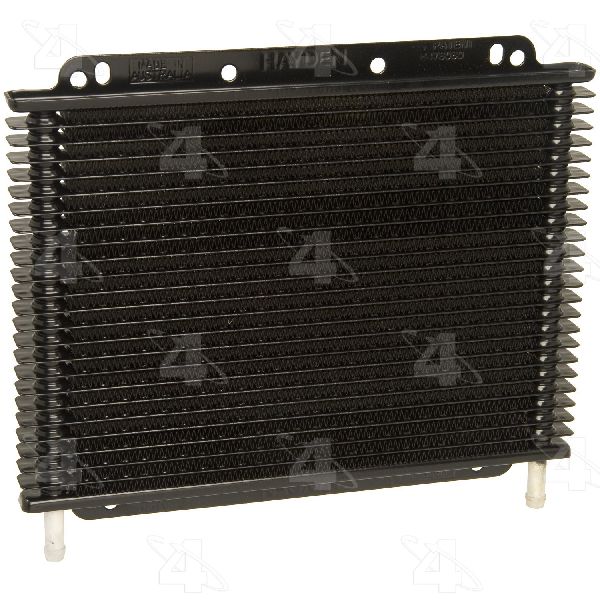
We Have This Part in Stock

The information in this article is provided for general reference and educational purposes only. Vehicle specifications, procedures, and part compatibility can vary by production date, trim level, and region. Always consult your vehicle's factory service manual and verify part numbers before purchasing or performing repairs. Safety-critical components such as airbags, seat belts, and braking systems should be installed by a qualified professional.
- Cadillac SRX:
- 🧭 Diagnostic Flowchart
- 🎬 Helpful Videos
- 🛍️ Shop This Part
- What's Unique About the 2007-2009 Cadillac SRX
- Symptoms You May Notice
- Most Likely Causes
- Diagnosis Steps
- Parts You'll Likely Need
- Related Codes That Often Appear With This One
- Technical Service Bulletins (TSBs) & Recalls
- Platform-Specific Known Issues
- Mechanic-Grade Diagnostic Values
- Scan Tool Commands That Help
- Wiring & Ground Locations
- Real Owner Repair Stories
- Model Year Variations Within This Range
- 🎟️ Get 5% Off