

P0700 on 2007-2013 Mercedes-Benz S-Class: Transmission Control System Fault Guide
P0700 on a W221 S-Class almost always means the transmission conductor plate has failed, specifically its internal speed sensors. This component, part of the 7G-Tronic (722.9) transmission, houses the Transmission Control Module (TCM) and is a well-documented weak point. Failure causes the car to enter a protective 'limp mode,' stuck in one gear. The fix is to replace the conductor plate and have it programmed, or repair the sensors on the original plate. Expect costs to range from $500 for a DI
- P0700 is just a messenger code; the real problem is stored in the Transmission Control Module (TCM).
- The most likely cause on a 2007-2013 S-Class is a failed conductor plate, specifically the integrated speed sensors.
- Symptoms are typically severe, including getting stuck in one gear ('limp mode').
- Repair requires dropping the transmission pan and valve body. A new conductor plate must be programmed to the car.
- Do not immediately assume you need a new transmission; the fault is almost always electronic, not mechanical.
What's Unique About the 2007-2013 Mercedes-Benz S-Class
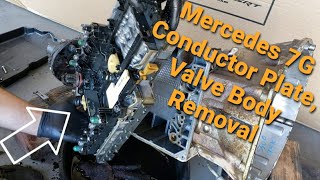
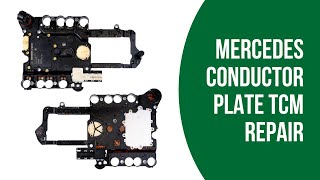
The 2007-2013 S-Class (W221 generation) uses the 7G-Tronic (722.9) automatic transmission. A very common and well-documented weakness in this transmission is the failure of the electronic conductor plate, also called the valve body insert or mechatronic unit. This component, which is submerged in hot transmission fluid, houses the TCM and critical speed sensors (Y3/8n1, Y3/8n2, Y3/8n3). These plastic sensors are known to fail from heat cycles, triggering the P0700 code and putting the car into limp mode. 🎬 Watch: Understanding 722.9 conductor plate symptoms and repair options. Early versions of this transmission (often with VGS1 or VGS2 conductor plates) were particularly prone to this issue.
Symptoms You May Notice
- Check Engine Light is on
- Transmission is stuck in one gear (usually 2nd gear), known as 'limp mode'.
- Harsh, jerky, or delayed gear shifts, sometimes described as an aggressive or forced shift.
- Inability to shift gears using the manual paddles/shifter.
- A message on the dashboard like 'Transmission Malfunction – Visit Workshop' or 'Drive to Workshop Without Changing Gear'.
- Sudden, unexpected downshifts while cruising at highway speeds.
- Replacing the entire transmission. While the fault is serious, it's almost always isolated to the serviceable electronic components (conductor plate/valve body) inside the transmission, not the mechanical gears themselves. A full transmission replacement is rarely the necessary first step for P0700 with speed sensor codes.
- Replacing the steering column module (SCM). While a faulty SCM can cause shifting issues, it typically presents with different symptoms and codes and is not a common cause for P0700.
Most Likely Causes
- Failed Conductor Plate (TCM Speed Sensors) 🔴 High Probability The speed sensors (Turbine Y3/8n1, Internal Y3/8n2, and Output Y3/8n3) are integrated into the conductor plate, which lives inside the hot transmission. Over time, heat cycles and exposure to fluid cause the plastic sensor housings and internal electronics to fail. This is the most common issue for the 722.9 transmission, affecting a huge number of Mercedes models from this era.
How to confirm: Use a Mercedes-specific scan tool (like STAR/Xentry) to read codes from the TCM. Look for codes like 0717, 0718 (Turbine Speed Sensor Y3/8n1), 2767, 2768 (Internal Speed Sensor Y3/8n2), or 0722 (Output Speed Sensor Y3/8n3). The presence of any of these codes alongside P0700 is a definitive sign of conductor plate failure.
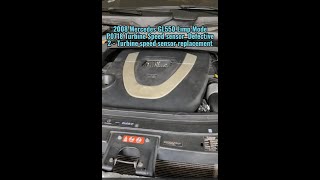
Typical fix: Option 1: Replace the entire conductor plate assembly. The new unit must then be SCN coded (programmed) to the car's VIN. Option 2: Remove the original conductor plate and send it to a specialist for repair, where they replace only the faulty sensors. This avoids the need for programming. Option 3 (Advanced DIY): Purchase a sensor repair kit and replace the sensors yourself. This requires carefully cutting out the old sensors and securing the new ones. 🎬 Watch: Step-by-step guide to replacing the turbine speed sensors.
Est. part cost: $400-$700 for a new OEM conductor plate, or ~$150-$300 for a repair service. DIY sensor kits cost $50-$150. - Failed Valve Body or Solenoids 🟡 Medium Probability → Shop Transmission Valve Body The hydraulic valve body and its solenoids can wear over time or become clogged with metallic debris from old fluid, leading to incorrect fluid pressure and shifting problems. Solenoid O-rings can also fail, causing pressure loss.
How to confirm: Diagnosis requires a professional scan tool to monitor solenoid operation and line pressures. Specific solenoid fault codes (e.g., P0748, P0778, or codes for specific clutch pack solenoids) would point to this issue rather than speed sensor codes. A technician can also perform a resistance check on the solenoids; a healthy solenoid should measure approximately 5 Ohms.
Typical fix: Replacement of the faulty solenoid(s) or the entire valve body assembly. This is often done at the same time as a conductor plate replacement since the components are assembled together.
Est. part cost: $50-$150 per solenoid, $800-$1500 for a valve body. - Low or Degraded Transmission Fluid ⚪ Low Probability → Shop Transmission Assembly While not a design flaw, neglected fluid service can lead to overheating, debris accumulation, and poor hydraulic performance, causing shifting issues that the TCM flags as a fault. The 722.9 transmission has specific fluid requirements (MB 236.14 or 236.15 spec) that must be followed.
How to confirm: Check the transmission fluid level and condition. This vehicle does not have a dipstick, so it must be checked from underneath with the engine running at a specific temperature (typically 45°C). Dark, burnt-smelling fluid or fluid with visible debris indicates a problem.
Typical fix: Perform a complete transmission fluid and filter change using the correct Mercedes-Benz specification fluid. This is required for any conductor plate or valve body service.
Est. part cost: $150-$250 for a fluid and filter kit.
Diagnosis Steps
- Connect a diagnostic scanner capable of reading Mercedes-Benz Transmission Control Module (TCM) codes, such as a Mercedes STAR/Xentry system. A generic OBD-II reader will only show P0700.
- Read the fault codes from the TCM. Note any codes related to speed sensors (0717, 0718, 2767, 2768, etc.) or solenoids.
- If speed sensor codes are present, the conductor plate is the primary suspect.
- If no speed sensor codes are present, check the transmission fluid level and condition. This requires lifting the vehicle and following a specific procedure as there is no dipstick. The fluid level must be checked at a specific temperature (usually 45°C).
- If the fluid is low, top it off and check for leaks, paying close attention to the main electrical connector O-ring, a common leak point.
- If the fluid is old/burnt, perform a fluid and filter service.
- If the problem persists and codes point to solenoids or pressure issues, further diagnosis of the valve body is required. This can include checking solenoid resistance (target is ~5 Ohms).
- Before ordering parts, visually inspect the existing conductor plate to identify its version (VGS1, VGS2, or VGS3), as they are not directly interchangeable without specific procedures.
Parts You'll Likely Need
- Transmission Conductor Plate (TCM)
(OEM #A0002702600, A0034460310, A0335457332 (Varies by VGS version, VGS3 is common))— This is the most common failure point. It contains the speed sensors that fail and trigger the P0700 code and limp mode.
Trusted brands: Mercedes-Benz (OEM), Bosch
OEM price range: $400-$700
Aftermarket price range: $300-$500 - Transmission Conductor Plate Speed Sensor Repair Kit — For advanced DIYers or shops, this kit allows for the replacement of only the failed sensors (Y3/8n1, Y3/8n2) on the existing conductor plate, avoiding the need for expensive programming.
Trusted brands: Various aftermarket kits on eBay/Amazon, MercTribe
OEM price range: N/A
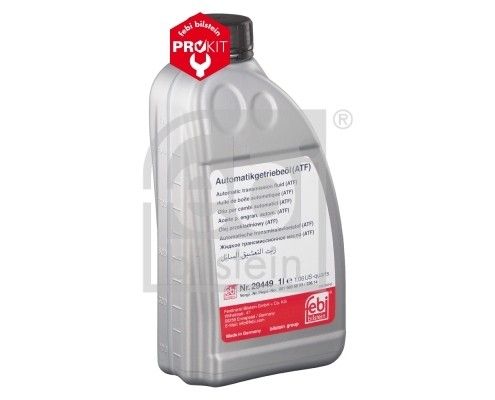
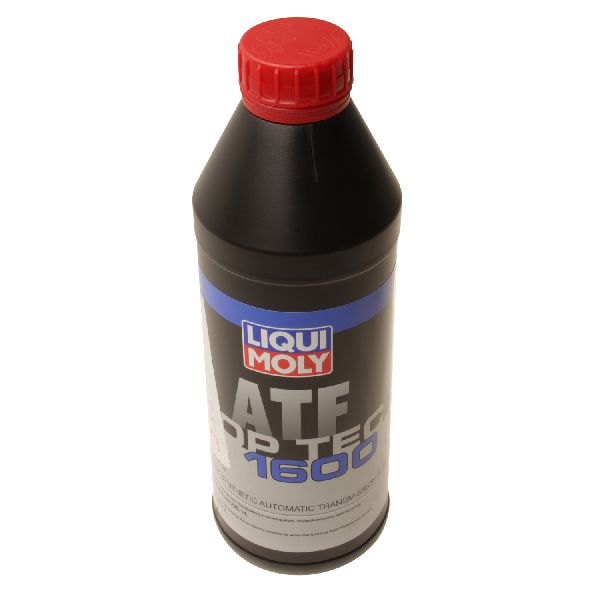
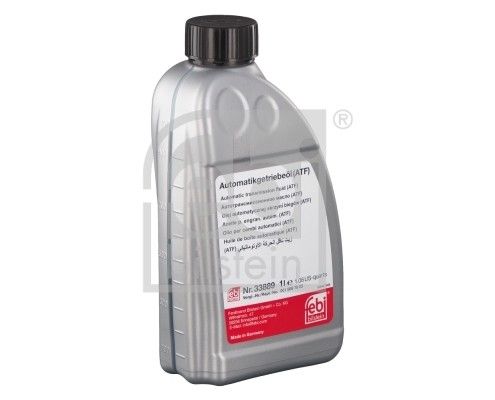
Aftermarket price range: $50-$150 - Transmission Fluid and Filter Kit — This is required whenever the valve body is removed to replace the conductor plate. Using the correct fluid (MB 236.14 or 236.15 spec) is critical.
Trusted brands: Fuchs Titan, Shell ATF 134, Mercedes-Benz (OEM)
OEM price range: $200-$300
Aftermarket price range: $100-$180
Related Codes That Often Appear With This One
- 0717 / 0718 — These Mercedes-specific codes directly indicate a fault (no signal or defective) with the Turbine Speed Sensor (Y3/8n1), a primary failure point on the conductor plate.
- 2767 / 2768 — These codes point to a fault (no signal or defective) with the Internal Speed Sensor (Y3/8n2), another common failure on the conductor plate.
- 0721 / 0722 — These codes indicate a fault (performance or no signal) with the Output Speed Sensor (Y3/8n3), also located on the conductor plate.
Technical Service Bulletins (TSBs) & Recalls
- TSB LI27.60-P-049775: This service bulletin addresses fault codes related to the transmission speed sensors (Y3/8n1, Y3/8n2, Y3/8n3) on the 722.9 transmission. It acknowledges the issue and provides diagnostic and repair guidance, often leading to the replacement of the electrohydraulic controller unit (the conductor plate).
Platform-Specific Known Issues
- A class-action lawsuit was filed regarding failures of the 722.9 transmission's conductor plate and valve body, citing premature failure and safety concerns from the vehicle suddenly entering limp mode.
- For years, Mercedes-Benz restricted the sale of conductor plates as 'theft-related parts' to authorized dealers, making repairs more expensive and difficult for independent shops and DIYers.
Mechanic-Grade Diagnostic Values
- Transmission Solenoid Resistance — expected: ~5 Ohms. Failure: Significantly higher or lower readings. One forum user reported false readings of 10-17 Ohms with a faulty multimeter before confirming the 5 Ohm value with a quality meter.
Hidden / Shadow Codes Worth Checking
- 0717 / 0718: The signal from component Y3/8n1 (Turbine speed sensor (VGS)) is not available / is defective. (see via Mercedes STAR/Xentry or equivalent advanced scanner.)
- 2767 / 2768: The signal from component Y3/8n2 (Internal speed sensor (VGS)) is not available / is defective. (see via Mercedes STAR/Xentry or equivalent advanced scanner.)
- 0722 / 0723: The signal from component Y3/8n3 (Output speed sensor (VGS)) is not available / is defective. (see via Mercedes STAR/Xentry or equivalent advanced scanner.)
- 0641 / 0642: Component Y3/8n4 (VGS control unit) is defective / Voltage supply of speed sensors is faulty (Undervoltage). (see via Mercedes STAR/Xentry or equivalent advanced scanner.)
- 0705: Component Y3/8s1 (Selection range sensor (VGS)) is defective. (see via Mercedes STAR/Xentry or equivalent advanced scanner.)
- 0748, 0778, 0798, 2716, 2725: Internal electrical check of various clutch and brake control solenoid valves has failed. (see via Mercedes STAR/Xentry or equivalent advanced scanner.)
Scan Tool Commands That Help
- Mercedes STAR/Xentry (or advanced equivalent like Thinkcar, Autel): Initial Startup / Teach-in Process — Required after installing a new or virginized conductor plate. This multi-step process guides the tech through programming, personalization, and activation.
- Mercedes STAR/Xentry: Detach Transport Protection — This is one of the first steps in the 'Initial Startup' process for a new conductor plate. It removes the security lock placed on the part for shipping.
- Mercedes STAR/Xentry: Personalization and Activation — This function electronically marries the new conductor plate to the car's VIN and enables its operation. It is a critical part of the 'Initial Startup' process.
- Mercedes STAR/Xentry: Reset Adaptation Data — After a repair, this function clears the learned shift adaptations. The car will then re-learn shift pressures and timings. This can resolve harsh or erratic shifting.
- Mercedes STAR/Xentry: Transfer flow data from old plate — When replacing a conductor plate, some technicians recommend transferring the hydraulic valve flow data from the old TCM to the new one to ensure optimal shift quality, though others report success by simply resetting adaptations.
Wiring & Ground Locations
- Transmission Main Connector — External plug on the 722.9 transmission housing.. This 5-pin connector provides all power and communication. A poor connection or corrosion here can cause a total loss of communication, triggering P0700. Pin 1 = CAN C High, Pin 2 = CAN C Low, Pin 3 = Diagnostic K-Line (on older VGS2), Pin 4 = Circuit 87 (Power), Pin 5 = Circuit 31 (Ground).
- Main Engine/Transmission Ground — A large ground strap connecting the engine/bell housing area to the chassis, often near the starter motor.. The TCM relies on a solid ground connection (Circuit 31) to function. A corroded or loose main ground strap can cause intermittent and difficult-to-diagnose electronic faults, including TCM malfunctions that lead to a P0700 code.
Real Owner Repair Stories
- MBWorld.org Forums (2006 E350 (with 722.9 VGS2 transmission)) — Car in limp mode with a K2 clutch solenoid fault.
❌ Tried (didn't work) Replacing only the K2 solenoid. The fault returned after two days., Replacing the original VGS2 conductor plate with a new VGS3 plate.
✅ What actually fixed it The story highlights a complication, not a final fix. After installing the new VGS3 plate, the car shifted terribly and threw a new P0730 (Incorrect Gear Ratio) code, indicating a programming or compatibility issue between the newer plate and the older vehicle systems that required further professional diagnosis at a dealer or specialist. - YouTube repair channel (C230 with 722.9 transmission) — Transmission in fail-safe (limp mode), won't shift.
❌ Tried (didn't work) Initial diagnosis pointed towards a full conductor plate replacement costing over $1,000 due to programming needs.
✅ What actually fixed it The actual cause was a single broken pin on the external connector of the conductor plate, likely damaged during a previous repair. The technician repaired the single pin by drilling out the surrounding plastic, soldering a new lead to the broken stub, and creating a new external connection, saving the cost of a full replacement and programming.
"I Checked Everything" — The Actual Cause
- A common misdiagnosis pattern for this code is a non-specialist shop recommending a full transmission rebuild costing thousands. In one documented case, a 2008 S550 with a harsh shifting issue and limp mode was quoted $12,000 for a rebuild. A specialist shop correctly identified the issue as solely the common conductor plate failure, which was repaired by replacing and programming the plate for a fraction of the cost.
When the Usual Fixes Don't Work
- While the conductor plate is the cause in over 90% of cases, do not assume it is the only possibility. A failing Intelligent Servo Module (ISM) can produce very similar symptoms, including limp mode and a general transmission fault message. A full diagnostic scan of all vehicle modules with a tool like Xentry is critical to differentiate between a TCM internal fault (conductor plate) and an ISM fault before ordering expensive, VIN-locked parts.
OEM Part Supersession History
VGS1 / VGS2 Conductor Plates (e.g., A0335456732, A0335457332)→VGS3 Conductor Plate (e.g., A0034460310)— VGS3 is an updated, more reliable design intended to address the high failure rate of the speed sensors in earlier versions.
Heads up: A VGS1 plate (found in pre-W221 models but a possibility in very early 2007s) required the entire valve body to be replaced with it. While a VGS3 plate can replace a VGS2, it is not always a simple swap. It may require specific online SCN coding and can sometimes lead to compatibility issues (like code P0730) if not performed correctly by a knowledgeable technician.
Model Year Variations Within This Range
- 2007-~2009: These earlier W221 models are typically equipped with the VGS2 conductor plate. While repairable, they represent an older hardware version compared to the VGS3 found in later models.
- ~2010-2013: Later W221 models came with the more reliable VGS3 conductor plate from the factory. A key hardware difference is that the VGS3 unit removed the dedicated K-Line diagnostic pin (Pin 3) that was present on the VGS2 connector.
Diagnostic Flowchart
Other Known Issues on This Vehicle
Issues unrelated to this code that are worth knowing about as an owner of this generation:
- Airmatic Suspension Failure 🔴 High — Very common after 80,000-150,000 km. Leaking air springs (struts) or a failing compressor are the usual culprits.
- M273 V8 Engine - Idler Gear Wear 🔴 High — Affects engines manufactured before ~2009. The sprocket on an idler gear was made of a soft metal that wears prematurely, causing timing chain slack. (Ref: Mercedes Service Bulletin S-B-03.30/08i addresses this.)
- M272 V6 Engine - Balance Shaft Gear Wear 🔴 High — Affects engines manufactured before ~2009. Similar to the M273 issue, but involves the balance shaft sprocket. (Ref: Mercedes Service Bulletin S-B-03.30/08i also addresses this.)
- S400 Hybrid - Power Electronics / Battery Failure 🔴 High → Shop Vehicle Battery — Common on the S400 Hybrid model. The hybrid power electronics module can fail, or the high-voltage battery can degrade, leading to no-start conditions or stalling. (Ref: Service campaigns 2012880004 and 2015030006 were issued for the power electronics module.)
- Auxiliary Battery Failure 🟡 Low → Shop Vehicle Battery — Common on cars over 7 years old or with over 100,000 miles.
Used vs. New Parts: Buying Guide for This Vehicle
When a used part is the smart pick: For this repair, a 'used' conductor plate from a junkyard is almost never a smart choice. The part is electronically married ('personalized') to the original car's VIN and will not function in another vehicle. The only exception is if you are buying a complete used valve body with its original, matching conductor plate, and have a specialist who can 'virginize' the used plate before programming it to your car. A used hydraulic valve body (without electronics) can be a viable option if yours is mechanically damaged, but this is rare.
Donor-vehicle mileage cap: roughly under 80000 miles for the part to have meaningful remaining life.
What to inspect on the donor part:
- For a valve body: Ask for photos of the fluid that was drained. It should be reddish/brown, not black or full of metallic particles.
- Ensure all solenoids are present and connectors are not damaged.
- Verify the donor vehicle was not involved in a severe front-end collision that could have shocked the transmission.
OEM-only on this vehicle (don't cheap out):
- Transmission Conductor Plate (TCM). While you can buy 'pre-programmed' aftermarket units, the most reliable path is a new OEM part from Mercedes, programmed by the dealer or a qualified specialist with online Xentry access.
Aftermarket brands forum-validated for this vehicle:
- For Repair Service (sending your original part): Circuit Board Medics, Pelican Diagnostics, and various eBay services have a long track record of successfully repairing the speed sensors on the original plate, which avoids the need for programming.
- For Sensor Repair Kits (DIY): Aftermarket sensor kits from brands like MercTribe or others found on eBay/Amazon can work but require a high level of skill to install correctly.
Brands owners have reported issues with on this vehicle:
- Be wary of no-name, pre-programmed conductor plates from unknown online vendors. While some work, many have been reported to fail prematurely or arrive with incorrect programming, leading to more diagnostic headaches.
Real Owner Stories
Aggregated from forums and TSBs cited above. Mileages and costs reflect what owners reported in those sources.
Mercedes-Benz GL X164 (722.9 Transmission)
Symptoms: The vehicle entered limp mode with increasing frequency. The owner experienced the transmission getting stuck in gear, requiring a restart to temporarily clear the issue.
What fixed it: Diagnosed as a failed speed sensor on the conductor plate.
Source hint: MBWorld.org: 'GL X164 Trans Conductor Plate Speed Sensor Fix'
Mercedes-Benz CLK (722.9 Transmission)
Symptoms: Experienced limp mode symptoms that became more frequent over several months, accompanied by code P0717.
What fixed it: Identified as the 'infamous' speed sensor problem on the conductor plate.
Cost: $2,000-$2,000
Source hint: MBWorld.org: 'PO717'
Mercedes-Benz 722.9 7G-TRONIC
Symptoms: Turbine speed sensor failure causing transmission faults.
What fixed it: Replacement of just the turbine speed sensor on the existing conductor plate to avoid the cost and programming of a full replacement unit.
Source hint: MercTribe: 'Mercedes 722.9 7G-TRONIC Transmission conductor plate turbine speed sensor replacement'
Related OBD-II Codes
Frequently Asked Questions
My S-Class is stuck in 2nd gear and won't shift. Is there a specific TSB for this?
Can I buy a conductor plate and install it myself on my 2007-2013 S-Class?
What specific speed sensor codes should I look for alongside P0700?
Is there a known legal issue regarding these transmission failures?
How do I check the transmission fluid level on my S-Class to rule out P0700 causes?
What is the resistance specification for the solenoids in the 722.9 valve body?
Helpful Videos

We Have This Part in Stock


The information in this article is provided for general reference and educational purposes only. Vehicle specifications, procedures, and part compatibility can vary by production date, trim level, and region. Always consult your vehicle's factory service manual and verify part numbers before purchasing or performing repairs. Safety-critical components such as airbags, seat belts, and braking systems should be installed by a qualified professional.
- Mercedes-Benz S-Class:
- 🧭 Diagnostic Flowchart
- 🎬 Helpful Videos
- 🛍️ Shop This Part
- What's Unique About the 2007-2013 Mercedes-Benz S-Class
- Symptoms You May Notice
- Most Likely Causes
- Diagnosis Steps
- Parts You'll Likely Need
- Related Codes That Often Appear With This One
- Technical Service Bulletins (TSBs) & Recalls
- Platform-Specific Known Issues
- Mechanic-Grade Diagnostic Values
- Hidden / Shadow Codes Worth Checking
- Scan Tool Commands That Help
- Wiring & Ground Locations
- Real Owner Repair Stories
- "I Checked Everything" — The Actual Cause
- When the Usual Fixes Don't Work
- OEM Part Supersession History
- Model Year Variations Within This Range
- Other Known Issues on This Vehicle
- Used vs. New Parts: Buying Guide for This Vehicle
- Real Owner Stories
- Mercedes-Benz GL X164 (722.9 Transmission)
- Mercedes-Benz CLK (722.9 Transmission)
- Mercedes-Benz 722.9 7G-TRONIC
- Related OBD-II Codes
- Frequently Asked Questions
- 🎟️ Get 5% Off