

P0701 on 2011-2013 Chevrolet Silverado: Transmission Control System Fault Guide
P0701 on a 2011-2013 Silverado indicates a general transmission fault. It means the Transmission Control Module (TCM) has detected a problem and requested the check engine light. The actual cause is stored as a more specific code in the TCM, which requires an advanced scanner to read. The most common cause is a failing internal control module (TEHCM) on the 6-speed 6L80 transmission, often confirmed by erratic pressure switch data on a scan tool.
- P0701 is a general alert from the transmission; it is not a specific diagnosis. You must use a scan tool that can read codes from the Transmission Control Module (TCM) to find the root cause.
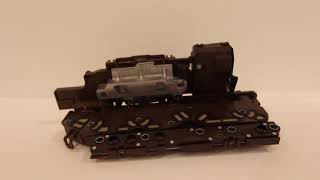
- On 2011-2013 Silverados with the 6-speed automatic, the most likely cause is a failing Transmission Electro-Hydraulic Control Module (TEHCM) located inside the transmission.
- Symptoms are serious and include harsh shifting, getting stuck in gear (limp mode), or failing to move at all.
- Repair is not a simple DIY job. It requires an advanced scan tool for diagnosis and often involves removing the valve body and programming a new control module.
What's Unique About the 2011-2013 Chevrolet SILVERADO
For this generation of Silverado (GMT900), the P0701 code is often a precursor to significant transmission work. These trucks primarily use the 6-speed 6L80 automatic transmission, which is known for failures of the internal Transmission Electro-Hydraulic Control Module (TEHCM). Unlike older models where external sensors were common culprits, issues on the 2011-2013 models are frequently traced back to this internal module, which contains the TCM, solenoids, and pressure switches in one unit inside the transmission oil pan. This integrated design makes it a common and expensive failure point.
Diagnostic Flowchart
Tap your situation to follow the diagnostic path that matches what you're seeing on this vehicle.
Symptoms You May Notice
- Check Engine Light is on
- Transmission warning message on the driver information center (e.g., "Shift Inhibited Select Neutral to Reset").
- Harsh, erratic, or delayed shifting.
- Vehicle stuck in one gear (limp mode), often 3rd gear.
- Failure to engage Drive or Reverse.
- PRNDL indicator on the dash may flash or disappear.
- Transmission slipping between gears.
- A 'rumble strip' vibration or shudder, especially between 35-60 mph under light throttle, indicating a torque converter issue.
- Replacing the entire transmission without first reading the specific codes from the TCM. The fault could be a replaceable TEHCM or a simple wiring issue.
- Clearing the P0701 code without diagnosis. This erases valuable diagnostic data, including the specific underlying codes, and the problem will return quickly.
- Replacing the TEHCM without confirming the failure. If the underlying issue is a cracked separator plate or internal leak, a new TEHCM will not solve the problem.
Most Likely Causes
- Faulty Transmission Electro-Hydraulic Control Module (TEHCM) 🔴 High Probability → Shop Transmission Assembly The TEHCM is located inside the hot transmission oil pan, making it susceptible to failure from heat cycles and vibration, leading to solder joint fatigue and electronic failure. This is a widely documented issue on GM's 6L80 transmissions.
How to confirm: Use a professional scan tool to check for specific solenoid (e.g., P0751, P0756) or pressure switch codes stored alongside P0701. A key diagnostic is to monitor live data from the pressure switches with the engine running; if the switch states change erratically on their own after about a minute of idling, it strongly indicates an internal TEHCM failure.
Typical fix: Replace the TEHCM assembly. This requires removing the transmission valve body and programming the new module to the vehicle's VIN. Some shops will not attempt a rebuild and will only replace the entire transmission due to the high failure rate.
Est. part cost: $300-$700 - Internal Transmission Component Failure 🟡 Medium Probability → Shop Transmission Assembly The 6L80 transmission can suffer from torque converter issues (causing shudder) or clutch pack failure. TSBs also mention inspecting the valve body separator plate for blockages or cracks, which points to internal hydraulic problems.
How to confirm: Look for specific DTCs related to gear ratios (P0731-P0736) or torque converter clutch (TCC) operation. A professional diagnosis will involve checking line pressures and inspecting the transmission fluid and pan for excessive metal debris (clutch material or metal shavings).
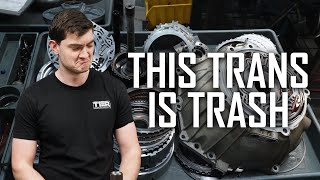
Typical fix: Depending on the failure, this can range from replacing the valve body separator plate to a complete transmission rebuild or replacement. A full rebuild with an upgraded torque converter can cost between $3,200 and $6,000. 🎬 Watch: Common 6L80 internal failures that lead to transmission destruction.
Est. part cost: $30-$4000+ - Low or Burnt Transmission Fluid ⚪ Low Probability → Shop Transmission Assembly While less common as the primary cause than TEHCM failure, leaks from cooler lines or gaskets can lead to low fluid levels. TSB #PIP4379K notes that low fluid (or even a recent fluid change that allows air into the system) can cause a loss of pump prime on a cold start, setting P0701 and other codes.
How to confirm: Check the transmission fluid level and condition following the 'Hot Check Procedure' in the owner's manual (fluid temp around 175°F). The fluid should be at the correct level, have a reddish color, and not smell burnt.
Typical fix: Top off the fluid with DEXRON-VI and repair any leaks. If TSB #PIP4379K is suspected, the fix may involve inspecting the internal suction filter for cracks. A fluid and filter change may be necessary if the fluid is degraded.
Est. part cost: $15-$150 - Wiring Harness or Connector Issues ⚪ Low Probability The main transmission harness connector can become contaminated with fluid or corrode. Poor ground connections, particularly the primary ECM/TCM ground on the front of the engine block, can also cause erratic TEHCM behavior and set various codes.
How to confirm: Visually inspect the main transmission connector for corrosion or pushed-out pins. Test the main engine block ground for resistance. Check the harness for any signs of chafing or damage near hot or moving parts.
Typical fix: Clean or repair the affected connector, ground point, or wiring harness section. Applying dielectric grease can prevent future corrosion.
Est. part cost: $5-$200
Diagnosis Steps
- Use an advanced scan tool capable of reading codes from the Transmission Control Module (TCM). Do not rely solely on the P0701 code from the engine computer.
- Record all codes stored in the TCM. Codes for specific solenoids (P07xx, P09xx), pressure switches (P27xx), or gear ratios (P073x) are crucial for diagnosis.
- Check the transmission fluid level and condition according to the manufacturer's 'Hot Check' procedure. Fluid should be at the correct level, red, and not smell burnt.
- If solenoid or pressure switch codes are present, monitor live data from the pressure switches. If the readings change erratically after about a minute of idling, suspect a faulty TEHCM.
- If gear ratio error codes (P073x) are present, investigate potential internal mechanical wear or hydraulic issues, such as the valve body separator plate mentioned in TSBs.
- Inspect the main transmission wiring harness connector for corrosion, damage, or loose pins.
- Check and clean the main TEHCM ground connection, which is typically part of the main negative battery cable harness at the left front of the engine block.
- If testing solenoids directly, expected resistance for 6L80 on/off shift solenoids is 20-40 ohms, while pressure control solenoids should be 3-8 ohms. Readings outside this range point to a failure within the TEHCM.
- If a TEHCM replacement is deemed necessary, the valve body must be removed from the transmission. The new TEHCM will require programming with a dealer-level tool.
Parts You'll Likely Need
- Transmission Electro-Hydraulic Control Module (TEHCM)
(OEM #24256861 (Superseded by 19435614))— This is the most common failure point for P0701 on 6L80-equipped Silverados. It contains the TCM, solenoids, and pressure switches, and fails due to heat and vibration.
Trusted brands: ACDelco (Genuine GM), Dorman
OEM price range: $450-$700
Aftermarket price range: $300-$500 - Transmission Valve Body Separator Plate
(OEM #24244057)— TSBs #PIP5100 and #PIP5100A mention inspecting separator plate orifices for blockages when vehicles won't move and set codes including P0701. The plate can also crack, causing internal hydraulic leaks.
Trusted brands: ACDelco, TransGo, Sonnax
OEM price range: $25-$50
Aftermarket price range: $20-$40
Related Codes That Often Appear With This One
- P0751 — Shift Solenoid 'A' Performance/Stuck Off. This and other solenoid codes point directly to a fault within the TEHCM or valve body, as the solenoids are integrated into the module.
- P0756 — Shift Solenoid 'B' Performance/Stuck Off. Like P0751, this indicates a specific solenoid circuit fault, often implicating the TEHCM.
- P0731-P0736 — Incorrect Gear Ratio codes. These codes indicate the transmission is slipping or failing to achieve the commanded gear, pointing to internal mechanical or hydraulic issues like a failing clutch pack or a leak at the separator plate.
- P2723 — Pressure Control Solenoid 'E' Performance/Stuck Off. This is another specific solenoid code mentioned in TSBs alongside P0701, pointing to a hydraulic control circuit issue, typically within the TEHCM.
Technical Service Bulletins (TSBs) & Recalls
- PIP4379K: Notes P0701 with other codes for no/delayed engagement or range inhibit issues.
- PIP5100: Connects P0701 with a no-move condition and points to inspecting the valve body separator plate.
- PIP5100A: A revised version of PIP5100 with the same guidance.
Platform-Specific Known Issues
- TSB #PIP4379K lists P0701 among codes related to delayed or no transmission engagement after a cold start or fluid service. It a
Mechanic-Grade Diagnostic Values
- On/Off Shift Solenoid Resistance — expected: 20-40 ohms. Failure: A reading outside this range indicates a failed solenoid within the TEHCM.
- PWM Pressure Control Solenoid Resistance — expected: 3-8 ohms (some sources state 3-5.5 ohms). Failure: A reading outside this range indicates a failed solenoid within the TEHCM.
- On/Off Shift Solenoid Current Draw — expected: 0.3-0.7 amps at 12V. Failure: Incorrect amperage indicates a failed solenoid.
- PWM Pressure Control Solenoid Current Draw — expected: 1.5-4.0 amps at 12V. Failure: Incorrect amperage indicates a failed solenoid. This test is not always recommended by the manufacturer.
- TCM Ground Resistance — expected: Below 0.1 Ω. Failure: Higher resistance indicates a poor ground connection, which can cause erratic module behavior.
- TCM Power Supply Voltage (Ignition On) — expected: 12.0V - 14.5V. Failure: Unstable or out-of-range voltage can indicate wiring or charging system issues affecting the TCM.
- Transmission Fluid Pressure (TFP) Switch 4 State (Scan Tool) — expected: LOW in all gears except 5th and 6th.. Failure: A reading of HI when it should be LOW (or vice-versa) points to a failed pressure switch inside the TEHCM.
- Transmission Fluid Pressure (TFP) Switch 3 State (Scan Tool) — expected: LOW in Park, Reverse, Neutral, 2nd, and 6th.. Failure: An incorrect state reading (HI/LOW) indicates a pressure switch fault.
Scan Tool Commands That Help
- GDS2 / Tech2: Solenoid Valve/Pressure Switch Test — Used to command individual solenoids on and off to verify their mechanical and hydraulic function. This is often done with the valve body on a test plate with regulated air pressure to check for leaks or stuck valves.
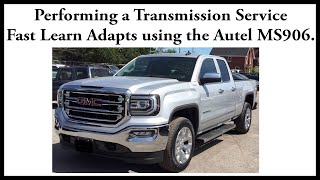
- GDS2 / Tech2: Transmission Service Fast Learn — This procedure is mandatory after replacing the TEHCM or rebuilding the transmission. It cycles the solenoids to establish baseline shift adapt values. Skipping this step will result in poor shift quality.
- GDS2 / Tech2: Solenoid Cleaning Procedure — If a solenoid performance DTC is present, this automated function can be run to cycle all solenoids rapidly to flush out minor debris. If the code returns after cleaning, the TEHCM likely needs replacement.
Wiring & Ground Locations
- G103 — On the front of the passenger side (right side) cylinder head. It is part of the main negative battery cable harness.. This is a primary ground for the Engine Control Module (ECM) and Transmission Control Module (TEHCM). A poor connection at G103 can cause erratic behavior, communication errors, and various fault codes, including P0701, by providing an unstable ground reference for the control modules.
- G107 / G108 — G107 is located on the top left rear of the engine; G108 is on the lower right rear of the engine block.. These are additional engine block grounds that ensure proper grounding for the entire powertrain. While G103 is the most cited for TCM issues, any poor engine-to-chassis ground can cause electrical noise and intermittent faults. A TSB for newer models (PIT5562) highlights how loose ground bolts can cause a wide range of electrical issues.
- Transmission Case Connector (X184) — The main 16-pin electrical connector on the passenger side of the transmission case.. This is the sole electrical link between the vehicle's main wiring harness and the internal TEHCM. All power, ground, and data communication (CAN bus) pass through this connector. Corrosion or pushed-out pins here will directly cause TEHCM malfunction and codes like P0701.
Real Owner Repair Stories
- Go-Parts.com Article (2006-2013 Chevrolet Silverado 1500) — Multiple pressure switch and solenoid codes, likely accompanied by P0701 and shifting problems.
❌ Tried (didn't work) Initial diagnosis pointed towards a common TEHCM failure.
✅ What actually fixed it The root cause was a cracked neck on the internal transmission filter. This allowed the transmission pump to suck in air, causing a loss of hydraulic pressure and triggering multiple faults. The fix was replacing the transmission filter. A temporary workaround was overfilling the fluid by one quart to submerge the crack.
OEM Part Supersession History
24256861→19435614— Component and logic updates to improve reliability and address common failure points like pressure switch degradation.
Heads up: TEHCMs are not interchangeable between different years or models, even if they physically fit. The internal calibration is specific. A new module must be programmed to the vehicle's VIN using GM's Service Programming System (SPS) or it will not function.
Model Year Variations Within This Range
- 2011-2013: While the 6L80 transmission was used across these years, GM made running changes to the TEHCM. A 2011 TEHCM may have different internal logic than a 2013 unit. It is critical to order a replacement TEHCM based on the vehicle's VIN and the Tag ID printed on the original module, not just the year and model. Mismatched modules will cause immediate faults or limp mode.
Helpful Videos


We Have This Part in Stock


The information in this article is provided for general reference and educational purposes only. Vehicle specifications, procedures, and part compatibility can vary by production date, trim level, and region. Always consult your vehicle's factory service manual and verify part numbers before purchasing or performing repairs. Safety-critical components such as airbags, seat belts, and braking systems should be installed by a qualified professional.
- Chevrolet SILVERADO:
- 🧭 Diagnostic Flowchart
- 🎬 Helpful Videos
- 🛍️ Shop This Part
- What's Unique About the 2011-2013 Chevrolet SILVERADO
- Symptoms You May Notice
- Most Likely Causes
- Diagnosis Steps
- Parts You'll Likely Need
- Related Codes That Often Appear With This One
- Technical Service Bulletins (TSBs) & Recalls
- Platform-Specific Known Issues
- Mechanic-Grade Diagnostic Values
- Scan Tool Commands That Help
- Wiring & Ground Locations
- Real Owner Repair Stories
- OEM Part Supersession History
- Model Year Variations Within This Range
- 🎟️ Get 5% Off