

P0701 on 2011-2013 GMC Sierra: Transmission Fault Causes and Fixes
P0701 on a 2011-2013 GMC Sierra indicates a general transmission fault. It's often caused by issues with the valve body separator plate or low transmission fluid, as noted in manufacturer TSBs. Do not drive the vehicle, as it may not engage gears, and have a professional scan the transmission for more specific codes.
- P0701 is a general code; you must use a professional scanner to retrieve the specific fault codes from the Transmission Control Module (TCM).
- For the 2011-2013 Sierra, a primary suspect is blocked orifices in the transmission valve body separator plate, as highlighted in GM Technical Service Bulletins.
- Always check the transmission fluid level and condition first, as low or dirty fluid is a common and simple-to-fix cause.
- Do not drive the vehicle. A P0701 code is often accompanied by severe symptoms like no gear engagement, which can leave you stranded and cause further damage.
- This is not a DIY-friendly repair. Due to the complexity of transmission diagnostics and valve body service, professional help is strongly recommended.
What's Unique About the 2011-2013 Gmc SIERRA
For this generation of GMC Sierra (GMT900) with the 6L80 6-speed transmission, the P0701 code is strongly linked to internal hydraulic and mechanical issues. Multiple Technical Service Bulletins (TSBs) document these patterns. Specifically, TSBs PIP5100 and PIP5100A point directly to blocked orifices in the transmission valve body separator plate as a key cause for no-move conditions accompanied by P0701. Another extremely common failure is the Transmission Electro-Hydraulic Control Module (TEHCM), which integrates the TCM, solenoids, and pressure switches into one unit inside the pan. These known weak points make internal inspection a critical diagnostic step.
Diagnostic Flowchart
Tap your situation to follow the diagnostic path that matches what you're seeing on this vehicle.
Symptoms You May Notice
- Vehicle will not move in forward or reverse.
- Delayed or harsh gear engagement.
- Check Engine Light is on.
- Transmission may enter a 'limp mode' with limited gears.
- "Range Inhibit" or "Shift Inhibited Select Neutral to Reset" message may appear on the dash.
- PRNDL (shift indicator) on the dash may flash or disappear.
- Whining or clunking noises from the transmission.
- Replacing the Transmission Control Module (TCM/TEHCM) without a full diagnosis. TSBs and field experience show that hydraulic or mechanical faults (like a cracked plate or bad torque converter) are often the root cause.
- Clearing the P0701 code without reading the underlying, more specific codes from the TCM.
- Performing only a fluid and filter change when a mechanical issue like a blocked separator plate or failing torque converter is the actual problem.
Most Likely Causes
- Blocked or Cracked Valve Body Separator Plate 🔴 High Probability → Shop Transmission Valve Body The 6L80 transmission's separator plate is a known weak point. TSB #PIP5100 specifically notes that debris can block small orifices, leading to a loss of hydraulic pressure and triggering P0701 with no-move conditions. The plate can also develop fine cracks, causing cross-leaks between hydraulic circuits, leading to erratic shifting and pressure loss.
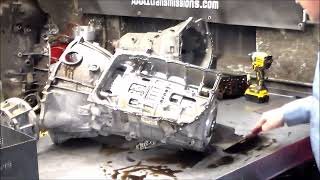
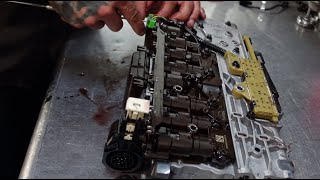
How to confirm: After confirming other codes, a technician will need to remove the transmission pan and valve body to visually inspect 🎬 See this step-by-step 6L80 valve body teardown guide. the separator plate orifices for blockage or fine cracks.
Typical fix: Clean the valve body and separator plate thoroughly. If the plate is cracked, warped, or damaged, it must be replaced. Upgraded aftermarket plates are available to prevent repeat failures.
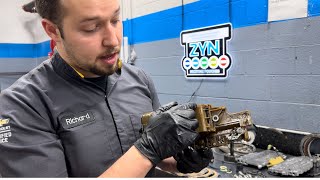
Est. part cost: $50-$100 - Low or Incorrect Transmission Fluid Level 🟡 Medium Probability → Shop Transmission Assembly TSB #PIP4379K indicates that a low fluid level can cause a loss of pump prime, especially during a cold start, 🎬 Watch: Troubleshooting a 6L80 that won't move when hot. leading to delayed engagement and setting P0701 and other codes. Leaks from cooler lines, the pan gasket, or seals are common sources of fluid loss.
How to confirm: Perform a transmission fluid level check using the proper 'Hot Check' procedure as specified by GM. The fluid should be at the correct level, red in color, and not smell burnt.
Typical fix: Top off the fluid to the correct level with DEXRON-VI automatic transmission fluid and repair any leaks. If the fluid is dirty or burnt, a fluid and filter change is required.
Est. part cost: $50-$150 - Failed Transmission Solenoid / TEHCM Assembly 🔴 High Probability → Shop Transmission Assembly The TSBs list numerous solenoid-specific codes (e.g., P0751, P0756) that often appear with P0701. On the 6L80, the solenoids are integrated into the TEHCM. These solenoids can fail electronically or become stuck due to contaminated fluid, often from a failing torque converter. The internal pressure switches on the TEHCM are also a common failure point.
How to confirm: A professional scan tool will identify specific solenoid or pressure switch fault codes. A technician can test solenoid resistance (typically 20-40 Ohms for on/off solenoids) but mechanical sticking may not show electrically.
Typical fix: Because the solenoids, switches, and TCM are an integrated unit, the entire TEHCM assembly is typically replaced as a unit. This is the most robust repair as debris often compromises the entire valve body. The new TEHCM must be programmed to the vehicle.
Est. part cost: $400-$800 - Torque Converter Failure 🟡 Medium Probability → Shop Automatic Transmission Torque Converter The torque converter clutch (TCC) in the 6L80 is a known weak point that can wear out, causing a 'rumble strip' shudder and shedding metallic debris into the transmission fluid. This debris, which can look like gray sludge or coffee grounds, then clogs solenoids and damages the valve body and TEHCM, leading to a cascade of failures including P0701.
How to confirm: Symptoms include a shudder or vibration during light acceleration at cruising speeds. A technician will also inspect the transmission pan for excessive metallic debris during service.
Typical fix: Replace the torque converter. If significant debris is found, the TEHCM, valve body, and transmission cooler must also be cleaned or replaced to prevent repeat failure.
Est. part cost: $300-$700
Rare But Worth Checking
- Wiring Harness Damage: Damage to the wiring harness between the PCM and TCM can cause communication errors or faulty sensor readings, triggering a P0701 code. Check for chafing, corrosion, or loose connectors, especially at the main transmission plug and ground points.
- Cracked Transmission Pump / Stator Support Shaft: → Shop Transmission Assembly Though less common, the stator support shaft within the transmission pump can develop cracks. This can lead to internal hydraulic leaks, clutch failure, and delayed or slipping engagement, which can trigger a P0701 and other gear ratio codes. This is a major internal repair.
Diagnosis Steps
- Use a professional-grade scan tool to read all diagnostic trouble codes from the Transmission Control Module (TCM), not just the engine computer. Do not rely on the P0701 code alone.
- Check the transmission fluid level and condition using the manufacturer's specified 'Hot Check' procedure.
- Inspect the transmission pan magnet for excessive metal debris, which could indicate torque converter or other internal mechanical failure.
- Inspect the transmission wiring harness and connectors for any visible damage, corrosion, or loose connections.
- Follow the specific diagnostic procedures outlined in the factory service manual for any other codes found in the TCM.
- If the vehicle will not move and codes from TSB #PIP5100 are present, inspect the valve body separator plate for blockages or cracks.
- If specific solenoid or pressure switch codes are present, diagnose the TEHCM. This often leads to replacement of the entire TEHCM unit.
- If a torque converter shudder is present, diagnose the TCC system, which may require replacement of the converter.
Parts You'll Likely Need
- Automatic Transmission Valve Body Separator Plate
(OEM #24241785)— TSBs directly identify blockages or cracks in the separator plate as a primary cause of P0701 and no-move conditions on these trucks.
Trusted brands: ACDelco, GM Genuine Parts
OEM price range: $60-$90
Aftermarket price range: $40-$70 - Transmission Electro-Hydraulic Control Module (TEHCM)
(OEM #24256861 (example, verify by VIN))— This integrated unit contains the TCM, solenoids, and pressure switches, and is a very common failure point. It is often replaced as a complete assembly to resolve solenoid or internal electronic faults.
Trusted brands: ACDelco, Dorman
OEM price range: $500-$800
Aftermarket price range: $300-$600 - Transmission Filter Kit — Should be replaced any time the transmission pan is removed for service. TSBs warn that debris from aftermarket filter packaging can cause blockages.
Trusted brands: ACDelco, Wix, ATP
OEM price range: $30-$60
Aftermarket price range: $20-$40
Related Codes That Often Appear With This One
- P0700 — This is an almost identical code to P0701, also indicating a general transmission fault has been requested by the TCM.
- P0751, P0756, P0776 — These are codes for specific shift solenoid performance issues. A failing solenoid is a common reason for the TCM to set a general fault like P0701, and often points to replacing the entire TEHCM assembly.
- P0877, P2723 — These codes relate to transmission fluid pressure switch performance. TSB #PIP5100 links them directly to blocked orifices in the valve body separator plate.
- U0101 — This code indicates a loss of communication with the TCM. It can be caused by a wiring issue or a complete failure of the internal TEHCM.
Technical Service Bulletins (TSBs) & Recalls
- PIP4379K: Delayed or no gear engagement with numerous DTCs, including P0701. Warns against replacing the TCM as a first step.
- PIP5100A: No-move condition in forward or reverse with P0701 and other codes. Instructs technicians to inspect valve body separator plate orifices for blockage.
Platform-Specific Known Issues
- TSB #PIP5100A: Warns that debris, particularly from aftermarket spin-on filter packaging, can get into the transmission and plug orifices in the valve body separator plate, causing a no-move condition and setting P0701.
- TSB #PIP4379K: Addresses customer complaints of delayed or no engagement into drive or reverse, especially on a cold start. It links P0701 with a wide range of other codes and points to low fluid level or loss of pump prime as potential causes.
Mechanic-Grade Diagnostic Values
- Shift Solenoid (On/Off type) Resistance — expected: 20-40 Ohms. Failure: A reading outside this range indicates a failed solenoid coil.
- Pressure Control Solenoid (PWM type) Resistance — expected: 3-8 Ohms. Failure: A reading outside this range suggests a faulty solenoid coil.
- TCM Power Supply Voltage — expected: 12.4V or higher at rest. Failure: Voltage drops below 9V or spikes above 16V at the TCM power pin can trigger a P0701.
Scan Tool Commands That Help
- GM GDS2 / Tech2: Solenoid Valve Automated Cleaning Process — If a solenoid performance DTC is present or a solenoid fails a bench air test, this function can be used to cycle all solenoids to flush debris before resorting to TEHCM replacement.
- GM GDS2 / Techline Connect: TEHCM Programming — This is required after installing a new or remanufactured TEHCM. The module must be programmed with the vehicle's VIN or it will not operate.
- GM GDS2 / Tech2: Fast Learn / Reset Adapts — This procedure must be performed after TEHCM programming to establish baseline shift adapt values. Skipping this step will result in poor shift quality.
Wiring & Ground Locations
- Main Transmission Harness Connector — On the passenger side of the transmission case.. It is a very common issue for this connector to not be fully seated after service, leading to a loss of communication with the TCM (U0101) and triggering a P0701. It has a slide-to-lock mechanism that must be fully engaged.
- GMT900 Body Grounds — Key locations include a ground from the negative battery cable to the passenger side fender, grounds on the firewall, and grounds near the front of the engine block.. Poor grounds on the GMT900 platform are a known cause of widespread electrical issues, including intermittent voltage to the TCM, which can cause communication codes and P0701. Cleaning and upgrading these grounds is a common preventative measure.
- TCM Power and Ground Pins — Within the 80-way connector at the TEHCM. Specifically Pin 10 (Battery Positive Voltage) and Pin 9 (Ground).. When diagnosing a potential TEHCM failure or communication issue, verifying stable voltage and a solid ground directly at these pins is a critical step to rule out a wiring or power supply problem before condemning the expensive module.
Real Owner Repair Stories
- gm-trucks.com forum user (2011 GMC Sierra) — Check engine light with codes P0700, P0701, and P0751 (Shift Solenoid A Performance/Stuck Off). Transmission was stuck in what felt like 3rd gear (limp mode).
❌ Tried (didn't work) The user did not report trying other fixes first; diagnosis pointed directly to the solenoid issue.
✅ What actually fixed it The TEHCM (valve body with integrated solenoids and TCM) was replaced. The user noted that since the solenoids are part of the valve body assembly, the entire unit had to be swapped out. This resolved all codes and restored normal shifting.
OEM Part Supersession History
24256861→19434978 (as of July 2025, previously 19435614)— Standard part revision and updates by the manufacturer.
Heads up: The TEHCM is year and model-specific. While part numbers may supersede, the correct module must be selected and programmed to the vehicle's VIN. Installing a TEHCM from a different year, even if it physically fits, can cause a no-start or immediate limp mode condition.
Helpful Videos
We Have This Part in Stock


The information in this article is provided for general reference and educational purposes only. Vehicle specifications, procedures, and part compatibility can vary by production date, trim level, and region. Always consult your vehicle's factory service manual and verify part numbers before purchasing or performing repairs. Safety-critical components such as airbags, seat belts, and braking systems should be installed by a qualified professional.
- Gmc SIERRA:
- 🧭 Diagnostic Flowchart
- 🎬 Helpful Videos
- 🛍️ Shop This Part
- What's Unique About the 2011-2013 Gmc SIERRA
- Symptoms You May Notice
- Most Likely Causes
- Rare But Worth Checking
- Diagnosis Steps
- Parts You'll Likely Need
- Related Codes That Often Appear With This One
- Technical Service Bulletins (TSBs) & Recalls
- Platform-Specific Known Issues
- Mechanic-Grade Diagnostic Values
- Scan Tool Commands That Help
- Wiring & Ground Locations
- Real Owner Repair Stories
- OEM Part Supersession History
- 🎟️ Get 5% Off