

P0701 on 2001-2008 GMC Sierra 2500: Transmission Fault Causes & Fixes
P0701 on your Sierra 2500 is a general transmission fault code. The most likely cause is low transmission fluid, a failing Transmission Control Module (TCM), or a bad Neutral Safety Switch. You must scan the TCM for more specific codes to diagnose the actual problem, as P0701 itself is just an informational alert.
- P0701 is a general alert. You MUST scan the Transmission Control Module (TCM) for the specific, actionable codes.
- Before suspecting expensive parts, perform the GM-specific 'Hot Check Procedure' to verify the transmission fluid level is correct. Low fluid is a very common cause.
- On 2001-2005 models with the Allison transmission, the Neutral Safety Back-Up (NSBU) switch is a frequent point of failure.
- Do not replace the TCM unless all other possibilities, including fluid level, wiring, and other failed components, have been professionally ruled out.
What's Unique About the 2001-2008 Gmc SIERRA 2500
The 2001-2008 Sierra 2500, which spans the GMT800 and early GMT900 generations, typically uses the robust Allison 1000 or 4L80-E transmissions. For these trucks, GM has issued specific Technical Service Bulletins (like PIP4379N) highlighting that P0701 is often triggered by something as simple as a low transmission fluid level, which can cause the internal pump to lose its prime, especially in cold weather or after a fluid change. Other known weak points on this platform are the externally-mounted TCM, which is prone to internal circuit failure, and the Neutral Safety Back-Up (NSBU) switch on earlier Allison models (2001-2005), which is notorious for failing due to its exposed location.
Diagnostic Flowchart
Tap your situation to follow the diagnostic path that matches what you're seeing on this vehicle.
Generation note: This range covers two generations: the GMT800 (2001-2006 and 2007 'Classic') and the GMT900 (2007-2008). The GMT800 models, particularly 2001-2005 with the Allison transmission, are known for issues with the Neutral Safety Back-Up (NSBU) switch. The externally mounted TCM is a known weak point across both generations, though part numbers may differ. Always verify parts for your specific model year.
Symptoms You May Notice
- Check Engine Light is on
- Transmission shifts harshly, erratically, or with a delay
- Delayed or no engagement when shifting into Drive or Reverse
- Transmission is stuck in one gear (limp mode)
- Transmission slipping between gears
- Decreased fuel efficiency
- "Shift Range Inhibited" message on the instrument cluster
- PRNDL (gear indicator) display on the dash is blank, flashing, or incorrect
- Replacing the Transmission Control Module (TCM) without proper diagnosis. The official GM TSB for this issue explicitly states that replacing the TCM is unlikely to correct the problem if it's related to low fluid or loss of pump prime.
- Assuming the transmission needs a rebuild. Because P0701 is a generic code, it is often triggered by simple external issues like low fluid, a bad NSBU switch, or a wiring fault. These should always be checked first.
Most Likely Causes
- Low or Incorrect Transmission Fluid 🔴 High Probability → Shop Transmission Assembly GM TSB PIP4379N/L specifically calls this out as a primary cause. A low fluid level can cause the transmission pump to lose prime, especially after a fluid change or in cold weather, triggering various fault codes including P0701.
How to confirm: Check the transmission fluid level and condition using the manufacturer's specified 'Hot Check Procedure'. The fluid should be at the top of the hot mark when the transmission temperature is ~175°F (80°C), and it should not appear dark, burnt, or contain debris.
Typical fix: Top off with the correct type of automatic transmission fluid (e.g., DEXRON-VI for later models). If the fluid is dirty, a fluid and filter change is needed. Find and repair any leaks.
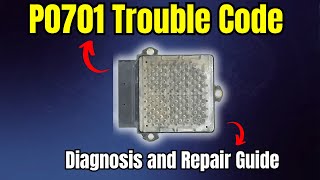
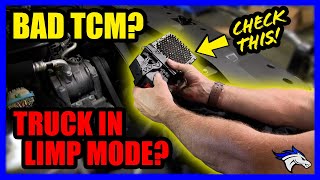
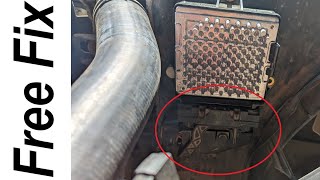
Est. part cost: $15-$150 - Faulty Transmission Control Module (TCM) 🟡 Medium Probability → Shop Transmission Assembly The TCM on these trucks is mounted externally on the radiator fan shroud and is a known failure point. It can suffer from internal circuit failure due to vibration, heat, and moisture, causing a wide range of transmission faults and communication codes like U0100.
How to confirm: After ruling out all other possibilities (fluid, wiring, grounds, other codes), the TCM is the likely culprit. Diagnosis involves checking for proper power and ground at the TCM connector and verifying communication with a scan tool. A professional may observe pressure switch data changing erratically on a scan tool about a minute after startup, pointing to internal TCM failure.
Typical fix: Replace the Transmission Control Module. The new module will need to be programmed to the vehicle's VIN, although some remanufactured units are sold pre-programmed.
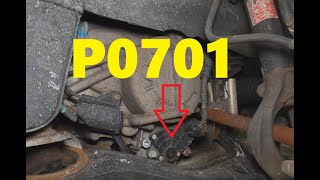
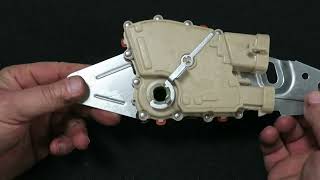
Est. part cost: $200-$600 - Faulty Neutral Safety Back-Up (NSBU) Switch 🟡 Medium Probability → Shop Neutral Safety Switch This is a very common failure on 2001-2005 models with the Allison 1000 transmission. Also known as a PRNDL switch, it's exposed to the elements on the side of the transmission and can fail due to water intrusion and wear, sending incorrect gear position data to the TCM.
How to confirm: Symptoms include the gear indicator on the dash not matching the actual gear, a no-start condition, or a flashing PRNDL display. A scan tool may show erratic position data or a specific code like P0708. The TCM compares the NSBU signal to the internal pressure switch manifold (PSM); a mismatch triggers a fault.
Typical fix: Replace the NSBU switch, located on the driver's side of the transmission selector shaft.
Est. part cost: $50-$150 - Wiring Harness Damage ⚪ Low Probability GM has noted specific areas where the engine/transmission harness can chafe against metal components, leading to short circuits. Common rub points include the ECM/TCM bracket, the upper control arm, and the shock tower bolt.
How to confirm: Visually inspect the entire wiring harness between the TCM and the transmission case connector for any signs of rubbing, melting, or corrosion. Pay close attention to the known chafe points near the driver's side wheel well area.
Typical fix: Repair the damaged wire(s) and re-route or protect the harness with anti-abrasion tape or loom to prevent future contact.
Est. part cost: $10-$300
Rare But Worth Checking
- Internal Transmission Mechanical Failure: → Shop Transmission Assembly The TSB mentions that codes like P0701 can be set due to internal issues like a cracked suction filter, a damaged filter seal, or a stuck valve in the pump cover, leading to a loss of hydraulic pressure. This is a worst-case scenario that should be considered after all external factors are ruled out.
- Poor Main Ground Connection: A corroded or loose main ground for the ECM/TCM can cause a host of bizarre electrical issues, including communication faults that trigger a P0701. On GMT800 trucks, grounds G101/G104 on the front-left of the engine block are critical and should be inspected. A bad ground can mimic a failed TCM.
Diagnosis Steps
- Obtain a full diagnostic scan. Use a scanner capable of reading codes from the Transmission Control Module (TCM), not just a basic OBD-II reader. This is the most critical step.
- Document all codes found in the TCM. The P0701 is just the messenger; the other codes (e.g., P0708, P0872, U0100) will point to the real problem.
- Check the transmission fluid level and condition. Follow the GM 'Hot Check Procedure' precisely. Ensure the fluid is full and clean. This is the most common and easiest fix.
- Inspect the transmission wiring harness and connectors. Look for any signs of chafing, corrosion, or loose connections. Pay special attention to the large round connector on the transmission, the TCM connectors, and known chafe points along the driver's side frame rail and near the upper control arm.
- Inspect main power and ground connections. Check the primary engine/chassis grounds (G101/G104 on the engine block) for corrosion or looseness, as a bad ground can cause module communication errors.
- If a Neutral Safety Switch code (P0708) or symptoms are present (erratic PRNDL), test the switch's operation. This is a very common failure on 2001-2005 models.
- If no other codes are present and the fluid, wiring, and grounds are good, the TCM itself becomes a primary suspect.
Parts You'll Likely Need
- Automatic Transmission Fluid — Low or degraded fluid is a very common and simple cause for this code, as highlighted in multiple GM service bulletins for causing a loss of pump prime.
Trusted brands: ACDelco DEXRON-VI
OEM price range: $10-$20 per quart
Aftermarket price range: $8-$15 per quart - Transmission Control Module (TCM)
(OEM #24256861 (example for 06-10 Duramax))— A common failure point on these trucks that can cause a wide range of transmission faults, often manifesting as a P0701 code when it fails internally.
Trusted brands: ACDelco, Dorman, Synapse (Remanufactured)
OEM price range: $400-$600
Aftermarket price range: $200-$450 - Neutral Safety Back-Up (NSBU) Switch
(OEM #29540479 (for Allison 1000, 2001-2005))— A very common failure on 2001-2005 models with the Allison transmission, causing incorrect gear position signals, no-start conditions, and triggering limp mode.
Trusted brands: ACDelco, Standard Motor Products, Merchant Automotive
OEM price range: $100-$180
Aftermarket price range: $50-$120
Related Codes That Often Appear With This One
- P0700 — P0700 is nearly identical to P0701; both are generic requests from the TCM to turn on the check engine light. Some systems may use one or the other, but they serve the same purpose.
- P0731-P0736 — These codes indicate incorrect gear ratios, which can be caused by slipping clutches or hydraulic issues often linked to the root cause of the P0701, such as low fluid pressure.
- P0751, P0756, etc. — These are codes for shift solenoid performance. A failing solenoid or a hydraulic issue preventing the solenoid from working correctly can easily trigger the general P0701 fault.
- U0100, U0101 — These are communication codes indicating a loss of communication with the ECM or TCM. If you see these alongside P0701, it strongly suggests a wiring issue, a bad ground, or a failed TCM.
Technical Service Bulletins (TSBs) & Recalls
- PIP4379N / PIP4379L: Addresses delayed or no engagement and a range of DTCs including P0701. It strongly points to low fluid level causing a loss of pump prime as the root cause, especially in cold weather or after a service. It explicitly warns that TCM replacement is unlikely to fix this specific condition.
- 21-NA-149: While for newer models, this bulletin details the engineering reasons for engine harness chafing against components like the TCM bracket and upper control arm, a problem that also exists on GMT800/900 platforms and can cause P0701.
Platform-Specific Known Issues
- Per TSB PIP4379N/L, a loss of transmission pump prime can occur after a fluid change, from a leak, or during a cold start, leading to P0701 and other codes. The first step should always be to verify the fluid level is correct using the hot check procedure.
- On 2001-2005 models with the Allison 1000, the NSBU switch is a primary suspect if the gear indicator is acting erratically or the truck won't start. Its exposed position on the transmission makes it prone to failure.
Mechanic-Grade Diagnostic Values
- TCM Power Supply Voltage (Key On) — expected: 12.0 V to 14.5 V. Failure: Voltage drops below 9V or spikes above 16V can trigger the code.
- TCM Ground Resistance — expected: Below 0.1 Ω. Failure: Higher resistance indicates a poor ground, which can cause erratic module behavior.
- Allison 1000 Shift Solenoids (C, D, E) Resistance — expected: 22 - 24.5 Ω. Failure: Readings outside this range indicate a failed solenoid.
- Allison 1000 Trim Solenoids (A, B) Resistance (2001-2005) — expected: 5.5 - 6.5 Ω. Failure: An out-of-spec reading points to a faulty trim solenoid.
- Allison 1000 TCC Solenoid Resistance (2001-2005) — expected: 10.5 - 11.5 Ω. Failure: Resistance outside this range suggests a bad Torque Converter Clutch solenoid.
- Allison 1000 Speed Sensors (Turbine, Output, Engine) AC Voltage — expected: 150mV - 15V AC (Varies with RPM). Failure: No voltage or erratic voltage can indicate a failed sensor.
Hidden / Shadow Codes Worth Checking
- Allison-Specific DTCs: The Allison transmission can store its own set of more specific fault codes that won't be read by a standard OBD-II scanner. P0701 is the generic code sent to the ECM, but the root cause is in the TCM's memory. (see via Use a professional scan tool like a GM Tech2, or retrieve codes via the transmission shift selector. With the key on and engine off, press the 'Up' and 'Down' arrow buttons on the shifter simultaneously to display codes on the gear indicator screen.)
Scan Tool Commands That Help
- GM Tech2 / GDS2: Transmission Output Control — This function allows a technician to command individual shift solenoids and the TCC solenoid on and off to verify their mechanical operation and check the integrity of the wiring circuit, helping to isolate a faulty component from a wiring or TCM driver issue.
- GM Tech2 / GDS2: Transmission Data List — Monitor live data from all transmission sensors, including the NSBU switch position, pressure switch manifold states, speed sensors, and fluid temperature. A reading that is erratic, stuck, or doesn't match the vehicle's state is a key diagnostic clue. For example, seeing the NSBU switch position flicker while the shifter is stationary points to a bad switch.
Wiring & Ground Locations
- G103 / G104 — On the front-left of the engine block, near the alternator. These are the primary grounds for the ECM and TCM.. A poor connection at these grounds can cause low voltage or electrical noise, leading to communication errors (U-codes) and performance codes like P0701. They are a common source of issues that mimic a failed TCM.
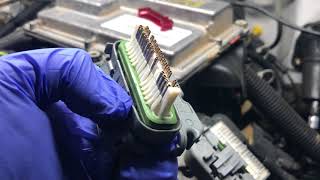
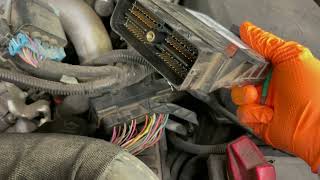
- TCM Main Connector (C1/C2) — On the Transmission Control Module, which is mounted to the radiator fan shroud on the driver's side of the engine bay.. This is the central connection point. All sensor inputs and solenoid outputs pass through here. Check for pin corrosion, damage, or poor terminal tension, especially on power (Pin 2 & 4, Pink) and ground (Pin 1 & 5, Black/White) wires.
- Transmission Case Connector — The main round connector on the passenger side of the Allison transmission case.. This connector links the internal transmission harness (solenoids, pressure switches, temp sensor) to the main vehicle harness. Damage or corrosion here can interrupt signals for multiple components at once.
- NSBU Switch Connectors — On the Neutral Safety Back-Up switch, located on the driver's side of the transmission where the shift linkage connects (2001-2005 models).. These two connectors are exposed to road debris and moisture. Corrosion or damage here is a very common cause of incorrect gear position signals being sent to the TCM, directly leading to P0701 and 'Shift Range Inhibited' messages.
Real Owner Repair Stories
- DuramaxDiesels.com Forum (2004 GMC Sierra 2500HD (LB7)) — No crank, no start, P0701 code present. Transmission would not engage any gear when the starting issue was bypassed.
❌ Tried (didn't work) Replacing the NSBU switch (twice, once with an aftermarket and once with an OEM Allison part)., Replacing the NSBU pigtail connectors., Checking all related fuses.
✅ What actually fixed it The problem was a faulty ignition switch. It was not providing the correct voltage on the circuit that powers the NSBU switch and starter relay, causing the no-start and triggering the transmission fault codes. Replacing the ignition switch resolved all issues.
OEM Part Supersession History
29540479→19540535— Updated design for better durability and resistance to moisture.
Heads up: This is the NSBU switch for 2001-2004 models with the dual-connector design. The original black switch was replaced by an updated tan-colored switch.Multiple (e.g., 29545535, 25798353, 24252363)→24256861, which is now superseded by 19435614— Internal revisions and hardware updates by the manufacturer.
Heads up: This is the TCM for later model years (approx. 2006-2009+). Always verify the correct part number for your specific VIN. These modules require programming to the vehicle after installation.
Model Year Variations Within This Range
- 2001-2005: These models use a 5-speed Allison 1000 transmission with an external, dual-connector NSBU switch that is a very common failure point. The valve body has six solenoids.
- 2006-2008: GM introduced the 6-speed Allison 1000. This version eliminated the problematic external NSBU switch, integrating its function into an internal mode switch. The valve body was redesigned, using seven solenoids and different pressure control logic. While a 5-speed can be converted to a 6-speed, it requires significant internal parts and a different TCM.
Helpful Videos


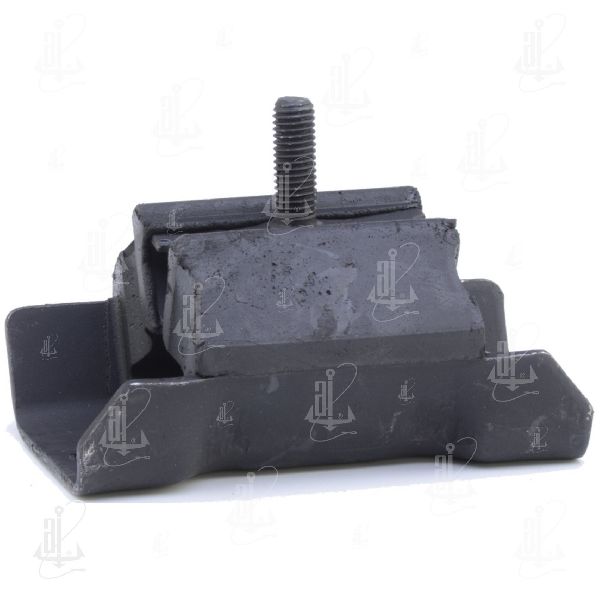
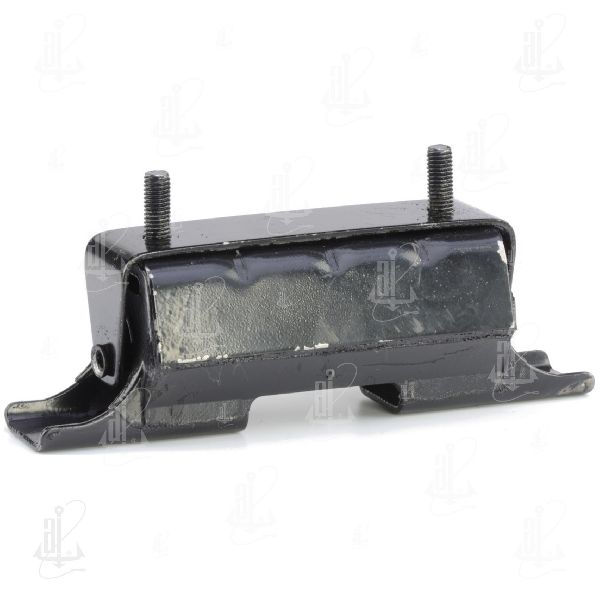
We Have This Part in Stock

The information in this article is provided for general reference and educational purposes only. Vehicle specifications, procedures, and part compatibility can vary by production date, trim level, and region. Always consult your vehicle's factory service manual and verify part numbers before purchasing or performing repairs. Safety-critical components such as airbags, seat belts, and braking systems should be installed by a qualified professional.
- Gmc SIERRA 2500:
- 🧭 Diagnostic Flowchart
- 🎬 Helpful Videos
- 🛍️ Shop This Part
- What's Unique About the 2001-2008 Gmc SIERRA 2500
- Symptoms You May Notice
- Most Likely Causes
- Rare But Worth Checking
- Diagnosis Steps
- Parts You'll Likely Need
- Related Codes That Often Appear With This One
- Technical Service Bulletins (TSBs) & Recalls
- Platform-Specific Known Issues
- Mechanic-Grade Diagnostic Values
- Hidden / Shadow Codes Worth Checking
- Scan Tool Commands That Help
- Wiring & Ground Locations
- Real Owner Repair Stories
- OEM Part Supersession History
- Model Year Variations Within This Range
- 🎟️ Get 5% Off