

P0701 on 2008-2012 GMC Sierra Denali: Transmission Control System Fault Guide
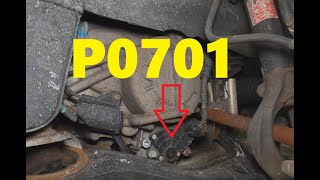
P0701 on a 2008-2012 GMC Sierra Denali indicates the Transmission Control Module (TCM) has detected a fault and requested the Check Engine Light. It's a general code that is almost always accompanied by more specific transmission codes retrieved from the TCM. The most common underlying cause is a worn or damaged valve body separator plate inside the 6L80 transmission, which causes hydraulic pressure loss. Other common issues include torque converter failure and failure of the internally-mounted
- P0701 is a general code; you must scan the Transmission Control Module (TCM) for the specific codes that are causing the problem.
- For the 2008-2012 Sierra Denali, the most likely culprit for a P0701 with shifting problems is a worn internal valve body separator plate.
- Always check the transmission fluid level and condition first, as low fluid can cause similar symptoms.
- This is not a DIY-friendly repair for beginners. Internal transmission work is complex and requires special care and tools.
- Do not replace the TCM or ECM without first ruling out the more common mechanical and hydraulic faults inside the transmission.
What's Unique About the 2008-2012 Gmc SIERRA DENALI
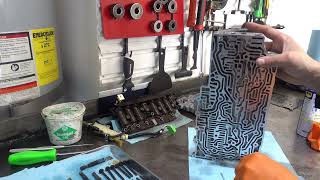
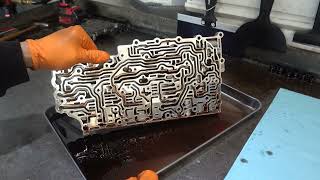
The 2008-2012 Sierra Denali uses the GM 6L80 (or occasionally the heavier-duty 6L90) automatic transmission. A well-documented, high-failure item with these transmissions is the internal valve body separator plate. The steel plate's checkball seats and orifices wear out, causing hydraulic cross-leaks between circuits. This leads to pressure loss, shift flares, slipping, and eventually, no-move conditions. 🎬 Watch: A deep dive into the real causes of 6L80 failure. Manufacturer technical service bulletins specifically point to inspecting this plate for wear when symptoms like no gear engagement occur with a P0701 code. [Bulletin #PIP5100A]
Diagnostic Flowchart
Tap your situation to follow the diagnostic path that matches what you're seeing on this vehicle.
Symptoms You May Notice
- Check Engine Light is on
- Delayed or no engagement into Drive or Reverse. [Bulletin #PIP4379M, Bulletin #PIP5100A]
- Harsh, jerky, or erratic shifting.
- Transmission slipping or flaring (engine RPMs spike) between gears.
- Vehicle enters "limp mode," often getting stuck in 3rd gear.
- Inability for the vehicle to move at all. [Bulletin #PIP5100]
- "Rumble strip" feeling or shudder during light acceleration, a classic sign of torque converter clutch failure.
- Flashing gear position indicator (PRNDL) on the dash.
- Replacing the Engine Control Module (ECM). The ECM is only reporting the fault; the problem originates in the transmission's control system.
- Replacing individual shift solenoids without inspecting the separator plate. If the plate is the root cause of the pressure loss, new solenoids will not fix the issue. This is less applicable on the 6L80 as solenoids are part of the TEHCM, but the principle stands: the hydraulic fault must be fixed, not just the electronic symptom.
- Replacing the TEHCM/TCM without addressing a failed torque converter. If a bad converter has filled the system with debris, the new TEHCM and valve body will soon be damaged as well.
Most Likely Causes
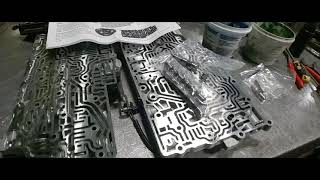
- Worn or Damaged Valve Body Separator Plate 🔴 High Probability → Shop Transmission Valve Body As documented in GM Technical Service Bulletins PIP5100A and PIP5100, the orifices and checkball seats in the 6L80 separator plate can wear, causing cross-leaks in hydraulic circuits. This leads to pressure loss and an inability for clutches to apply correctly, triggering various shift performance codes alongside P0701. This is a widely known failure point in the 6L80 transmission family.
How to confirm: After retrieving specific DTCs from the TCM (e.g., for shift solenoids or gear ratios), a technician will drop the transmission pan and valve body to physically inspect the separator plate for damage, wear (especially around checkball locations), or blocked orifices. Sonnax provides diagrams showing common wear locations.
Typical fix: Replace the valve body separator plate with an updated, more durable version. The valve body gaskets, which are bonded to the plate, are replaced as part of this service. Aftermarket solutions from Sonnax are popular as they often include other small components to address known hydraulic leaks in the valve body.
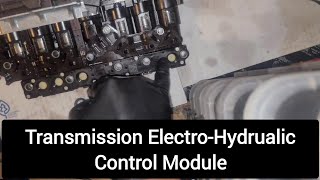
Est. part cost: $15-$60 - Failed Transmission Control Module (TCM/TEHCM) 🟡 Medium Probability → Shop Transmission Assembly The TCM in a 6L80 is integrated with the valve body solenoids into a single unit called a TEHCM (Transmission Electro-Hydraulic Control Module). It is located inside the transmission pan, where it is constantly exposed to heat and vibration, which can lead to electronic failure over time. Failures of the internal pressure switches (which are part of the TEHCM) are common.
How to confirm: A diagnostic scan tool may show a loss of communication with the TCM (code U0101) or specific internal TEHCM circuit faults. A technician will verify power and ground to the module before condemning it. TSB PIP4379M specifically notes that replacing the TCM is unlikely to correct pressure-related DTCs, highlighting the need to differentiate this from a separator plate issue.
Typical fix: The TEHCM must be replaced, which requires removing the valve body from the transmission. The new module must be programmed to the vehicle's VIN using dealership-level software.
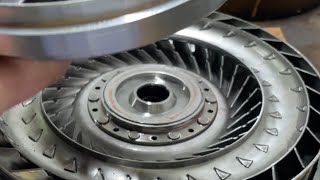
Est. part cost: $300-$700 - Torque Converter Failure 🟡 Medium Probability → Shop Automatic Transmission Torque Converter The torque converter clutch (TCC) is a very common failure point on the 6L80 transmission. When the clutch fails, it creates a shudder (often described as driving over rumble strips) and sends metallic debris throughout the transmission fluid. This debris clogs solenoids, wears out the valve body, and can lead to overheating, triggering a P0701 and codes like P0741 (TCC Stuck Off).
How to confirm: Symptoms include a noticeable shudder at cruising speeds. A technician will monitor TCC slip RPM with a scan tool. Inspecting the transmission fluid for excessive metallic debris is a key indicator. If the pan is dropped and a layer of metallic sludge is found, the converter is highly suspect.
Typical fix: This is a major repair. The transmission must be removed to replace the torque converter. Due to contamination, the transmission and cooler lines must be thoroughly flushed. Often, the transmission requires a full rebuild or replacement because the debris damages clutches and other internal components.
Est. part cost: $400-$2000 for the converter alone - Low or Burnt Transmission Fluid ⚪ Low Probability → Shop Transmission Assembly Leaks from the pan gasket, cooler lines, or case seals can lead to low fluid levels. Low fluid can cause the transmission pump to lose its prime, leading to a lack of hydraulic pressure needed for gear engagement, a condition noted in TSB PIP4379M. Overheating from heavy towing can also burn the fluid, reducing its lubricating properties.
How to confirm: Check the transmission fluid level and condition following the specific GM procedure (checking when hot via a check plug on the side of the pan, as there is no dipstick). Fluid should be at the correct level, red in color, and not have a burnt smell.
Typical fix: Top off the fluid to the correct level or perform a transmission fluid and filter change using DEXRON-VI fluid. If the level was low, the source of the leak must be found and repaired.
Est. part cost: $50-$150
Rare But Worth Checking
- Failed Shift Solenoid or Pressure Switch: → Shop Transmission Valve Body While individual solenoids can fail, they are integrated into the TEHCM on the 6L80. A specific solenoid performance code (e.g., P0751, P0776) will almost always be present. The failure is often within the TEHCM itself rather than a simple, individually replaceable solenoid. It is more common for the underlying cause to be hydraulic pressure loss from the separator plate, which prevents the solenoid from doing its job correctly.
- Wiring Harness Issues: Damage to the main transmission wiring harness connector at the transmission case can cause communication errors or loss of power, triggering a P0701 and often a U0101 (Lost Communication with TCM). This should be inspected for corrosion or pushed-back pins before condemning the internal TEHCM.
Diagnosis Steps
- Scan for Codes: Use an OBD-II scanner capable of reading codes from the Transmission Control Module (TCM). The P0701 in the ECM is just a pointer; the real codes are in the TCM.
- Check Fluid: Check the transmission fluid level and condition. This must be done with the vehicle level and the transmission at operating temperature (160-200°F). Remove the check plug on the side of the pan; a small trickle of fluid indicates a correct level. Note fluid color and smell; dark, burnt, or metallic fluid indicates severe internal wear.
- Analyze TCM Codes: The specific codes found in the TCM (e.g., P0741, P0751, P0894) will guide the diagnosis toward a specific circuit (TCC, shift solenoid) or a general hydraulic pressure issue.
Parts You'll Likely Need
- Transmission Valve Body Separator Plate
(OEM #24245720 (For early Type 1 valve bodies))— This is the most common point of failure on the 6L80 transmission leading to the symptoms and codes associated with P0701, as identified in manufacturer TSBs and extensive owner reports. There are different plates for different valve body types.
Trusted brands: ACDelco, Sonnax
OEM price range: $15-$30
Aftermarket price range: $20-$60 - Transmission Electro-Hydraulic Control Module (TEHCM)
(OEM #24256861 (Part number varies by year/calibration, always verify with VIN))— The TEHCM is the combined computer and solenoid body. It fails due to heat and vibration, causing communication codes, stuck solenoids, or erratic behavior. It must be replaced if it has internal electronic faults.
Trusted brands: ACDelco (GM Genuine)
OEM price range: $300-$700
Aftermarket price range: N/A (Remanufactured units exist but have a poor reputation for reliability) - Automatic Transmission Fluid — Required for any service involving dropping the transmission pan and valve body. Approximately 6-8 quarts are needed for a pan drop service.
Trusted brands: ACDelco DEXRON-VI
OEM price range: $8-$12 per quart
Aftermarket price range: $7-$10 per quart - Transmission Filter and Pan Gasket — Always replaced whenever the transmission pan is removed for service.
Trusted brands: ACDelco, Wix, ATP
OEM price range: $25-$40
Aftermarket price range: $15-$30
Related Codes That Often Appear With This One
- P0741 — Torque Converter Clutch (TCC) System - Stuck Off. A very common companion code indicating the TCC is failing to engage, often due to a bad converter, worn TCC regulator valve in the valve body, or debris.
- P0751 — Shift Solenoid 'A' Performance/Stuck Off. Often related to a hydraulic leak at the separator plate or an internal fault in the TEHCM. [Bulletin #PIP4379M]
- P0776 — Pressure Control Solenoid 'B' Performance/Stuck Off. Indicates a pressure regulation issue, often linked to valve body or separator plate wear. [Bulletin #PIP4379M]
- P0894 — Transmission Component Slipping. A general code indicating the transmission is detecting a slip, often a result of low hydraulic pressure from a worn separator plate or failing clutches. [Bulletin #PIP4379M]
- U0101 — Lost Communication With TCM. This code points directly to an electrical issue, either a wiring problem or a complete failure of the TEHCM module.
Technical Service Bulletins (TSBs) & Recalls
- PIP4379M: No engagement into drive, delayed, no engagement into reverse, and or a range inhibit.
- PIP5100A: Vehicles that will not move in forward or reverse, directs inspection of valve body separator plate orifices.
- PIP5100: Earlier version of PIP5100A with similar guidance.
Platform-Specific Known Issues
- TSB #PIP5100A and #PIP5100 specifically call out inspecting the valve body separator plate orifices for wear on vehicles that will not move and have set a P0701 along with other transmission codes.
- TSB #PIP4379M lists a wide array of transmission DTCs that, when seen with P0701, can indicate a loss of transmission pump prime, often due to a low fluid level.
Mechanic-Grade Diagnostic Values
- TEHCM Main Connector - Power and Ground — expected: Pin 4 (Battery +): 12V+. Pin 5 (Ground): Good continuity to chassis ground. Pin 12 (Run/Crank Power): 12V+ with key in ON/START position.. Failure: Loss of voltage or high resistance on any of these pins indicates a wiring or power supply issue external to the transmission.
- Shift Solenoid Resistance (Bench Test) — expected: On/Off type: 20-40 ohms. PWM type: 3-8 ohms.. Failure: Readings outside these ranges indicate a failed solenoid coil within the TEHCM, requiring TEHCM replacement.
- Pressure Switch Function (Bench Test) — expected: The five pressure switches are normally closed, showing continuity to ground. When ~30 PSI is applied, the circuit should open.. Failure: A switch that is stuck open (no continuity) or stuck closed (continuity remains under pressure) has failed.
Hidden / Shadow Codes Worth Checking
- N/A - Focus on TCM Codes: P0701 is a request from the TCM to the ECM to turn on the check engine light. There are no 'hidden' codes for P0701 itself. The critical diagnostic step is to use a capable scan tool (like GM's GDS2) to read the specific PXXXX codes stored within the TCM, which are the actual faults. (see via A professional scan tool that can communicate with the Transmission Control Module, not just the Engine Control Module.)
Scan Tool Commands That Help
- GDS2 (or equivalent J2534 device): Service Fast Learn Adapts — Required after replacing the TEHCM, valve body, or performing any major transmission repair. This procedure allows the TCM to quickly re-learn clutch apply pressures and shift timing. Skipping this can result in harsh shifts or premature wear.
- GDS2 (or equivalent J2534 device): Solenoid/Valve Characterization Programming — When a new TEHCM is installed, it must be programmed with the vehicle's VIN and the specific solenoid characterization data (often found on a tag on the new part). This ensures the TCM's commands match the hydraulic reality of the specific solenoids.
- GDS2 (or equivalent J2534 device): Cylinder Deactivation (AFM) Status — To diagnose a shudder that could be either TCC-related or caused by the Active Fuel Management (AFM) system. A technician can monitor when AFM is active to see if it correlates with the shudder, helping to differentiate the two common issues.
Wiring & Ground Locations
- TEHCM Main Connector (16-pin) — The main electrical connector on the passenger side of the transmission case.. This is the single point of failure for all power, ground, and communication between the vehicle and the internal TEHCM. Corrosion or pushed-back pins here (especially Pin 5 for ground, Pin 4 for Battery+, and Pin 12 for Ignition+) can cause a P0701 and a host of communication/power-related DTCs.
- Engine to Frame Ground Strap — Typically a braided strap connecting the engine block to the vehicle's frame rail.. A corroded or broken main ground strap can cause erratic behavior in all vehicle electronics, including the TCM. The transmission relies on the engine's ground path. Verifying this connection is a fundamental step in diagnosing any electronic fault.
Real Owner Repair Stories
- gm-trucks.com forum user (2011 Sierra) — Harsh 1-2 shift, P0701 and P0894 (Transmission Component Slipping) codes.
❌ Tried (didn't work) Transmission fluid and filter change.
✅ What actually fixed it The owner dropped the valve body and found the separator plate had worn spots where the check balls seat. Replacing the separator plate with an updated aftermarket version resolved the harsh shifting and cleared the codes.
OEM Part Supersession History
e.g., 24241350, 24252114→e.g., 24256861, 24274046, and many others— GM made numerous hardware and software revisions to the TEHCM to address issues with pressure switches, solenoids, and heat tolerance.
Heads up: TEHCMs are NOT interchangeable between year groups. For example, a 2011 TEHCM will not work in a 2008 truck, and vice-versa, even if it physically fits. The internal logic and communication protocols are different. The replacement TEHCM must be the correct part number for the specific model year and MUST be programmed with the vehicle's VIN to function.
Model Year Variations Within This Range
- 2008-2009 vs 2010-2012: Early 6L80s (pre-2010) have different TEHCM hardware and software logic compared to later models. While many internal parts are similar, swapping a complete transmission from a different year group will cause communication failures and a no-work condition unless the correct year-specific TEHCM is used and programmed. Some internal hard parts, like the 1-2-3-4 clutch piston, were also updated in later years to improve durability.
Helpful Videos
We Have This Part in Stock


The information in this article is provided for general reference and educational purposes only. Vehicle specifications, procedures, and part compatibility can vary by production date, trim level, and region. Always consult your vehicle's factory service manual and verify part numbers before purchasing or performing repairs. Safety-critical components such as airbags, seat belts, and braking systems should be installed by a qualified professional.
- Gmc SIERRA DENALI:
- 🧭 Diagnostic Flowchart
- 🎬 Helpful Videos
- 🛍️ Shop This Part
- What's Unique About the 2008-2012 Gmc SIERRA DENALI
- Symptoms You May Notice
- Most Likely Causes
- Rare But Worth Checking
- Diagnosis Steps
- Parts You'll Likely Need
- Related Codes That Often Appear With This One
- Technical Service Bulletins (TSBs) & Recalls
- Platform-Specific Known Issues
- Mechanic-Grade Diagnostic Values
- Hidden / Shadow Codes Worth Checking
- Scan Tool Commands That Help
- Wiring & Ground Locations
- Real Owner Repair Stories
- OEM Part Supersession History
- Model Year Variations Within This Range
- 🎟️ Get 5% Off