

P0701 on 2013-2015 GMC Sierra Denali: Transmission Control System Fault Guide
P0701 indicates a general transmission fault. On these trucks, especially those with the 6L80 transmission, the most likely cause is an issue with the valve body separator plate cracking or having its orifices blocked. This leads to hydraulic pressure loss, causing symptoms like no gear engagement. Expect a repair cost of $500-$1500 at a shop, as this is not a simple DIY job. Scanning the TCM for specific codes is mandatory for diagnosis.
- P0701 is a general alert from the transmission; the real, specific fault codes are stored in the Transmission Control Module (TCM) and require a special scanner to read.
- Do not drive the vehicle. The most common symptoms are severe, including delayed engagement or the truck not moving at all, which can leave you stranded.
- For the 6L80 transmission in these trucks, the most likely cause is a damaged valve body separator plate, a known issue documented in GM's own service bulletins.
- Do not simply replace the TCM. Diagnosis should focus on checking fluid and inspecting internal hydraulic and mechanical components first.
What's Unique About the 2013-2015 Gmc SIERRA DENALI
This year range covers two different generations of the Sierra Denali: the 2013 model (GMT900 platform) and the 2014-2015 models (K2XX platform). Both primarily use the 6L80 6-speed automatic transmission, which is known for specific issues. Manufacturer technical service bulletins for the 2013 model year specifically point to problems with the valve body separator plate causing symptoms like no or delayed gear engagement. [PIP4379M, PIP5100A] TSB PIP5100 explicitly mentions that debris, sometimes from aftermarket filter packaging, can block critical orifices in the separator plate, leading to a no-move condition and a P0701 code. This makes internal hydraulic issues a more likely cause than a simple sensor or module failure on other vehicles.
Diagnostic Flowchart
Tap your situation to follow the diagnostic path that matches what you're seeing on this vehicle.
Generation note: The 2013 model year is the final year of the second generation (GMT900), while 2014 and 2015 are the first two years of the third generation (K2XX). Both generations in this range commonly use the 6L80 6-speed automatic transmission, and the known issues are largely consistent. However, always verify parts by VIN, as the 8-speed 8L90 transmission was introduced in some 2015 models. The 6L80 separator plate itself underwent design changes, with a 'Type 2' plate used from 2010-2014 and a 'Type 3' from 2014 onward, which are functionally different.
Symptoms You May Notice
- Vehicle will not move in forward or reverse. [PIP5100, PIP5100A]
- Delayed engagement into Drive or Reverse. [PIP4379M]
- Harsh or jerky shifting.
- Transmission gets stuck in one gear (limp mode).
- "Range Inhibit" or "Shift Inhibited Select Neutral to Reset" message on the driver information center. [PIP4379M]
- Check Engine Light is illuminated.
- Flashing gear selector indicator (PRNDL).
- Immediately replacing the Transmission Control Module (TCM) without diagnosis. The provided TSBs suggest this is often not the root cause.
- Clearing the P0701 code without scanning the TCM for the more specific codes that actually identify the problem.
- Performing only a fluid and filter change when the underlying cause is a mechanical issue like a cracked separator plate.
Most Likely Causes
- Damaged or Deformed Valve Body Separator Plate 🔴 High Probability → Shop Transmission Valve Body Multiple GM Technical Service Bulletins (TSBs) for the 2013 model specifically instruct technicians to inspect the valve body separator plate orifices for issues when P0701 is present with engagement problems. [PIP5100, PIP5100A] TSB PIP5100 notes that debris can block orifices like the 'Modulated main feed orifice', causing a no-move condition. The plate is known to crack or have its bonded gaskets delaminate, causing hydraulic cross-leaks. Updated plates were released to address these issues.
How to confirm: After dropping the transmission pan and removing the valve body, the separator plate must be visually inspected for cracks, warping, or clogged orifices as per the TSBs. There are three design types of plates; identification is done by a notch pattern on the plate's edge.
Typical fix: Replace the valve body separator plate with an updated OEM or a more durable aftermarket version (e.g., from Sonnax). The valve body itself should be cleaned and inspected. The filter plate between the TEHCM and valve body must also be replaced.
Est. part cost: $50-$150 - Low or Incorrect Transmission Fluid 🟡 Medium Probability → Shop Transmission Assembly A TSB notes that a low fluid level can cause a loss of pump prime, especially on cold starts, leading to engagement issues and setting code P0701. A low or dirty fluid condition is a common cause for general transmission performance codes.
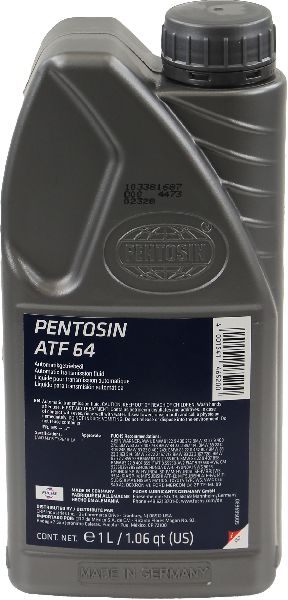
How to confirm: Check the transmission fluid level and condition according to the manufacturer's 'Hot Check' procedure. The fluid should be at the correct level, red in color, and not smell burnt. Only DEXRON-VI fluid should be used.
Typical fix: Top off the fluid to the correct level with DEXRON-VI automatic transmission fluid. If the fluid is dirty or burnt, a fluid and filter change is necessary. Address any leaks found.
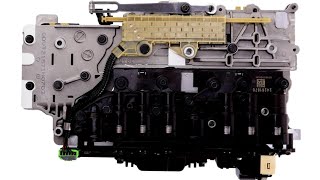
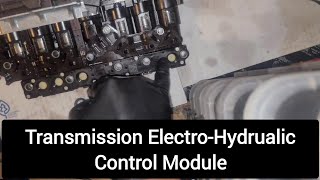
Est. part cost: $50-$120 - Faulty Transmission Control Module (TCM/TEHCM) ⚪ Low Probability → Shop Transmission Assembly The TCM (also called a TEHCM in the 6L80, as it combines the module and solenoids) is located inside the transmission pan, exposed to heat and fluid. While failure is possible, a TSB explicitly states that replacing the TCM is unlikely to correct this issue, pointing to mechanical/hydraulic faults as more probable. However, internal TEHCM circuit failures can cause multiple simultaneous solenoid and pressure switch codes, which is a strong indicator of a bad module.
How to confirm: This is typically a diagnosis of exclusion. If all other causes are ruled out and specific TCM communication or multiple pressure switch codes (e.g., P0877, P2715) are present, the module itself may be faulty. A technician can perform a bench test on the TEHCM using a special test plate (DT47825-100) to check solenoid function.
Typical fix: Replace the TEHCM assembly. This requires removing the valve body and must be followed by programming the new module to the vehicle's VIN using GM's Service Programming System (SPS).
Est. part cost: $300-$700
Rare But Worth Checking
- Damaged Wiring Harness or Connectors: The wiring harness to the transmission can be damaged by road debris or corrosion, leading to communication errors that can trigger a P0701 code. A thorough visual inspection is warranted if other causes aren't found.
- Plugged Transmission Filter: → Shop Transmission Assembly A severely plugged internal or spin-on transmission filter can restrict fluid flow enough to cause low line pressure, triggering a P0701 and a no-move condition. TSB PIP5100 specifically warns that protective shrink-wrap from aftermarket filters can get into the system and plug valve body orifices.
Diagnosis Steps
- Use a professional-grade scan tool to read codes from BOTH the Engine Control Module (ECM) and the Transmission Control Module (TCM). P0701 will be in the ECM; the more important, specific codes will be in the TCM.
- Document all codes found in the TCM. These will guide the rest of your diagnosis.
- Check the transmission fluid level and condition using the proper 'Hot Check' procedure. The fluid should be full, clean, and red. Use only DEXRON-VI.
- Inspect the transmission wiring harness and connectors for any visible damage, corrosion, or loose connections.
- If codes and symptoms align with the TSBs (e.g., no engagement, gear ratio codes), drop the transmission pan.
- A technician may check main line pressure at the tap port to verify if the pump is creating pressure (should be 45-80 psi at idle).
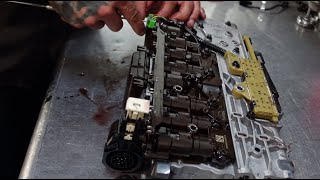
- Remove the valve body assembly and carefully inspect the separator plate for cracks, warping, or blockages, paying close attention to the orifices mentioned in the TSBs. [PIP5100A]
- If the plate is damaged, replace it along with the filter plate that sits between the valve body and TEHCM. If the plate is intact, further diagnosis of the valve body, solenoids, and TEHCM is required.
Parts You'll Likely Need
- Valve Body Separator Plate
(OEM #24272467)— This is the most likely culprit according to multiple manufacturer TSBs for the symptoms associated with P0701 on this platform. [PIP5100, PIP5100A] There are multiple designs; verify the correct one for your year.
Trusted brands: ACDelco, Sonnax
OEM price range: $70-$120
Aftermarket price range: $50-$100 - Transmission Control Module (TEHCM)
(OEM #24256861)— Though less likely to be the sole cause, a faulty TEHCM can trigger P0701. It is often replaced when multiple solenoid or pressure switch codes are present. This part number applies to 2010-2013 models and has been superseded.
Trusted brands: ACDelco, GM Genuine Parts
OEM price range: $300-$700
Aftermarket price range: $250-$500
Related Codes That Often Appear With This One
- P0700 — This is another generic code indicating a fault in the transmission control system, often used interchangeably with P0701 by manufacturers.
- P0731-P0736 — These codes indicate incorrect gear ratios. The TSBs list these as commonly appearing with P0701, pointing to internal slipping or hydraulic issues. [PIP4379M]
- P0751, P0756, P0761, P0776 — These codes relate to shift solenoid performance. The TSBs directly link them to P0701 and the associated no-movement symptoms, often caused by a blocked separator plate orifice or a failing TEHCM. [PIP4379M]
- P0877, P2723 — These are pressure switch and solenoid codes also listed in the TSBs as being related to the valve body issues that trigger P0701. [PIP5100, PIP5100A] A P0877 code specifically can be caused by a blocked reverse pressure orifice in the separator plate.
Technical Service Bulletins (TSBs) & Recalls
- PIP4379M: Addresses no/delayed engagement and range inhibit, listing P0701 among many other codes.
- PIP5100A: Addresses vehicles that won't move, specifically calling out inspection of the valve body separator plate when P0701 is present.
- PIP5100: An earlier version of PIP5100A with similar guidance.
Platform-Specific Known Issues
- TSB #PIP5100A and #PIP5100 state that for vehicles that will not move, technicians should inspect the valve body separator plate orifices for being blocked or damaged after finding code P0701. TSB #PIP5100 specifically calls out debris from aftermarket filter packaging as a potential cause for the blockage.
- TSB #PIP4379M links P0701 with a wide range of gear ratio and solenoid codes, pointing to a common underlying hydraulic fault.
- Forum Experience (DuramaxDiesels.com): A user with a similar GM transmission and P0701 code reported a no-move condition. The initial advice from an expert was to check for main line pressure at the tap port to confirm a basic hydraulic issue before tearing into the transmission.
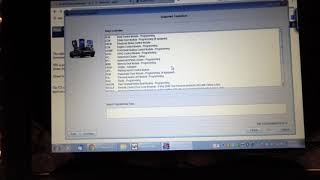
- Real Repair Story (YouTube): A 2009 Chevy Silverado HD with P0701 and a "Shift Inhibited" message was fixed by replacing the TEHCM (Part No. 24256861) and reprogramming it. The technician diagnosed the faulty module by observing that all four pressure switch data PIDs on his scan tool would erratically change state after about a minute of idling.
Mechanic-Grade Diagnostic Values
- TEHCM Shift Solenoid (On/Off type) Resistance — expected: 20 - 40 Ohms. Failure: Readings outside this range indicate a failed solenoid coil.
- TEHCM Pressure Control Solenoid (PWM type) Resistance — expected: 3 - 8 Ohms. Failure: Readings outside this range indicate a failed solenoid coil.
- Transmission Main Line Pressure at Idle — expected: 45 - 80 psi. Failure: Significantly lower pressure indicates a pump, regulator valve, or major leak issue.
- Transmission Main Line Pressure at Wide Open Throttle (Stall) — expected: Up to 300 psi (though some sources recommend a lower max of 190-210 psi to avoid damage). Failure: Failure to build pressure indicates a pump, clutch, or hydraulic circuit failure.
- TEHCM Pressure Switch Resistance (actuated) — expected: ~10 Ohms. Failure: Incorrect or nonexistent readings when pressure is applied (e.g., with a pencil eraser) indicates a bad switch.
Scan Tool Commands That Help
- GDS2 / Tech2 (or equivalent professional scanner): Service Fast Learn Adapts — This procedure must be performed after replacing the TEHCM, valve body, or entire transmission to reset and relearn clutch volume indexes and shift pressures for proper operation.
- GDS2 / Tech2 with Test Plate J-47825-1: Solenoid ON/OFF Command — Used to bench test the TEHCM. A technician commands a specific solenoid on and off while applying shop air to the test plate; a pressure gauge should show pressure building and exhausting, confirming mechanical function of the valve and solenoid.
Wiring & Ground Locations
- G102 — On the lower left front of the engine.. A poor engine ground can cause a variety of electrical issues, including faulty sensor readings or communication problems between the ECM and TCM.
- G201 — Upper left corner of the dash.. This is an interior ground point; poor connection here could affect modules located inside the cab that communicate with the powertrain.
- Transmission Main Connector (16-pin) — On the driver's side of the transmission case.. This is the primary interface for all power, ground, and communication signals (CAN bus) to the TEHCM. Pins 10 & 11 (or 13 & 14 for the second CAN bus) are critical for communication with the rest of the vehicle.
- Engine Block to Firewall Ground Strap — Typically runs from the rear of the passenger-side cylinder head to the firewall.. This is a critical ground path. On GM trucks, this strap is known to corrode or break, leading to widespread electrical gremlins that can mimic module failures.
OEM Part Supersession History
24256861→19435614— Updated hardware/software revision for improved reliability.
Heads up: Part number 24256861 is for 2010-2013 models. It is not compatible with 2014+ models which use a different TEHCM (e.g., 24274046). Programming to the vehicle's VIN is always required.24245720 (Separator Plate, Type 2)→24272467 (Separator Plate, Type 3)— Design change to accommodate an eighth check ball and alter orifice sizing for improved hydraulic control.
Heads up: The Type 3 plate can be retrofitted to an older 6L80, but the eighth check ball must also be installed. The Type 2 plate (for 2010-2014) does not use the eighth check ball.
Model Year Variations Within This Range
- 2013 vs 2014-2015: The 2013 GMT900 truck uses TEHCM P/N 24256861. The 2014-2015 K2XX trucks use a different TEHCM (e.g., 24274046). They are not interchangeable.
- 2014: The 2014 model year was a transition year for the valve body separator plate. It could have either the 'Type 2' (OE# 24245720) or the updated 'Type 3' (OE# 24272467) plate. Visual identification using the notch pattern on the plate is required before ordering a replacement.
Helpful Videos
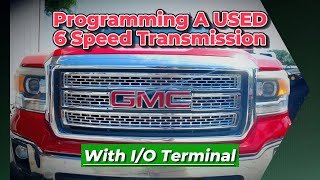
We Have This Part in Stock
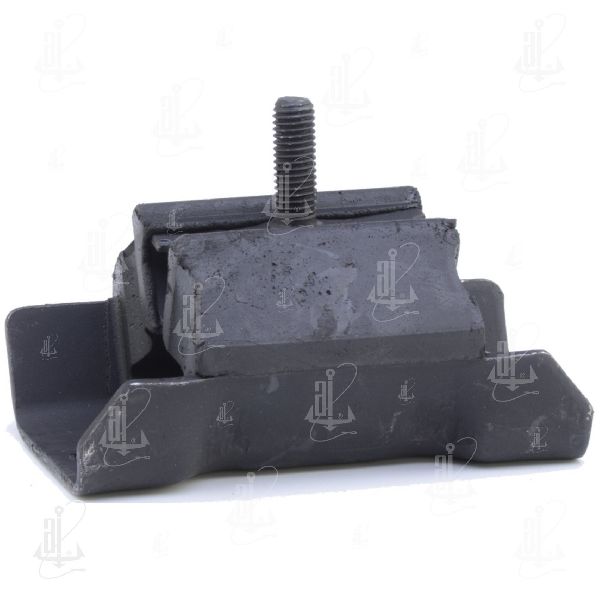
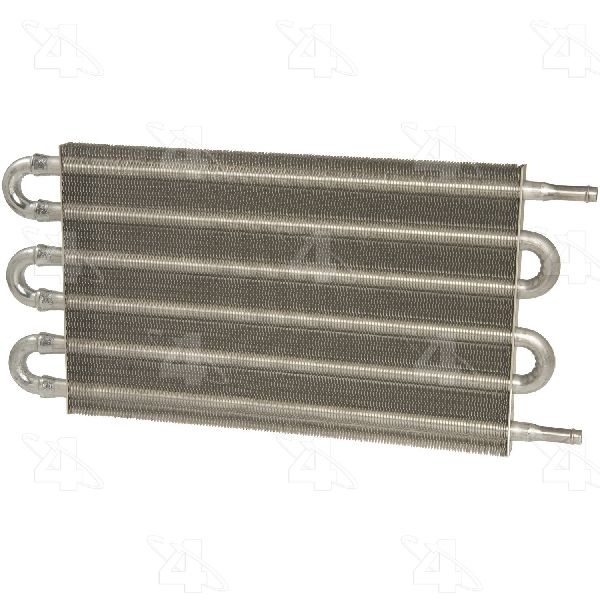

The information in this article is provided for general reference and educational purposes only. Vehicle specifications, procedures, and part compatibility can vary by production date, trim level, and region. Always consult your vehicle's factory service manual and verify part numbers before purchasing or performing repairs. Safety-critical components such as airbags, seat belts, and braking systems should be installed by a qualified professional.
- Gmc SIERRA DENALI:
- 🧭 Diagnostic Flowchart
- 🎬 Helpful Videos
- 🛍️ Shop This Part
- What's Unique About the 2013-2015 Gmc SIERRA DENALI
- Symptoms You May Notice
- Most Likely Causes
- Rare But Worth Checking
- Diagnosis Steps
- Parts You'll Likely Need
- Related Codes That Often Appear With This One
- Technical Service Bulletins (TSBs) & Recalls
- Platform-Specific Known Issues
- Mechanic-Grade Diagnostic Values
- Scan Tool Commands That Help
- Wiring & Ground Locations
- OEM Part Supersession History
- Model Year Variations Within This Range
- 🎟️ Get 5% Off