

P0701 on 2021-2022 Jeep Wrangler 3.6L: Transmission Software Update Causes and Fixes
On a 2021-2022 Wrangler, the P0701 code is almost always caused by outdated transmission software. The fix is a simple reprogram at a Jeep dealership, which is addressed in official Technical Service Bulletins (TSBs). Before replacing any parts, have a dealer check for software updates.
- P0701 on your 2021-2022 Wrangler is a flag for a transmission problem; the real code is in the TCM.
- The most likely cause is outdated TCM software, not a broken part.
- DO NOT replace any parts before having a Jeep dealer check for available software updates.
- Look for the companion code P1DB7-00, as it strongly points to the TSB-documented software fix.
- The repair may be as simple and inexpensive as a 1-hour dealer visit for a software flash.
What's Unique About the 2021-2022 Jeep Wrangler
For the 2021-2022 Jeep Wrangler JL with the 8-speed 850RE automatic transmission, this code is very frequently a software issue, not a mechanical failure. Jeep has released several Technical Service Bulletins (TSBs) advising dealers to reprogram the Transmission Control Module (TCM) with updated software to resolve this exact code, often seen with P1DB7-00. This is far more common than actual part failures, making a software check the most important first step in diagnosis.
Symptoms You May Notice
- Check Engine Light is on
- Harsh, jerky, or delayed shifts, especially from Park to Reverse.
- Transmission gets stuck in a single gear ('limp mode').
- Vehicle may stall, particularly after an engine auto start/stop event or when shifting.
- Engine revs higher than usual between shifts ('shift flare').
- Transmission overheating warning light may illuminate.
- Sudden loss of power or unresponsiveness to the accelerator pedal.
- Replacing transmission sensors or solenoids individually before checking for software updates.
- Replacing the entire valve body/TCM assembly without first attempting the much cheaper software reprogram.
- Replacing the torque converter before performing the TSB-specified software flash, as the software is designed to correct the logic that flags the torque converter issue.
Most Likely Causes
- Outdated Transmission Control Module (TCM) Software 🔴 High Probability → Shop Transmission Assembly Jeep has issued multiple TSBs for this specific issue on this platform, indicating a widespread problem with the original factory software logic that misinterprets data, especially concerning torque converter clutch operation.
How to confirm: A Jeep dealer or a qualified shop with a wiTECH scan tool must check the current software calibration ID against the latest available updates referenced in TSBs. For 2022 models, reference TSB 21-029-22 or its revision 21-022-25 REV. A. For 2021 models, TSB 21-013-21 or a similar bulletin applies.
Typical fix: Reprogramming (flashing) the TCM with the latest software version. This is a non-invasive, software-only repair that typically takes less than 30 minutes.
Est. part cost: $0 - Torque Converter Clutch Performance Issue 🟡 Medium Probability → Shop Automatic Transmission Torque Converter This is often linked directly to the software issue. TSB 21-022-25 REV. A explicitly connects P0701 with code P1DB7-00 (Torque Converter Clutch Performance), with the prescribed fix being the TCM software update. In some cases where the software update does not resolve the issue, a physical failure of the torque converter can occur.
How to confirm: Scan for the companion code P1DB7-00. If a software update doesn't fix the issue, a technician may inspect the transmission fluid for excessive metal shavings, which would indicate a mechanical failure.
Typical fix: First, perform the TCM software update as prescribed by the TSB. If the problem persists and mechanical failure is confirmed, the torque converter will need to be replaced.
Est. part cost: $400-$800 - Low or Dirty Transmission Fluid ⚪ Low Probability → Shop Transmission Assembly This is a universal cause for any automatic transmission, not specific to this platform. It's less likely than the software issue on these newer vehicles unless there is a leak or the vehicle has high mileage.
How to confirm: Check the transmission fluid level and condition according to the manufacturer's procedure. The fluid should be at the correct level and reddish in color, not dark brown or black, and should not have a burnt smell. The 850RE transmission does not have a traditional dipstick, making this check more involved.
Typical fix: Perform a transmission fluid and filter change. If the fluid is low, the source of the leak must be found and repaired.
Est. part cost: $100-$250
Rare But Worth Checking
- Faulty Valve Body / TCM Assembly: → Shop Transmission Valve Body On the Wrangler JL, the TCM is integrated into the valve body inside the transmission pan. While some owners have had this assembly replaced under warranty, it is an expensive repair that should only be considered after all software updates have been performed and ruled out as the cause. A potential Mopar part number is 68393625AA or a superseding part.
- Wiring Harness or Connector Issue: Damage to the wiring harness leading to the transmission can disrupt communication and trigger faults. A connector located behind the passenger side front wheel liner is a known point of failure for corrosion or bad pin connections, which can cause various transmission faults. This is more common on vehicles used heavily off-road. Another chafe point is where the harness can rub against an exhaust pipe flange.
- Failing Main or Auxiliary Battery: The complex dual-battery system (for Engine Start-Stop) on the Wrangler is a frequent source of electrical issues. A failing auxiliary or main battery can cause low voltage conditions (below 9V or spikes above 16V) that lead to communication errors between modules, potentially triggering a P0701 code or other transmission-related faults like P1DB9.
Diagnosis Steps
- Connect a high-quality OBD-II scanner capable of reading transmission-specific codes.
- Check for any other DTCs stored in the TCM, paying close attention to P1DB7-00.
- Contact a Jeep dealership or a qualified shop with access to dealer tools (wiTECH).
- Reference TSBs (e.g., 21-029-22 or 21-022-25 for 2022 models) and have them check if a TCM software update is available for your vehicle's VIN.
- If an update is available, perform the TCM reprogram. This is the most likely fix and should be the first step.
- If no update is available or the code returns, proceed with further diagnosis.
- Check the transmission fluid level and condition. Look for signs of leaks.
- Inspect the transmission wiring harness and connectors for any visible damage, corrosion, or loose connections, paying special attention to the large connector behind the front passenger wheel well liner.
- Test the vehicle's main and auxiliary batteries, as low voltage can cause communication faults.
- If fluid is dark/burnt or contains metal shavings, suspect internal mechanical failure (e.g., torque converter) and prepare for more extensive repairs.
Parts You'll Likely Need
- Transmission Control Module (TCM) Reprogram — This is not a physical part, but a software update. It is the most common and manufacturer-recommended fix for P0701 on this vehicle.
OEM price range: $150-$250
Aftermarket price range: N/A - Automatic Transmission Torque Converter — If a software update does not resolve the issue and companion code P1DB7-00 is present, the torque converter itself may have failed mechanically.
Trusted brands: Mopar, Luk
OEM price range: $600-$900
Aftermarket price range: $300-$500 - Valve Body with Integrated TCM
(OEM #68393625AA (or superseding part))— This is a last-resort repair if software updates fail and diagnosis points to an internal control module or hydraulic failure. It is very expensive and rarely the root cause.
Trusted brands: Mopar
OEM price range: $1200-$2000
Aftermarket price range: N/A
Related Codes That Often Appear With This One
- P1DB7-00 — This code for 'Torque Converter Clutch Performance' is explicitly mentioned in Jeep TSBs as appearing alongside P0701. Its presence is a strong indicator that the TCM software update is the required fix.
Technical Service Bulletins (TSBs) & Recalls
- TSB 21-029-22 / 21-022-25 REV. A: Addresses P0701 and P1DB7-00 on 2022 Wranglers with the 3.6L engine, recommending a TCM software update.
- TSB 21-013-21: An earlier bulletin that addresses P0701 on 2021 Wranglers with the 3.6L e-Torque engine by reprogramming the TCM.
- TSB Bulletin #21-040-24: Notes that a technician must find DTC P0701 and involves reprogramming the TCM with the latest available software to address Malfunction Indicator Lamp (MIL) illumination.
- TSB Bulletin #21-034-24: Specifies that for cases of MIL illumination where P0701 is found, the TCM should be reprogrammed with the latest software.
- TSB Bulletin #21-022-25: Confirms that the vehicle must exhibit P0701 or P1DB7-00 and that customers may experience check engine light illumination.
- TSB Bulletin #2102922: States that upon investigation of a Malfunction Indicator Lamp, a technician may find DTC P0701 Transmission Control System Range/Performance.
Platform-Specific Known Issues
- The 8-speed 850RE transmission in the Wrangler JL platform is known to be sensitive to software calibration, leading to multiple TSBs for shift quality and fault codes.
- Some owners on forums note the P0701 code appearing after specific events, like driving in heavy rain or using 4-Hi Auto, suggesting a potential sensitivity to environmental factors or system stress that the software update aims to correct.
Mechanic-Grade Diagnostic Values
- TCM Power Supply Voltage — expected: 13.2V - 13.5V (during flash procedure). Failure: Voltage dropping below 13.2V or climbing above 13.5V during a flash can interrupt the process and cause failure. In general operation, drops below 9V or spikes above 16V can trigger faults.
Scan Tool Commands That Help
- wiTECH or capable aftermarket (e.g., Autel, JScan): TCM Quick Learn — This procedure should be performed after replacing major transmission components like the valve body/TCM assembly to reset the adaptive learn values. It forces the TCM to relearn clutch fill times and pressures for smooth shifting. It is not a fix for the P0701 software bug itself but is a necessary step after a hardware replacement.
- wiTECH: Reprogram TCM — This is the primary repair for the P0701 code on this platform, as specified by multiple TSBs. It updates the TCM's software to correct logic errors that falsely trigger the fault code.
Wiring & Ground Locations
- XY230A — A large inline connector for the transmission harness located behind the right front fender liner, along the firewall.. This connector is a known failure point. Poor pin connections or corrosion within this connector can interrupt power, ground, or CAN bus communication to the TCM, causing P0701 and other communication faults. Some technicians recommend bypassing the connector for a more robust repair.
- G901C — A ground point for the transmission harness.. A poor connection at this ground can cause a variety of electrical issues for the transmission control system, leading to communication faults and performance codes like P0701.
- G909B — A ground point associated with the Body Control Module and Transmission Control Module circuits.. This ground is part of the TCM's control circuit. A loose or corroded connection here can lead to intermittent and difficult-to-diagnose electronic faults.
- Transmission Harness Chafe Point — On the passenger side, the harness may rest on or near a flange of the exhaust or DPF pipe.. Vibrations and heat can cause the harness to chafe or melt, shorting out wires related to the TCM. This can cause a sudden onset of multiple codes, limp mode, and stalling.
- STAR Connector — Located behind the glove box.. This is a central connection point for multiple vehicle modules. A failure here can cause widespread communication issues across the CAN bus, potentially leading to a P0701 if the TCM loses communication. It is a likely culprit if many unrelated error codes appear simultaneously.
Real Owner Repair Stories
- JLWranglerForums.com user 'alphawolff' (2021 Jeep Wrangler JLU, 44k miles) — Vehicle broke down, no communication with TCM.
❌ Tried (didn't work) Dealer replaced the entire valve body/TCM assembly, but the new part failed immediately upon starting the engine.
✅ What actually fixed it The root cause was a bad pin connection within the XY230A connector located behind the right front fender liner. The user, a technician, recommends bypassing the connector for the four TCM power, ground, and CAN bus wires for a permanent fix. - JLWranglerForums.com user (2021 Jeep Wrangler Unlimited Rubicon Diesel (JLURD), 52,xxx miles) — Multiple communication errors for almost every module, 19 codes pulled, vehicle was still drivable to the dealership.
❌ Tried (didn't work) Initial diagnosis was inconclusive due to the sheer number of codes.
✅ What actually fixed it A technician found that the TCM wiring harness had been laying on the exhaust and melted through, causing a short. The plastic wire tie securing the harness to the firewall had reportedly failed, which is a known issue mentioned in a TSB.
When the Usual Fixes Don't Work
- In some documented cases, the standard fix of a TCM software update did not resolve the issue. One owner on JLWranglerForums had the TCM replaced twice, with the second unit failing immediately. The ultimate cause was found to be a faulty wiring connector (XY230A) between the main harness and the transmission, which was causing a communication breakdown. This highlights that while software is the most common cause, a thorough inspection of the wiring harness, connectors, and grounds is critical if the code returns after a reflash.
Model Year Variations Within This Range
- 2021 vs 2022: While both years use the same 3.6L V6 and 850RE transmission, Jeep issued different TSBs for the P0701 software issue, suggesting different baseline software calibrations from the factory. TSB 21-013-21 applies to 2021 models, while TSB 21-029-22 and its revisions apply to 2022 models. The core problem and fix (TCM reprogram) remain the same.
Diagnostic Flowchart
Other Known Issues on This Vehicle
Issues unrelated to this code that are worth knowing about as an owner of this generation:
- Steering Wander / Loose Feel 🟠 Medium — Very common on 2018-2020 models, leading to multiple TSBs. 2021+ models received an updated steering gear from the factory, but some owners still report a 'dead zone' or vague steering feel. (Ref: TSB 08-074-20 (and its revisions) and 08-003-21 addressed this for 2018-2020 models by replacing the aluminum steering gear with a cast iron one.)
- Dual Battery System (ESS) Failure 🟠 Medium — Widespread reports of the smaller auxiliary battery failing prematurely, which can drain the main battery and cause a no-start condition or various electrical warnings.
- 3.6L Pentastar Rocker Arm/Lifter Failure 🟡 Low — Less common on the updated (ERG/ERC) engine version but still a known potential failure for the Pentastar family. Often presents as a distinct 'ticking' sound from the top of the engine. (Ref: A class-action lawsuit was filed concerning this issue on 2014-2020 models.)
- Paint/Corrosion Issues 🟡 Low — Some owners report premature paint bubbling and corrosion, particularly around door hinges and frame welds. This was more prevalent on earlier JLs but is still mentioned on newer models.
Used vs. New Parts: Buying Guide for This Vehicle
When a used part is the smart pick: For this specific code, buying used parts is generally not recommended. The primary fix is a software update, which cannot be bought used. For secondary failures, a used torque converter is a high-risk purchase due to unknown wear. A used valve body/TCM assembly from a junkyard might be a cost-saving option over a new OEM part, but it comes with significant risks.
Donor-vehicle mileage cap: roughly under 40000 miles for the part to have meaningful remaining life.
What to inspect on the donor part:
- Verify the donor vehicle was not in a major front-end or undercarriage collision.
- If possible, get the VIN of the donor vehicle to check its service history.
- Inspect the valve body/TCM for any signs of physical damage, corrosion, or burnt fluid residue.
- Ensure all electrical connectors and pins on the used part are clean and straight.
OEM-only on this vehicle (don't cheap out):
- Valve Body / TCM Assembly: A used assembly is a gamble. It MUST be reprogrammed to your vehicle's VIN using a dealer tool like wiTECH. There is no guarantee a used part will accept the new programming or that it doesn't have the same internal flaws as the part being replaced. Given the labor involved, a new Mopar part is the safest bet.
Aftermarket brands forum-validated for this vehicle:
- For this specific issue, sticking to OEM Mopar parts is highly recommended, as aftermarket solutions for the integrated TCM/valve body are not widely available or validated.
Brands owners have reported issues with on this vehicle:
- No-name or unverified sellers of 'remanufactured' valve bodies on platforms like eBay or Amazon should be avoided unless they offer a comprehensive warranty and clear return policy.
Real Owner Stories
Aggregated from forums and TSBs cited above. Mileages and costs reflect what owners reported in those sources.
2022 Jeep Wrangler Xtreme Recon 3.6L
Symptoms: Received a 'Service Transmission...' warning on the dash and the vehicle went into limp mode. The issue returned even after a battery replacement.
What fixed it: After a battery replacement did not solve the issue, the dealer proceeded to replace the valve body and the Transmission Control Module (TCM).
Source hint: JLWranglerForums.com thread titled 'Got warning "Service Transmission..."'
Jeep Gladiator 3.6L
Symptoms: The vehicle stalled and set code P0701 immediately after driving in the rain while using the 4-Hi Auto setting.
What fixed it: The source highlights this as a potential trigger for the known software fault, for which a TCM software update is the common fix.
Source hint: JeepGladiatorForum.com thread titled 'P0701 code'
Related OBD-II Codes
Frequently Asked Questions
My 2022 Jeep Wrangler is showing a P0701 code. Is there a specific TSB for this?
I have a 2021 Wrangler with P0701. Does the same TSB apply to my vehicle?
My scanner is showing both P0701 and P1DB7-00. Are these related?
Is a software update really the most likely fix for P0701 on my Wrangler?
Can driving in the rain or using 4-Hi Auto cause the P0701 code to appear?
My Wrangler is stalling after the engine auto start/stop engages and the check engine light is on. Could this be P0701?
I have a Jeep Gladiator with the same symptoms. Does this P0701 issue affect Gladiators too?
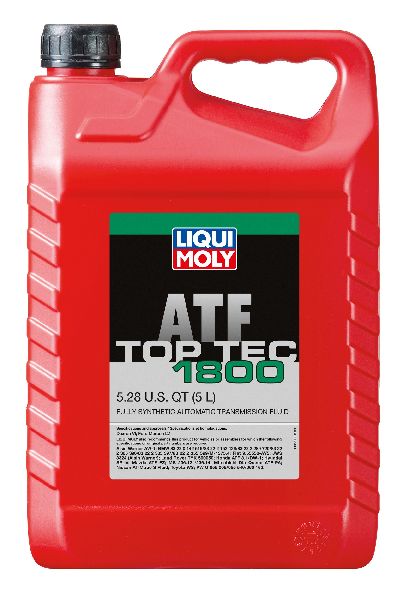
We Have This Part in Stock


The information in this article is provided for general reference and educational purposes only. Vehicle specifications, procedures, and part compatibility can vary by production date, trim level, and region. Always consult your vehicle's factory service manual and verify part numbers before purchasing or performing repairs. Safety-critical components such as airbags, seat belts, and braking systems should be installed by a qualified professional.
- Jeep Wrangler:
- 🧭 Diagnostic Flowchart
- 🛍️ Shop This Part
- What's Unique About the 2021-2022 Jeep Wrangler
- Symptoms You May Notice
- Most Likely Causes
- Rare But Worth Checking
- Diagnosis Steps
- Parts You'll Likely Need
- Related Codes That Often Appear With This One
- Technical Service Bulletins (TSBs) & Recalls
- Platform-Specific Known Issues
- Mechanic-Grade Diagnostic Values
- Scan Tool Commands That Help
- Wiring & Ground Locations
- Real Owner Repair Stories
- When the Usual Fixes Don't Work
- Model Year Variations Within This Range
- Other Known Issues on This Vehicle
- Used vs. New Parts: Buying Guide for This Vehicle
- Real Owner Stories
- 2022 Jeep Wrangler Xtreme Recon 3.6L
- Jeep Gladiator 3.6L
- Related OBD-II Codes
- Frequently Asked Questions
- 🎟️ Get 5% Off