

OBD-II Code P0702: Transmission Control System Electrical Problem
The Ultimate 2026 Guide to Meaning, Diagnosis, and Repair
- P0702 indicates an electrical fault in the transmission control system, meaning you likely need a sensor, wiring repair, or module rather than a $3,000 mechanical rebuild.
- Scan the Transmission Control Module (TCM) for specific codes like P0705 or P0750; fixing these secondary codes resolves the generic P0702 fault 90% of the time.
- Test your battery and alternator first, as voltage drops below 11.5V frequently trigger this code even when the transmission is perfectly healthy.
- Stop driving immediately; P0702 forces the vehicle into 'limp mode' (locked in 2nd or 3rd gear), and highway driving in this state destroys transmission clutch packs.
- If you drive a 2000-2012 Mercedes, Jeep, or Dodge, inspect the 13-pin transmission connector for fluid leaks, which cost $250 to fix before they destroy the $1,000 TCM.
What Does P0702 Mean?
P0702 is a generic OBD-II code indicating the Powertrain Control Module (PCM) or Transmission Control Module (TCM) detected an electrical fault in the automatic transmission's control system. This confirms the issue is electrical (wiring, sensors, solenoids, or the TCM itself) rather than mechanical. Because P0702 is generic, you must use an advanced scanner to read the TCM for specific sub-codes to pinpoint the exact failure.
Technical definition: The SAE/ISO definition for P0702 is "Transmission Control System Electrical". The controlling module registered an electrical malfunction—such as abnormal voltage, out-of-spec resistance, or a CAN bus data communication error—preventing the transmission from operating as commanded.
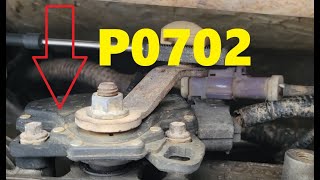
🎬 Watch: A deep dive into understanding the P0702 code.Can I Drive With P0702?
No — Do Not Drive. Driving with P0702 is strongly discouraged. Your vehicle enters 'limp mode,' locking into 2nd or 3rd gear with severely limited speed. Continuing to drive overheats the transmission and destroys internal clutch packs, turning a $200 electrical repair into a $4,000 transmission replacement. Drive only to the nearest safe location or repair shop.
Common Causes
- Low Battery Voltage or Weak Charging System (Very Common) — The transmission control system requires stable voltage. A weak battery, corroded terminals, or a failing alternator causes voltage drops below 11V, triggering a P0702 code even if the transmission itself is perfectly healthy.
- Wiring Harness or Connector Damage (Very Common) — Wires fray, short, or break from engine heat and vibration. Connectors corrode from moisture, severing the electrical connection between the transmission and the TCM.
- Leaking 13-Pin Transmission Connector (Mercedes/Chrysler/Jeep) (Very Common) — On Mercedes-Benz and related Chrysler/Jeep NAG1 transmissions, a faulty 13-pin connector seal allows transmission fluid to wick up the wiring harness directly into the TCM, causing short circuits.
- Defective Transmission Conductor Plate / Valve Body (Common) — Common in Mercedes, Chrysler, Dodge, and Jeep, the conductor plate housing the speed sensors fails electrically, severing communication with the TCM.
- Faulty Transmission Control Module (TCM) (Common) — The TCM is the transmission's brain. Internal circuit failure from heat, vibration, or water intrusion causes it to malfunction. Cracked solder joints are a frequent failure point.
- Blown Fuse or Faulty Relay (Less Common) — A blown fuse or a bad relay in the transmission's power supply circuit cuts power to the TCM, immediately logging an electrical fault.
- Failed Internal Transmission Sensor or Solenoid (Less Common) — An internal short or open circuit in a shift solenoid, speed sensor, or pressure sensor triggers P0702, almost always accompanied by a more specific component code.
- Communication Loss Between Modules (CAN Bus Fault) (Less Common) — The TCM and PCM exchange data over the CAN bus network. A broken CAN-high or CAN-low wire severs communication, registering as a major electrical fault.
Symptoms
- Vehicle Stuck in 'Limp Mode' — The transmission locks into a single gear (usually 2nd or 3rd) to prevent damage, resulting in poor acceleration and high RPMs at highway speeds.
- Harsh, Erratic, or Delayed Shifting — The transmission slams into gear, shifts at the wrong RPMs, or hesitates for several seconds before engaging.
- Check Engine Light and Transmission Warning Light On — The dashboard illuminates the MIL (Malfunction Indicator Lamp) and often a specific gear/transmission warning icon.
- Engine Fails to Crank or Start — If the fault lies in the Transmission Range Sensor (neutral safety switch) circuit, the computer prevents the engine from cranking because it cannot confirm the vehicle is in Park or Neutral.
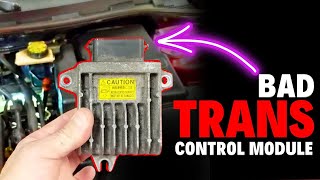
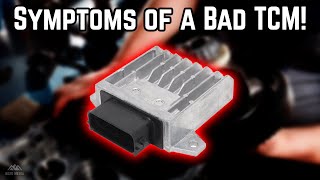
- Engine Stalls When Coming to a Stop — If an electrical fault prevents the torque converter clutch from disengaging, the engine stalls when you stop the car, similar to forgetting to press the clutch in a manual vehicle. 🎬 See common symptoms of a failing transmission control module.
Diagnostic Flowchart
Tap your situation to follow the diagnostic path that matches what you're seeing on this code.
Common Fixes & Costs
- Replace Battery and/or Alternator — Parts: $150-$400, Labor: $100-$250, ~0.8-1.5 hr book time (DIY)
- Replace Leaking 13-Pin Transmission Connector (Mercedes/Chrysler) — Parts: $20-$60, Labor: $150-$300, ~1.0-2.0 hr book time (Intermediate)
- Repair Damaged Wiring or Clean Connectors — Parts: $10-$50, Labor: $150-$500, ~1.0-3.0 hr book time (Intermediate)
- Replace Transmission Valve Body / Conductor Plate — Parts: $200-$500, Labor: $400-$800, ~3.0-5.0 hr book time (Professional)
- Replace Transmission Control Module (TCM) — Parts: $300-$900, Labor: $150-$400, ~1.5-2.5 hr book time (Professional)
DIY vs Professional
- Replace Battery and/or Alternator — Beginner: Yes
Tools: Socket set, wrench set, battery terminal cleaner. - Replace Leaking 13-Pin Transmission Connector — Beginner: Yes
Tools: Socket set, small pick or screwdriver, drain pan, torque wrench. - Repair Damaged Wiring or Clean Connectors — Beginner: No
Tools: Multimeter, wiring diagrams, wire strippers, crimpers, heat shrink tubing, electrical contact cleaner. - Replace Transmission Valve Body / Conductor Plate — Beginner: No
Tools: Large drain pan, Torx socket set, torque wrench, transmission fluid pump, lint-free rags. - Replace Transmission Control Module (TCM) — Beginner: No
Tools: Socket set, trim removal tools, advanced OBD-II scanner capable of module programming.
Used vs. New Parts: Buying Guide
When a used part is worth it: For simple electrical components like wiring pigtails or non-programmed modules on older, low-value vehicles.
Donor-vehicle mileage cap: roughly under 80000 miles for the part to have meaningful remaining life.
Donor quality checklist:
- Verify the donor vehicle was scrapped for reasons unrelated to transmission or electrical failure (e.g., rear-end collision).
- Match the part number EXACTLY. Electronic modules are specific to year, model, and software version.
- Avoid conductor plates from vehicles known to have high transmission temperatures.
Decision logic:
- If The part is a TCM requiring VIN programming → Buy a new or remanufactured, pre-programmed unit. Used modules are often locked to the donor's VIN.
- If The vehicle is less than 10 years old → Buy a new or remanufactured part to ensure longevity and secure a warranty.
- If The part is a simple wiring harness or connector → Used is acceptable if the part shows zero signs of corrosion or brittle insulation.
Warranty tradeoff: Salvage yard parts offer a 30-90 day warranty covering the part only. New aftermarket or remanufactured parts include 1-year to lifetime warranties.
Worst-case if a used part fails: $400-$1000 if a used TCM or conductor plate fails, requiring repeat labor costs.
What Happens If You Wait — Timeline
- 0-1 month: Code sets. Vehicle enters limp mode, locking in 2nd or 3rd gear. Shifting is harsh, and engine RPM is high at highway speeds. (MPG impact: 10-25%% · Added cost: $50-$150 in wasted fuel.)
- 1-3 months: Driving in limp mode forces the transmission to operate at extreme temperatures. Fluid breaks down and loses lubricating properties. (MPG impact: 10-25%% · Added cost: $150-$250 for a mandatory fluid flush.)
- 3-6 months: Burnt fluid and high heat glaze the internal clutch packs. The transmission begins slipping, requiring internal mechanical repair. (MPG impact: 15-30%% · Added cost: $800-$2,000 to replace worn clutch packs and torque converter.)
- 6+ months: Catastrophic failure. Overheating and slipping destroy hard parts like planetary gears and the valve body. Full replacement required. (MPG impact: N/A (Vehicle undrivable)% · Added cost: $3,000-$7,000+ for a new transmission.)
Cost of Not Fixing It
- Immediate (0-1 month): Vehicle is stuck in limp mode. Unpredictable shifting poses a safety risk. Fuel economy drops 10-20% due to being locked in an inefficient gear. (Added cost: $50-$150 in wasted fuel.)
- Short Term (1-6 months): Driving in limp mode puts excessive strain on transmission clutches and the torque converter, causing overheating and accelerated wear. (Added cost: $800-$2,000 for replacing burnt clutch packs or a damaged torque converter.)
- Long Term (6+ months): Catastrophic transmission failure. Constant overheating and slipping clutches destroy hard parts like planetary gears and the valve body. (Added cost: $3,000-$7,000+ for a complete transmission replacement.)
Diagnosis Steps
- Scan for All Trouble Codes (TCM & PCM)
Use an advanced OBD-II scanner to read ALL codes from the TCM and PCM. P0702 is general; specific codes like P0705 (Range Sensor) or P0750 (Shift Solenoid) pinpoint the exact component failure.
Tools: Advanced OBD-II Scanner (Beginner) - Check Battery and Charging System
Test battery voltage with the engine off (12.4-12.6V) and running (13.7-14.7V). Voltage supply to the TCM below 11.5V triggers false transmission codes. Clean and tighten all battery terminals.
Tools: Multimeter, Battery Terminal Cleaner (Beginner) - Inspect Transmission Fuses and Relays
Locate the transmission control system fuses and relays. Visually inspect fuses for breaks and swap the TCM relay with a known good identical relay (like the horn relay) to test functionality.
Tools: Owner's Manual, Fuse Puller (Beginner) - Visually Inspect Wiring and Connectors
Inspect the wiring harness routing to the transmission and TCM. Look for melted insulation, chafing, or green corrosion on pins. On Mercedes/Dodge/Jeep models, check the 13-pin transmission connector for fluid leaks.
Tools: Flashlight, Mirror (Intermediate) - Test TCM Power and Ground Circuits Under Load
Identify the TCM's main power and ground pins using a wiring diagram. Verify battery voltage at the power pin. Perform a voltage drop test on the ground circuit; a reading above 0.2V indicates a poor ground connection requiring repair.
Tools: Multimeter, Vehicle-Specific Wiring Diagram (Advanced) - Test Sensor and Solenoid Resistance
Following specific codes from Step 1, test the suspect component's resistance. Compare readings to the manufacturer's service manual. A reading of 'OL' (Open Loop) or zero ohms confirms a failed component.
Tools: Multimeter, Manufacturer Service Manual (Advanced) - Check CAN Bus Network Integrity
Connect an oscilloscope to the CAN-High and CAN-Low wires. A healthy CAN bus shows a mirror-image square wave. Missing signals or distorted waveforms indicate a wiring short or a module corrupting the network.
Tools: Oscilloscope, Wiring Diagram (Professional)
When This Code Triggers (Freeze-Frame Conditions)
- System Voltage: < 11.5V or > 15V (The fault logs during engine start-up if battery voltage is low, or while driving if the alternator fails, causing a voltage spike or drop.)
- Gear Commanded / Gear Actual: Mismatch (The TCM commanded a shift, but an electrical fault prevented the solenoid from activating, setting the code.)
- Engine RPM: Variable (Sets during a shift event when the expected electrical response from a sensor or solenoid is missing.)
- Vehicle Speed: Variable (Triggers at any speed, but highly common during initial acceleration or highway shifting (40-60 mph).)
Related Codes
- P0700 — P0700 is a generic alert telling the engine computer the transmission has a problem. P0702 specifies the fault is electrical, not mechanical.
- P0705 — Indicates a fault in the Transmission Range Sensor Circuit. If present with P0702, the electrical problem is isolated to the neutral safety switch or its wiring.
- P0750 — Points to an electrical fault in Shift Solenoid A. This narrows the general P0702 electrical problem down to a specific solenoid circuit inside the transmission.
- U0101 — Means 'Lost Communication With TCM'. Suggests the problem is a broken CAN bus wire, a dead TCM, or a total loss of power/ground to the module.
Climate & Environmental Factors
- High Humidity & Road Salt: Accelerates corrosion on wiring harnesses and connector pins, leading to intermittent open or short circuits that trigger P0702.
- Extreme Heat: Increases under-hood temperatures, accelerating the degradation of electronic components and solder joints within the TCM and conductor plate.
- Extreme Cold: Thickens transmission fluid, straining solenoids. Cold weather also drops battery efficiency, making low-voltage P0702 triggers highly likely on startup.
How to Talk to a Mechanic About This Code
Say this: "I have a P0702 code, which is a general transmission electrical fault. I need a diagnostic appointment to read the specific TCM sub-codes. Please test the battery under load and inspect the transmission wiring harness and connectors before quoting any module replacements."
This proves you understand the code is generic and directs the shop to perform basic electrical diagnosis first, preventing them from immediately quoting a $1,500 TCM replacement.
Avoid saying:
- 'My car is shifting weird, can you fix it?'
- 'I think I need a new transmission.'
- 'Just fix whatever's wrong.'
Questions to ask before authorizing the repair:
- What specific sub-codes did you pull from the Transmission Control Module?
- Did you load-test the battery and check the alternator output?
- Did you find any fluid contamination or corrosion at the transmission connectors?
- If replacing the TCM, have you verified the power and ground circuits to the module are intact?
- Does this quote include the cost of programming the new module to my VIN?
Where to Take It: Dealer vs Independent vs Chain
- Dealer:
Necessary if a new TCM requires programming, or for German vehicles where specialized diagnostic software is mandatory.
Best for: Vehicles under warranty, Complex Mercedes/Jeep conductor plate issues, Repairs requiring proprietary software to program a new TCM
Downsides: Highest labor rates, Will replace entire assemblies rather than repairing a single wire or connector (Typical cost: +50% vs. baseline) - Independent Shop:
The best balance of cost and expertise. Find an independent shop specializing in auto-electrical or transmission diagnostics.
Best for: Out-of-warranty vehicles, Diagnosing wiring faults, battery issues, and leaking connectors
Downsides: May lack dealer-level programming tools for new modules. (Typical cost: +0% vs. baseline) - Chain Shop:
Avoid. They are not equipped for the in-depth electrical troubleshooting P0702 requires.
Best for: Battery testing and replacement
Downsides: Technicians lack specialized training for complex electrical diagnosis., High risk of misdiagnosis and upselling unnecessary parts. (Typical cost: -10% vs. baseline)
When to Walk Away From the Repair
If the estimated repair cost for the P0702 fault exceeds 50% of your car's private-party market value, sell the car as-is.
- Car worth $4000, fix is $2200: Walk away. The repair cost is over 50% of the car's value.
- Car worth $10000, fix is $1200: Fix it. The repair is well below the 50% threshold and restores the vehicle's function.
- Car worth $3000, fix is $800: Borderline. Get a firm quote before proceeding. If the car needs other major repairs (tires, brakes), sell it.
What Scan Tool You Need for This Code
Minimum: A scanner capable of reading manufacturer-specific trouble codes from the Transmission Control Module (TCM).
A $20 code reader only shows the generic P0702 from the engine computer. It cannot read the specific underlying codes (e.g., P0750) stored in the TCM, leaving you guessing at the actual failed component.
Budget: Foxwell NT301 / Launch Creader 529 (~$40) — These are engine-only readers. They confirm the P0702 code exists but cannot read the TCM to tell you why.
Mid-range: Foxwell NT604 Elite / Autel MaxiDiag MD906 Pro (~$130) — The recommended DIY level. These read codes from all major systems, including the Transmission (TCM), revealing the specific component failure causing the P0702.
Professional: Autel MaxiCOM MK808 / Foxwell NT809BT (~$500) — Provides bidirectional control. You can command specific solenoids and sensors to test their function directly from the scanner, pinpointing faults without removing parts.
Rent vs buy: Buy a mid-range scanner. P0702 diagnosis requires multiple steps (read codes, repair, clear codes, test drive), making a personal scanner a necessary investment.
How to Clear the Code After You Fix It
- Fix the underlying electrical fault (e.g., replace battery, repair wiring, replace TCM).
- Use an OBD-II scan tool to clear all diagnostic trouble codes (DTCs) from the PCM and TCM.
- Perform a complete transmission drive cycle to allow the readiness monitors to run.
Drive cycle (~20 minutes): Cold start and idle for 3 minutes. Drive in stop-and-go city traffic, utilizing all gears. Drive at a steady highway speed (55 mph) for 10 minutes. Safely decelerate to a stop without using the brakes if possible. Allow the vehicle to cool down.
Readiness monitors affected: Comprehensive Component Monitor, Transmission-related monitors
Before emissions retest: drive at least 50 miles to fully set monitors.
Watch out for:
- Clearing the code without fixing the root cause results in the code returning immediately.
- Disconnecting the battery clears the code but resets all readiness monitors to 'Not Ready', causing an automatic emissions test failure.
- Failing to perform a complete drive cycle leaves monitors 'Not Ready'.
Will This Fail Emissions / State Inspection?
Yes — this code typically fails an OBD-II emissions inspection.
- California: An illuminated Check Engine Light is an automatic failure. All required readiness monitors must be 'Ready'. A full drive cycle is mandatory after repair.
- New York: Fails OBDII inspection with an active code. For 2001 and newer vehicles, only one readiness monitor can be 'Not Ready' to pass.
- Texas: An active P0702 code with the Check Engine Light on is an automatic failure. You must drive 50-100 miles after clearing codes to set readiness monitors.
Most Commonly Affected Vehicles
- Mercedes-Benz C-Class, E-Class, S-Class, ML-Class (2000-2010) — Extremely prone to 722.6 transmission conductor plate failures and 13-pin connector leaks that push fluid into the TCM.
- Jeep Grand Cherokee (WJ, WK), Commander (XK) (2002-2010) — Models with the NAG1 transmission suffer from conductor plate failure. WJ/WG models frequently experience electronic shifter module (ESM) circuit board failures.
- Dodge/Chrysler Charger, Challenger, 300, Magnum (2005-2012) — Utilize the Mercedes-derived NAG1 transmission and suffer identical conductor plate and 13-pin connector failures.
- Ford Focus, Fusion, Escape (2000-2008) — P0702 is often traced to wiring harness chafing against the transmission case or internal TCM failures on the 4F27E transmission.
- Chevrolet/GMC Equinox, Terrain (2010-2017) — Susceptible to water intrusion into A-pillar body connectors (GM TSB 23-NA-046), causing widespread electrical faults including P0702.
- Honda Accord, Civic, CR-V (2003-2007) — Code appears due to failing transmission pressure switches, shift solenoids, or low battery voltage.
- Volkswagen Jetta, Passat, Golf (2004-2013) — Frequently log P0702 due to internal failures in the Mechatronic unit (combined TCM and valve body) on 09G transmissions.
- Nissan Altima, Maxima, Murano (2003-2015) — On CVT models, this code points to a failing TCM or valve body stepper motor.
Manufacturer-Specific Notes
- Mercedes-Benz: The 13-pin electrical connector wicks fluid up the wiring harness and into the TCM. Replacing the connector (Part # 2035400253) and cleaning the harness is a mandatory first step.
- Chrysler/Dodge/Jeep: NAG1 transmissions suffer from faulty conductor plates (Dorman # 917-678). On Grand Cherokees, the electronic shifter module PCB is a primary failure point causing P0702.
- General Motors: Water leaks past body plugs in the 'A' pillar onto door harness connectors (X500, X600), causing corrosion and triggering false transmission electrical codes.
- Ford: The wiring harness running over the top of the 4F27E transmission chafes against the case or shift linkages, causing intermittent shorts.
Real Owner Stories
2004 Jeep Grand Cherokee 2.7 CRD at 130K miles - The Shifter Fix
Vehicle stuck in 2nd gear limp mode. Gear selector position lights (P, R, N, D) were dead. Only code present was P0702.
What they tried:
- Tested battery and alternator, which passed.
- Feared a major transmission failure based on generic forum advice.
Outcome: Research revealed a known failure of the electronic shifter module's printed circuit board (PCB). The owner swapped the board with a $150 aftermarket replacement in one hour. Codes cleared, and normal shifting returned.
Lesson: On WJ/WG Grand Cherokees, P0702 combined with dead shifter illumination guarantees a failed shifter PCB, not a transmission failure.
2008 Dodge Charger at 95K miles - The $25 Connector
Harsh shifting and intermittent limp mode in wet weather. Codes P0700 and P0702 stored.
What they tried:
- General repair shop quoted $1,100 for a new TCM and programming.
- Sought a second opinion from a transmission specialist.
Outcome: The specialist inspected the NAG1 transmission's 13-pin electrical connector. It was saturated with fluid. Replacing the $25 connector seal and cleaning the harness fixed the issue for $250 total.
Lesson: Never accept a TCM replacement diagnosis on a Mercedes, Dodge, Chrysler, or Jeep without physically inspecting the 13-pin connector for fluid leaks first.
2007 Honda Accord at 110K miles - The Battery Culprit
Car sat for two weeks. Started fine, but immediately threw P0702 and shifted violently into gear.
What they tried:
- Cleared the code with a basic scanner, but it returned instantly.
- Booked an expensive diagnostic appointment.
Outcome: Before the appointment, an auto parts store load-tested the 5-year-old battery. It failed. Replacing the battery for $180 permanently resolved the code.
Lesson: Always load-test the battery first. Modern transmissions are highly sensitive to voltage drops, even if the battery has enough power to crank the engine.
How to Prevent This Code From Triggering
- Service transmission fluid and filter at recommended intervals. (Every 60,000 miles.) — Clean fluid prevents overheating and sludge buildup, which causes solenoids to stick and fail electrically.
- Maintain a healthy battery and charging system. (Test annually after 3 years of battery life.) — Prevents low voltage conditions (<11.5V) that cause communication glitches and trigger false P0702 codes.
- Apply dielectric grease to critical electrical connectors. (Whenever a connector is disconnected.) — Seals out moisture and prevents corrosion on connector pins exposed to the elements.
- Visually inspect the transmission wiring harness. (During every oil change.) — Detects chafing against the chassis or hot exhaust components before wires short out.
- Come to a complete stop before shifting from Drive to Reverse. (Daily habit.) — Reduces mechanical and electrical stress on the transmission range sensor and internal solenoids.
Frequently Asked Questions
Does P0702 mean I need a new transmission?
No. This code points to an electrical problem, not a major mechanical failure. The fix is usually a new sensor, a wiring repair, or a control module. These repairs cost significantly less than a full transmission rebuild.
What is the most common misdiagnosis for P0702?
The most frequent mistake is replacing the Transmission Control Module (TCM) without checking for low battery voltage or poor grounds. A weak battery frequently triggers this code. Always test the charging system before replacing expensive modules.
Can a bad battery cause a P0702 code?
Yes. The transmission's computer and sensors require stable voltage to function correctly. A weak battery or failing alternator causes voltage drops below 11V, triggering a P0702 code even if the transmission is perfectly healthy.
Is P0702 expensive to fix?
Repair costs range from $150 for a new battery to $1,200 for a new TCM or conductor plate. A simple wiring repair or connector replacement typically costs $200 to $400. Accurate diagnosis is critical to avoid unnecessary expenses.
Can I just clear the P0702 code and keep driving?
No. Clearing the code does not fix the underlying electrical fault, and the code returns immediately. Ignoring it forces the car into limp mode, which destroys internal transmission components if driven at highway speeds.
What is 'limp mode'?
Limp mode is a safety protocol where the computer locks the transmission into a single gear (usually 2nd or 3rd). This prevents erratic shifting and protects the transmission from catastrophic damage when an electrical fault is detected. It limits your speed so you can safely reach a repair shop.
Why did P0702 appear after I changed my battery?
The new battery might be faulty, or the terminals are not tightened properly, creating a poor connection. Disconnecting the old battery can also cause a voltage spike that triggers a latent issue in the TCM. Verify the new battery outputs at least 12.4V and the connections are secure.
What's the difference between P0700 and P0702?
P0700 is a generic alert telling the engine computer that the transmission has a problem. P0702 is slightly more specific, indicating the transmission fault is strictly electrical. You still need an advanced scanner to read the TCM for the exact component failure.
Key Takeaways
- P0702 indicates an electrical fault in the transmission control system, meaning you likely need a sensor, wiring repair, or module rather than a $3,000 mechanical rebuild.
- Scan the Transmission Control Module (TCM) for specific codes like P0705 or P0750; fixing these secondary codes resolves the generic P0702 fault 90% of the time.
- Test your battery and alternator first, as voltage drops below 11.5V frequently trigger this code even when the transmission is perfectly healthy.
- Stop driving immediately; P0702 forces the vehicle into 'limp mode' (locked in 2nd or 3rd gear), and highway driving in this state destroys transmission clutch packs.
- If you drive a 2000-2012 Mercedes, Jeep, or Dodge, inspect the 13-pin transmission connector for fluid leaks, which cost $250 to fix before they destroy the $1,000 TCM.
Helpful Videos


Shop the Parts Behind P0702
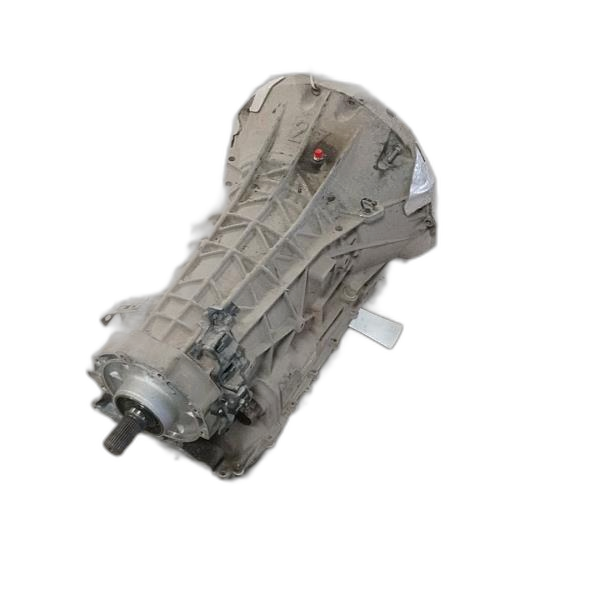
Below are the parts most often responsible for code P0702, ranked by how frequently each one is the actual culprit (per the diagnosis above). Tap any to see what we have for your vehicle.




The information in this article is provided for general reference and educational purposes only. Vehicle specifications, procedures, and part compatibility can vary by production date, trim level, and region. Always consult your vehicle's factory service manual and verify part numbers before purchasing or performing repairs. Safety-critical components such as airbags, seat belts, and braking systems should be installed by a qualified professional.
- 🧭 Diagnostic Flowchart
- 🎬 Helpful Videos
- 🛍️ Shop This Part
- What Does P0702 Mean?
- Can I Drive With P0702?
- Common Causes
- Symptoms
- Common Fixes & Costs
- DIY vs Professional
- Used vs. New Parts: Buying Guide
- What Happens If You Wait — Timeline
- Cost of Not Fixing It
- Diagnosis Steps
- When This Code Triggers (Freeze-Frame Conditions)
- Related Codes
- Climate & Environmental Factors
- How to Talk to a Mechanic About This Code
- Where to Take It: Dealer vs Independent vs Chain
- When to Walk Away From the Repair
- What Scan Tool You Need for This Code
- How to Clear the Code After You Fix It
- Will This Fail Emissions / State Inspection?
- Most Commonly Affected Vehicles
- Manufacturer-Specific Notes
- Real Owner Stories
- 2004 Jeep Grand Cherokee 2.7 CRD at 130K miles - The Shifter Fix
- 2008 Dodge Charger at 95K miles - The $25 Connector
- 2007 Honda Accord at 110K miles - The Battery Culprit
- How to Prevent This Code From Triggering
- Frequently Asked Questions
- Does P0702 mean I need a new transmission?
- What is the most common misdiagnosis for P0702?
- Can a bad battery cause a P0702 code?
- Is P0702 expensive to fix?
- Can I just clear the P0702 code and keep driving?
- What is 'limp mode'?
- Why did P0702 appear after I changed my battery?
- What's the difference between P0700 and P0702?
- Key Takeaways
- 🎟️ Get 5% Off