

P0705 on 2005-2010 Chevrolet Cobalt: Transmission Range Sensor Fault and Fixes
On a 2005-2010 Cobalt, code P0705 is almost always caused by a corroded or broken ground wire on the transmission, not the sensor itself. Inspect and repair the G105 ground on the transmission bellhousing before buying any parts. This is a very common, low-cost fix that often resolves multiple electrical and transmission issues.
- For a P0705 code on a 2005-2010 Cobalt, immediately inspect the G105 ground wire on the transmission case before considering any other repairs.
- The most likely cause is a corroded ground connection that costs only a few dollars to repair with a new wire terminal.
- Symptoms are severe and include a no-start condition or getting stuck in gear, so the vehicle should not be driven.
- Do not replace the Transmission Range Sensor unless the ground and wiring have been thoroughly checked and confirmed to be in good condition.
What's Unique About the 2005-2010 Chevrolet Cobalt
For the 2005-2010 Chevrolet Cobalt, the story of P0705 is almost always about a bad ground, not a bad sensor. These cars are known for having a critical ground point on the transmission case (known as G105) that corrodes and breaks over time, especially in regions with road salt. This single failed ground connection, which serves the TCM and other components, gets severed, leading to the P0705 code and other related transmission and electrical faults. Owners often mistakenly replace the sensor when the real, high-probability fix is simply repairing this ground wire.
Symptoms You May Notice
- Check Engine Light is on
- Shifter is stuck in Park
- Engine will not start or cranks but won't start
- Harsh, erratic, or no shifting
- Vehicle enters 'limp mode' (stuck in one gear)
- Incorrect or no gear position (PRNDL) displayed on the instrument cluster
- Reverse lights do not work.
- Power steering warning light may appear intermittently
- Door locks may cycle erratically
- Replacing the Transmission Range Sensor (TRS) without first inspecting the G105 ground wire. Many owners replace the sensor only to have the problem persist because the corroded ground was the actual root cause.
Most Likely Causes
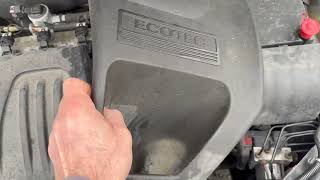
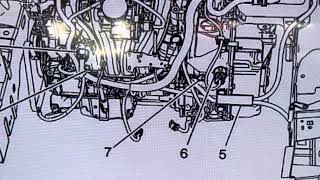
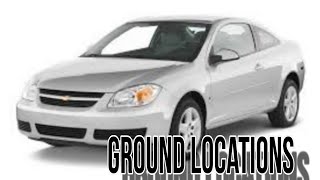
- Corroded or Broken G105 Ground Wire 🔴 High Probability The ground stud is located on top of the aluminum transmission case, where it is exposed to moisture and road salt, leading to galvanic corrosion and wire failure. This is a widely documented failure point for the Cobalt 🎬 See: Locate and inspect Cobalt ground points and its platform mates.
How to confirm: Visually inspect the ground connection bolted to the top of the transmission bellhousing, often located under the upper radiator hose. It is a stud with several black wires crimped into a single ring terminal. Look for green/white corrosion, frayed wires, or completely broken wires at the terminal lug. Wiggling this wire bundle may cause the symptoms to appear or disappear.
Typical fix: Repair the ground connection. This involves disconnecting the battery, unbolting the terminal (typically a 10mm or 13mm nut), cutting off the corroded lug, stripping the wires back to clean copper, crimping on a new ring terminal (or multiple terminals), cleaning the stud and contact surface, and re-securing it tightly. Applying dielectric grease can help prevent future corrosion.
Est. part cost: $1-$5 - Failed Transmission Range Sensor (TRS) ⚪ Low Probability → Shop Transmission Assembly
How to confirm: If the G105 ground and all related wiring are confirmed to be in perfect condition, the sensor itself may be faulty. This requires testing the sensor's electrical output signals with a multimeter while moving the gear shifter to verify it sends the correct voltage for each gear position, according to the vehicle's service manual.
Typical fix: Replace the Transmission Range Sensor, which is mounted externally on the transmission where the shift linkage connects. This may require a specific alignment procedure during installation. 🎬 Watch: How to replace and align the sensor
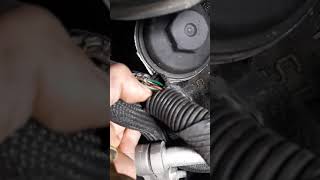
Est. part cost: $40-$120 - Damaged Wiring Harness or Connector ⚪ Low Probability The wiring harness can sometimes rub against engine components, causing chafing and short circuits. A known chafe point on some Cobalts is near the oil filter housing.
How to confirm: Inspect the wiring harness leading to the Transmission Range Sensor and the Transmission Control Module for any signs of physical damage, chafing, melting, or corrosion at the connectors. Pay close attention to the area near the oil filter.
Typical fix: Repair the damaged section of the wiring harness and secure it away from any sharp edges or hot components. Replace any corroded or damaged connectors.
Est. part cost: $5-$50
Rare But Worth Checking
- Faulty Transmission Control Module (TCM): → Shop Transmission Assembly This is very rare. The TCM is generally reliable. A bad ground is far more likely to cause a loss of communication than an internal TCM failure. Always eliminate the ground and wiring issues before considering the TCM.
Diagnosis Steps
- Scan the vehicle for all codes. Note the P0705 code and any accompanying P0700 or U-codes.
- CRITICAL STEP for Cobalt: Disconnect the battery. Locate the G105 ground connection on the top of the transmission case. It is a stud with one or more black wires bolted to it, often near the upper radiator hose.
- Thoroughly inspect the G105 ground wires and terminal lug for any signs of corrosion (green/white powder), looseness, or breakage. Gently tug on the wires to see if they are brittle or broken inside the insulation.
- If corrosion or damage is found, repair the ground connection. This is the most likely fix. Clean the stud and wire ends thoroughly, attach a new ring terminal, and tighten securely.
- If the ground is pristine, inspect the wiring harness to the Transmission Range Sensor for any chafing, melting, or connector damage. Pay special attention to the harness near the oil filter housing.
- Check the connector at the Transmission Range Sensor for corrosion, moisture, or bent pins.
- If the ground and wiring are good, the next step is to test the Transmission Range Sensor itself. Using a wiring diagram and a multimeter, check for correct voltage signals from the sensor as the gear selector is moved through each position (P, R, N, D, etc.).
- If the sensor fails the electrical tests, replace the Transmission Range Sensor.
- After any repairs, clear the trouble codes and perform a test drive to ensure the issue is resolved.
Parts You'll Likely Need
- Ring Terminal Connector — This is needed to repair the corroded G105 ground connection, which is the most common cause of P0705 on this vehicle. A 1/4" or 5/16" ring terminal for 10-12 AWG wire is typical.
Trusted brands: Dorman, 3M, Gardner Bender
Aftermarket price range: $1-$5 - Transmission Range Sensor / Neutral Safety Switch
(OEM #GM 24219476 (ACDelco D2259C))— This part is replaced only if it is confirmed to be faulty after verifying the ground connection and wiring are good.
Trusted brands: ACDelco (GM Genuine), Standard Motor Products (SMP), Dorman
OEM price range: $80-$120
Aftermarket price range: $40-$75
Related Codes That Often Appear With This One
- P0700 — P0700 is a generic code that means the Transmission Control Module (TCM) has stored a fault. It almost always appears alongside more specific transmission codes like P0705 to alert the main engine computer that a transmission problem exists.
- U-codes (e.g., U0101) — U-codes indicate a loss of communication between modules. A faulty G105 ground can cause the TCM to lose power or communication, triggering codes that indicate it is offline.
- P1682 — This code relates to an ignition switch voltage issue. In some cases, owners have reported this code appearing alongside P0705, pointing to a systemic electrical problem often rooted in the same bad G105 ground.
Technical Service Bulletins (TSBs) & Recalls
- While no TSB is specific to P0705, GM has issued bulletins like 16-NA-161 regarding the importance of cleaning and properly securing corroded ground connections (like G103 on an Impala) to resolve intermittent no-start and electrical issues, a principle that directly applies to the Cobalt's G105 ground.
- Preliminary Information bulletin PIP4115F discusses intermittent loss of PRNDL display and P0705, suggesting inspection of the PNP switch connector for moisture or poor connections as a potential cause.
- Manufacturer TSB Bulletin #PIP5101 notes that vehicles may lack power, fail to shift, and show a blank PRNDL display when P0705 is present, requiring an inspection of the Park Neutral Position connector for spread terminals or damaged weather seals.
Platform-Specific Known Issues
- The G105 ground point on the transmission bellhousing is a well-known and frequent point of failure due to corrosion, causing a host of transmission-related electrical problems, including code P0705.
- A user on 2CarPros.com with a 2007 Cobalt fixed their P0705 by splicing into the black/white ground wire at the TRS and running a new ground to the chassis, confirming a break in the original ground circuit.
- A Reddit user in r/ChevyCobalt documented their troubleshooting process, which started with no-crank and electrical issues. Wiggling the G105 ground terminal caused symptoms to change, and the ultimate fix was repairing the broken ground wires at that terminal.
Hidden / Shadow Codes Worth Checking
- P0700: While not hidden, this code indicates the Transmission Control Module (TCM) has stored a specific fault (like P0705). A basic OBD-II scanner might only show P0700, while a more advanced scanner (like a Tech2 or similar) is needed to retrieve the specific P-code from the TCM. (see via Professional-grade scan tool with access to the Transmission Control Module.)
Scan Tool Commands That Help
- Tech2 / GDS2 or equivalent: TCM Data Display — To view the live data from the Transmission Range Sensor. A technician can watch the displayed gear position (PARK, REV, NEUT, etc.) change as the shifter is moved. If the display shows an invalid state or doesn't change, it points to a problem with the sensor or its circuit. A user reported their scanner showed 'no value' for the TRS switch until the ground was fixed.
Wiring & Ground Locations
- G105 — On the lower left front of the transmission case, often under the upper radiator hose. It's a stud on the transmission bellhousing with one or more ring terminals with black wires.. This is the primary ground for the Transmission Control Module (TCM) and the Transmission Range Sensor (TRS) circuit. Corrosion or breakage here is the most common cause of P0705 on this vehicle.
- Transmission Range Sensor (TRS) Connector — On the exterior of the transmission where the shift linkage connects.. This 11-pin connector is the interface for the sensor. The Black/White wire is the ground wire that runs to G105. Testing for power, ground, and signal continuity happens at this connector.
- G103 — Left front of the engine compartment, under the left headlamp assembly.. While G105 is the primary suspect, other engine bay grounds like G103 can cause widespread electrical issues if corroded. It's a secondary check if the G105 repair doesn't solve all electrical symptoms.
- G107 — Located on the right rear of the cylinder head.. This is another major engine ground point. Verifying all major grounds are clean and tight is a best practice when chasing electrical faults like P0705.
Real Owner Repair Stories
- 2CarPros.com user 'RILEYCAR614' (2007 Chevrolet Cobalt) — P0700 and P0705 codes. Scan tool showed 'no value' for TRS switch and all circuits from the TCM were reading 'high'.
❌ Tried (didn't work) A previous user in the same thread replaced the TRS sensor, but the code returned, indicating it was not the root cause.
✅ What actually fixed it The user spliced into the Black/White wire at the Transmission Range Sensor connector and ran a new, separate ground wire to the strut tower. This immediately fixed the issue, confirming the original ground path via G105 was broken. - 2CarPros.com user (2007 Chevrolet Cobalt) — P1682 initially, with door locks cycling, rough shifting, and power steering light. After a temporary fix, code P0705 appeared and the shifter became locked in Park.
❌ Tried (didn't work) The user initially grounded the TCM body directly to the car frame, which temporarily resolved the P1682 but led to the P0705 code.
✅ What actually fixed it The thread suggests the root cause is a systemic electrical/grounding issue, with the P1682 and P0705 codes being related symptoms. The final fix was not posted, but the story highlights the direct link between general electrical faults and this specific transmission code. - NHTSA ODI #10583357 — An owner reported a life-threatening problem where the vehicle would not shift out of 1st gear when accelerating onto a freeway due to a defective transmission range sensor and DTC P0705.
OEM Part Supersession History
Unknown→GM 24219476 / ACDelco D2259C— This is the current and widely available part number for the Park/Neutral Position Switch (Transmission Range Sensor) for the entire 2005-2010 Cobalt model run.
Heads up: This part is also used on a wide variety of other GM vehicles with the 4T40/4T45 transmission, including the HHR, G5/G6, and some Malibu models, making it a common part.
Model Year Variations Within This Range
- 2005-2008 vs 2009-2010: The base engine was updated in 2009 from the 2.2L L61 to the 2.2L LAP, which added variable valve timing. While this did not change the 4T45-E transmission or the fundamental cause of P0705 (bad G105 ground), wiring harness routing and connector details could have minor variations. However, the G105 location and function remained consistent.
Diagnostic Flowchart
Other Known Issues on This Vehicle
Issues unrelated to this code that are worth knowing about as an owner of this generation:
- Defective Ignition Switch 🔴 High — Extremely widespread, subject of a massive recall (NHTSA Campaign 14V047000). The switch can move out of the 'Run' position due to weight on the keychain or jarring, shutting off the engine and disabling airbags. (Ref: NHTSA Recalls: 14V047000, 14V171000)
- Electric Power Steering (EPS) Motor Failure 🔴 High — Very common failure leading to a sudden loss of power steering assist. Subject of a major recall (NHTSA Campaign 10V073000). (Ref: NHTSA Recall: 10V073000)
- Corroded Fuel Lines 🔴 High — Fuel lines, particularly near the left rear wheel well, are prone to corrosion, leading to fuel leaks and strong gas odors. This was subject to an NHTSA investigation covering over 600,000 vehicles. (Ref: NHTSA Investigation PE20-003; Recall 09V419000 for earlier models in specific states.)
- Removable Key When Not in Park 🟠 Medium — A defect in the ignition lock cylinder allows the key to be removed when the vehicle is not in 'Park', creating a rollaway risk. This was part of the broader ignition system recalls. (Ref: NHTSA Recall: 14V171000)
- Timing Chain Tensioner Failure 🟠 Medium — The timing chain tensioner can fail, causing a rattling noise on cold starts. If not addressed, it can lead to the timing chain skipping or breaking, causing significant engine damage.
- Faulty Shifter Cable 🟡 Low — The shifter cable can fail, preventing the key from being removed from the ignition or causing a mismatch between the selected gear and the actual gear engaged. (Ref: A recall was issued for some vehicles to install a corrective clamp.)
Used vs. New Parts: Buying Guide for This Vehicle
When a used part is the smart pick: For this repair, a used part is generally not recommended for the sensor itself due to the low cost of a new aftermarket part and the unknown history of a used one. However, sourcing a connector pigtail from a junkyard harness is a very smart choice if your original connector is damaged or corroded.
Donor-vehicle mileage cap: roughly under 100000 miles for the part to have meaningful remaining life.
What to inspect on the donor part:
- For a connector pigtail: ensure the plastic is not brittle, the locking tab is intact, and there is no green/white corrosion on the pins.
- Cut as much wire as possible to give yourself room to work.
- If considering a used sensor, check for a clean connector and smooth mechanical action of the lever arm.
Aftermarket brands forum-validated for this vehicle:
- ACDelco (GM Genuine) is the OEM supplier and the most trusted choice.
- Standard Motor Products (SMP) is a reputable aftermarket brand with a good track record.
- Dorman is widely available and a viable option, though quality can sometimes be inconsistent compared to OEM.
Brands owners have reported issues with on this vehicle:
- Avoid unbranded, low-cost sensors from online marketplaces, as they are more likely to have a higher failure rate, potentially causing you to redo the repair.
Real Owner Stories
Aggregated from forums and TSBs cited above. Mileages and costs reflect what owners reported in those sources.
2007 Chevrolet Cobalt
Symptoms: The vehicle had a P0705 code and issues with the transmission range circuit.
What fixed it: Spliced into the black/white ground wire at the Transmission Range Sensor (TRS) and ran a new ground wire directly to the strut tower (chassis ground).
Source hint: 2CarPros.com - 'Codes P0700 and P0705 - 2006 chevrolet cobalt'
Chevrolet Cobalt
Symptoms: No-crank condition and various electrical issues; symptoms changed when wiggling the ground terminal on the transmission.
What fixed it: Repaired broken ground wires at the G105 terminal lug on the transmission bellhousing.
Source hint: Reddit (r/ChevyCobalt)
Chevrolet Spark (Cross-Manufacturer Reference)
Symptoms: An owner reported the vehicle would not shift out of 1st gear when accelerating onto the freeway, citing a defective transmission range sensor and code P0705.
What fixed it: The owner referenced TSB #PIP-5101 regarding the transmission range sensor error.
Source hint: NHTSA ODI #10583357
Related OBD-II Codes
Frequently Asked Questions
Why is my 2005-2010 Chevrolet Cobalt stuck in Park and showing a P0705 code?
Does GM have a TSB for the PRNDL display disappearing on my Cobalt?
Where is the G105 ground located on the Cobalt, and why does it fail?
Can a bad ground on the transmission cause my power steering light to come on?
Is there a recall for the electrical issues causing my Cobalt to shut off?
How can I tell if my P0705 code is the sensor or just a bad wire?
Helpful Videos
We Have This Part in Stock

The information in this article is provided for general reference and educational purposes only. Vehicle specifications, procedures, and part compatibility can vary by production date, trim level, and region. Always consult your vehicle's factory service manual and verify part numbers before purchasing or performing repairs. Safety-critical components such as airbags, seat belts, and braking systems should be installed by a qualified professional.
- Chevrolet Cobalt:
- 🧭 Diagnostic Flowchart
- 🎬 Helpful Videos
- 🛍️ Shop This Part
- What's Unique About the 2005-2010 Chevrolet Cobalt
- Symptoms You May Notice
- Most Likely Causes
- Rare But Worth Checking
- Diagnosis Steps
- Parts You'll Likely Need
- Related Codes That Often Appear With This One
- Technical Service Bulletins (TSBs) & Recalls
- Platform-Specific Known Issues
- Hidden / Shadow Codes Worth Checking
- Scan Tool Commands That Help
- Wiring & Ground Locations
- Real Owner Repair Stories
- OEM Part Supersession History
- Model Year Variations Within This Range
- Other Known Issues on This Vehicle
- Used vs. New Parts: Buying Guide for This Vehicle
- Real Owner Stories
- 2007 Chevrolet Cobalt
- Chevrolet Cobalt
- Chevrolet Spark (Cross-Manufacturer Reference)
- Related OBD-II Codes
- Frequently Asked Questions
- 🎟️ Get 5% Off