

P0705 on 2008-2012 Ford Escape: Transmission Range Sensor Malfunction Causes and Fixes
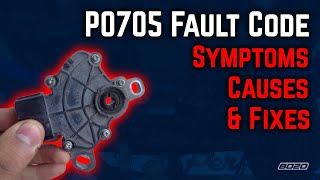
This code indicates a problem with the Transmission Range Sensor (TRS), which tells the computer what gear the vehicle is in. On the 2008-2012 Escape, this is most often caused by a faulty sensor itself, which can be damaged by fluid leaks. Expect to pay $30-$90 for a new sensor, with DIY replacement being moderately difficult.
- P0705 on a 2008-2012 Escape means the computer is getting an invalid signal about which gear you've selected.
- The most likely cause is a failed Transmission Range Sensor (TRS), often damaged by leaking coolant from the thermostat housing above it, especially on V6 models.
- Before replacing the sensor, always inspect the wiring and connector for damage, as this is another common cause.
- Do not drive the vehicle with this code, as it can lead to unpredictable shifting and become a safety hazard.
What's Unique About the 2008-2012 Ford Escape
The 2008-2012 Ford Escape, particularly V6 models, has a specific design vulnerability that leads to P0705. The Transmission Range Sensor (TRS) is located on the driver's side of the 6F35 transmission, in a position where it is highly susceptible to damage from fluid leaks. A very common failure of the thermostat housing, located higher up in the engine bay, can drench the sensor and its connector in coolant, leading to corrosion, short circuits, and premature failure. This makes the P0705 code a frequent issue for this generation of Escape.
Symptoms You May Notice
- Check Engine Light is on
- Vehicle will not start
- Vehicle will only start in Neutral, not Park
- Harsh, erratic, or delayed shifting
- Inability to shift into certain gears
- Reverse lights do not work
- Backup camera does not activate
- Gear indicator on the dashboard is incorrect, blank, or all segments are lit
- Reduced fuel economy
- Replacing the sensor without first inspecting the wiring. A damaged wire can mimic the symptoms of a failed sensor, leading to unnecessary parts replacement.
- Replacing the sensor without addressing the root cause of the failure, such as a leaking thermostat housing. The new sensor will likely fail again in a short time if the leak is not fixed.
Most Likely Causes
- Faulty Transmission Range Sensor (TRS) 🔴 High Probability → Shop Transmission Assembly The sensor is located on the side of the transmission where it is vulnerable to fluid leaks (coolant, oil) from higher up on the engine, which can cause it to short out. Coolant leaks from the thermostat housing are a widely reported problem that directly leads to TRS failure on the V6 models.
How to confirm: Inspect the sensor and its connector for signs of fluid contamination (often pink or green coolant residue), corrosion, or physical damage. If no visible damage, the sensor's output can be tested with a high-end scan tool to see if the PRNDL data stream matches the gear position. A multimeter can also be used to check for correct voltage/resistance values at the sensor's connector for each gear position, which requires a vehicle-specific wiring diagram.
Typical fix: Replace the Transmission Range Sensor. This often requires removing the air filter housing and battery tray for access. On V6 models, it is highly recommended to inspect and replace the thermostat housing at the same time if any signs of leaking are present.
Est. part cost: $30-$90 - Damaged Wiring or Connector 🟡 Medium Probability The wiring harness to the sensor can be damaged by heat from the exhaust or chafing against other components. The connector is also highly susceptible to corrosion from fluid leaks, a common issue on this platform.
How to confirm: Visually inspect the entire length of the wiring harness from the sensor to the PCM for any signs of melting, breaks, or corrosion. Check the connector pins for corrosion (green or white crust), moisture, or a loose fit. Perform a continuity test on the wires with a multimeter.
Typical fix: Repair the damaged section of wire or replace the connector pigtail. If corrosion is severe, both the sensor and the connector may need to be replaced.
Est. part cost: $15-$50 - Misadjusted Shift Linkage ⚪ Low Probability
How to confirm: Check if the gear selected by the lever matches the gear indicated on the dashboard and the actual gear the transmission is in. If there is play or misalignment, the linkage may be the issue. The sensor itself has slotted mounting holes for minor adjustments. A 'wiggle test' where you slightly move the shifter while trying to start can indicate an adjustment issue.
Typical fix: Adjust the shift linkage or the position of the TRS on its mount. This is typically done by loosening the sensor mounting bolts and rotating it slightly until the scan tool shows the correct gear position.
Est. part cost: $0
Rare But Worth Checking
- Faulty Powertrain Control Module (PCM): This is very rare. The PCM should only be considered after all other possibilities, including the sensor and wiring, have been exhaustively tested and ruled out. A PCM failure will usually be accompanied by other trouble codes and more widespread issues.
Diagnosis Steps
- Read the codes: Use an OBD-II scanner to confirm P0705 is present and check for any other related codes.
- Visual Inspection: Carefully inspect the Transmission Range Sensor (TRS) and its electrical connector, which is mounted on the driver's side of the transmission. Look for signs of fluid contamination (especially coolant), corrosion, or physical damage. Trace the wiring harness for melting, chafing, or breaks.
- Check Scan Tool Data: Use a scan tool to monitor the live data for the PRNDL input. As you move the shifter through each gear (P, R, N, D, L), verify that the scan tool displays the correct position. An incorrect or unchanging reading points to a sensor or wiring issue.
- Test the Sensor Circuit: If scan tool data is inconclusive, use a digital multimeter and a wiring diagram. Disconnect the sensor and check for proper voltage and ground at the connector. Then, test the sensor itself by measuring resistance between the pins for each gear position to see if it matches the manufacturer's specifications.
- Check Shift Linkage: Ensure the manual shift linkage is not loose or misadjusted, causing a mismatch between the lever position and the sensor's position. The sensor can be slightly rotated for adjustment.
- Address Fluid Leaks: If coolant or oil contamination is found on the sensor, identify and repair the source of the leak (e.g., thermostat housing, valve cover gaskets) before replacing the sensor.
- Test the PCM: If the sensor and wiring test good, the final step would be to test the PCM, which is best left to a professional.
Parts You'll Likely Need
- Transmission Range Sensor
(OEM #GN1Z-7H557-B (replaces 9L8Z-7H557-A))— This is the most common failure point for this code, often due to its location making it susceptible to fluid damage from common engine leaks.
Trusted brands: Motorcraft, Standard Motor Products (SMP), Dorman
OEM price range: $70-$120
Aftermarket price range: $30-$90
Technical Service Bulletins (TSBs) & Recalls
- TSB 16-0043: Addresses a fluid leak from the left-hand transmission halfshaft seal on 2009-2012 Escapes with the 6F35 transmission. This can cause fluid contamination in the general area of the TRS.
- TSB 10-1-7: Pertains to harsh shifts and other DTCs (P0720, P0722) on 2009-2010 Escapes due to an open circuit in the Output Shaft Speed (OSS) sensor or lead frame, but highlights the electrical vulnerability of components on the 6F35 transmission.
Platform-Specific Known Issues
- On V6 models, the thermostat housing is located above the transmission. A very common failure of the housing's seal can cause coolant to leak directly onto the Transmission Range Sensor, causing it to fail and trigger a P0705 code. This is a well-documented issue in owner forums.
- The 6F35 transmission used from 2009-2012 can also suffer from fluid leaks at the left side halfshaft seal, covered by TSB 16-0043. While not a direct cause of P0705, it indicates another potential fluid leak in the vicinity of the transmission that should be inspected.
Mechanic-Grade Diagnostic Values
- Scan Tool PID: TR_DC (Duty Cycle) and TR_FREQ (Frequency) — expected: The TR_DC PID should correspond to the selected gear position according to the manufacturer's chart. TR_FREQ should remain stable while wiggling the harness.. Failure: PID values that do not match the gear position, or erratic readings when the harness is moved, indicate a sensor or wiring fault.
- Voltage between TR sensor connector pins 1 (RD) and 3 (BK) on the solenoid body leadframe side — expected: Greater than 10 volts with the ignition on.. Failure: Voltage below 10 volts indicates a power supply issue to the sensor circuit.
Hidden / Shadow Codes Worth Checking
- P1702: Indicates an intermittent fault in the Transmission Range Sensor circuit. This may be stored in addition to P0705 and points towards a wiring or connection issue rather than a hard sensor failure. (see via Professional scan tools like Snap-on Solus or Ford's IDS.)
- P1705: Manual Lever Position Sensor Out of Self-Test Range. This Ford-specific code indicates the TRS signal was not within the expected range during the PCM's self-test at startup. (see via Ford IDS or equivalent advanced scan tool.)
Scan Tool Commands That Help
- Ford IDS / High-End Scan Tool: On-Board Diagnostic (OBD) System Test — Used to command a system-wide self-test to confirm if only TR sensor-related DTCs are present, which helps isolate the fault.
- Ford IDS / High-End Scan Tool: Live Data Monitoring (PIDs: TR_DC, TR_FREQ) — Essential for live diagnosis. By observing the duty cycle (TR_DC) and frequency (TR_FREQ) PIDs while shifting gears and wiggling wires, a technician can determine if the sensor is reporting correctly or if there's a wiring issue.
Wiring & Ground Locations
- G104 — On the chassis ground near the PCM. A user on 2CarPros referenced testing resistance from the DLC to G104.. The PCM and its related sensors require a solid ground connection to function. A corroded or loose G104 ground can cause erratic sensor readings and trigger various codes, including P0705. Verifying this ground is a key step in diagnosing electrical faults.
- C175T — The PCM Transaxle Harness Connector.. This is a key connector to disconnect when performing resistance tests on the TR sensor circuits between the sensor and the PCM to check for an open or shorted wire.
- C168a — The main transaxle vehicle harness connector, located on the transmission.. This is the primary connection point for the transmission's electronics, including the TR sensor. It's a common location for corrosion and pin damage, especially due to fluid leaks.
Documented NHTSA Reports
- NHTSA ODI #11673731: An owner reported having no way of visually confirming if the vehicle was in drive; a diagnostic scan returned code P0705 for the transmission range sensor A circuit.
- NHTSA ODI #11671167: A report describes a vehicle that required multiple attempts to restart, with a scanner retrieving DTC P0705 indicating a Transmission Range Sensor Circuit Malfunction.
- NHTSA ODI #11547976: A manufacturer dealer diagnosed a vehicle with code P0705 due to the transmission range sensor circuit malfunctioning, which affected undisclosed functions on the vehicle.
- NHTSA ODI #11389831: An owner reported a situation where the vehicle would not back up, and a dealer found trouble code P0705 for the transmission range sensor.
- NHTSA ODI #11488420: A report notes that after a vehicle would not start, a scanner revealed codes P0706 and P0705, and a technician advised that the issue was the lead frame.
Real Owner Repair Stories
- YouTube - 'South Main Auto Repair LLC' (2010 Ford Escape) — No-crank, no-start condition.
❌ Tried (didn't work) Initial diagnosis pointed towards a potential neutral safety switch (TRS) issue due to the no-crank symptom.
✅ What actually fixed it The problem was a mechanically failed ignition lock housing. The internal components were worn, preventing the key turn from fully actuating the electronic ignition switch, which in turn did not send the 'start' signal to the PCM. Replacing the ignition lock housing resolved the no-start condition. - Reddit user on r/fordescape (2009 Ford Escape 3.0L with 6F35 transmission) — No crank condition with codes P0707, P0708, and P1702 after a rear main seal replacement.
❌ Tried (didn't work) Replacing the transmission range sensor., Clearing keep alive memory.
✅ What actually fixed it The user was advised that the external connector on the front of the transmission pan, which connects to the internal lead frame containing the TRS, can be plugged in 180 degrees incorrectly. The fix was to flip the connector the other way.
OEM Part Supersession History
9L8Z-7H557-A→GN1Z-7H557-B— Standard part number update and potential design revision by Ford.
Heads up: The new part number GN1Z-7H557-B is the correct service replacement for the original 9L8Z-7H557-A. No incompatibility is noted.
Model Year Variations Within This Range
- 2008: The 2008 model year Escape used the older 4-speed CD4E automatic transmission, carried over from the first generation. The P0705 issue on this transmission would involve a different sensor part number and location than the 2009-2012 models.
- 2009-2012: These model years introduced the 6-speed 6F35 automatic transmission. The Transmission Range Sensor (TRS) for this transmission is part of the internal lead frame assembly, located inside the front transmission pan. This is a significant difference from the externally mounted sensors on many other vehicles.
Diagnostic Flowchart
Other Known Issues on This Vehicle
Issues unrelated to this code that are worth knowing about as an owner of this generation:
- 6F35 Transmission Failure/Harsh Shifting 🔴 High → Shop Transmission Assembly — Common, especially in 2009-2012 models. Can occur at various mileages, often exacerbated by lack of fluid changes. (Ref: Multiple TSBs exist, including 16-0043 for seal leaks and 10-1-7 for sensor issues.)
- Rear Shock Tower Rust 🔴 High — Very common in regions that use road salt. The passenger side is particularly prone to rusting completely through, detaching the shock from the body.
- Electronic Power Steering (EPAS) Failure 🔴 High — Widespread on 2008-2011 models, leading to a sudden loss of power assist. (Ref: Recall 14S05 was issued to update software and replace the torque sensor or steering column if necessary.)
- Leaking Thermostat Housing (V6) 🟠 Medium — A very common failure point on the 3.0L V6 engine, leading to coolant loss and, as noted, failure of components below it like the TRS.
- ABS Tone Ring Failure 🟠 Medium — The front ABS tone rings can crack or break, causing the ABS and traction control lights to illuminate and the system to activate erratically.
Used vs. New Parts: Buying Guide for This Vehicle
When a used part is the smart pick: For this specific repair, buying a used Transmission Range Sensor is NOT recommended. The sensor is an electronic component known to fail from both internal wear and external contamination. A used part from a junkyard carries a high risk of having the same latent issues or a significantly shortened lifespan.
What to inspect on the donor part:
- Not applicable as used purchase is not advised.
OEM-only on this vehicle (don't cheap out):
- Transmission Range Sensor (Lead Frame Assembly): While aftermarket options exist, the OEM Motorcraft part is strongly recommended for reliability and to avoid compatibility issues with the PCM. Given the labor involved in accessing it (inside the transmission pan), using a lower-quality part that might fail prematurely is a significant risk.
Aftermarket brands forum-validated for this vehicle:
- Standard Motor Products (SMP) is generally considered a reliable Tier 1 aftermarket supplier if an OEM part is unavailable.
Brands owners have reported issues with on this vehicle:
- Avoid unbranded, 'white-box' parts from online marketplaces. Forum discussions often highlight issues with fitment or immediate failure of the cheapest available sensors.
Real Owner Stories
Aggregated from forums and TSBs cited above. Mileages and costs reflect what owners reported in those sources.
2009 Ford Escape V6
Symptoms: A user reported a coolant leak from the thermostat housing area, which is a known precursor to sensor failure due to its location directly above the transmission components.
What fixed it: Identify and repair the source of the leak (thermostat housing) before replacing the contaminated sensor.
Source hint: Reddit r/fordescape thread titled 'Thermostat housing leaking?'
2009-2012 Ford Escape
Symptoms: Fluid leaks at the left side halfshaft seal, causing contamination in the general area of the transmission sensors.
What fixed it: Repair the left-hand transmission halfshaft seal as per TSB 16-0043.
Source hint: TSB 16-0043
Related OBD-II Codes
Frequently Asked Questions
Why is my 2008-2012 Ford Escape V6 leaking coolant onto the transmission sensor?
Does TSB 16-0043 explain why I have transmission fluid near my sensor?
Can I adjust the sensor on my Ford Escape instead of replacing it?
Why will my Escape only start in Neutral but not in Park?
Is the P0705 code related to the Electronic Power Steering (EPAS) recall?
Should I replace the thermostat housing when fixing P0705 on my V6 Escape?
Helpful Videos

We Have This Part in Stock

The information in this article is provided for general reference and educational purposes only. Vehicle specifications, procedures, and part compatibility can vary by production date, trim level, and region. Always consult your vehicle's factory service manual and verify part numbers before purchasing or performing repairs. Safety-critical components such as airbags, seat belts, and braking systems should be installed by a qualified professional.
- Ford Escape:
- 🧭 Diagnostic Flowchart
- 🎬 Helpful Videos
- 🛍️ Shop This Part
- What's Unique About the 2008-2012 Ford Escape
- Symptoms You May Notice
- Most Likely Causes
- Rare But Worth Checking
- Diagnosis Steps
- Parts You'll Likely Need
- Technical Service Bulletins (TSBs) & Recalls
- Platform-Specific Known Issues
- Mechanic-Grade Diagnostic Values
- Hidden / Shadow Codes Worth Checking
- Scan Tool Commands That Help
- Wiring & Ground Locations
- Documented NHTSA Reports
- Real Owner Repair Stories
- OEM Part Supersession History
- Model Year Variations Within This Range
- Other Known Issues on This Vehicle
- Used vs. New Parts: Buying Guide for This Vehicle
- Real Owner Stories
- 2009 Ford Escape V6
- 2009-2012 Ford Escape
- Related OBD-II Codes
- Frequently Asked Questions
- 🎟️ Get 5% Off