

P0705 on 2002-2005 Ford Explorer: Transmission Range Sensor Malfunction Causes and Fixes
On a 2002-2005 Ford Explorer, code P0705 almost always points to a failed Transmission Range Sensor (TRS), also known as a neutral safety switch or DTR sensor. This can cause a no-start, erratic shifting, or an incorrect gear display. The sensor is located on the driver's side of the 5R55W/S transmission. Replacing the sensor and ensuring proper alignment is the most common fix.
- P0705 on a 2002-2005 Explorer is a transmission-related code that points to a problem with the Transmission Range Sensor (TRS) circuit.
- The most common symptoms are a no-start condition (or starting only in Neutral), erratic shifting, and an incorrect gear display.
- The most likely cause is a failed Transmission Range Sensor, followed by damaged wiring to the sensor.
- Driving with this code is not recommended due to the risk of unpredictable transmission behavior.
- A DIY replacement of the sensor is possible for those with moderate mechanical skill, but proper alignment of the new sensor in the Neutral position is absolutely critical for the repair to succeed.
What's Unique About the 2002-2005 Ford Explorer
The 2002-2005 Ford Explorer (third generation) uses a specific Digital Transmission Range (DTR) sensor mounted on the driver's side of the 5R55W/S automatic transmission. This component is exposed to road debris, moisture, and heat, making it a very common failure point. Unlike some other vehicles where this code might be due to linkage misadjustment, on this Explorer, P0705 is almost always an electrical fault with the sensor itself or its wiring. The issue is so common that it also affects its platform-mates, the Mercury Mountaineer and Lincoln Aviator.
Symptoms You May Notice
- Check Engine Light is on
- Engine won't start, or only starts in Neutral instead of Park.
- Incorrect gear indicator on the dashboard (PRNDL display is blank, erratic, or shows the wrong gear).
- Transmission goes into 'limp mode,' often getting stuck in one gear.
- Harsh, erratic, or delayed shifting.
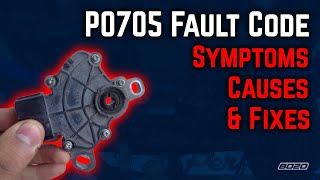
- Reverse lights do not turn on when in Reverse. 🎬 See this video explaining the causes and fixes for P0705.
- The O/D (Overdrive) OFF light on the shifter stalk may blink.
- Replacing the transmission itself. The symptoms can mimic severe internal transmission failure, but P0705 is an electrical code that should be diagnosed first.
- Replacing the battery or starter because of a no-crank condition, without first checking if the vehicle starts in Neutral.
- Replacing the sensor without performing the critical alignment step, leading to the same symptoms returning immediately.
Most Likely Causes
- Failed Transmission Range Sensor (TRS) 🔴 High Probability → Shop Transmission Assembly The sensor is mounted externally on the transmission, making it vulnerable to corrosion and damage from water, salt, and road debris. The internal contacts wear out over time, leading to intermittent or total signal loss.
How to confirm: Use a scan tool to monitor the TRS data PID. If the displayed gear position does not match the physical shifter position, or if the signal is erratic when wiggling the connector, the sensor is likely bad. A classic test is confirming the vehicle will crank in Neutral but not in Park.
Typical fix: Replace the Transmission Range Sensor. This part is located on the driver's side of the transmission case, where the shift cable attaches. Proper alignment of the new sensor is critical.
Est. part cost: $40-$90 - Damaged Wiring or Connector 🟡 Medium Probability The wiring harness leading to the sensor can be damaged by heat from the exhaust, road debris, or corrosion from moisture intrusion into the connector pins.
How to confirm: Visually inspect the wiring harness and connector for any signs of melting, chafing, corrosion, or broken wires. Perform a continuity test on the wires between the TRS connector and the PCM. Check for voltage and ground at the connector.
Typical fix: Repair the damaged section of the wiring harness or replace the connector pigtail. Ensure the harness is properly secured away from heat sources.
Est. part cost: $20-$50 - Misaligned Transmission Range Sensor ⚪ Low Probability → Shop Transmission Assembly If the sensor has been recently replaced or disturbed, it may not have been aligned correctly. Proper alignment is critical for correct operation and is a very common mistake during installation.
How to confirm: Check for proper alignment. There are alignment marks on the sensor body and the inner rotating hub that must line up. The standard procedure is to place the gear selector and the transmission lever in Neutral, then align the marks on the sensor before tightening the mounting bolts.
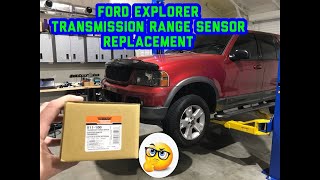
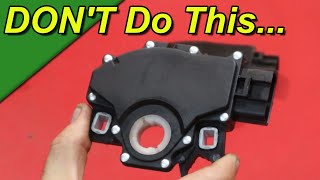
Typical fix: Loosen the sensor mounting bolts, correctly align it with the transmission in Neutral, and then retighten the bolts. A YouTube video by '63cpl' titled '2003 Ford Explorer - Range Sensor / Neutral Safety Switch Replacement...' provides a clear visual guide. 🎬 Watch this step-by-step replacement and alignment walkthrough.
Est. part cost: $0
Rare But Worth Checking
- Faulty Powertrain Control Module (PCM): This is very rare. Before condemning the PCM, all other possibilities, especially the sensor and wiring, must be exhaustively ruled out. This is usually diagnosed by a professional after checking all inputs and outputs at the PCM connector. Often, other unrelated codes will be present if the PCM is failing.
Diagnosis Steps
- Plug in an OBD-II scanner and confirm P0705 is present. Check for any other related codes like P0707 or P0708.
- Check the vehicle's starting behavior. Does it start in Park? Does it start in Neutral? A failure to start in Park but starting in Neutral is a classic symptom.
- With the key on and engine off, move the shifter through all gears (P, R, N, D, etc.) and watch the gear indicator on the dash. Note any discrepancies between the shifter position and the display.
- Raise the vehicle safely. Locate the Transmission Range Sensor on the driver's side of the transmission, where the shift lever connects.
- Visually inspect the sensor, its connector, and the surrounding wiring for any obvious damage, corrosion, or loose connections.
- If you have a scan tool with live data, monitor the TRS PID while an assistant moves the shifter. The PID should accurately reflect the gear position. Wiggle the connector and harness to see if the reading becomes erratic, which would indicate a wiring issue.
- If the sensor signal is faulty and the wiring appears intact, the sensor itself is the most likely cause and should be replaced.
- If a new sensor is installed, ensure it is properly aligned. Place the transmission in Neutral and align the marks on the sensor before tightening the bolts.
- If a new, properly aligned sensor does not fix the issue, perform a continuity and short-to-ground/power test on each wire between the TRS connector and the PCM.
Parts You'll Likely Need
- Transmission Range Sensor
(OEM #5L2Z-7F293-AA (supercedes 1L2Z-7F293-AA))— This is the most common failure point for code P0705 on this vehicle due to its location and function.
Trusted brands: Motorcraft (SW5983 or SW5645), Dorman (511-100), Standard Motor Products (NS-129)
OEM price range: $70-$120
Aftermarket price range: $40-$90
Related Codes That Often Appear With This One
- P0707 — Indicates 'Transmission Range Sensor Circuit Low Input', pointing to a short to ground in the sensor or wiring.
- P0708 — Indicates 'Transmission Range Sensor Circuit High Input', pointing to an open circuit or a short to power.
- P1702 — A Ford-specific code that indicates an intermittent failure of the Transmission Range Sensor, often logged before a hard P0705 fault appears.
Technical Service Bulletins (TSBs) & Recalls
- No specific Technical Service Bulletin (TSB) is widely cited for the P0705 code on this platform, as it is considered a straightforward component failure. However, Ford did issue TSBs for other chronic issues on this vehicle, such as 02-25-6 for the cracked tailgate applique.
- While not a recall for the Explorer, a similar Ford manufacturer recall (12C23) was issued for other models like the F-150 for transmission range sensor issues, as noted in NHTSA ODI #11389831 where a vehicle would not back up.
Platform-Specific Known Issues
- While P0705 is an external electrical fault, the 5R55W/S transmission in these Explorers is also known for internal mechanical issues, particularly worn servo bores in the case, which can cause delayed gear engagement or loss of gears (especially Reverse). It is important to distinguish between the electrical symptoms of P0705 and these separate, more serious mechanical problems.
Mechanic-Grade Diagnostic Values
- Digital TR Sensor (DTR) 4-bit Signal Voltage — expected: The DTR sensor sends a unique 4-bit binary code (High/Low voltage state) to the PCM for each gear position. A 'High' state is near battery voltage, 'Low' is near 0V. The combination of signals on the four pins (TR1, TR2, TR3A, TR4) determines the gear. For example, Park might be High-Low-Low-Low. An invalid combination (e.g., all High or all Low) triggers P0705.. Failure: Using a scan tool (like Ford IDS) to monitor the TR_D PID, or back-probing the connector pins, any deviation from the expected High/Low pattern for a given gear, or an intermittent signal when wiggling the harness, indicates a fault.
- DTR Sensor State Logic Chart (PCM Interpretation) — expected: PARK: H-L-L-L | REVERSE: L-H-L-L | NEUTRAL: H-H-L-L | DRIVE (OD): L-L-H-L | MANUAL 2: H-L-H-L | MANUAL 1: L-H-H-L. (H=High, L=Low). Note: Specific pin assignments for TR1-4 may vary slightly, consult a vehicle-specific wiring diagram.. Failure: The PCM receiving a combination not listed in the logic chart (e.g., L-L-L-L or H-H-H-H) will set code P0705.
Hidden / Shadow Codes Worth Checking
- P1705: Indicates 'Manual Lever Position Sensor Out of Self-Test Range'. This Ford-specific code is often set during a Key-On-Engine-Off (KOEO) self-test if the sensor is not in Park or Neutral, but can also indicate an intermittent circuit fault that precedes a hard P0705 code. (see via Ford IDS/NGS scan tool or other professional scanners capable of running Ford-specific self-tests.)
Scan Tool Commands That Help
- Ford IDS (Integrated Diagnostic System): Datalogger with PIDs: TR_D, TR_V — Use the 'TR_D' PID to view the digital state (gear position) the PCM is seeing. Use 'TR_V' to see the raw voltage. Graphing these PIDs while moving the shifter and wiggling the harness is the most effective way to catch intermittent signal dropouts from a bad sensor or wire.
- Ford IDS (Integrated Diagnostic System): KOEO (Key-On-Engine-Off) Self-Test — Running the KOEO self-test can flag intermittent circuit integrity issues or out-of-range sensor readings (like P1705) that may not be present as active codes, helping to confirm a fault in the TRS circuit.
Wiring & Ground Locations
- C167 — The main electrical connector on the Transmission Range Sensor itself, located on the driver's side of the transmission case.. This connector is the most common point for corrosion, pin damage, or water intrusion. Wiggling this connector during live data monitoring is a key diagnostic step. A faulty connection here directly causes P0705.
- G101 / G104 — G101 is located at the left front of the engine compartment, often near the battery. G104 is at the left front of the engine compartment or right rear of the engine compartment, depending on the exact year/configuration.. These are primary chassis and engine ground points. Corrosion or a loose connection at these grounds can introduce electrical noise or incorrect reference voltage for the entire powertrain system, potentially causing erratic sensor readings and codes like P0705, even if the sensor and its direct wiring are good.
Real Owner Repair Stories
- ExplorerForum.com user (2004 Ford Explorer) — Check engine light with P0705, O/D light flashing, sometimes would not start in Park but would in Neutral.
❌ Tried (didn't work) Replaced the Transmission Range Sensor (TRS) with a new aftermarket part., Checked and re-checked the alignment of the new sensor multiple times.
✅ What actually fixed it The problem persisted. Upon close inspection of the wiring harness connector (C167) that plugs into the sensor, one of the female pins inside was found to be green with corrosion and had backed out slightly. The final fix was cutting off the old connector and splicing in a new pigtail connector, which resolved all symptoms. - Ford-Trucks.com user (2002 Ford Explorer 4.0L) — P0705 code, erratic shifting, and incorrect gear indicator on the dash.
❌ Tried (didn't work) Initial diagnosis suggested a bad sensor.
✅ What actually fixed it The owner discovered the plastic clip holding the TRS wiring harness had broken, allowing the harness to sag and rest against the hot exhaust pipe. This melted the insulation on several wires, causing them to short against each other. Repairing the melted section of the harness and securing it properly away from the exhaust fixed the code.
Documented NHTSA Reports
- An owner reported in NHTSA ODI #11673731 that they had no way of visually confirming the gear position on the dash, and a diagnostic scan returned code P0705. They also noted that when the vehicle was placed in Park, the radiator fans would turn on high.
- NHTSA ODI #11671167 describes a situation where a scanner retrieved DTC P0705 (Transmission Range Sensor Circuit Malfunction) after the vehicle required multiple attempts to restart.
- In NHTSA ODI #11547976, a dealer diagnosis confirmed code P0705 was due to the transmission range sensor circuit malfunctioning, which also affected other undisclosed functions on the vehicle.
- A report in NHTSA ODI #11488420 notes that after a scanner showed codes P0706 and P0705, the vehicle would not start back up, and the issue was attributed to the lead frame.
OEM Part Supersession History
1L2Z-7F293-AA→5L2Z-7F293-AA— The updated part likely features improved internal sealing and more robust electrical contacts to increase longevity and resist failure from moisture and vibration.
Heads up: None. The new part number (5L2Z-7F293-AA) is a direct, backward-compatible replacement for the original.
Model Year Variations Within This Range
- 2002-2005: The 2002 model year primarily used the 5R55W transmission, while 2003-2005 models more commonly used the 5R55S. However, for the purposes of diagnosing P0705, the Digital Transmission Range (DTR) sensor, its function, and its wiring are virtually identical between these two transmission models. The diagnostic procedure does not change.
Diagnostic Flowchart
Other Known Issues on This Vehicle
Issues unrelated to this code that are worth knowing about as an owner of this generation:
- Cracked Tailgate Panel Applique 🟠 Medium — Extremely common. The plastic panel below the rear window cracks, often vertically near the emblem. This is a cosmetic issue that can allow water intrusion. (Ref: TSB 02-25-6 was issued, and class-action lawsuits were filed regarding this defect.)
- 4.0L SOHC V6 Timing Chain Rattle 🔴 High — Very common, especially at higher mileage (75k+ miles). Caused by failure of plastic timing chain guides and hydraulic tensioners. A brief rattle on cold start is a precursor to the 'death rattle' of complete guide failure, which can destroy the engine. (Ref: Multiple TSBs (e.g., 99-26-05) were issued for tensioner replacement. The repair is extremely labor-intensive as one chain cassette is at the rear of the engine.)
- 5R55W/S Transmission Servo Bore Wear 🔴 High → Shop Transmission Assembly — A common failure mode for this transmission, often occurring after 100k miles. The aluminum transmission case's servo bores for reverse and overdrive wear out, causing fluid pressure loss.
- Wheel Bearing / Hub Assembly Failure 🟠 Medium — Common failure item, leading to a humming or grinding noise that changes with vehicle speed. Typically requires replacement of the entire hub assembly.
Used vs. New Parts: Buying Guide for This Vehicle
When a used part is the smart pick: For this specific repair, a used part is NOT recommended. The cost of a new aftermarket sensor is low, and the labor involved makes it impractical to risk installing a used part with unknown life remaining.
Donor-vehicle mileage cap: roughly under 80000 miles for the part to have meaningful remaining life.
What to inspect on the donor part:
- If buying used is unavoidable, inspect the connector pins for any signs of green or white corrosion.
- Check the plastic housing for cracks or heat damage.
- Avoid parts from vehicles in regions with heavy road salt usage (Rust Belt).
OEM-only on this vehicle (don't cheap out):
- While not strictly 'OEM-only', using a Motorcraft sensor is highly recommended for best fitment and longevity. Some aftermarket sensors have been reported to have slightly off alignment marks or less durable internal contacts.
Aftermarket brands forum-validated for this vehicle:
- Motorcraft (OEM)
- Standard Motor Products (SMP)
- Dorman
Brands owners have reported issues with on this vehicle:
- Unnamed, no-brand 'white box' parts from online marketplaces are a gamble and often fail prematurely.
Real Owner Stories
Aggregated from forums and TSBs cited above. Mileages and costs reflect what owners reported in those sources.
2003 Ford Explorer
Symptoms: The user described losing 3rd gear and Overdrive, receiving a P0705 code. The issue was intermittent and would occasionally resolve itself temporarily.
What fixed it: Diagnostic advice suggested checking alignment marks in Neutral and replacing the Transmission Range Sensor (TRS).
Source hint: Ford Truck Enthusiasts Forum: 'Transmission Troubles: P0705 ???'
2002-2005 Ford Explorer
Symptoms: A user reported a non-working speedometer and a blinking O/D light in conjunction with the P0705 code.
What fixed it: Replacement of the Transmission Range Sensor (TRS), which is a common failure item for the 3rd generation Explorer.
Source hint: Ford Truck Enthusiasts Forum: 'Code P0705'
2003 Ford Explorer
Symptoms: The vehicle required a Range Sensor / Neutral Safety Switch replacement due to erratic gear signals.
What fixed it: Replacement and proper alignment of the sensor using the alignment marks on the sensor body while the transmission is in Neutral.
Source hint: YouTube video by '63cpl' titled '2003 Ford Explorer - Range Sensor / Neutral Safety Switch Replacement...'
Related OBD-II Codes
Frequently Asked Questions
My 2003 Ford Explorer won't start in Park but starts fine in Neutral. Is this related to P0705?
Is there a TSB for the P0705 code on the 2002-2005 Explorer?
Where is the Transmission Range Sensor located on my 2004 Explorer?
Can I align the TRS myself to fix the P0705 code?
Why is my Explorer's O/D OFF light blinking along with the Check Engine Light?
Could the P0705 code be caused by the common 5R55W/S servo bore wear issue?
Helpful Videos


We Have This Part in Stock


The information in this article is provided for general reference and educational purposes only. Vehicle specifications, procedures, and part compatibility can vary by production date, trim level, and region. Always consult your vehicle's factory service manual and verify part numbers before purchasing or performing repairs. Safety-critical components such as airbags, seat belts, and braking systems should be installed by a qualified professional.
- Ford Explorer:
- 🧭 Diagnostic Flowchart
- 🎬 Helpful Videos
- 🛍️ Shop This Part
- What's Unique About the 2002-2005 Ford Explorer
- Symptoms You May Notice
- Most Likely Causes
- Rare But Worth Checking
- Diagnosis Steps
- Parts You'll Likely Need
- Related Codes That Often Appear With This One
- Technical Service Bulletins (TSBs) & Recalls
- Platform-Specific Known Issues
- Mechanic-Grade Diagnostic Values
- Hidden / Shadow Codes Worth Checking
- Scan Tool Commands That Help
- Wiring & Ground Locations
- Real Owner Repair Stories
- Documented NHTSA Reports
- OEM Part Supersession History
- Model Year Variations Within This Range
- Other Known Issues on This Vehicle
- Used vs. New Parts: Buying Guide for This Vehicle
- Real Owner Stories
- 2003 Ford Explorer
- 2002-2005 Ford Explorer
- 2003 Ford Explorer
- Related OBD-II Codes
- Frequently Asked Questions
- 🎟️ Get 5% Off