

P0705 on 2011-2019 Ford Explorer: Transmission Range Sensor Causes and Fixes
On a 2011-2019 Ford Explorer, code P0705 is most often caused by a faulty Transmission Range Sensor (TRS) or its wiring. This can prevent the vehicle from starting or cause erratic shifting. Expect to pay $50-$150 for a new sensor, which is a moderately difficult DIY replacement.
- P0705 on a 2011-2019 Explorer points to a problem with the Transmission Range Sensor (TRS) circuit.
- The most common symptoms are a no-start condition and erratic shifting.
- The most likely cause is a failed TRS itself, followed by damaged wiring or a corroded electrical connector.
- Before replacing the sensor, always perform a careful visual inspection of the wiring harness for heat damage or corrosion.
- Because this fault can cause unpredictable shifting or leave you stranded, it should be addressed promptly.
What's Unique About the 2011-2019 Ford Explorer
The 2011-2019 Ford Explorer uses a 6-speed automatic transmission (6F35/6F50) where the Transmission Range Sensor (TRS), also known as a Neutral Safety Switch, is mounted externally on the transmission case. This is a benefit for diagnosis and repair, as it doesn't require removing the transmission pan or valve body like an internal sensor would. While no major recalls are specific to this code, the general cause is almost always an electrical failure of the sensor itself or the wiring harness connected to it.
Symptoms You May Notice
- Engine will not crank or start.
- Engine only starts in Neutral, but not Park (or vice-versa).
- Check Engine Light or Wrench Light is illuminated.
- Transmission is stuck in one gear (limp mode).
- Harsh, delayed, or erratic shifting between gears.
- The gear indicator (PRNDL) on the dashboard is blank or does not match the selected gear.
- Reverse lights do not turn on when in Reverse.
- Radiator fans may turn on high when the vehicle is placed in Park, as noted in some Ford-specific diagnostic reports (NHTSA ODI #11673731).
- Replacing the battery or starter when the vehicle has a no-crank condition, without first checking for transmission-related codes. The TRS acts as a neutral safety switch, and if it's faulty, it will prevent the starter from engaging.
- Replacing the TRS sensor without first inspecting the wiring harness. A corroded connector or chafed wire can produce the exact same symptoms as a failed sensor.
Most Likely Causes
- Faulty Transmission Range Sensor (TRS) 🔴 High Probability → Shop Transmission Assembly The sensor is exposed to the elements on the outside of the transmission, making it susceptible to moisture intrusion, corrosion, and wear over time. Internal contacts wear out, leading to incorrect signal transmission.
How to confirm: Using a scan tool to monitor the sensor's output (PID) while moving the shifter. Alternatively, use a multimeter to back-probe the sensor's connector and verify that the voltage signals change correctly for each gear position according to the service manual's specifications. If the signal is intermittent or incorrect, the sensor has failed. 🎬 Watch: How to test and fix your Transmission Range Sensor
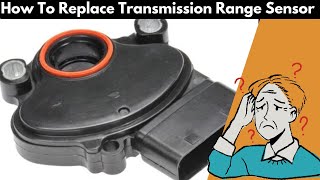
Typical fix: Replace the Transmission Range Sensor. This involves disconnecting the shift linkage and electrical connector, unbolting the old sensor, and installing the new one. 🎬 See this quick 3-minute sensor replacement walkthrough Proper alignment with the transmission in Neutral is critical for correct operation. 🎬 Watch: Replace the sensor without using any special tools
Est. part cost: $50-$150 - Damaged Wiring or Connector 🟡 Medium Probability The wiring harness runs near hot exhaust components and is exposed to road debris and moisture, which can lead to melted insulation, chafed wires, or corroded connector pins. Some owners have found wires chafed through near the driver-side engine mount.
How to confirm: Visually inspect the entire wiring harness from the TRS sensor back to the main harness. Look for melted, brittle, or broken wires. Unplug the connector and check for green or white corrosion on the pins. Perform a continuity test on each wire if no visible damage is found.
Typical fix: Repair the damaged section of wire or replace the corroded connector pigtail. Clean the connector pins with an electrical contact cleaner.
Est. part cost: $10-$40 - Misadjusted Shift Linkage ⚪ Low Probability
How to confirm: Confirm that the gear selected by the shifter inside the vehicle corresponds to the gear position lever on the transmission itself. If there is excessive play or the lever doesn't fully engage in each detent, the linkage may be loose or misadjusted. This can prevent the sensor from reading the correct position.
Typical fix: Adjust the shift cable at the transmission lever or shifter assembly to remove slack and ensure proper alignment.
Est. part cost: $0
Rare But Worth Checking
- Powertrain Control Module (PCM) Fault: This is very uncommon and should only be considered after the sensor, wiring, and connectors have been thoroughly tested and proven to be good. A PCM failure will typically present with multiple other fault codes, not just P0705 in isolation.
Diagnosis Steps
- Connect an OBD-II scanner to confirm the P0705 code and check for any other related transmission codes like P0707 or P0708.
- Observe the live data from the Transmission Range Sensor on the scanner (if available). As you move the shifter through each gear (P, R, N, D), verify that the computer is seeing the correct position.
- Perform a thorough visual inspection of the Transmission Range Sensor, its electrical connector, and the wiring harness. The sensor is located on the driver's side of the transmission where the shift cable attaches.
- Look for any signs of physical damage, corrosion on the connector pins, or wires that are melted, chafed, or broken. Pay close attention to the harness routing near the exhaust and engine mounts.
- If the wiring appears intact, test the sensor circuit. Using a multimeter and a wiring diagram, check for correct voltage and ground at the sensor's connector.
- Test the sensor's output by back-probing the signal wires. The voltage should change distinctly for each gear position. If the voltage is erratic, does not change, or is out of spec, the sensor is likely faulty.
- Check the mechanical shift linkage to ensure it is not loose, bent, or misadjusted. Ensure the lever on the transmission moves to its full detent in each gear.
- If the sensor and wiring test good, the problem may be an internal transmission issue or a faulty PCM, which requires more advanced diagnostics.
Parts You'll Likely Need
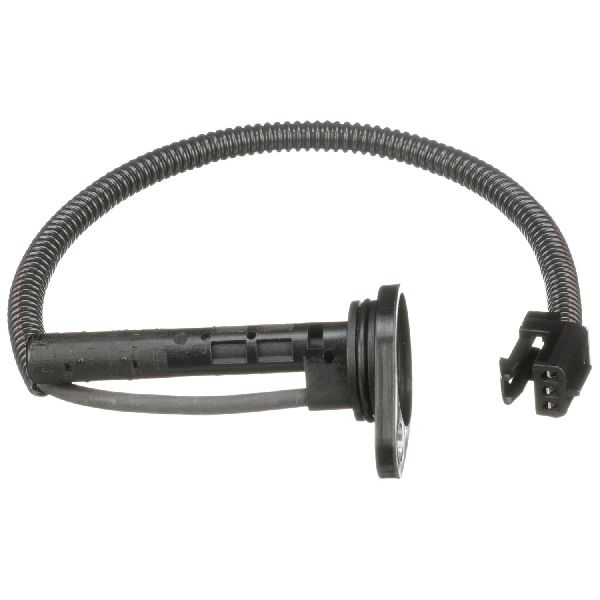
- Transmission Range Sensor
(OEM #CC3Z-7H557-B (replaces BC3Z-7H557-C, CC3Z-7H557-A). Note: Some sources also list 9L8P-7H557-AF for the 6F35 transmission family, always verify with VIN.)— This is the most common component to fail, causing the P0705 code by sending incorrect gear position signals to the computer.
Trusted brands: Motorcraft, Standard Motor Products (SMP), Dorman
OEM price range: $100-$180
Aftermarket price range: $50-$120
Related Codes That Often Appear With This One
- P0707 — Indicates the TRS circuit has low input, often pointing to a short to ground or a faulty sensor.
- P0708 — Indicates the TRS circuit has high input, often pointing to an open circuit or a faulty sensor.
Platform-Specific Known Issues
- Real-World Repair Story: Intermittent No-Start: A user on explorerforum.com with a 2013 Explorer reported an intermittent no-start condition with a P0705 code. After replacing the sensor with no change, they traced the wiring harness and found a wire had chafed through where it passed near the driver-side engine mount. Repairing the wire resolved the issue permanently.
- Diagnostic Tip from a Ford Technician: A former Ford transmission engineer on Ford-Trucks.com emphasized the importance of checking the sensor's alignment marks. With the transmission manually placed in Neutral, the alignment marks on the sensor and its housing should line up perfectly. If they don't, it can cause this code even with a new sensor.
Mechanic-Grade Diagnostic Values
- TRS Circuit Resistance to Ground — expected: > 10,000 ohms. Failure: A resistance value less than 10,000 ohms indicates a short to ground in one of the sensor's signal circuits.
- TRS Power Supply Voltage — expected: > 10 volts (Key On, Engine Off). Failure: Voltage below 10V indicates a problem with the power supply circuit from the PCM/TCM to the sensor.
- Continuity through TRS internal wiring — expected: < 5 ohms. Failure: Resistance greater than 5 ohms between the main leadframe connector and the TRS connector (with the valve body cover removed) points to a break in the internal harness.
Scan Tool Commands That Help
- Ford IDS (or equivalent high-end scanner): Datalogger PID Monitoring (TR_DC, TR_FREQ) — Use these PIDs to monitor the duty cycle and frequency of the digital TRS signal while moving the shifter. Comparing the live data to the service manual chart can confirm if the sensor is sending the correct combination of signals for each gear position.
- Ford IDS (or equivalent high-end scanner): TCM Bidirectional Test - Read Sensor Input — This command forces the TCM to report the gear position it is currently seeing from the sensor. It helps differentiate between a faulty sensor sending a bad signal and a faulty TCM that is misinterpreting a good signal.
Wiring & Ground Locations
- C168a / C1520A — The main transaxle vehicle harness connector, located on the side of the 6F35/6F50 transmission.. This is the primary connector where all signals from the TRS pass to the main vehicle harness. It's a critical point for testing voltage, ground, and continuity back to the PCM/TCM. Corrosion or pushed-out pins here are a common cause of P0705.
- S142 — A splice point in the engine bay wiring harness.. Splice S142 provides the power (VPWR) that is shared between the Transmission Range Sensor (TRS), Output Shaft Speed (OSS) sensor, and Turbine Shaft Speed (TSS) sensor. A fault at this splice can cause codes for all three components.
Real Owner Repair Stories
- Ford-Trucks.com forum member (2013 Ford Explorer) — Intermittent no-start, P0705 code stored.
❌ Tried (didn't work) Replaced the Transmission Range Sensor (TRS)
✅ What actually fixed it The user inspected the main transmission harness connector and found one of the female pins had corroded and was pushed back into the connector, causing a poor connection. After cleaning the corrosion and reseating the pin, the issue was resolved. - NHTSA ODI #11488420 — An owner reported that after their vehicle would not start back up, a scanner revealed codes P0705 and P0706. A dealership later advised that the failure was related to the lead frame.
- NHTSA ODI #11389831 — One owner experienced a situation where the vehicle would not back up. After being towed to a dealer, it was found to be pulling code P0705 for the transmission range sensor.
OEM Part Supersession History
BC3Z-7H557-C, CC3Z-7H557-A→CC3Z-7H557-B— Standard part revision and consolidation by Ford.
Heads up: The part listed as 9L8P-7H557-AF in some catalogs is for a different transmission family and is not compatible with the 2011-2019 Explorer's 6F35/6F50 transmission, despite also being a Ford TRS. Always verify by VIN.
Diagnostic Flowchart
Other Known Issues on This Vehicle
Issues unrelated to this code that are worth knowing about as an owner of this generation:
- Internal Water Pump Failure (3.5L V6) 🔴 High — Commonly occurs between 80,000 and 150,000 miles. Failure can cause coolant to mix with engine oil, leading to catastrophic engine damage if not caught early.
- Power Transfer Unit (PTU) Overheating/Failure (AWD Models) 🔴 High — The PTU fluid overheats due to proximity to the exhaust, turning to sludge and causing bearing/gear failure. Owners recommend fluid changes every 20-30k miles to prolong life, though Ford initially called it a 'lifetime' fluid.
- Exhaust Fume / Carbon Monoxide Intrusion into Cabin 🔴 High — Affects mainly 2011-2017 models, where exhaust fumes can enter the cabin during heavy acceleration or when using the rear climate control. This prompted a lengthy NHTSA investigation and multiple TSBs. (Ref: TSB 14-0130, TSB 16-0166)
- Throttle Body Malfunction 🟠 Medium — Can cause the vehicle to unexpectedly enter 'limp mode' with reduced power. This was common enough that Ford extended warranty coverage for this specific part on some model years. (Ref: Warranty Extension Program)
- Rear Suspension Toe Link Fracture 🔴 High — Affects 2011-2017 models and can cause a sudden loss of steering control. This led to a major safety recall. (Ref: NHTSA Recall 19V435)
Used vs. New Parts: Buying Guide for This Vehicle
When a used part is the smart pick: A used Transmission Range Sensor is generally not recommended. As an external electronic component exposed to heat, moisture, and vibration, its lifespan is limited. The cost savings of a used part (typically $20-$40) are minimal compared to a new aftermarket part ($50-$120) and do not justify the risk of premature failure and the labor required for replacement.
Donor-vehicle mileage cap: roughly under 50000 miles for the part to have meaningful remaining life.
What to inspect on the donor part:
- Inspect the electrical connector pins for any signs of green or white corrosion.
- Check the plastic housing for cracks or signs of heat damage.
- Ensure the manual lever arm is not bent or excessively worn.
- If possible, get a part from a vehicle in a dry, salt-free climate.
Aftermarket brands forum-validated for this vehicle:
- Motorcraft (OEM)
- Standard Motor Products (SMP)
- Dorman
Brands owners have reported issues with on this vehicle:
- No-name, unbranded parts from online marketplaces should be avoided due to inconsistent quality control.
Documented NHTSA Reports
NHTSA ODI #11671167
Symptoms: An owner reported that after several attempts, the vehicle restarted. A scan retrieved DTC P0705 (Transmission Range Sensor Circuit Malfunction).
NHTSA ODI #11547976
Symptoms: A vehicle was diagnosed at a dealer and produced code P0705 due to the transmission range sensor circuit malfunctioning.
Real Owner Stories
Aggregated from forums and TSBs cited above. Mileages and costs reflect what owners reported in those sources.
2013 Ford Explorer
Symptoms: Intermittent no-start condition accompanied by a P0705 code.
What fixed it: Traced the wiring harness and repaired a wire that had chafed through where it passed near the driver-side engine mount.
Source hint: explorerforum.com: Real-World Repair Story: Intermittent No-Start
2011-2019 Ford Explorer
Symptoms: User asked about the urgency of repair after receiving a P0705 code; noted the car might drive intermittently but feared being stranded.
What fixed it: High-priority replacement of the transmission range sensor to avoid bad data causing further transmission issues.
Source hint: reddit.com/r/FordExplorer - 'Transmission Sensor Replacement?'
Related OBD-II Codes
Frequently Asked Questions
Where is the Transmission Range Sensor located on my 2011-2019 Ford Explorer?
Why does my Explorer start in Neutral but not in Park when P0705 is present?
Is there a specific alignment procedure for the TRS on this vehicle?
Can a wiring issue near the engine cause the P0705 code?
Should I be worried about my 3.5L V6 Explorer's water pump while fixing this transmission code?
Does the Ford Explorer share this transmission issue with other models?
Helpful Videos

We Have This Part in Stock



The information in this article is provided for general reference and educational purposes only. Vehicle specifications, procedures, and part compatibility can vary by production date, trim level, and region. Always consult your vehicle's factory service manual and verify part numbers before purchasing or performing repairs. Safety-critical components such as airbags, seat belts, and braking systems should be installed by a qualified professional.
- Ford Explorer:
- 🧭 Diagnostic Flowchart
- 🎬 Helpful Videos
- 🛍️ Shop This Part
- What's Unique About the 2011-2019 Ford Explorer
- Symptoms You May Notice
- Most Likely Causes
- Rare But Worth Checking
- Diagnosis Steps
- Parts You'll Likely Need
- Related Codes That Often Appear With This One
- Platform-Specific Known Issues
- Mechanic-Grade Diagnostic Values
- Scan Tool Commands That Help
- Wiring & Ground Locations
- Real Owner Repair Stories
- OEM Part Supersession History
- Other Known Issues on This Vehicle
- Used vs. New Parts: Buying Guide for This Vehicle
- Documented NHTSA Reports
- NHTSA ODI #11671167
- NHTSA ODI #11547976
- Real Owner Stories
- 2013 Ford Explorer
- 2011-2019 Ford Explorer
- Related OBD-II Codes
- Frequently Asked Questions
- 🎟️ Get 5% Off