

P0705 on 2009-2014 Ford F-150: Transmission Range Sensor Circuit Malfunction Causes and Fixes
Code P0705 on a 2009-2014 Ford F-150 indicates a fault with the Transmission Range Sensor (TRS) circuit. On 2009-2010 models, this is typically a faulty external sensor. On 2011-2014 models, it is most often a failure of the internal transmission lead frame assembly. This can cause no-start conditions, erratic shifting, and a 'Transmission Fault' warning. The fix varies significantly by model year.
- P0705 on a 2009-2014 F-150 means the computer has lost track of what gear the transmission is in.
- The most common symptoms are a no-start condition, erratic shifting, and a 'Transmission Fault' warning light.
- The problem is almost always a faulty external Transmission Range Sensor (TRS) or its wiring/connector.
- Before replacing parts, inspect the wiring harness for heat damage or corrosion, as this is a common and cheaper fix.
- If replacing the sensor, proper alignment is critical to ensure the vehicle will start and shift correctly.
What's Unique About the 2009-2014 Ford F-150

The 2009-2014 F-150 generation spans a critical change in how the Transmission Range Sensor (TRS) is configured. For 2009-2010 models with the 6R80 transmission, P0705 is most often caused by a failure of the external Digital Transmission Range (DTR) sensor on the driver's side of the transmission case. However, for 2011-2014 models, Ford integrated the TRS into the molded lead frame assembly, which is located inside the transmission oil pan and attached to the valve body. This internal lead frame is a well-documented failure point, not just for P0705 causing a no-start, but also for other issues like sudden, unintended downshifts, which prompted Ford to issue recalls and extended warranties (e.g., 19S07) for the same part. Therefore, diagnosing P0705 on this platform requires first identifying which sensor style the truck has.
Symptoms You May Notice

- Check Engine Light is on
- "Transmission Fault" warning on the dashboard
- Vehicle will not crank or start (intermittently or completely).
- Engine only starts in Neutral, but not Park
- Harsh, erratic, or delayed shifting
- Transmission may enter 'limp mode', stuck in one gear
- Gear indicator on the dashboard is incorrect or does not display.
- Reverse lights do not turn on when in Reverse.
- A single 'click' from the fuse box area when trying to start, but no crank.
- Replacing the starter when the vehicle has an intermittent no-crank condition caused by the TRS.
- Replacing the external TRS on a 2011-2014 model, not realizing the sensor is internal.
- Assuming an internal transmission failure without first diagnosing the external sensor and its circuit on 2009-2010 models.
Most Likely Causes

- Faulty Internal Molded Lead Frame (2011-2014 Models) 🔴 High Probability → Shop Transmission Valve Body The lead frame, which contains the TRS, output speed sensor, and other electronics, is a known high-failure item inside the 6R80 transmission. It is exposed to heat, vibration, and contamination from clutch material, leading to cracked solder joints or sensor failure. This is the same part recalled for other transmission issues.
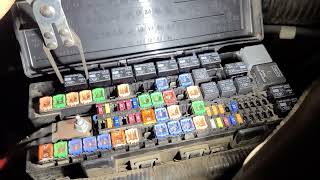
How to confirm: Confirm with a scan tool showing P0705 alongside codes like P1702 or P1921. 🎬 Watch: Diagnosing a no-crank with these specific fault codes. A professional diagnosis is often needed as it involves testing the circuit at the transmission connector. If the vehicle is a 2011-2014 model and exhibits intermittent no-crank, this is the most likely cause.
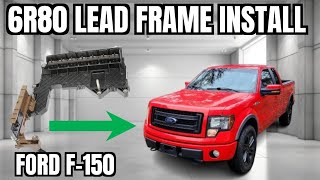
Typical fix: Replace the entire molded lead frame assembly. This requires draining the transmission fluid, removing the pan, and removing the main valve body to access the part. The connector sleeve seal should also be replaced. 🎬 See this step-by-step 6R80 internal lead frame replacement tutorial.
Est. part cost: $150-$300 - Faulty External Transmission Range Sensor (2009-2010 Models) 🔴 High Probability → Shop Transmission Assembly The sensor is mounted externally on the transmission, making it vulnerable to corrosion and damage from road debris, water, and heat cycles.
How to confirm: Use a scan tool to monitor the sensor's output (PID) while moving the gear shifter. If the reading is erratic, doesn't change, or shows an invalid state, the sensor is likely bad. You can also test the sensor's internal resistance with a multimeter.
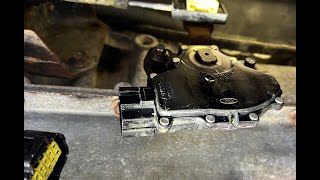
Typical fix: Replace the Transmission Range Sensor. This part is located on the driver's side of the transmission where the shift linkage connects. 🎬 Watch: How to replace an external transmission position sensor.
Est. part cost: $50-$100 - Damaged Wiring or Corroded Connector 🟡 Medium Probability The wiring harness to the transmission can be damaged by heat from the exhaust or by chafing where it routes over the back of the engine block. The main transmission connector can also get corroded.
How to confirm: Visually inspect the wiring harness running to the transmission for any signs of melting, chafing, or breaks. Unplug the main connector and check for green or white corrosion on the pins. Perform a continuity test on the wires from the sensor to the PCM if no visible damage is found.
Typical fix: Repair the damaged section of wire or clean the connector terminals. If corrosion is severe, the connector pigtail may need to be replaced.
Est. part cost: $15-$50 - Misaligned Transmission Range Sensor (External Sensor Models Only) ⚪ Low Probability → Shop Transmission Assembly This typically only occurs after the external sensor has been replaced or the transmission has been serviced.
How to confirm: If the no-start or shifting issue began immediately after a repair on a 2009-2010 model, check the sensor's alignment. There are alignment marks on the sensor and the transmission case that must line up correctly, usually with the transmission in Neutral.
Typical fix: Loosen the sensor's mounting bolts and rotate it until the alignment marks are perfectly aligned, then retighten the bolts.
Est. part cost: $0
Rare But Worth Checking
- Faulty Powertrain Control Module (PCM): This is very rare. Before condemning the PCM, all other possibilities (sensor, lead frame, wiring, alignment) must be exhaustively ruled out. A faulty PCM will usually be accompanied by multiple other seemingly unrelated trouble codes.
- Damaged or Misadjusted Shift Linkage: If the mechanical linkage from the shifter to the transmission is bent, loose, or has worn bushings, it may not be able to move the sensor (internal or external) to the correct position, causing a mismatch that triggers the code.
Diagnosis Steps
- Connect an OBD-II scanner and confirm P0705 is present. Note any other codes like P1702 or P1921.
- Identify the vehicle model year. If 2011 or newer, the problem is likely the internal lead frame. If 2010 or older, it is likely the external sensor or wiring.
- For 2009-2010 models: Visually inspect the external Transmission Range Sensor on the driver's side of the transmission. Look for physical damage, corrosion, and wiring issues, especially near the exhaust.
- For all years: With a scan tool, monitor the Transmission Range Sensor PID (TR_D, TR_P, etc.). Move the shifter through all gears. The scanner display should match the shifter position. An incorrect or missing reading points to the circuit fault.
- For 2011-2014 models: If live data is erratic or missing and other related codes are present, the internal lead frame is the primary suspect. Diagnosis from this point typically requires a professional to test the wiring at the transmission connector before condemning the internal part.
- If wiring and connectors are confirmed good, the faulty component (external sensor or internal lead frame) must be replaced.
- After replacement of an external sensor, ensure it is properly aligned in Neutral to prevent a no-start condition.
Parts You'll Likely Need
- Transmission Molded Lead Frame Assembly (for 2011-2014 models)
(OEM #AL3Z-7G276-D)— For 2011-2014 F-150s, the TRS is integrated into this assembly, which is the most common failure point for P0705.
Trusted brands: Motorcraft, Dorman
OEM price range: $200-$300
Aftermarket price range: $150-$220 - Transmission Range Sensor (Neutral Safety Switch) (for 2009-2010 models)
(OEM #F7LZ-7F293-AB)— This is the most common failure point for the P0705 code on the earlier models of this generation with an external sensor.
Trusted brands: Motorcraft
OEM price range: $70-$120
Aftermarket price range: $45-$80
Related Codes That Often Appear With This One
- P1702 — This Ford-specific code indicates the TRS circuit sent an invalid signal during the PCM's self-test, often appearing alongside P0705 as they both point to a fault in the same sensor circuit.
- P1921 — This code indicates the PCM detected a transmission range signal that was out of its valid range, which directly relates to the P0705 malfunction and can also cause a no-crank condition.
Technical Service Bulletins (TSBs) & Recalls
- While no TSB is specifically for P0705, Ford Customer Satisfaction Program 19N01 and Recall 19S07 address failures of the transmission lead frame in 2011-2013 F-150s, which contains the Transmission Range Sensor. A P0705 code on these vehicles should prompt an inquiry with a Ford dealer about warranty coverage, even if the vehicle is outside the normal warranty period.
- NHTSA ODI #11389831 notes that an owner reported a P0705 code for the transmission range sensor and referenced recall 12C23 for certain 2011 through 2013 models.
Platform-Specific Known Issues
- The most critical issue for this platform is the mid-generation switch from an external sensor to an internal lead frame around the 2011 model year. The internal lead frame in 2011-2014 trucks is a known weak point and was subject to Ford Customer Satisfaction Program 19N01 (and recall 19S07) for sudden downshift issues caused by a faulty Output Speed Sensor (OSS) on the same lead frame. A P0705 code on these years is often another symptom of the same failing component.
- NHTSA ODI #11319545 describes a vehicle that downshifts from 3rd to 1st gear while driving, with codes P0705 and P0016 present.
- NHTSA ODI #11151065 highlights an owner's report of the "infamous P0705 code" reading on a truck produced at the Kansas plant, suggesting it deserves a recall evaluation.
Mechanic-Grade Diagnostic Values
- Transmission Range (TR) Sensor PWM Signal Frequency (2011-2014 models) — expected: 100 to 150 Hz. Failure: A frequency outside this range indicates a fault in the sensor or circuit.
- Transmission Range (TR) Sensor PWM Duty Cycle (TR_DC PID) (2011-2014 models) — expected: Park: 8.0-25.8%, Reverse: 30.5-39.31%, Neutral: 40.54-52.49%, Drive: 54.35-71.15%. Failure: A duty cycle percentage that does not match the selected gear, is erratic, or is out of range indicates a fault.
- TR Sensor Power Supply Voltage at Transmission Connector C1575, Pin 12 (VT/GN wire) (2011-2014 models) — expected: Greater than 9.5 volts with key on. Failure: Voltage less than 9.5 volts indicates an open in the power supply circuit from the PCM.
Scan Tool Commands That Help
- Ford IDS or equivalent professional scanner: Monitor PIDs: TR_DC (Transmission Range Duty Cycle) and TR_FREQ (Transmission Range Frequency) — This is the primary method for diagnosing the internal Hall-effect TR sensor on 2011-2014 models. Wiggle the harness while monitoring these PIDs to check for intermittent connections.
- Professional scanner with bidirectional capability: TCM Communication Test / Read Sensor Input — Used to command the TCM to read the sensor input. If the module reports 'no signal' even when voltage is confirmed at the sensor, it points towards an internal TCM fault, though this is rare.
Wiring & Ground Locations

- C175B — The center connector on the Powertrain Control Module (PCM), typically located on the passenger-side firewall.. This connector contains the pins for the TR sensor signals going to the PCM. For 2009-2010 models, this is where you would back-probe to test the circuit from the external sensor.
- C1575 — The main 16-pin round electrical connector on the transmission case.. This is the primary test point for 2011-2014 models. You can test for power, ground, and signal integrity at this connector before dropping the transmission pan to access the internal lead frame. Pin 12 (VT/GN) is power, Pin 4 (VT) is the signal.
- Harness Chafe Point — Where the main wiring harness routes over the back of the engine block, near the firewall.. On some trucks, the protective covering on the harness in this area can become brittle from heat and age, leading to chafed or melted wires for the transmission circuits, which can cause a P0705 code.
Real Owner Repair Stories
- YouTube channel 'Codemans auto' (2011 Ford F-150) — No crank, no start. Codes P0705, P1702, P1921, and U0422 were present. The gear indicator on the dash was not working.
❌ Tried (didn't work) Initial visual inspection of wiring showed no obvious problems.
✅ What actually fixed it The internal molded lead frame was replaced. This required dropping the transmission pan and valve body. After replacement, the truck started and ran correctly. - F150forum.com user (2012 F-150 FX4 5.0L) — After personally replacing the lead frame, the truck would not start and threw 11 new transmission-related DTCs.
❌ Tried (didn't work) Re-checking the main electrical pigtail connection.
✅ What actually fixed it The likely cause, suggested by other forum members, was the misalignment of the new lead frame's range sensor slide with the manual valve linkage pin inside the transmission during reassembly. This prevents the PCM from knowing the transmission is in Park or Neutral, thus disabling the starter. - Reddit user on r/f150 (2011 F-150) — Intermittent no-crank condition, followed by code P0705.
❌ Tried (didn't work) Took it to a Ford dealer who diagnosed a bad lead frame.
✅ What actually fixed it The diagnosis of a bad lead frame was correct, but the dealer informed the owner that the part was on backorder with no ETA, with a previous case taking 7 months to resolve. This highlights a major real-world issue with this repair: part availability. - NHTSA ODI #11671167 — An owner reported that after several attempts, the vehicle restarted, but a scanner retrieved DTC P0705 (Transmission Range Sensor Circuit Malfunction).
- NHTSA ODI #11302507 — An owner reported that the gear indicators do not light up and the check engine light comes on; after restarting a few times, P0705 and P1702 codes were found, though they later disappeared with no history recorded.
OEM Part Supersession History
AL3Z-7G276-A, AL3Z-7G276-B→AL3Z-7G276-D— Revision to address reliability issues of the integrated sensors and circuitry on the lead frame.
Heads up: The 'D' revision replaces the earlier versions and should be used for all repairs. While older stock of 'A' or 'B' might be found, the 'D' version is the most current and recommended part.
Model Year Variations Within This Range
- 2011-2014: The internal Transmission Range Sensor is not a simple switch. It uses a set of Hall-effect sensors that send a Pulse Width Modulated (PWM) signal to the PCM. Diagnosis requires a scan tool capable of reading the signal's frequency and duty cycle, not just a simple resistance or voltage test.
Diagnostic Flowchart
Used vs. New Parts: Buying Guide for This Vehicle
When a used part is the smart pick: For the external sensor on 2009-2010 models, a used part could be considered if on a tight budget, but new parts are inexpensive. For the 2011-2014 internal lead frame, a used part is strongly discouraged due to the extremely high failure rate of this component.
Donor-vehicle mileage cap: roughly under 50000 miles for the part to have meaningful remaining life.
What to inspect on the donor part:
- For an external sensor, check for a clean connector with no corrosion and an intact plastic housing with no cracks.
- For a lead frame, do not buy used from a junkyard. If considering a remanufactured unit, use a reputable source like 'Circuit Board Medics' that provides a warranty.
OEM-only on this vehicle (don't cheap out):
- Molded Lead Frame Assembly (Motorcraft AL3Z-7G276-D) is highly recommended over aftermarket if it can be sourced. Supply chain issues are common.
Aftermarket brands forum-validated for this vehicle:
- Dorman: Widely available and used as an alternative when the Motorcraft part is on backorder. Forum reports indicate it generally works, though long-term reliability is less proven than OEM.
Brands owners have reported issues with on this vehicle:
- Unbranded, no-name lead frames from online marketplaces should be avoided due to the complexity of the part and the high cost of labor to replace it if it fails prematurely.
Real Owner Stories
Aggregated from forums and TSBs cited above. Mileages and costs reflect what owners reported in those sources.
2011 Ford F-150 5.0L
Symptoms: An intermittent no-crank, no-start condition accompanied by code P0705.
What fixed it: The problem was traced to the internal sensor, requiring the replacement of the entire molded lead frame assembly inside the transmission.
Source hint: f150forum.com - Thread: '2011 5.0 No Crank No Start P0705'
2011 Ford F-150
Symptoms: A no-crank condition with codes P0705, P1702, and P1921 present.
What fixed it: A professional diagnosis concluded the internal molded lead frame was the cause of the fault.
Source hint: YouTube - '2011 F150 No Crank Codes P0705, P1702 and P1921'
2008 Ford F-150
Symptoms: The P0705 code returned even after replacing the external transmission range sensor.
What fixed it: The next diagnostic step was to inspect and repair the wiring harness and check for bad grounds, as these are common secondary causes.
Source hint: f150forum.com - Thread: 'P0705 Remains, as does my frustration'
Related OBD-II Codes
Frequently Asked Questions
My 2012 F-150 won't start and has code P0705. Is this related to the transmission recall I heard about?
Why is it so important to know if my F-150 is a 2010 or a 2011 model when diagnosing P0705?
My truck only starts in Neutral, not Park. Is this a symptom of P0705?
I replaced the external sensor on my 2009 F-150, but it still won't start. What could be wrong?
My mechanic says the fix for P0705 on my 2013 F-150 is to replace the 'molded lead frame.' What is that?
Besides the check engine light, what other dashboard warnings might I see with a P0705 code?
Helpful Videos
We Have This Part in Stock

The information in this article is provided for general reference and educational purposes only. Vehicle specifications, procedures, and part compatibility can vary by production date, trim level, and region. Always consult your vehicle's factory service manual and verify part numbers before purchasing or performing repairs. Safety-critical components such as airbags, seat belts, and braking systems should be installed by a qualified professional.
- Ford F-150:
- 🧭 Diagnostic Flowchart
- 🎬 Helpful Videos
- 🛍️ Shop This Part
- What's Unique About the 2009-2014 Ford F-150
- Symptoms You May Notice
- Most Likely Causes
- Rare But Worth Checking
- Diagnosis Steps
- Parts You'll Likely Need
- Related Codes That Often Appear With This One
- Technical Service Bulletins (TSBs) & Recalls
- Platform-Specific Known Issues
- Mechanic-Grade Diagnostic Values
- Scan Tool Commands That Help
- Wiring & Ground Locations
- Real Owner Repair Stories
- OEM Part Supersession History
- Model Year Variations Within This Range
- Used vs. New Parts: Buying Guide for This Vehicle
- Real Owner Stories
- 2011 Ford F-150 5.0L
- 2011 Ford F-150
- 2008 Ford F-150
- Related OBD-II Codes
- Frequently Asked Questions
- 🎟️ Get 5% Off