

P0705 on 2015-2020 Ford F-150: Transmission Range Sensor Causes and Fixes
For 2015-2017 F-150s with the 6R80 6-speed transmission, this code is almost always caused by a faulty internal transmission lead frame, which is covered by Ford's Customer Satisfaction Program 19N01 (previously recall 16S28). For 2017-2020 models with the 10R80 10-speed, the cause is less common and more likely related to wiring, the external sensor, or internal valve body issues.
- For 2015-2017 F-150s with the 6R80 6-speed, immediately check with a Ford dealer about Customer Satisfaction Program 19N01. This could entitle you to a free lead frame replacement.
- The most common symptoms are a wrench light, loss of the gear indicator on the dash, and sudden, dangerous downshifts.
- Do not drive the vehicle if you experience these symptoms. The risk of an unexpected downshift causing a loss of control is significant.
- For 2017-2020 F-150s with the 10R80 10-speed, P0705 is less common and likely points to a wiring issue or a more complex internal transmission problem that may be covered by other TSBs.
- The correct OEM part for the 6R80 lead frame is Motorcraft AL3Z-7G276-D.
What's Unique About the 2015-2020 Ford F-150
The 2015-2020 F-150 generation spans two different automatic transmissions, and the cause of P0705 is dramatically different between them. For 2015-2017 models equipped with the 6-speed 6R80, this code is overwhelmingly caused by a well-documented failure of the internal molded lead frame, which contains the range sensor. This issue is so widespread that it prompted a major safety recall which was later converted to an extended warranty program. For 2017-2020 models with the 10-speed 10R80, code P0705 is far less common and does not point to a single, systemic defect, but can be a symptom of broader valve body or wiring issues.
Generation note: The 2015-2020 F-150 is a single generation (13th gen), but this period covers a major transmission change. Models from 2015-2017 primarily used the 6-speed 6R80 automatic. Starting in 2017, Ford introduced the 10-speed 10R80 automatic, co-developed with GM, which became the standard by 2018. The cause of P0705 is highly specific to which transmission the truck has.
Symptoms You May Notice
- Illuminated Malfunction Indicator Lamp (Check Engine Light) or Wrench Light.
- Sudden, unexpected downshift to a lower gear (often 1st or 2nd) while driving.
- Gear position indicator (PRNDL) on the dashboard disappears or displays the incorrect gear.
- Transmission enters a limited-functionality "limp mode".
- Vehicle will not crank or start, or only starts intermittently. 🎬 See how to fix an F-150 no-start by replacing the lead frame.
- Vehicle will only start in Neutral, not Park.
- Inability to shift into Reverse or other gears.
- Backup camera and reverse lights do not activate when in Reverse.
- A "Trans Fault" message appears on the instrument cluster.
- Radiator fans turning on high when the vehicle is placed in Park (reported in NHTSA ODI #11673731).
- Replacing only the external transmission wiring harness connector when the fault is internal to the lead frame (on 6R80 models).
- Assuming the issue is a simple misadjusted shift cable; this system is digital and P0705 points to an electrical fault. The shift cable bushing recall (22S43 / NHTSA 22V-413) causes different symptoms, like the vehicle rolling away in Park, not typically a P0705 code.
- Replacing the PCM when the actual problem is a wiring short or faulty lead frame.
- Replacing the external Transmission Range Sensor on a 6R80 transmission, not realizing the sensor is integrated into the internal lead frame.
Most Likely Causes
- Faulty Internal Molded Lead Frame (6R80 Transmission) 🔴 High Probability → Shop Transmission Valve Body This is a widespread, documented failure on 2015-2017 F-150s with the 6R80 transmission, leading to Customer Satisfaction Program 19N01. Electrical connections on the lead frame, which is a plastic frame holding sensors and electrical pathways, degrade from heat cycles and vibration. This causes signal loss from the integrated Transmission Range Sensor. NHTSA ODI #11488420 describes a situation where a scanner retrieved codes P0705 and P0706, and the dealer confirmed the lead frame was the cause.
How to confirm: Check the vehicle's VIN with a Ford dealer for coverage under Customer Satisfaction Program 19N01, which extended the warranty for this specific part to 10 years or 150,000 miles. A Ford dealer can scan for specific diagnostic codes (including P0705 and P1702) that confirm the lead frame needs replacement under the program.
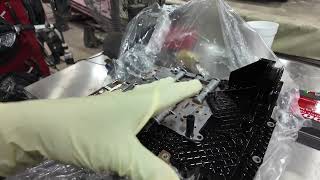
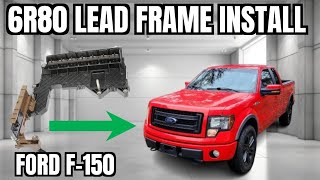
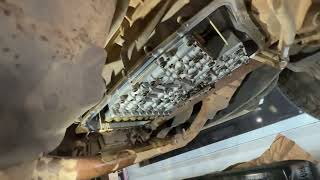
Typical fix: Per the Ford program, a dealer will replace the entire molded lead frame assembly inside the transmission. This involves draining the fluid, dropping the pan, removing the valve body, replacing the lead frame, and then reassembling with a new pan gasket and fluid. 🎬 Watch a real-world 6R80 lead frame repair walkthrough.
Est. part cost: $0 (if covered by warranty extension) - Damaged Wiring Harness or Connector (All Transmissions) 🟡 Medium Probability The main transmission wiring harness can be susceptible to damage from road debris, improper servicing, or heat from the nearby exhaust system. The connector pins can also corrode or become loose, leading to intermittent signals.
How to confirm: Perform a thorough visual inspection of the wiring harness leading to the transmission. Look for any chafed, melted, or broken wires. Unplug the main connector and inspect for corrosion, moisture, or bent/backed-out pins. A technician would use a multimeter to perform a pin-out test, checking for continuity and correct voltages against a wiring diagram.
Typical fix: Repairing the damaged section of wire or replacing the connector pigtail. If the damage is extensive, the entire harness section may need replacement.
Est. part cost: $20 - $400
Rare But Worth Checking
- Faulty Transmission Control Module (TCM) / Valve Body (10R80): → Shop Transmission Assembly On the 10R80 transmission, P0705 is not a common standalone code and may appear with other codes related to shift solenoids or valve body performance (e.g., P0751, P2700). Ford has issued multiple TSBs (like 23-2123) for harsh shifting and engagement issues that require valve body overhaul or replacement. A faulty range sensor reading could be a secondary result of these internal hydraulic or electronic issues.
- Faulty Powertrain Control Module (PCM): This is very rare. The PCM is a robust component. Before condemning the PCM, all other possibilities, especially wiring and sensor issues, must be exhaustively ruled out. This is usually diagnosed by seeing multiple, unrelated fault codes alongside P0705 or by confirming the PCM is not sending the correct reference voltage to the sensor circuit.
Diagnosis Steps
- Check for Warranty Extensions/Recalls: The first step for a 6R80-equipped truck (2015-2017) is to contact a Ford dealer with the VIN to check for coverage under Customer Satisfaction Program 19N01 for the lead frame. Also check for the unrelated shift cable bushing recall 22S43.
- Scan for Codes: Use a quality OBD-II scanner to confirm P0705 and look for other related codes like P1702. Document and clear the codes, then test drive to see which codes return immediately, which can help isolate the fault. NHTSA ODI #11671167 notes an instance where a scanner retrieved P0705, identifying a Transmission Range Sensor Circuit Malfunction.
- Visual Inspection: Thoroughly inspect the transmission wiring harness from the PCM to the transmission case. Pay close attention to areas near the exhaust manifolds and where the harness may rub against the chassis or engine components. Check the main connector for damage or corrosion.
- Test Sensor Circuit (10R80 or post-recall 6R80): For 10-speed models or 6-speeds where the lead frame is not the suspected cause, a technician would use a wiring diagram and multimeter to test the TRS circuit. This involves checking for the correct reference voltage from the PCM and testing the signal wire's integrity between the sensor and the PCM.
- Isolate the Fault: If the external wiring and PCM reference voltage are good, the fault is internal to the transmission. For the 6R80, this almost certainly means a failed lead frame. For the 10R80, this points towards a faulty range sensor, internal harness, or a more complex valve body issue requiring further diagnosis per Ford's TSBs.
- Professional Repair: Replacement of the 6R80 lead frame or diagnosis of the 10R80's internal components requires specialized knowledge and tools and should be performed by a qualified technician.
Parts You'll Likely Need
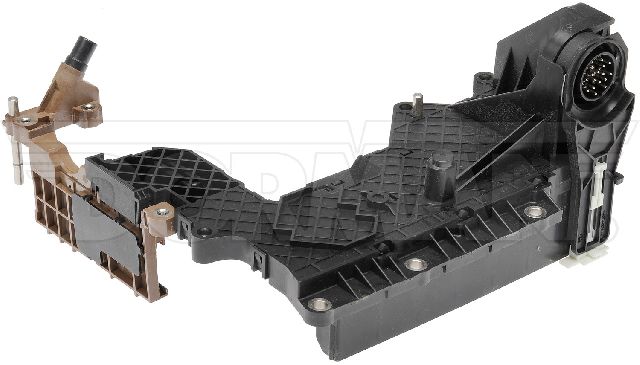
- Transmission Molded Lead Frame Assembly (Connector)
(OEM #AL3Z-7G276-D)— For the 6R80 transmission (2015-2017), this part is the confirmed cause of the P0705 code in the vast majority of cases. It is an integrated unit containing the Transmission Range Sensor (TRS), output speed sensor, and other electronics that fail. This part number supersedes older versions like AL3Z-7G276-A and AL3Z-7G276-B.
Trusted brands: Motorcraft, Dorman (926-149)
OEM price range: $200-$320
Aftermarket price range: $150-$250
Related Codes That Often Appear With This One
- P1702 — P1702 indicates the Transmission Range Sensor circuit sent an invalid signal. It is very often set in conjunction with P0705 as they both point to the same component failure within the lead frame or its wiring.
- P1921 — This code means the PCM detected a transmission range signal that was out of its expected range, which can prevent the engine from cranking. It is another code directly related to the failure of the TRS circuit.
Technical Service Bulletins (TSBs) & Recalls
- While not a TSB, Ford Customer Satisfaction Program 19N01 is the most critical document for P0705 on 2015-2017 models.
- NHTSA ODI #11389831 references a related recall (12C23) for certain F-150 models regarding the transmission range sensor.
Platform-Specific Known Issues
- Ford Customer Satisfaction Program 19N01: This is an extended warranty covering the molded lead frame on 6R80 transmissions for 10 years or 150,000 miles. It replaced earlier recalls and TSBs. Owners may be eligible for a free repair if their vehicle falls within these parameters and exhibits the specific fault codes.
- Ford Safety Recall 22S43 / NHTSA 22V-413: This recall addresses a degraded shift cable bushing that can detach, causing a mismatch between the gear shifter's position and the actual transmission gear. This could lead to the vehicle rolling away. While it does not cause a P0705 code, it is a critical transmission-related safety issue for this platform.
Mechanic-Grade Diagnostic Values
- Transmission Range (TR) Sensor PWM Signal Frequency (6R80) — expected: 100 to 150 Hz. Failure: A frequency outside this range indicates a fault in the sensor or circuit.
- Transmission Range (TR) Sensor PWM Duty Cycle (TR_DC PID on Scan Tool, 6R80) — expected: Park: 8.0-25.8%, Reverse: 30.5-39.31%, Neutral: 40.54-52.49%, Drive: 60.0-75.0% (approx.). Failure: Values that are erratic, stuck, or do not correspond to the selected gear indicate a failed sensor.
- Voltage at Transmission Bulkhead Connector C175T (6R80) — expected: Pin 12 (VT/GN wire) should have battery voltage with key on. Pin 4 (VT wire) is the signal wire to the PCM.. Failure: No voltage on Pin 12 points to a power supply issue; erratic or missing signal on Pin 4 with good power points to an internal lead frame fault.
Scan Tool Commands That Help
- Ford IDS (Integrated Diagnostic System): Datalogger > PID Monitoring — Use this to monitor live data PIDs for the Transmission Range sensor, such as TR, TR1, TR2, TR3, TR4, and TR_DC (Duty Cycle). While moving the shifter, watch for the PID values to change logically and match the expected duty cycle percentages for each gear. A frozen, erratic, or blank value confirms a sensor/circuit fault.
- Ford IDS (Integrated Diagnostic System): Transmission Characterization / Solenoid Body Strategy — This function is required *after* replacing the lead frame/valve body assembly. The new part comes with a tag containing a new strategy ID number that must be programmed into the PCM to ensure proper shift performance and communication.
Wiring & Ground Locations
- C175T — The main 16-pin electrical connector on the passenger side of the transmission case. It's a round, pass-through connector.. This is the primary interface between the internal lead frame (which contains the TRS) and the vehicle's main wiring harness. Testing for power, ground, and signal integrity at this connector is the key step to determine if the fault is internal to the transmission (bad lead frame) or external (wiring, PCM).
- Engine Block Ground — A bolt that secures a main ground wire to the engine block.. In one documented case, a P0705 code that persisted after replacing the TRS, starter, and battery was ultimately caused by a loose ground bolt on the engine block, leading to erratic electrical behavior.
- Harness Chafe Point — The section of the main wiring harness that routes over the back of the engine and transmission, near the exhaust.. The protective loom in this area can become brittle from heat, exposing the transmission sensor wires to heat damage, chafing, or melting, which can cause a short or open circuit leading to code P0705.
Real Owner Repair Stories
- YouTube channel 'Mekanika' (2017 Ford F-150 w/ 6R80 Transmission) — Transmission stuck in 5th, 6th, and Reverse only. Multiple transmission codes including P0706, P0707, and P1702.
❌ Tried (didn't work) Initial diagnosis pointed towards a catastrophic transmission failure due to metal particles found in the pan.
✅ What actually fixed it Despite finding metal debris, the owner requested only the lead frame be replaced. The technician noted that the magnetic range sensor on the old lead frame was covered in ferrous metal filings, which likely made it unreadable. Replacing only the lead frame and cleaning the pan resolved all shifting issues and cleared the codes, against expectations. - Ford Truck Enthusiasts Forum (Older F-150 (applicable principle)) — No crank, no start condition with P0705 code.
❌ Tried (didn't work) Replaced Transmission Range Sensor (TRS), Replaced starter, Replaced starter relay, Bought a new battery
✅ What actually fixed it The bolt holding the main ground wire to the engine block had become loose over time. Tightening this ground bolt resolved the no-crank condition and the associated code. - NHTSA ODI #11547976 — An owner reported that their vehicle was diagnosed with code P0705 due to the transmission range sensor circuit malfunctioning, which affected other undisclosed functions on the vehicle.
OEM Part Supersession History
AL3Z-7G276-A, AL3Z-7G276-B→AL3Z-7G276-D— The original lead frame designs had a high failure rate due to internal circuit board issues and sensor degradation from heat and vibration. The 'D' revision is the updated, more reliable part.
Heads up: While older revisions may be found, it is critical to use the latest 'D' revision for the repair to be durable. The parts are physically interchangeable, but the older versions are prone to the same failure.
Model Year Variations Within This Range
- 2015-2017: Primarily used the 6-speed 6R80 transmission. For this code, the cause is almost always the internal molded lead frame (AL3Z-7G276-D).
- 2017-2020: Primarily used the 10-speed 10R80 transmission. P0705 is less common on these models and does not have a single, widespread cause like the 6R80's lead frame. Diagnosis is more traditional, focusing on external wiring, the external range sensor, or internal valve body issues.
Diagnostic Flowchart
Other Known Issues on This Vehicle
Issues unrelated to this code that are worth knowing about as an owner of this generation:
- Excessive Oil Consumption (5.0L V8) 🟠 Medium — Common on 2018-2020 models. Some engines may consume over 1 quart per 3,000 miles. (Ref: TSB 19-2365 details a PCM reflash and new dipstick to address the issue.)
- Frozen Door Latches 🔴 High — Widespread on 2015-2018 models in cold climates, preventing doors from opening or latching shut. (Ref: Multiple recalls (e.g., 17S33, 20S30) and a class-action settlement have been issued to address this.)
- Harsh/Erratic Shifting (10R80 Transmission) 🟠 Medium — Very common on 2017-2020 models with the 10-speed. Can manifest as hard shifts, clunks, or hesitation. (Ref: Multiple TSBs (e.g., 21-2357, 23-2123) exist for PCM reprogramming and valve body overhauls.)
- Warped Dashboard 🟡 Low — Common on trucks exposed to high heat and sun (Lariat, King Ranch, Platinum trims). The leather or plastic dash can lift and deform around vents.
- Panoramic Sunroof Rattle/Leak 🟠 Medium — Affects models with the optional panoramic sunroof. Can develop rattles from the frame or leak due to clogged drain tubes.
- 3.5L EcoBoost Cam Phaser Rattle on Startup 🔴 High — Common on 3.5L EcoBoost engines, especially on cold starts. A brief but loud rattle indicates wear. (Ref: TSB 15-0131 was an early TSB; later versions and updated parts exist for this repair, which can be costly out of warranty.)
Used vs. New Parts: Buying Guide for This Vehicle
When a used part is the smart pick: For this specific repair, a used part is almost never a smart choice. The primary failure part, the 6R80 molded lead frame, fails due to heat and vibration over time. A used part from a junkyard has unknown history and is likely to fail in the same way as the original.
What to inspect on the donor part:
- Not applicable; avoid used lead frames.
OEM-only on this vehicle (don't cheap out):
- Transmission Molded Lead Frame Assembly: While aftermarket options exist, the Motorcraft (OEM) part is strongly recommended. The labor to replace this internal part is significant, so using a part with questionable long-term reliability is a major gamble. The cost savings do not justify the risk of a repeat failure.
Brands owners have reported issues with on this vehicle:
- Dorman (926-149): Owner and technician reviews are mixed. Some report perfect function, while others report failure within months or even immediately after installation. Given the high labor cost of the job, many professionals avoid this brand for this specific part.
Real Owner Stories
Aggregated from forums and TSBs cited above. Mileages and costs reflect what owners reported in those sources.
2011 Ford F-150
Symptoms: Vehicle experienced a no-start condition and threw code P0705.
What fixed it: Replacement of the internal molded lead frame/valve body assembly, as the range sensor is internal to the 6R80 transmission.
Source hint: f150forum.com - Thread '2011 f150 p0705 no start.'
2011 Ford F-150
Symptoms: Owner took the vehicle to a dealership regarding the P0705 code to check for warranty coverage.
What fixed it: The dealer confirmed the lead frame issue is a known problem covered by an extended warranty, provided specific diagnostic codes are present.
Source hint: reddit.com/r/f150 - Thread 'P0705 code - Transmission Range Sensor circuit - 2011'
2011 Ford F-150
Symptoms: Stranded on a camping trip with symptoms of a failing lead frame and a P0705 code.
What fixed it: Community advised the lead frame had failed and warned against driving due to the risk of sudden downshifts.
Source hint: reddit.com/r/MechanicAdvice - Thread 'P0705 transmission code 2011 f150'
2016 Ford F-150
Symptoms: Owner reported having no way of visually confirming the vehicle was in Drive and a diagnostic scan revealed code P0705.
What fixed it: NHTSA ODI #11673731 documents this failure where the radiator fans also turned on high when the vehicle was placed in Park.
2016 Ford F-150
Symptoms: Vehicle would not start back up after a failure.
What fixed it: According to NHTSA ODI #11488420, a scanner retrieved codes P0706 and P0705, and Ford advised that the lead frame was the cause of the failure.
Related OBD-II Codes
Frequently Asked Questions
Is there a warranty extension for the P0705 code on my 2015-2017 F-150 with the 6-speed transmission?
My F-150 won't start in Park but starts in Neutral; is this related to P0705?
Does the shift cable bushing recall (22S43) cause the P0705 code?
What specific diagnostic codes does a Ford dealer look for to approve a free lead frame replacement?
Can I drive my F-150 if it has a P0705 code and is experiencing sudden downshifts?
Is the 10-speed transmission (10R80) in the 2018-2020 F-150 also prone to lead frame failure?
Helpful Videos
We Have This Part in Stock



The information in this article is provided for general reference and educational purposes only. Vehicle specifications, procedures, and part compatibility can vary by production date, trim level, and region. Always consult your vehicle's factory service manual and verify part numbers before purchasing or performing repairs. Safety-critical components such as airbags, seat belts, and braking systems should be installed by a qualified professional.
- Ford F-150:
- 🧭 Diagnostic Flowchart
- 🎬 Helpful Videos
- 🛍️ Shop This Part
- What's Unique About the 2015-2020 Ford F-150
- Symptoms You May Notice
- Most Likely Causes
- Rare But Worth Checking
- Diagnosis Steps
- Parts You'll Likely Need
- Related Codes That Often Appear With This One
- Technical Service Bulletins (TSBs) & Recalls
- Platform-Specific Known Issues
- Mechanic-Grade Diagnostic Values
- Scan Tool Commands That Help
- Wiring & Ground Locations
- Real Owner Repair Stories
- OEM Part Supersession History
- Model Year Variations Within This Range
- Other Known Issues on This Vehicle
- Used vs. New Parts: Buying Guide for This Vehicle
- Real Owner Stories
- 2011 Ford F-150
- 2011 Ford F-150
- 2011 Ford F-150
- 2016 Ford F-150
- 2016 Ford F-150
- Related OBD-II Codes
- Frequently Asked Questions
- 🎟️ Get 5% Off