

P0705 on 2000-2007 Ford Taurus: Transmission Range Sensor Failure Causes and Fixes
On a 2000-2007 Ford Taurus, code P0705 is almost always caused by a failed Transmission Range Sensor (TRS), also known as a Neutral Safety Switch. This can cause a no-start condition, erratic shifting, a flashing O/D light, or incorrect gear indicator readings. Replacing the externally-mounted sensor is a common DIY fix, with parts costing between $30 and $100. Proper alignment in Neutral during installation is critical.
- P0705 on a 2000-2007 Taurus almost always points to the Transmission Range Sensor (TRS) or its wiring.
- Key symptoms include the car not starting in Park (but starting in Neutral), a flashing O/D light, and harsh shifting.
- Do not drive the vehicle, as it can shift unpredictably or fail to start, leaving you stranded.
- Before replacing the sensor, always inspect its electrical connector and wiring for corrosion or damage, as this is a common and cheaper fix.
- If you replace the sensor yourself, it is critical to set the transmission and the new sensor to the Neutral position for correct alignment by lining up the hash marks on the sensor body.
What's Unique About the 2000-2007 Ford Taurus
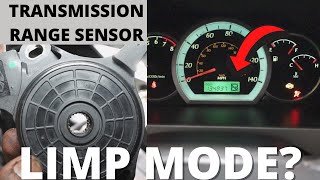
The 2000-2007 Ford Taurus (and its sibling, the Mercury Sable) uses an externally mounted Transmission Range Sensor (TRS) on its 4F50N (also called AX4N) automatic transmission. Because the sensor is on the outside of the transmission case, it is exposed to road salt, water, and debris, making it a common failure point. The plastic body of the sensor can become brittle over time and may break during removal. While the part itself is relatively simple, its failure can mimic more severe internal transmission problems, so it's a critical first part to check when this code appears.
Symptoms You May Notice
- Check Engine Light is on
- Vehicle will not start in Park, but may start in Neutral.
- Flashing 'O/D Off' (Overdrive Off) light on the dashboard
- Harsh or erratic shifting
- Transmission gets stuck in one gear (limp mode).
- Reverse lights do not work.
- Gear indicator on the dashboard is incorrect, does not light up, or shows a position that doesn't match the shifter.
- Vehicle may not start at all, even in Park or Neutral.
- Backup camera (if equipped) does not activate in Reverse.
- Replacing the transmission. The symptoms of a bad TRS, like harsh shifting and limp mode, can easily be mistaken for a major internal transmission failure. Always diagnose the P0705 code first.
- Replacing the starter. Because a primary symptom is a no-start condition, some may incorrectly diagnose a bad starter or starter relay, when the issue is the TRS not sending the 'Park' or 'Neutral' signal to allow the engine to crank.
Most Likely Causes
- Failed Transmission Range Sensor (TRS) 🔴 High Probability → Shop Transmission Assembly The sensor is mounted externally on the front of the transmission, making it vulnerable to corrosion from road salt and water spray. The plastic housing can become brittle with age and heat cycles, leading to cracks and internal failure.
How to confirm: With a scan tool, check the live data for the TRS PIDs (TR1, TR2, TR3A, TR4). The pattern of high/low signals should match the service manual chart for each gear position. If it's erratic, stuck, or incorrect, the sensor is likely bad. You can also test the sensor's output circuits with a multimeter. 🎬 Watch: How to test and replace a neutral safety switch
Typical fix: Replace the Transmission Range Sensor. The new sensor must be correctly aligned in the Neutral position 🎬 See this guide: Replacing and aligning the sensor without special tools during installation. This is done by shifting the transmission into Neutral, then aligning the marks on the new sensor before tightening the bolts.
Est. part cost: $30-$100 - Corroded or Damaged Wiring/Connector 🟡 Medium Probability The wiring harness and connector for the TRS are located under the vehicle and are exposed to the elements, leading to potential corrosion on the pins (green/white powder) or breaks in the wires from debris or vibration.
How to confirm: Visually inspect the TRS connector and nearby wiring for green/white corrosion, frayed wires, or physical damage. Unplug the connector and check for bent or corroded pins inside. Perform a continuity test on the wires between the sensor connector and the PCM if visual inspection is inconclusive.
Typical fix: Clean the connector terminals with an electrical contact cleaner and a small brush. If the wiring is damaged, it will need to be repaired or the connector pigtail replaced. Dielectric grease should be applied to the connector upon reassembly to prevent future moisture intrusion.
Est. part cost: $5-$30 - Misaligned Transmission Range Sensor or Shift Linkage ⚪ Low Probability → Shop Transmission Assembly If the sensor has been replaced previously without proper alignment, or if the shift linkage is loose or damaged, the signal sent to the PCM will be incorrect. This is a common mistake during DIY replacement.
How to confirm: Ensure the shift linkage cable is not loose or damaged. When installing a new TRS, it must be aligned while the transmission is physically in Neutral. The sensor itself has alignment marks (often two fine lines) that must be lined up perfectly before tightening the mounting bolts.
Typical fix: Loosen the sensor's mounting bolts, place the shifter and transmission lever in Neutral, align the sensor's marks, and retighten. Adjust the shift linkage cable if necessary.
Est. part cost: $0
Rare But Worth Checking
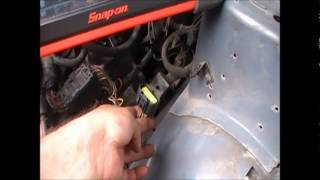
- Faulty Powertrain Control Module (PCM): This is very rare, but has been documented. In one case for a 2000 Taurus, codes P0705 and P1702 persisted 🎬 Watch: Diagnosing a Taurus with codes P0705 and P1702 after replacing a known-good sensor and checking wiring. The technician diagnosed a faulty driver circuit within the PCM by back-probing the PCM connector and finding that the TR4 circuit was shorted to ground internally in the PCM. This should only be considered after all other possibilities have been exhausted.
Diagnosis Steps
- Scan the PCM for codes. Confirm P0705 is present and note any other related codes like P1702, P0707, or P1705.
- Using a scan tool with live data, monitor the TRS/MLPS PIDs (TR1, TR2, TR3A, TR4). Shift the lever through all gears (P, R, N, D, 2, 1) and verify that the data on the scan tool accurately reflects the shifter position according to the service manual chart.
- If the data is erratic or incorrect, locate the Transmission Range Sensor on the top front of the transmission, near where the shift cable attaches.
- Visually inspect the sensor's electrical connector and wiring harness for any signs of corrosion (green/white powder), water intrusion, or physical damage like chafed or broken wires.
- If the wiring looks good, unplug the connector and inspect the pins for damage or corrosion. Clean if necessary and apply dielectric grease.
- If the issue persists, test the sensor itself. This typically involves checking for proper voltage and ground at the connector and then testing the output signals for each gear position with a multimeter to ensure they are within the manufacturer's specified range.
- Check the alignment of the sensor. Ensure the alignment marks on the sensor line up perfectly when the transmission is in Neutral.
- If all external components and wiring test correctly, the fault may lie within the Powertrain Control Module (PCM), though this is very uncommon.
Parts You'll Likely Need
- Transmission Range Sensor
(OEM #SW-5978)— This sensor is the most common point of failure for the P0705 code on this vehicle due to its exposed mounting location and electronic nature.
Trusted brands: Motorcraft, Standard Motor Products (SMP), Dorman
OEM price range: $70-$100
Aftermarket price range: $30-$60
Related Codes That Often Appear With This One
- P1702 — This Ford-specific code indicates an intermittent failure in the Transmission Range Sensor circuit. It frequently appears alongside P0705 as they both point to the same component's erratic behavior.
- P0707 — This code means 'Transmission Range Sensor Circuit Low Input', indicating a specific type of electrical fault (like a short to ground) within the same circuit.
- P1705 — This Ford-specific code means 'Transmission Range Sensor Out of Self-Test Range'. It indicates the PCM did not see the expected P/N signal during startup self-test, directly pointing to a TRS circuit issue.
Platform-Specific Known Issues
- Owner on Blue Oval Forums reported their 2002 Taurus had a rear coil spring break which blew out a tire, a common issue also seen by their mechanic on other Tauruses.
- A user on a Car Talk forum mentioned their 2002 Taurus required a dealer visit to diagnose a failing cam synchronizer, which was causing misfire codes before the more specific P1336 code appeared.
Mechanic-Grade Diagnostic Values
- Digital TR Sensor State (TR1, TR2, TR3A, TR4) — expected: A 4-bit binary code that changes for each gear. PARK=0000, REV=1100, NEUT=0110, O/D=1111, Man3=1010, Man2=1001, Man1=0011. (0=Closed, 1=Open).. Failure: The binary code on a scan tool does not match the chart for the selected gear, or is intermittent.
- TR1, TR2, TR4 Circuit Voltage at PCM — expected: 0.0 Volts for a closed switch (state '0'), 9.0 - 14.0 Volts for an open switch (state '1').. Failure: Voltage does not switch between the two states or is stuck at an intermediate value.
- TR3A Circuit Voltage at PCM — expected: 0.0 Volts for a closed switch (state '0'), 1.3 - 1.8 Volts for an open switch (state '1').. Failure: Voltage does not switch between the two states or is out of the specified range for the 'open' state.
Hidden / Shadow Codes Worth Checking
- P1702: Ford-specific code for 'Transmission Range Sensor Circuit Intermittent'. Often appears with P0705, indicating the fault is not constant. (see via Standard OBD-II scanner.)
- P1705: Ford-specific code for 'Transmission Range Sensor Out of Self-Test Range'. Set if the PCM does not see a P or N signal during the Key-On-Engine-Off (KOEO) self-test. (see via Pro-level scanner capable of running Ford-specific KOEO tests.)
Scan Tool Commands That Help
- Ford IDS / Pro-level Scan Tool: Live Data PID Monitoring (TR, TR1, TR2, TR3A, TR4) — This is the primary method to diagnose a faulty TRS. By observing the four switch states in real-time while moving the shifter, you can confirm if the sensor is sending the correct combination of signals for each gear position as per the diagnostic chart.
- Ford IDS / Autel / Pro-level Scan Tool: PATS Key Programming / Parameter Reset — This is a mandatory step if the PCM is replaced. The Passive Anti-Theft System (PATS) will prevent the engine from starting until the existing keys are reprogrammed to the new PCM.
Wiring & Ground Locations
- Digital Transmission Range (DTR) Sensor — On top of the transmission housing, where the shift linkage connects.. This is the primary component for the P0705 code. Its external location makes its connector and wiring vulnerable to damage and corrosion.
- Powertrain Control Module (PCM) — On the passenger side firewall, in the engine compartment.. The PCM receives and interprets the signals from the DTR sensor. All sensor wiring terminates here. In rare cases, the PCM itself can be the source of the fault.
- G103 — Right rear of the engine compartment.. This is a major ground point in the engine bay. A poor connection here could potentially cause erratic voltage readings on various sensor circuits, including the TRS.
Real Owner Repair Stories
- YouTube: 'Automatic Transmission - 2000 Ford Taurus TR Sensor Problem P0705, P1702 - Transmission Repair' (2000 Ford Taurus with AX4N transmission) — P0705 and P1702 codes present. Scan tool showed incorrect gear readings.
❌ Tried (didn't work) Replacing the Transmission Range Sensor (TRS) with a new part and a known-good used part.
✅ What actually fixed it The Powertrain Control Module (PCM) was faulty. A technician back-probed the PCM connector and found the 'TR4' circuit was internally shorted to ground inside the PCM. Replacing the PCM and reprogramming the PATS keys resolved the issue.
Documented NHTSA Reports
While the following reports involve other Ford models, they describe the same P0705 circuit failures common to the manufacturer's transmission range sensor designs. NHTSA ODI #11673731 describes an owner who had no way of visually confirming the gear position and found that placing the vehicle in Park caused the radiator fans to turn on high. In another instance, NHTSA ODI #11671167 notes a vehicle that required multiple attempts to restart before a scanner retrieved the P0705 code. Similarly, NHTSA ODI #11547976 reports a diagnosis of P0705 due to the transmission range sensor circuit malfunctioning, affecting undisclosed vehicle functions. NHTSA ODI #11389831 describes a situation where the vehicle would not back up, leading to a dealer diagnosis of P0705. Finally, NHTSA ODI #11488420 details a case where the vehicle would not start back up after triggering P0705 and P0706 codes.
Diagnostic Flowchart
Other Known Issues on This Vehicle
Issues unrelated to this code that are worth knowing about as an owner of this generation:
- Camshaft Synchronizer Failure (3.0L Vulcan V6) 🔴 High — Common failure item. A 'chirping' or 'squeaking' noise from the engine bay is the primary warning sign. Failure can occur at any mileage but is more common over 100k miles.
- Broken Coil Springs (Front and Rear) 🔴 High — Very common, especially in regions with road salt. Springs can fail without warning at various mileages. (Ref: Recalls existed for earlier models and some front springs, but the problem is widespread on both front and rear for 2000-2007 models.)
- Subframe Corrosion and Failure 🔴 High — Common in the 'Salt Belt'. Can become structurally unsafe over time. (Ref: Safety Recall 14S02 for some models to install a reinforcement brace. Earlier recalls (98S36) also existed for older models.)
- Leaking Valve Cover and Oil Pan Gaskets 🟡 Low — Common oil leaks as the vehicle ages.
- Failed Hydraulic Engine Mounts 🟠 Medium — Common as the vehicle ages, typically over 100k miles.
Used vs. New Parts: Buying Guide for This Vehicle
When a used part is the smart pick: A used Transmission Range Sensor is generally not recommended. Due to its external mounting location, it is highly susceptible to weather, road salt, and debris, which cause corrosion and internal failure. The cost of a new aftermarket part is low enough that the risk and labor of potentially installing a bad used part are not worthwhile.
Donor-vehicle mileage cap: roughly under 80000 miles for the part to have meaningful remaining life.
What to inspect on the donor part:
- Visually inspect the plastic housing for cracks or heat stress.
- Check the electrical connector pins for any signs of green or white corrosion powder.
- Ensure the manual lever arm moves smoothly without binding.
- If possible, source from a vehicle in a dry, salt-free climate.
OEM-only on this vehicle (don't cheap out):
- Powertrain Control Module (PCM) - While not an OEM-only part in the strictest sense, using a used PCM is complex due to VIN and PATS programming. A specialized remanufacturing service that programs the module to your vehicle's VIN is the most reliable path.
Aftermarket brands forum-validated for this vehicle:
- Motorcraft (OEM)
- Standard Motor Products (SMP)
Brands owners have reported issues with on this vehicle:
- Ultra-cheap, unbranded sensors from online marketplaces often have high failure rates and may not align correctly.
Real Owner Stories
Aggregated from forums and TSBs cited above. Mileages and costs reflect what owners reported in those sources.
2000 Ford Taurus 3.0L V6
Symptoms: The vehicle threw code P0705 and P1702. Diagnostics involved checking voltages at the PCM to determine if the sensor or the computer was at fault.
What fixed it: Replacement of the Powertrain Control Module (PCM) after confirming the internal fault.
Source hint: YouTube: Automatic Transmission - 2000 Ford Taurus TR Sensor Problem P0705, P1702 - Transmission Repair
2002 Ford Taurus 3.0L V6
Symptoms: Owner reported a rear coil spring broke which blew out a tire; also experienced misfire codes before a specific P1336 code appeared.
What fixed it: The cam synchronizer required a dealer visit for diagnosis and replacement.
Source hint: Blue Oval Forums and Car Talk forum mentioned in vehicle_specific_issues
Related OBD-II Codes
Frequently Asked Questions
Why won't my 2000-2007 Ford Taurus start in Park, but it starts in Neutral?
My dashboard gear indicator is wrong and the 'O/D Off' light is flashing. Is my transmission failing?
Do I need a special Ford tool to align the new TRS on my Taurus?
Can a bad PCM cause P0705 on a 2000 Ford Taurus even if the sensor is new?
Why did my backup camera and reverse lights stop working at the same time as the Check Engine Light?
Helpful Videos


We Have This Part in Stock

The information in this article is provided for general reference and educational purposes only. Vehicle specifications, procedures, and part compatibility can vary by production date, trim level, and region. Always consult your vehicle's factory service manual and verify part numbers before purchasing or performing repairs. Safety-critical components such as airbags, seat belts, and braking systems should be installed by a qualified professional.
- Ford Taurus:
- 🧭 Diagnostic Flowchart
- 🎬 Helpful Videos
- 🛍️ Shop This Part
- What's Unique About the 2000-2007 Ford Taurus
- Symptoms You May Notice
- Most Likely Causes
- Rare But Worth Checking
- Diagnosis Steps
- Parts You'll Likely Need
- Related Codes That Often Appear With This One
- Platform-Specific Known Issues
- Mechanic-Grade Diagnostic Values
- Hidden / Shadow Codes Worth Checking
- Scan Tool Commands That Help
- Wiring & Ground Locations
- Real Owner Repair Stories
- Documented NHTSA Reports
- Other Known Issues on This Vehicle
- Used vs. New Parts: Buying Guide for This Vehicle
- Real Owner Stories
- 2000 Ford Taurus 3.0L V6
- 2002 Ford Taurus 3.0L V6
- Related OBD-II Codes
- Frequently Asked Questions
- 🎟️ Get 5% Off