

P0705 on 2017-2020 Genesis G80: Transmission Range Sensor Causes and Fixes
This code almost always points to a faulty Transmission Range Sensor, also known as an inhibitor switch. It's a common failure item on the G80 and its platform mates (Kia K900, Hyundai Equus). Replacing this externally-mounted sensor is the most likely fix. Expect to pay around $95 for an OEM part.
- The most likely cause for a P0705 code on your G80 is a failed Transmission Range Sensor (Inhibitor Switch).
- Symptoms are serious and affect safety; the vehicle may not start, could shift erratically, or lose reverse lights, so driving is not recommended.
- The fix typically involves replacing the externally-mounted sensor on the transmission, which is a moderately difficult DIY job or a relatively quick repair for a professional.
- Ensure you use the latest superseded OEM part number (42700-4E200) for the best results.
- Before replacing parts, always check the sensor's wiring and connector for damage or corrosion, and verify related fuses and grounds.
What's Unique About the 2017-2020 Genesis G80
The 2017-2020 Genesis G80 is part of the 'DH' platform, which began as the Hyundai Genesis Sedan in 2015 and shares its 8-speed automatic transmission with the Kia K900 and Hyundai Equus. Hyundai issued a Technical Service Bulletin (TSB 12-AT-018-1) for these earlier models specifically for code P0705, pointing to an improperly adjusted or failing inhibitor switch. 🎬 Watch: Understanding the P0705 code and its common fixes This indicates a known history of this specific part being a weak point on the platform. The fix is well-documented and usually does not require major transmission work, as the sensor is mounted externally on the driver's side of the transmission case.
Symptoms You May Notice
- Check Engine Light is illuminated
- Vehicle will not start
- Engine only starts when the transmission is in 'N' (Neutral)
- Harsh, erratic, or delayed gear shifts
- Transmission is stuck in a single gear (limp mode)
- Gear indicator on the dashboard is incorrect or does not display
- Reverse lights do not turn on
- Backup camera does not activate when shifting into Reverse
- Replacing the transmission valve body when the issue is an external sensor.
- Replacing the entire transmission without first diagnosing the inexpensive external components.
- Replacing the starter motor because the engine won't crank, when the root cause is the inhibitor switch not sending the 'Park' or 'Neutral' signal to allow starting.
Most Likely Causes
- Faulty Transmission Range Sensor (Inhibitor Switch) 🔴 High Probability → Shop Transmission Assembly A Technical Service Bulletin for the platform points to this specific component being a known failure point. The sensor's internal contacts can wear out, become contaminated with moisture or dirt, or fail electrically, leading to incorrect signals.
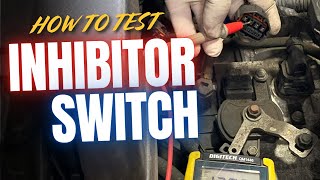
How to confirm: Using a diagnostic scan tool, a technician can monitor the live data stream from the sensor while moving the gear selector. If the data is erratic, absent, or doesn't match the selected gear, the sensor is likely faulty. A multimeter can also be used to check for continuity across the sensor's pins for each gear position, comparing against the service manual's specifications.
Typical fix: Replace the inhibitor switch located on the exterior of the transmission housing. The new switch must be properly adjusted; this is typically done by aligning a guide hole on the switch with the transmission's manual shaft while the transmission is in Neutral.
Est. part cost: $80-$135 - Damaged Wiring or Corroded Connector 🟡 Medium Probability The sensor and its wiring are located on the underside of the vehicle, exposed to moisture, heat, and road debris which can lead to corrosion in the connector pins or physical damage to the wires over time.
How to confirm: Visually inspect the wiring harness and connector going to the inhibitor switch for any signs of fraying, melting, corrosion, or loose pins. Perform a continuity test on the wires between the sensor connector and the Transmission Control Module (TCM) to rule out an open or short circuit.
Typical fix: Repair the damaged section of the wiring harness or clean the connector pins with electrical contact cleaner. If corrosion is severe, the connector pigtail may need to be replaced.
Est. part cost: $10-$50 - Misadjusted Shift Control Cable ⚪ Low Probability
How to confirm: Verify that the gear selected by the driver matches the position of the manual control lever on the transmission itself. If there is play or misalignment, the cable may not be moving the inhibitor switch to the correct detent for each gear.
Typical fix: Adjust the shift cable linkage to ensure the inhibitor switch is correctly aligned with the gear selector's position.
Est. part cost: $0
Rare But Worth Checking
- Faulty Powertrain or Transmission Control Module (PCM/TCM): → Shop Transmission Assembly This is uncommon, but if the sensor, wiring, and adjustment are all confirmed to be good, the control module itself may be the issue. This is a last-resort diagnosis and often requires specialized programming.
Diagnosis Steps
- Connect a diagnostic scanner and confirm the P0705 code is present. Check for any other transmission-related codes like P0706, P0707, or P0708.
- Using the scanner's live data function, monitor the Transmission Range Sensor input. Shift the lever through all positions (P, R, N, D) and verify the scanner displays the correct gear.
- If the data is incorrect or erratic, raise the vehicle and locate the inhibitor switch on the driver's side of the transmission.
- Visually inspect the switch, its electrical connector, and the wiring harness for any obvious signs of damage, corrosion, or loose connections.
- Check for simple related functions. For example, do the reverse lights turn on when 'R' is selected? If not, it further points to an issue with the range sensor circuit.
- If the visual inspection is clear, disconnect the sensor and use a multimeter to test the continuity and resistance of the sensor itself, comparing the readings to the vehicle's service manual specifications for each gear position.
- Check the shift cable and linkage to ensure it is properly adjusted and not binding or loose.
- If the sensor and its adjustment are good, test the wiring harness for continuity and shorts between the sensor connector and the TCM.
- If all wiring and the sensor test good, the issue may be with the Transmission Control Module (TCM).
Parts You'll Likely Need
- Transmission Range Sensor / Inhibitor Switch
(OEM #42700-4E200)— This is the most common failure part for this code, as identified in a manufacturer TSB for the platform. It is the latest superseded part number.
Trusted brands: Genuine Hyundai / Genesis
OEM price range: $95-$135
Aftermarket price range: $40-$80
Related Codes That Often Appear With This One
- P0706 - Transmission Range Sensor 'A' Circuit Range/Performance
- P0707 - Transmission Range Sensor 'A' Circuit Low
- P0708 - Transmission Range Sensor 'A' Circuit High
Technical Service Bulletins (TSBs) & Recalls
- Hyundai TSB 12-AT-018-1 (for Genesis Sedan DH): While not for the G80 by name, it covers the same platform and directly addresses P0705, identifying the inhibitor switch as the cause.
- Hyundai TSB 17-AT-005: A general TSB for various Hyundai models with 6-speed transmissions, but provides a detailed diagnostic and replacement procedure for P0705 that is highly relevant, including the switch adjustment process.
- Hyundai TSB 21-AT-010HG: Addresses harsh shifting on 2017 G80 models by replacing transmission solenoids. While not a direct fix for P0705, it's relevant if harsh shifts are a primary symptom.
Mechanic-Grade Diagnostic Values
- Inhibitor Switch Mounting Bolt Torque — expected: 9.8 - 11.8 N.m (7.2 - 8.7 lb-ft). Failure: N/A - This is an installation specification.
- Inhibitor Switch Power Supply Voltage — expected: Approximately 12V (Battery Voltage). Failure: 0V or significantly low voltage indicates a problem with the power supply wire or fuse (TCU2).
- Inhibitor Switch Signal Voltage — expected: Approximately 12V on the specific signal wire for the selected gear, and 0V on the others.. Failure: No voltage when a gear is selected, or voltage present on multiple signal wires simultaneously.
- Rear Combination Lamp Ground Voltage Drop — expected: Less than 0.2 V. Failure: A reading greater than 0.2 V indicates a poor ground connection, which can cause this code and must be repaired.
Scan Tool Commands That Help
- Hyundai GDS (Global Diagnostic System): Live Data Monitoring: 'Shift Lever Switch' — This is the primary diagnostic step using a scan tool. The technician selects this parameter and moves the physical gear shifter through P, R, N, D. If the value displayed on the scan tool does not match the shifter's position, it confirms a fault in the range sensor circuit.
Wiring & Ground Locations
- TCU2 Fuse — Located in the fuse box in the engine compartment.. This fuse supplies power to the transmission control unit and related circuits. A blown fuse will cause a loss of signal and trigger a P0705 code.
- Rear Combination Lamp Ground — The ground bolt for the rear taillight harness, typically located in the trunk area.. Multiple Hyundai TSBs cite a poor ground at this location as a potential cause for P0705. The inhibitor switch circuit can be sensitive to bad grounds elsewhere on the vehicle, and this is a known, non-obvious point to inspect and tighten.
- Inhibitor Switch Connector — On the driver's side of the transmission case, connecting directly to the inhibitor switch.. This is the primary connection point for the sensor. It is exposed to road debris and moisture, making it a common site for corrosion, pin damage, or loose connections.
Real Owner Repair Stories
- Reddit user on r/genesiscoupe (Genesis Coupe (shares similar electrical logic)) — P0705 code, gear selector stuck in Reverse, limp mode, symptoms were worse after a car wash.
❌ Tried (didn't work) Initial diagnosis suggested moisture in the sensor, but the problem became persistent.
✅ What actually fixed it The root cause was a faulty aftermarket rearview camera that was wired into the reverse light circuit. Unplugging the camera from the reverse light wire in the trunk immediately resolved all shifting problems and the code.
OEM Part Supersession History
42700-4E000→Check with dealer for latest part number.— TSB 12-AT-018-1 for the Genesis DH platform (8-speed A/T) specifies this part number. The part number42700-4E200cited in some aftermarket catalogs and the Pass 2 data is more commonly for 6-speed FWD transmissions and may be incorrect for this RWD 8-speed application.
Heads up: Using the incorrect inhibitor switch, even if it physically fits, can result in persistent P0705 codes or other shifting abnormalities. Always verify the part number with the vehicle's VIN at a dealership.
Diagnostic Flowchart
Other Known Issues on This Vehicle
Issues unrelated to this code that are worth knowing about as an owner of this generation:
- ABS Module Electrical Short / Fire Risk 🔴 High — Widespread enough to trigger a major safety recall (NHTSA 21V-490 / Hyundai Recall 205). Affects 2017-2020 models. (Ref: NHTSA 21V-490)
- Leaking Turbocharger Oil Feed Pipe (3.3T Engine) 🔴 High — Common failure leading to a safety recall (NHTSA 24V-191, superseding 19V-538). The pipe deteriorates from heat and leaks oil onto the exhaust manifold. Affects 2018-2020 G80 3.3T models. (Ref: NHTSA 24V-191)
- Intake Valve Carbon Buildup (GDI Engines) 🟠 Medium — A common long-term issue for all Gasoline Direct Injection (GDI) engines (3.8L, 3.3T, 5.0L), typically becoming noticeable after 50,000 miles. Can cause rough idle, hesitation, and misfires.
- Starter Solenoid Water Intrusion 🔴 High — Subject of a recall for 2017-2019 G80 models. Water can enter the starter solenoid, causing a short and potential engine fire. (Ref: NHTSA Recall (undetermined number from search, but confirmed))
- Harsh Shifting (2-3, 3-4, 4-5 Upshifts) 🟠 Medium — Affects some 2017 G80 models, leading to a TSB that provides a procedure to replace specific solenoids in the transmission. (Ref: Hyundai TSB 21-AT-010HG)
- Infotainment System Glitches / Reboots 🟡 Low — Owners report issues with screens freezing, rebooting, or becoming unresponsive. Some issues on later models were addressed via software recalls. A hard reset can sometimes provide a temporary fix. (Ref: NHTSA 26V019000 (for later models, but illustrates platform tendency))
Used vs. New Parts: Buying Guide for This Vehicle
When a used part is the smart pick: For the external inhibitor switch, a used OEM part from a reputable salvage yard is a reasonable option to save costs. It is an electro-mechanical switch, not a complex, VIN-programmed module.
Donor-vehicle mileage cap: roughly under 80000 miles for the part to have meaningful remaining life.
What to inspect on the donor part:
- Inspect the electrical connector for any green/white powder (corrosion) or bent pins.
- Check the plastic housing for cracks or signs of heat damage.
- Ensure the splines on the manual control lever shaft are not stripped or damaged.
- If possible, source from a vehicle that was not in a front-end or undercarriage collision.
OEM-only on this vehicle (don't cheap out):
- Powertrain Control Module (PCM) / Transmission Control Module (TCM)
Brands owners have reported issues with on this vehicle:
- Unnamed, no-brand parts from online marketplaces are a gamble. Some owners on related platforms have reported issues with cheap aftermarket sensors causing new problems that were only resolved by installing a genuine OEM part.
Real Owner Stories
Aggregated from forums and TSBs cited above. Mileages and costs reflect what owners reported in those sources.
2015 Hyundai Genesis 5.0 (DH Platform)
Symptoms: The vehicle experienced a no-start condition and there was no gear indication displayed on the dashboard instrument cluster.
What fixed it: Replacing the inhibitor switch (Part No. 42700-4E200) and properly aligning the new switch in the neutral position.
Source hint: GenesisOwners.com - Thread: 'P0705 code inhibitor switch'
Genesis Coupe (Related Platform)
Symptoms: The P0705 code was triggered unexpectedly following electrical modifications.
What fixed it: Correcting the wiring of aftermarket taillights, which were improperly installed and interfering with the range sensor circuit.
Source hint: r/genesiscoupe
Related OBD-II Codes
Frequently Asked Questions
Does Hyundai TSB 12-AT-018-1 apply to my Genesis G80 even though it mentions the Genesis Sedan?
I'm experiencing harsh shifting in my 2017 G80 along with the P0705 code; is there a specific fix for this?
Can I use the diagnostic procedure from TSB 17-AT-005 for my G80's transmission code?
What is the specific part number for the inhibitor switch on a 2017-2020 Genesis G80?
Why won't my backup camera or reverse lights work when I have a P0705 code?
Is there a risk of fire associated with my 2017-2020 G80 that I should check while fixing transmission codes?
Helpful Videos



We Have This Part in Stock




The information in this article is provided for general reference and educational purposes only. Vehicle specifications, procedures, and part compatibility can vary by production date, trim level, and region. Always consult your vehicle's factory service manual and verify part numbers before purchasing or performing repairs. Safety-critical components such as airbags, seat belts, and braking systems should be installed by a qualified professional.
- Genesis G80:
- 🧭 Diagnostic Flowchart
- 🎬 Helpful Videos
- 🛍️ Shop This Part
- What's Unique About the 2017-2020 Genesis G80
- Symptoms You May Notice
- Most Likely Causes
- Rare But Worth Checking
- Diagnosis Steps
- Parts You'll Likely Need
- Related Codes That Often Appear With This One
- Technical Service Bulletins (TSBs) & Recalls
- Mechanic-Grade Diagnostic Values
- Scan Tool Commands That Help
- Wiring & Ground Locations
- Real Owner Repair Stories
- OEM Part Supersession History
- Other Known Issues on This Vehicle
- Used vs. New Parts: Buying Guide for This Vehicle
- Real Owner Stories
- 2015 Hyundai Genesis 5.0 (DH Platform)
- Genesis Coupe (Related Platform)
- Related OBD-II Codes
- Frequently Asked Questions
- 🎟️ Get 5% Off