

P0705 on 1999-2006 GMC Sierra 1500: Transmission Range Sensor Causes and Fixes
On a 1999-2006 GMC Sierra, code P0705 is most often caused by a failed Transmission Range Sensor (also called a Neutral Safety Switch) or its wiring. A very common point of failure on this platform is the wiring harness melting where it passes near the exhaust manifold. Expect to pay $40-$90 for an aftermarket sensor or $150-$250 for an OEM part, with DIY difficulty at 3/5.
- P0705 on your Sierra means the computer is confused about what gear the truck is in.
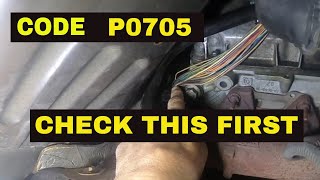
- Before buying a new sensor, carefully inspect the wiring harness where it passes by the engine and exhaust for any signs of melting or damage, as this is a very common issue on GMT800 trucks.
- Symptoms can be severe, including a no-start condition or the transmission going into a protective 'limp mode'.
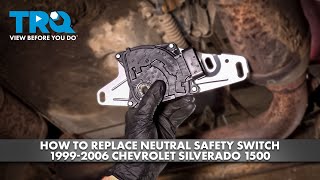
- The most likely fix is replacing the Transmission Range Sensor (also called a Neutral Safety Switch) located on the side of the transmission, but only after ruling out wiring damage.
- Due to the safety risk of the truck potentially starting in gear, this repair should be approached with caution.
What's Unique About the 1999-2006 GMC Sierra 1500
On the GMT800 platform, which includes the 1999-2006 Sierra and its sibling the Chevrolet Silverado, the wiring harness for the transmission is a known weak point. The harness is often routed close to the engine's cylinder head and exhaust components. Over many heat cycles, the protective loom disintegrates and the wire insulation can become brittle and melt. This allows wires to touch and short together, which sends an irrational signal to the PCM, perfectly mimicking the failure of the sensor itself. This is a very common cause for the P0705 code on these specific trucks and should be inspected before replacing parts.
Symptoms You May Notice
- Check Engine Light is on
- Vehicle will not crank or start
- Vehicle only starts in Neutral, not Park
- Erratic, harsh, or delayed shifting
- Transmission enters 'limp mode' (stuck in one gear, usually 2nd or 3rd)
- Gear indicator on the dashboard is incorrect, blank, or shows all positions lit up at once.
- Reverse lights do not work
- Inability to shift out of Park
- Reduced fuel economy.
- Replacing the transmission. People may assume the transmission is failing due to the shifting problems, when the issue is only a faulty sensor or wiring providing bad information.
- Replacing the sensor when the actual problem is the melted wiring harness a few feet away. Always inspect the harness first. 🎬 Watch: How to inspect the wiring harness first
Most Likely Causes
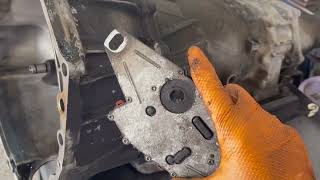
- Failed Transmission Range Sensor (Neutral Safety Switch) 🔴 High Probability → Shop Transmission Assembly The sensor is an electro-mechanical part mounted on the outside of the transmission (on the manual shift shaft), exposing it to heat, moisture, and road debris, leading to eventual failure. The internal contacts can wear out or the plastic housing can break, especially during removal of the weathered electrical connectors.
How to confirm: After confirming the wiring is intact, test the sensor's output with a multimeter. The voltage/resistance should change predictably as you move the gear selector through each position, according to the service manual's specifications. If the readings are out of spec or do not change, the sensor is bad.
Typical fix: Replace the Transmission Range Sensor. The OEM ACDelco part is generally recommended for longevity.
Est. part cost: $40-$250 - Damaged Wiring or Connector 🟡 Medium Probability The wiring harness is routed near the hot exhaust manifold and the back of the cylinder head. Over time, heat melts the insulation, causing wires to short together or break. The connector at the sensor is also prone to internal corrosion from moisture and the factory-applied dielectric grease can make it very difficult to remove without breaking the sensor's plastic housing.
How to confirm: Visually inspect the entire wiring harness from the sensor to the firewall. Pay close attention to the section near the transmission dipstick tube and exhaust. Gently separate any wires that appear melted together and check for exposed copper. Unplug the connector (if possible without breaking it) and look for green or white corrosion on the pins.
Typical fix: Repair the damaged section of the harness. This may involve separating melted wires, repairing breaks with new wire, and re-insulating with high-temp wire loom. If the connector is corroded, it may need to be cleaned with electrical contact cleaner or replaced.
Est. part cost: $10-$50 - Misadjusted Sensor or Shift Linkage ⚪ Low Probability
How to confirm: Check if the bolt holes on the sensor allow for adjustment. Ensure the shift cable is properly seated and not binding. With the transmission manually placed in Neutral, there are alignment marks on the sensor body and the rotating hub that should line up. A special tool (J41364-A) can be used, but it's often possible to align it by eye.
Typical fix: Loosen the two sensor mounting bolts and rotate it slightly until the alignment marks for Neutral line up perfectly. Tighten the bolts to spec (approx. 18 lb-ft). After adjustment, confirm the truck starts in Park and Neutral only, and that the reverse lights work in Reverse.
Est. part cost: $0
Rare But Worth Checking
- Faulty Powertrain Control Module (PCM): This is very uncommon. The PCM should only be considered after the sensor, wiring, and adjustments have been thoroughly checked and ruled out.
Diagnosis Steps
- Read the codes with an OBD-II scanner to confirm P0705 and check for others like P0700.
- Check the level and condition of the transmission fluid. Burnt or low fluid can indicate other issues.
- Crucial Step for GMT800: Perform a careful visual inspection of the Transmission Range Sensor wiring harness, especially where it runs near the engine and exhaust manifold. Look for any signs of melting, chafing, or corrosion. Separate any wires that are stuck together.
- Inspect the electrical connector at the sensor for corrosion, moisture, or bent pins. Be aware that the connector can be very difficult to remove and may break the old sensor.
- Check the adjustment of the sensor. With the transmission in Neutral, check if the alignment marks on the sensor body and hub are aligned.
- If wiring and adjustment look good, use a multimeter to test the sensor. Back-probe the connector and verify the correct voltage or resistance signals are sent to the PCM for each gear position (P, R, N, D, etc.), comparing your readings to a service manual.
- If the sensor tests bad, replace it. The ACDelco OEM part is recommended. If the sensor tests good, the problem is almost certainly in the wiring harness or, rarely, the PCM.
Parts You'll Likely Need
- Transmission Range Sensor / Neutral Safety Switch
(OEM #ACDelco D2261C (Supersedes GM 24229422))— This is the most common part to fail internally, causing incorrect signals to be sent to the computer. The original GM part number was 24229422.
Trusted brands: ACDelco (OEM Recommended), Standard Motor Products (SMP), Delphi
OEM price range: $150-$250
Aftermarket price range: $40-$90
Related Codes That Often Appear With This One
- P0700 — P0700 is a generic code indicating the Transmission Control Module (TCM) has detected a fault. It's often a 'request' for the main computer to turn on the Check Engine Light and will almost always appear alongside a more specific transmission code like P0705.
Platform-Specific Known Issues
- The wiring harness for the transmission can melt due to its proximity to the exhaust manifold, causing wires to short out and trigger a P0705 code even if the sensor itself is good.
- The electrical connectors on the sensor can become seized with age and factory sealant, often causing the plastic housing of the old sensor to break upon removal.
Mechanic-Grade Diagnostic Values
- Transmission Range Switch Logic (4-Signal) — expected: The PCM reads four separate signal lines (A, B, C, P) from the TRS. Each gear position corresponds to a unique combination of High (Ignition Voltage) and Low (0 Volts) signals. For example, 'Park' is Low-Hi-Hi-Low, 'Reverse' is Low-Low-Hi-Hi, and 'Neutral' is Hi-Low-Hi-Low. An illogical combination (e.g., one that doesn't match any defined gear) triggers P0705.. Failure: Any voltage combination that does not match the specific pattern for a valid gear position as defined in the service manual.
- TFP Switch Values (4L60-E) — expected: The Transmission Fluid Pressure (TFP) switch assembly, which is part of the internal transmission wiring on some models, provides pressure readings to the PCM. For a 4L60-E, a switch in the 'ON' state should read 0 volts, while an 'OFF' state should read 12 volts.. Failure: Readings that do not correspond to the expected on/off voltage for a given gear and operating condition.
Scan Tool Commands That Help
- GM Tech 2: Data Display > Transmission Data — The Tech 2 scan tool, which is the OEM tool for this vehicle generation, can display the live status of the four signal inputs (A, B, C, P) from the Transmission Range Sensor. This allows a technician to watch the signal states change in real-time as the shifter is moved, confirming if the sensor is sending correct or illogical patterns to the PCM without needing to back-probe wires.
- Professional OBD-II Scanner (with bidirectional control): TCM Communication Test — A bidirectional scanner can command the TCM to read the sensor input. If the scan tool shows 'no signal' even when voltage is confirmed at the TCM connector with a multimeter, it strongly suggests the fault is within the TCM itself.
Wiring & Ground Locations
- Main Engine-to-Chassis Ground — Typically a braided strap from the back of the passenger side cylinder head to the firewall.. A weak or corroded main engine ground can cause a host of floating voltages and erratic electrical behavior. The PCM and other modules rely on a solid ground reference. If this ground is poor, the PCM may misinterpret the voltage signals from the TRS, leading to a P0705 code even if the sensor and its dedicated wiring are perfectly fine.
- TRS Connector (C1 on some diagrams) — On the driver's side of the transmission, where the shift linkage connects.. This is the primary connection point for the sensor. The four critical signal wires (often Gray, White, Yellow, Black/White) plus power and ground pass through here. Verifying signal logic at this connector is a key diagnostic step.
Real Owner Repair Stories
- YouTube video by Southpaw Autoworks (GM Truck with 4L60-E (similar to Sierra 1500)) — No start, no gear indicator light on the dash.
❌ Tried (didn't work) Initial assumption was a bad starter or battery.
✅ What actually fixed it The Transmission Range Sensor (MLPS) was faulty. The video details the process of replacing the sensor, including the critical step of aligning the new sensor in the Neutral position before tightening the bolts. The fix restored the starting function and correct gear indication.
OEM Part Supersession History
GM 24229422→ACDelco D2261C, GM 24298931— Standard part evolution and manufacturer changes.
Heads up: The connector style for the TRS changed around 2004. Early models (approx. 1999-2003) often used a two-connector switch, while later models used a single, larger connector. When replacing, it is critical to match the new sensor's connector style to the vehicle's harness. Some aftermarket harnesses are designed for the newer single-connector style and require you to update to the newer sensor if you have an older transmission.
Model Year Variations Within This Range
- 1999-2003 vs 2004-2006: The electrical connector on the Transmission Range Sensor changed. Early models may have a two-piece connector setup, while later models (approx. 2004+) use a single large connector. It is crucial to visually inspect the existing sensor and harness before ordering a replacement part to ensure compatibility.
- 2006+: Starting around 2006, the 4L60-E family (including the 4L65E/4L70E) began incorporating an internal input shaft speed sensor. This led to changes in the internal wiring harness and the main case connector color (changing from green to black). While this guide focuses up to 2006, a late-production 2006 model could have these later electronics, which can affect interchangeability with earlier transmissions.
Diagnostic Flowchart
Other Known Issues on This Vehicle
Issues unrelated to this code that are worth knowing about as an owner of this generation:
- Instrument Cluster Gauge Stepper Motor Failure 🟠 Medium — Extremely common, especially on 2003-2006 models. Gauges (speedometer, tachometer, fuel, etc.) will stick, read incorrectly, or stop working entirely. (Ref: GM issued a special coverage adjustment for some vehicles, but it has long since expired. No formal recall was issued.)
- Cracked 'Castech' Cylinder Heads (4.8L/5.3L V8) 🔴 High — A significant issue for 1999-2006 models equipped with cylinder heads from the supplier 'Castech'. A casting flaw leads to cracks, causing a slow, mysterious coolant loss that mimics a bad head gasket. (Ref: GM TSB #06-06-01-019C details the issue and diagnosis.)
- Brake Line Corrosion and Failure 🔴 High — Very common in regions that use road salt ('Salt Belt'). The factory steel brake lines are prone to severe rust, which can lead to a sudden loss of braking ability when a line bursts under pressure. (Ref: NHTSA investigated (Action Number: DP10005) but did not issue a recall, classifying it as a maintenance item.)
- 4L60-E Transmission Failure 🔴 High → Shop Transmission Assembly — The 3-4 clutch pack is a known weak point in the 4L60-E transmission, often failing between 100,000 and 150,000 miles, resulting in loss of 3rd and 4th gears.
- Rocker Panel and Cab Corner Rust 🟠 Medium — Widespread on trucks used in winter climates. The rocker panels and the rear corners of the cab are notorious for rusting from the inside out.
Used vs. New Parts: Buying Guide for This Vehicle
When a used part is the smart pick: A used Transmission Range Sensor is generally not recommended. It is an electro-mechanical part exposed to significant heat and environmental stress, and its internal contacts wear out over time. The cost savings of a used part are minimal compared to the labor involved in replacement and the risk of premature failure. A used wiring harness pigtail can be a smart choice if only the connector is damaged and the rest of the harness is intact.
Donor-vehicle mileage cap: roughly under 50000 miles for the part to have meaningful remaining life.
What to inspect on the donor part:
- For a harness pigtail, inspect for any signs of melting, brittleness, or cracking insulation.
- Ensure the connector's locking tabs are intact and not broken.
- Check for any green or white corrosion on the electrical pins inside the connector.
- Ensure you get at least 6-8 inches of wire past the connector for easier splicing.
OEM-only on this vehicle (don't cheap out):
- Transmission Range Sensor (Neutral Safety Switch) - While some aftermarket brands are reliable, the ACDelco OEM part is widely recommended by technicians for best fit, alignment, and longevity on this platform.
Aftermarket brands forum-validated for this vehicle:
- Standard Motor Products (SMP)
- Delphi
Brands owners have reported issues with on this vehicle:
- Unbranded, 'white box' parts from online marketplaces often have higher failure rates and may not align correctly, causing the code to return immediately.
Real Owner Stories
Aggregated from forums and TSBs cited above. Mileages and costs reflect what owners reported in those sources.
2002 GMC Sierra 1500 with 4L60E
Symptoms: Owner was looking for instructions on how to align the 'PRNDL' switch without the special tool. The gear indicator was not matching the shifter position correctly.
What fixed it: Aligned the switch by lining up the molded notch with the tabs on the rotating ring while the transmission was manually placed in the neutral position.
Source hint: CorvetteForum - C5 4l60e trans "PRNDL" switch adjustment
1999-2006 GMC Sierra 1500
Symptoms: The electrical connectors on the sensor were seized due to age and factory sealant, making removal nearly impossible without damage.
What fixed it: Replacement of the Transmission Range Sensor, though the plastic housing of the old sensor broke during the removal of the stubborn electrical connectors.
Source hint: vehicle_specific_issues
Related OBD-II Codes
Frequently Asked Questions
Why does my 1999-2006 GMC Sierra 1500 only start in Neutral but not in Park?
Is there a specific tool I need to align the range sensor on my Sierra's 4L60E transmission?
I'm trying to replace the sensor, but the electrical connector won't come off. What should I do?
Could my Sierra's exhaust be causing the P0705 code?
What part should I use to replace the Neutral Safety Switch for the best reliability?
Does the P0705 code cause the 'limp mode' where my truck stays in 2nd or 3rd gear?
Helpful Videos
We Have This Part in Stock


The information in this article is provided for general reference and educational purposes only. Vehicle specifications, procedures, and part compatibility can vary by production date, trim level, and region. Always consult your vehicle's factory service manual and verify part numbers before purchasing or performing repairs. Safety-critical components such as airbags, seat belts, and braking systems should be installed by a qualified professional.
- GMC Sierra 1500:
- 🧭 Diagnostic Flowchart
- 🎬 Helpful Videos
- 🛍️ Shop This Part
- What's Unique About the 1999-2006 GMC Sierra 1500
- Symptoms You May Notice
- Most Likely Causes
- Rare But Worth Checking
- Diagnosis Steps
- Parts You'll Likely Need
- Related Codes That Often Appear With This One
- Platform-Specific Known Issues
- Mechanic-Grade Diagnostic Values
- Scan Tool Commands That Help
- Wiring & Ground Locations
- Real Owner Repair Stories
- OEM Part Supersession History
- Model Year Variations Within This Range
- Other Known Issues on This Vehicle
- Used vs. New Parts: Buying Guide for This Vehicle
- Real Owner Stories
- 2002 GMC Sierra 1500 with 4L60E
- 1999-2006 GMC Sierra 1500
- Related OBD-II Codes
- Frequently Asked Questions
- 🎟️ Get 5% Off