

P0705 on 2006-2011 Honda Civic: Transmission Range Sensor Causes and Fixes
On a 2006-2011 Honda Civic, code P0705 is almost always caused by a faulty transmission range sensor (neutral safety switch). Symptoms include a blinking 'D' light, the engine not starting in Park, and the gear indicator on the dash being incorrect. Replacing the sensor (OEM Part No. 28900-RCR-013) is the most common fix, with the part costing between $40 for an aftermarket version and $150 for an OEM part.
- P0705 on a 2006-2011 Civic almost always points to a bad transmission range sensor.
- Key symptoms are a blinking 'D' light on the dash and the car not starting in Park.
- Before replacing the sensor, always inspect its electrical connector for corrosion or damage.
- Proper alignment of the new sensor in the Neutral position is critical for the repair to be successful.
What's Unique About the 2006-2011 Honda Civic
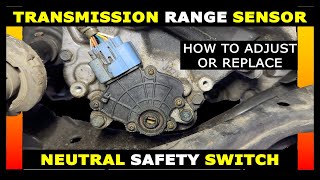
The 8th generation Honda Civic, like many other Hondas from this era, has the transmission range sensor mounted externally on the top of the transmission case, just below the air intake assembly. This makes it relatively easy to access and replace compared to vehicles where the sensor is internal to the transmission. The failure of this specific sensor is a very common and well-documented issue across various Honda models, often leading to a distinct set of symptoms like a no-start condition in Park and a flashing 'D' light.
Symptoms You May Notice
- Blinking 'D' (Drive) indicator light on the instrument cluster.
- Check Engine Light is on.
- Engine will not start, or only starts in Neutral but not in Park.
- Reverse lights do not turn on when in Reverse.
- Harsh or delayed gear shifts.
- Transmission may enter 'limp mode', getting stuck in a single gear.
- Gear indicator on the dashboard (P, R, N, D) does not match the actual shifter position.
- On some occasions, when shifting into Reverse, both the 'R' and a flashing 'D' light will be illuminated simultaneously.
- Replacing the starter motor or battery when a no-start condition is present, without first checking for transmission-related codes like P0705.
- Assuming an internal transmission failure due to the blinking 'D' light, when the issue is just an external sensor.
Most Likely Causes
- Faulty Transmission Range Sensor (Neutral Safety Switch) 🔴 High Probability → Shop Transmission Assembly This is a common failure part on many Honda models of this era due to age, internal wear from shifting, and exposure to heat and moisture under the hood.
How to confirm: Use a scan tool to watch the sensor's data stream while shifting; if the displayed gear doesn't match the shifter position, the sensor is likely bad. A simpler test is to see if the engine starts in Neutral but not Park, or if it starts while wiggling the shifter; this strongly points to a faulty or misadjusted sensor.
Typical fix: Replace the transmission range sensor. This requires careful alignment of the new sensor in the Neutral position during installation. The old sensor is removed, and the new one is installed, ensuring the alignment marks on the sensor body line up with the transmission in Neutral before tightening the bolts.
Est. part cost: $40-$150 - Damaged Wiring or Corroded Connector 🟡 Medium Probability The sensor and its connector are located on top of the transmission, where they are exposed to engine heat, road grime, and moisture, which can lead to corrosion or brittle wires over time.
How to confirm: Visually inspect the wiring harness and the electrical connector going to the range sensor for any signs of corrosion (green crust), frayed wires, or loose pins. Wiggle the connector while an assistant observes the gear indicator to see if it causes a change.
Typical fix: Clean the connector terminals with electrical contact cleaner and a small brush. Apply dielectric grease to the connector to prevent future moisture intrusion. If the wiring or connector is damaged, it will need to be repaired or replaced.
Est. part cost: $5-$50 - Misadjusted Transmission Range Sensor ⚪ Low Probability → Shop Transmission Assembly The sensor is held by bolts in slotted holes, allowing for rotational adjustment. While less common than outright failure, a hard jolt or previous incorrect installation could cause it to shift out of alignment.
How to confirm: If the vehicle starts in Neutral but not Park, the sensor's alignment may be off. Loosen the mounting bolts and slightly rotate the sensor to see if proper function can be restored.
Typical fix: Re-align the sensor. The factory procedure involves placing the shifter in Neutral, then inserting a 2.0 mm (0.08 inch) feeler gauge or a suitable pin through the alignment holes on the sensor to lock it in the correct neutral position before tightening the mounting bolts.
Est. part cost: $0
Rare But Worth Checking
- Liquid Contamination in Junction Block Connector: Honda issued Technical Service Bulletin (TSB) T-SB-0277-09 for some models, which notes that liquid contamination or corrosion in a specific electrical connector (DD) and the Junction Block can cause a P0705 code. This should be inspected if the sensor and its direct wiring appear to be in good condition.
- Faulty Powertrain Control Module (PCM): This is a very rare cause. The PCM should only be considered after all other possibilities, including the sensor, wiring, and adjustment, have been thoroughly ruled out. A forum user on Honda-Tech ultimately traced their persistent P0705 issue to the PCM after replacing the sensor and checking wiring.
Diagnosis Steps
- Read the trouble codes with an OBD-II scanner. Confirm P0705 is present.
- Check the symptoms. Verify if the 'D' light is blinking and if the car starts in both Park and Neutral. Note if it only starts in Neutral.
- Locate the sensor. It is on top of the transmission, under the air intake tube. You will need to remove the airbox assembly to gain clear access.
- Inspect the transmission range sensor's electrical connector and wiring harness for any visible damage, corrosion, or loose connections.
- If you have a capable scan tool, monitor the live data for the transmission range sensor. Shift the lever through all positions (P, R, N, D) and verify that the data on the scanner matches the actual gear position.
- If the data is incorrect or erratic, the sensor is the primary suspect. If the data is good, the problem may be intermittent or within the PCM.
- To test/replace, place the shifter in Neutral. Safely raise and support the vehicle if accessing from below, though top access is typical. Disconnect the battery.
- Check the sensor's alignment. With the transmission in Neutral, there are alignment marks on the sensor body that should line up. A 2.0mm feeler gauge can be used to verify and set the position on a new sensor.
- If replacing the sensor, disconnect the electrical connector, remove the shift cable linkage (usually held by a cotter pin), remove the mounting bolts, and install the new sensor. Ensure it is correctly aligned in the Neutral position before tightening.
- After repair, clear the code and perform a test drive. Confirm the car starts correctly in Park and Neutral, the reverse lights work, and the gear indicator is accurate through all positions.
Parts You'll Likely Need
- Transmission Range Sensor / Neutral Safety Switch
(OEM #28900-RCR-013)— This sensor is the most common point of failure for the P0705 code on this vehicle, responsible for telling the computer the selected gear.
Trusted brands: Honda (Genuine OEM), Standard Motor Products (NS433), Dorman (924-988), Beck/Arnley
OEM price range: $120-$170
Aftermarket price range: $40-$90
Technical Service Bulletins (TSBs) & Recalls
- T-SB-0277-09: MIL ON with DTC P0705 - Points to potential liquid contamination in a specific wire harness connector and Junction Block as a possible cause.
Platform-Specific Known Issues
- Per TSB T-SB-0277-09, check for liquid or corrosion in the Junction Block and related harness connectors if the sensor and its immediate wiring are okay.
- In other Honda models, NHTSA ODI #11174984 describes a scenario where P0705 appeared alongside P0700 and P0740, all in relation to the automatic transmission.
- NHTSA ODI #10544028 notes that a dealership reported transmission failure in a similar Honda platform specifically due to codes P0705 and P0706.
Mechanic-Grade Diagnostic Values
- Transmission Range Sensor Continuity Test — expected: With the sensor unplugged, there should be continuity ONLY between the specified terminals for each gear position. For a similar generation Civic, the pinouts were: P: Terminals 2-3, R: Terminals 2-4, N: Terminals 2-5, D: Terminals 2-9.. Failure: Continuity is present on incorrect pins for a selected gear, or continuity exists on a pin in all positions.
- Voltage at PCM Connector (Advanced) — expected: With the ignition ON (II) and shifter in any gear except Reverse, there should be battery voltage when back-probing from PCM connector pins A23 (BRN/YEL) and A24 (BRN/YEL) to C10 (WHT).. Failure: No voltage or low voltage at these pins points to a wiring issue between the PCM and the transmission range sensor circuit.
Wiring & Ground Locations
- G101 — Typically located on the thermostat housing or on the intake manifold.. G101 is a critical power and logic ground for the ECU/PCM. A poor connection at G101 can cause a wide range of bizarre electrical issues and codes, including transmission sensor faults. The BRN/YEL wires at the C101 connector are grounds coming from G101.
- Transmission Range Sensor Connector — On top of the transmission case, below the air intake assembly.. This is the primary connection point for the sensor. It is exposed to heat and moisture, making it a common point for corrosion and wiring damage that directly causes P0705.
- PCM Connectors (A, B, C, etc.) — Located behind the glove box or in the passenger-side footwell area.. The signals from the range sensor are sent to specific pins on these connectors (e.g., A23, A24, C10). A poor connection here, though rare, can mimic a failed sensor or wiring harness issue.
Real Owner Repair Stories
- Honda-Tech forum user (2004 Honda Civic EX, 140k miles) — P0705 code, blinking 'D' light, poor acceleration, torque converter not locking up, especially when cold.
❌ Tried (didn't work) Replacing the transmission range switch with a new one.
✅ What actually fixed it After following the service manual to the final step, the user reseated all PCM connectors and thoroughly scrubbed the transmission range switch connector again. This resolved the issue, suggesting a poor connection at either the PCM or the sensor was the root cause.
OEM Part Supersession History
28900-RCR-013→28900-RPC-013— Standard part evolution and consolidation across multiple models.
Heads up: The new part number, 28900-RPC-013, replaces the original 28900-RCR-013 and several other similar part numbers for use in models like the Civic, CR-V, and Element. It is a direct, compatible replacement.
Diagnostic Flowchart
Other Known Issues on This Vehicle
Issues unrelated to this code that are worth knowing about as an owner of this generation:
- Cracked Engine Block (R18A1 Engine) 🔴 High — Affects 2006-2008 and early 2009 models. A casting defect can cause a crack to form, leading to a coolant leak and engine overheating. Honda issued TSB 10-048 and extended the warranty to 10 years, which has now expired for most vehicles. (Ref: TSB 10-048)
- Premature Clear Coat / Paint Failure 🟡 Low — Widespread across this generation, particularly on darker colors. The clear coat fails and peels, typically on the roof, hood, and trunk. Honda extended the paint warranty to 7 years, but this has long since expired. (Ref: Paint Warranty Extension (Expired))
- Passenger-Side Engine Mount Failure 🟠 Medium — The main hydraulic passenger-side engine mount is prone to leaking and collapsing, often between 50,000 and 100,000 miles. This results in excessive vibration in the cabin at idle and loud clunking noises.
- Broken Sun Visor 🟡 Low — Extremely common. The plastic housing at the visor's pivot point cracks, causing the visor to droop and not stay in the stowed position. This can become a safety hazard by obstructing the driver's view.
Used vs. New Parts: Buying Guide for This Vehicle
When a used part is the smart pick: A used OEM sensor from a low-mileage donor vehicle can be a viable option if on a tight budget, as OEM quality is often superior to new, cheap aftermarket alternatives. However, given the relatively low cost of a new aftermarket part and the labor involved, most owners opt for a new part.
Donor-vehicle mileage cap: roughly under 80000 miles for the part to have meaningful remaining life.
What to inspect on the donor part:
- Check for cracks on the plastic housing, especially around the mounting points and connector.
- Ensure the connector pins are clean, straight, and free of any green or white corrosion.
- Verify the alignment marks are clearly visible.
- If possible, test for continuity across the pins before purchase.
OEM-only on this vehicle (don't cheap out):
- While not strictly 'OEM-only', many technicians and forum users strongly prefer using a genuine Honda sensor to avoid premature failure or out-of-box defects common with some aftermarket brands.
Aftermarket brands forum-validated for this vehicle:
- Standard Motor Products (SMP)
- Beck/Arnley
Brands owners have reported issues with on this vehicle:
- Dorman is often cited as having inconsistent quality; some parts work fine, while others fail quickly or have fitment issues.
- Unbranded, no-name parts from online marketplaces are generally not recommended due to high failure rates.
Real Owner Stories
Aggregated from forums and TSBs cited above. Mileages and costs reflect what owners reported in those sources.
2009 Honda Civic 1.8L Flex
Symptoms: While driving, the 'D' (Drive) light starts flashing on the instrument cluster.
What fixed it: The owner identified the issue as the transmission range sensor (neutral safety switch) failing to communicate the correct gear position.
Source hint: youtube_comment from JCAR MECÂNICA
2001-2005 Honda Civic
Symptoms: Blinking 'D' light persisted even after the transmission range switch was replaced.
What fixed it: Reseating all PCM connectors and thoroughly cleaning the sensor connector.
Source hint: Honda-Tech.com - 'P0705/blinking d light despite changing transmission range switch'
2005 Acura TL
Symptoms: P0705 code remained active after replacing the sensor twice, the connector, and the pressure switches.
What fixed it: This source describes a complex diagnostic scenario where standard part replacement failed to resolve the code, suggesting deeper electrical or PCM issues.
Source hint: AcuraZine.com - 'P0705 code don't know what to do anymore!'
Honda Owner Report
Symptoms: An owner reported that within a week of driving, the check engine light came on with codes P0700, P0705, and P0740 present, all relating to the automatic transmission.
Source hint: NHTSA ODI #11174984
Related OBD-II Codes
Frequently Asked Questions
My 2009 Civic has a blinking 'D' light when I shift into Reverse. Is this related to P0705?
Does TSB T-SB-0277-09 apply to my P0705 diagnostic process?
Can I adjust the Transmission Range Sensor myself on my 8th Gen Civic?
Where is the sensor located on the 2006-2011 Civic?
I replaced the sensor but the P0705 code and blinking light won't go away. What else should I check?
Will a faulty range sensor prevent my Civic from starting?
Helpful Videos




We Have This Part in Stock

The information in this article is provided for general reference and educational purposes only. Vehicle specifications, procedures, and part compatibility can vary by production date, trim level, and region. Always consult your vehicle's factory service manual and verify part numbers before purchasing or performing repairs. Safety-critical components such as airbags, seat belts, and braking systems should be installed by a qualified professional.
- Honda Civic:
- 🧭 Diagnostic Flowchart
- 🎬 Helpful Videos
- 🛍️ Shop This Part
- What's Unique About the 2006-2011 Honda Civic
- Symptoms You May Notice
- Most Likely Causes
- Rare But Worth Checking
- Diagnosis Steps
- Parts You'll Likely Need
- Technical Service Bulletins (TSBs) & Recalls
- Platform-Specific Known Issues
- Mechanic-Grade Diagnostic Values
- Wiring & Ground Locations
- Real Owner Repair Stories
- OEM Part Supersession History
- Other Known Issues on This Vehicle
- Used vs. New Parts: Buying Guide for This Vehicle
- Real Owner Stories
- 2009 Honda Civic 1.8L Flex
- 2001-2005 Honda Civic
- 2005 Acura TL
- Honda Owner Report
- Related OBD-II Codes
- Frequently Asked Questions
- 🎟️ Get 5% Off