

P0705 on 2006-2010 Hummer H3: Transmission Range Sensor Failure Causes and Fixes
On a 2006-2010 Hummer H3, code P0705 is almost always caused by a failed Transmission Range Sensor, also known as the Neutral Safety Switch, located on the driver's side of the 4L60-E transmission. This can cause a no-start condition (especially in Park), erratic gear indication, or no reverse lights. Replacing the sensor is a common and accessible DIY fix, with parts costing around $40-$80. Proper alignment of the new sensor is critical.
- P0705 on your H3 almost certainly means the Transmission Range Sensor (Neutral Safety Switch) has failed.
- A classic symptom is the engine not starting in Park but starting when you shift to Neutral.
- This is a safety issue; do not drive the vehicle as it could potentially start in gear or leave you stranded.
- The sensor is located on the outside of the transmission, making it a manageable DIY replacement for many owners.
- When replacing the sensor, proper alignment in the Neutral position is critical for the fix to be successful.
- The OEM part number is 24229422, which has been superseded by 24298931.
What's Unique About the 2006-2010 Hummer H3
The Hummer H3 uses the common GM 4L60-E automatic transmission. For this P0705 code, the issue is almost always the externally mounted Transmission Range Sensor (TRS) located on the driver's side of the transmission case. This is a well-documented failure point on this platform and its cousins, the Chevy Colorado and GMC Canyon, which share the GMT355 platform architecture. Unlike some vehicles with internal sensors, the H3's external sensor makes replacement a more straightforward job that doesn't require opening the transmission.
Symptoms You May Notice
- Engine will not crank or start when in Park (but may start in Neutral).
- Check Engine Light is illuminated.
- Gear indicator on the dashboard is incorrect, blank, or erratic.
- Reverse lights do not work.
- Transmission may shift harshly or enter a 'limp mode' (stuck in one gear).
- Inability to shift the gear selector out of Park.
- A 'Service Transmission' message may appear on the driver information center.
- Replacing the starter when the vehicle won't crank. If the lights and accessories work but the engine doesn't turn over, the issue is often the P0705 code preventing the starter from engaging because it doesn't see a 'Park' or 'Neutral' signal.
- Assuming an internal transmission failure. This code is almost always caused by the inexpensive, externally mounted sensor, not a major internal component.
- Confusing the no-start symptom with a GM PassLock anti-theft system failure. The PassLock issue is also common on H3s but will typically be accompanied by a flashing security light on the dashboard. 🎬 See how to diagnose and fix this no-start issue
Most Likely Causes
- Failed Transmission Range Sensor (Neutral Safety Switch) 🔴 High Probability → Shop Transmission Assembly The sensor is an electro-mechanical part exposed to heat, moisture, and road debris under the vehicle. Internal contacts wear out or get contaminated over time, leading to faulty signals.
How to confirm: Try starting the vehicle in Neutral. If it starts in Neutral but not Park, the sensor is the most likely culprit. A scan tool can also be used to monitor the sensor's output data (PID) while shifting through the gears to see if the computer is receiving the correct position.
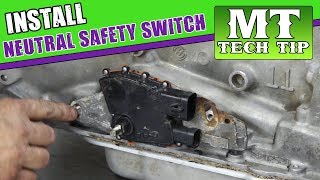
Typical fix: Replace the Transmission Range Sensor. This involves removing the old sensor from the driver's side of the transmission, installing the new one, and carefully aligning it. The new sensor must be aligned with its marks lining up while the transmission is physically in Neutral.
Est. part cost: $40-$80 - Damaged Wiring or Connector 🟡 Medium Probability The wiring harness to the sensor is located under the vehicle, making it susceptible to corrosion, moisture intrusion, or physical damage from road debris or exhaust heat.
How to confirm: Visually inspect the wiring harness and the multi-pin connector at the Transmission Range Sensor for any signs of corrosion (green crust), broken wires, chafing, or loose pins.
Typical fix: Clean the connector pins with an electrical contact cleaner. Repair any broken or frayed wires. If the connector itself is damaged, it may need to be replaced with a new pigtail.
Est. part cost: $10-$30 - Misadjusted Sensor or Shift Linkage ⚪ Low Probability This is most likely to occur after the transmission has been serviced or the sensor has been replaced without proper alignment. The mounting holes on the sensor are slotted to allow for adjustment.
How to confirm: With the transmission in Neutral, check that the alignment marks on the sensor body and the central hub line up perfectly. A straight edge can be used to verify alignment. If they do not, the sensor is misadjusted.
Typical fix: Loosen the sensor's two mounting bolts and rotate it until the alignment marks line up correctly with the transmission in Neutral, then retighten the bolts to the specified torque (20 N·m or 15 ft-lbs). Adjust the shift linkage cable if necessary.
Est. part cost: $0
Rare But Worth Checking
- Faulty Transmission Control Module (TCM) or Powertrain Control Module (PCM): → Shop Transmission Assembly This is extremely rare. The sensor and wiring should be thoroughly tested and ruled out before considering the replacement of a control module.
Diagnosis Steps
- Confirm the presence of the P0705 code with an OBD-II scanner. Note any other codes, such as P0700 or P0706.
- Test for symptoms: Check if the reverse lights work. Try starting the engine in Park, then in Neutral. If it starts in Neutral but not Park, the sensor or its alignment is highly suspect.
- Safely raise and support the vehicle on jack stands. Chock the wheels.
- Locate the Transmission Range Sensor on the driver's side of the transmission, where the shift lever connects.
- Visually inspect the sensor, its connector, and the surrounding wiring for any obvious damage, corrosion, or loose connections.
- If the wiring looks good, check the sensor's adjustment. Put the transmission in Neutral and verify the alignment marks on the sensor line up.
- If adjustment is correct or doesn't solve the problem, the next step is to replace the sensor. Many new sensors come with a small metal pin or plastic clip holding them in the Neutral position for easy installation.
- If replacing the sensor does not fix the issue, use a multimeter to test the circuit for proper voltage and ground according to the vehicle's service manual.
- If the sensor and wiring are confirmed to be good, the problem may be with the TCM/PCM, but this is very unlikely.
Parts You'll Likely Need
- Transmission Range Sensor / Neutral Safety Switch
(OEM #24229422 (Superseded by 24298931))— This is the component that fails over 90% of the time for this code on the H3, causing the no-start and gear indication problems.
Trusted brands: ACDelco (GM Genuine), Standard Motor Products (SMP), Rostra
OEM price range: $60-$90
Aftermarket price range: $25-$70
Related Codes That Often Appear With This One
- P0700 — P0700 is a generic code that means the Transmission Control Module (TCM) has stored a fault. It acts as a 'check engine' light for the transmission and will appear alongside specific codes like P0705.
- P0706 — P0706 indicates a 'Range/Performance' issue with the same sensor. P0705 and P0706 are very similar, often appear together, and point to the exact same failure of the Transmission Range Sensor.
Technical Service Bulletins (TSBs) & Recalls
- No specific Technical Service Bulletins (TSBs) or recalls were found directly for the P0705 code on the 2006-2010 Hummer H3. The issue is addressed as a standard component failure and replacement.
Platform-Specific Known Issues
- Owner Experience: No Start in Park, Starts in Neutral: A common owner complaint found on forums like HummerForums.com is that the H3 will suddenly refuse to start in Park. All lights come on, but turning the key does nothing. Shifting the vehicle to Neutral allows it to start normally. This is a classic, textbook symptom of a failed Transmission Range Sensor.
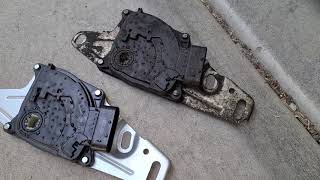
- DIY Alignment is Critical: Multiple DIY repair videos and forum threads emphasize the importance of proper alignment. The new sensor has alignment marks that must line up perfectly with the transmission lever in the Neutral position. Failure to do this will result in the code returning, incorrect gear indication, or continued no-start issues. Some aftermarket sensors come with a temporary pin to hold them in the neutral position for installation.
Mechanic-Grade Diagnostic Values
- Transmission Range (TR) Switch Signal State on Scan Tool — expected: The PCM expects a unique combination of HI and LOW signals for each gear position from four signal circuits (A, B, C, Parity). For example, disconnecting the switch should make all signals read 'HI' on a scan tool.. Failure: If the scan tool shows an invalid combination (e.g., all LOWs or a combination not in the logic chart), or if a signal does not change state when grounding the corresponding pin, it indicates a fault in the wiring or PCM.
- TR Switch Pin Grounding Test — expected: Using a fused jumper wire to ground each of the four signal pins at the harness connector (with the switch disconnected) should cause the corresponding signal on the scan tool to change from 'HI' to 'LOW'.. Failure: If grounding a pin does not result in the scan tool showing 'LOW', it indicates an open or high resistance in the wiring between the connector and the PCM.
Scan Tool Commands That Help
- Tech2: Output Control - Command 4th Gear — In a case where shifting is affected, a technician can use the Tech2 to command a specific gear. If the transmission fails to shift as commanded and throws a range error, it helps isolate the problem to the range-sensing circuit rather than a purely mechanical or hydraulic issue within the transmission.
- Tech2 / Professional Scan Tool: Data List - Transmission Input/Output — This is the primary diagnostic screen for P0705. It allows a technician to view the live state (HI/LOW or On/Off) of the TR switch signal circuits (A, B, C, P) as reported to the PCM/TCM. By moving the shifter through each gear, the technician can verify if the PCM is receiving the correct combination of signals, instantly identifying a faulty switch or circuit.
Wiring & Ground Locations
- G102 / G103 / G104 / G110 — Various locations on the left side of the engine block, some near the starter or behind the battery.. These are the primary engine block grounds. The Transmission Control Module (TCM) and its sensors rely on a clean engine ground. A loose or corroded connection at one of these points can introduce electrical noise or voltage offsets, causing the PCM/TCM to misinterpret the signals from the Transmission Range Sensor, potentially triggering a P0705 code even if the sensor and its direct wiring are good.
- TR Sensor Connector Pin 7 — On the main connector of the Transmission Range Sensor itself, located on the driver's side of the transmission.. According to wiring diagrams and forum discussions, Pin 7 of the TR sensor connector should be the ground wire for the switch's internal contacts. If this pin does not have continuity to a known good ground, the sensor cannot send a valid signal for any gear position, leading to a P0705 code.
- G107 — For V8 models, located on the engine.. This is another critical engine ground point, particularly for the V8 'Alpha' models. A poor connection here can cause a wide range of electrical issues, including erratic behavior from the transmission control system.
Real Owner Repair Stories
- HummerForums.com user 'swiltheone' (2008 Hummer H3 Alpha (V8)) — After a transmission rebuild, experienced no 4th gear, could not shift out of park without manual override, and door locks stopped working. Used a Tech2 scanner which gave a transmission range error when 4th gear was commanded.
❌ Tried (didn't work) Checking for a pinched wiring harness between the engine and transmission bell housing.
✅ What actually fixed it The user diagnosed that Pin 7 (ground) at the TR sensor connector was not grounded. They also found voltage on multiple signal pins where there should have been none. After testing the wiring and the module itself, they concluded the Transmission Control Module (TCM) was faulty and was the root cause of the incorrect voltages and lack of ground signal being processed correctly.
OEM Part Supersession History
24229422→24298931— Standard part lifecycle update by GM/ACDelco. The new part number is the current genuine replacement.
Heads up: The new part number 24298931 is a direct replacement and fully compatible with vehicles that used the original 24229422 part.
Model Year Variations Within This Range
- 2008-2010: The introduction of the 5.3L V8 engine in the 'Alpha' models brought different wiring harnesses and potentially different ground point locations (e.g., G107) compared to the 3.5L/3.7L I5 engine models. While the P0705 diagnosis is fundamentally the same as it uses the same 4L60-E transmission and TR sensor, technicians should consult the correct wiring diagram for the specific engine.
Diagnostic Flowchart
Other Known Issues on This Vehicle
Issues unrelated to this code that are worth knowing about as an owner of this generation:
- Cylinder Head Failure (Valve Seat Wear) 🔴 High — Very common, especially on 2006-2008 models with the 3.5L and 3.7L engines. Often occurs between 60k-100k miles, causing misfire codes (P0300-P0305). (Ref: GM TSB #07-06-01-017B was issued to address diagnosis.)
- Cracked Radiator 🟠 Medium — Common failure of the plastic end tanks, leading to coolant leaks and potential overheating. Can occur at any mileage over 60k. (Ref: GM TSB #PIE0354A acknowledges the issue and ended data collection on it.)
- GM PassLock II Anti-Theft System Failure 🟠 Medium — A very common and frustrating issue where the vehicle intermittently fails to start, requiring a 10-minute wait for the system to reset. Often misdiagnosed.
- HVAC Blower Motor Resistor & Harness Failure 🟡 Low — Extremely common failure where the blower motor only works on the highest setting (or not at all). Caused by the resistor and its wiring harness connector overheating and melting.
- Leaking Sunroof Drain Tubes 🟡 Low — The drain tubes for the sunroof can become clogged with debris, causing water to leak into the cabin, typically around the A-pillars or headliner. A regular maintenance issue.
Used vs. New Parts: Buying Guide for This Vehicle
When a used part is the smart pick: For this specific repair, a used part is NOT recommended. The Transmission Range Sensor is a relatively low-cost electronic and mechanical wear item. The risk of getting a used part that is near the end of its own service life is high, and the labor to replace it again outweighs any initial cost savings.
What to inspect on the donor part:
- Not applicable, as a new part is strongly advised.
OEM-only on this vehicle (don't cheap out):
- While not strictly 'OEM-only', using a reputable brand is critical. ACDelco (GM's OEM brand) is the safest choice. Avoid unbranded, no-name parts from online marketplaces, as their internal components and weather sealing are often of poor quality, leading to premature failure.
Aftermarket brands forum-validated for this vehicle:
- ACDelco (GM Genuine)
- Standard Motor Products (SMP)
- Rostra
Brands owners have reported issues with on this vehicle:
- Unbranded parts from third-party marketplace sellers without a warranty or clear brand identity.
Real Owner Stories
Aggregated from forums and TSBs cited above. Mileages and costs reflect what owners reported in those sources.
2006-2010 Hummer H3
Symptoms: The vehicle suddenly refused to start in Park. All lights came on, but turning the key did nothing. Shifting the vehicle to Neutral allowed it to start normally.
What fixed it: Replacing the Transmission Range Sensor (Neutral Safety Switch).
Source hint: HummerForums.com - It's 2020, how is your H3 holding up?
2006-2010 Hummer H3
Symptoms: Incorrect gear indication on the dashboard and continued no-start issues after a DIY repair attempt.
What fixed it: Properly aligning the new sensor's marks with the transmission lever in the Neutral position.
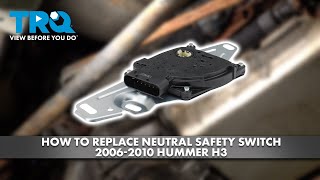
Source hint: YouTube: 'How to Replace Neutral Safety Switch 2006-2010 Hummer H3'
2004-2012 Chevrolet Colorado
Symptoms: P0705 code and neutral safety switch failure symptoms identical to the Hummer H3.
What fixed it: Replacing the externally mounted neutral safety switch.
Source hint: 355Nation.net (Colorado/Canyon Forum)
Related OBD-II Codes
Frequently Asked Questions
My Hummer H3 won't start in Park, but it starts in Neutral. Is this a common issue?
Is there a specific TSB for the P0705 code on the 2006-2010 Hummer H3?
I'm also seeing misfire codes like P0300-P0305; is that related to the P0705?
Can I adjust the sensor myself to fix the P0705 code?
Why does the Transmission Range Sensor fail so often on the H3?
What should I check if my H3 has a P0705 and the reverse lights aren't working?
Helpful Videos
We Have This Part in Stock

The information in this article is provided for general reference and educational purposes only. Vehicle specifications, procedures, and part compatibility can vary by production date, trim level, and region. Always consult your vehicle's factory service manual and verify part numbers before purchasing or performing repairs. Safety-critical components such as airbags, seat belts, and braking systems should be installed by a qualified professional.
- Hummer H3:
- 🧭 Diagnostic Flowchart
- 🎬 Helpful Videos
- 🛍️ Shop This Part
- What's Unique About the 2006-2010 Hummer H3
- Symptoms You May Notice
- Most Likely Causes
- Rare But Worth Checking
- Diagnosis Steps
- Parts You'll Likely Need
- Related Codes That Often Appear With This One
- Technical Service Bulletins (TSBs) & Recalls
- Platform-Specific Known Issues
- Mechanic-Grade Diagnostic Values
- Scan Tool Commands That Help
- Wiring & Ground Locations
- Real Owner Repair Stories
- OEM Part Supersession History
- Model Year Variations Within This Range
- Other Known Issues on This Vehicle
- Used vs. New Parts: Buying Guide for This Vehicle
- Real Owner Stories
- 2006-2010 Hummer H3
- 2006-2010 Hummer H3
- 2004-2012 Chevrolet Colorado
- Related OBD-II Codes
- Frequently Asked Questions
- 🎟️ Get 5% Off