

P0705 on 2012-2019 Hyundai Accent: Transmission Range Sensor Circuit Malfunction Guide
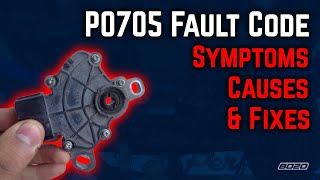
On a 2012-2019 Hyundai Accent, code P0705 almost always points to a faulty transmission range sensor, also known as an inhibitor switch. This can cause a no-start condition, erratic shifting, a blank gear indicator, or the transmission entering a 'fail-safe' (limp) mode. Replacing the sensor and ensuring proper alignment is the most common and effective fix.
- P0705 on a Hyundai Accent is most commonly caused by a failed transmission range sensor (inhibitor switch), often due to moisture intrusion.
- Symptoms are serious and can include the car not starting or getting stuck in a fail-safe gear, so it should be addressed promptly.
- Before replacing the sensor, always inspect the wiring and connector for corrosion or damage, as this is a common and cheaper fix.
- Proper alignment of the new sensor using a 5mm pin or bolt in the 'Neutral' position is critical for the repair to be successful.
- This is a known pattern failure across many Hyundai and Kia models, not just the Accent.
What's Unique About the 2012-2019 Hyundai ACCENT

For the Hyundai Accent and its platform mates, the transmission range sensor (inhibitor switch) is a well-documented point of failure, as evidenced by multiple Technical Service Bulletins (TSBs) issued by the manufacturer. This suggests it's a recurring issue for this platform. The sensor is typically mounted externally on the transmission, making it highly susceptible to moisture and road debris, which can lead to internal corrosion and premature failure of the switch or its wiring. Forum users have specifically correlated failures of this switch with driving through heavy rain or high water.
Diagnostic Flowchart

Tap your situation to follow the diagnostic path that matches what you're seeing on this vehicle.
Generation note: The 2012-2019 range covers two generations of the Hyundai Accent: the 4th Gen (RB, 2012-2017) and the 5th Gen (YC/HC, 2018-2019). While both generations can experience this code, the specific part number for the range sensor may differ. For example, part number 42700-26500 is listed for 2016-2019 models, but other numbers like 42700-26700 and 42700-26000 are also associated with this part, sometimes superseding older versions. Always verify the correct part with your vehicle's VIN before purchasing.
Symptoms You May Notice

- Check Engine Light is on
- Vehicle will not start, or only starts in Neutral
- Gear indicator on the dashboard is blank, incorrect, or does not update
- Harsh, delayed, or erratic shifting between gears
- Transmission may be stuck in one gear (fail-safe or 'limp' mode, often 4th gear).
- Reverse lights do not work.
- Backup camera does not activate.
- Replacing the starter motor when the actual issue is a no-start condition caused by the inhibitor switch not sending the 'Park' or 'Neutral' signal.
- Replacing the battery or alternator due to intermittent starting problems.
- Assuming an internal transmission failure and recommending a costly rebuild or replacement when only the inexpensive external sensor is at fault.
Most Likely Causes

- Faulty Transmission Range Sensor (Inhibitor Switch) 🔴 High Probability → Shop Transmission Assembly The sensor is mounted externally on the transmission, exposing it to heat, moisture, and road grime, which can cause internal corrosion and failure. This is a known weak point confirmed by multiple Hyundai TSBs and owner reports, especially after exposure to heavy rain or puddles.
How to confirm: Use a scan tool to monitor the sensor's live data PID while moving the gear selector. If the data doesn't match the selected gear, the sensor is likely faulty. You can also test the sensor's terminals for specific voltage outputs or continuity for each gear position using a multimeter, as specified in the factory service manual. For example, Park may read ~0.8-1.2V and Reverse ~1.8-2.2V.
Typical fix: Replace the transmission range sensor/inhibitor switch. This requires removing the battery and battery tray for access. The new sensor must be correctly aligned by placing the shifter in Neutral and inserting a 5mm bolt or alignment pin (SST 09480-A3800) through the sensor's alignment hole before tightening the mounting bolts.
Est. part cost: $40-$100 - Damaged Wiring or Corroded Connector 🟡 Medium Probability The wiring harness leading to the sensor is in an exposed location under the battery tray and can be damaged by road debris, heat, or vibration. Moisture intrusion into the connector is a very common cause of failure, leading to corroded pins and a poor signal.
How to confirm: Visually inspect the wiring harness and the connector pins for any signs of corrosion (green or white powder), breakage, or loose connections. Perform a wiggle test on the connector while monitoring the sensor data on a scan tool. A fluctuating signal indicates a bad connection.
Typical fix: Repair the damaged section of wire or clean the connector pins meticulously. If corrosion is severe, the connector pigtail may need to be replaced. Always apply dielectric grease to the connector 🎬 Watch this before replacing your switch to avoid common mistakes. before reassembly to prevent future moisture intrusion.
Est. part cost: $10-$50 - Misadjusted Transmission Range Sensor or Shift Cable ⚪ Low Probability → Shop Transmission Assembly This is less common but can occur after transmission service, if the shift cable has stretched, or if the sensor was replaced without proper alignment. The sensor's position is adjustable via slotted mounting holes.
How to confirm: A classic symptom is the vehicle starting in Neutral but not in Park. Visually check the alignment. When the transmission is manually put into Neutral, a small hole on the sensor body should line up with a corresponding hole on its rotating arm, allowing a 5mm bolt to pass through.
Typical fix: Loosen the sensor's mounting bolts, place the shifter in Neutral, and rotate the sensor until the alignment holes line up. Insert a 5mm bolt or pin to hold it in place, then tighten the mounting bolts to specification. Verify the vehicle starts in both Park and Neutral and that the gear indicator is accurate.
Est. part cost: $0
Rare But Worth Checking
- Faulty Powertrain Control Module (PCM) or Transmission Control Module (TCM): → Shop Transmission Assembly This is extremely rare and should only be considered after all other possibilities (sensor, wiring, adjustment) have been exhaustively ruled out. A faulty module will typically present with multiple other unrelated fault codes.
Diagnosis Steps

- Connect an OBD-II scanner and confirm the presence of P0705. Record and check for any other related transmission codes (P0706, P0707, P0708).
- Using the scanner's live data function, monitor the transmission range sensor PID. Observe the reading as you slowly move the gear selector through P, R, N, and D. The reading should match the gear position without glitches or delays.
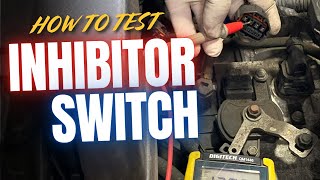
- Perform a visual inspection. Remove the air intake duct and battery/battery tray to access the inhibitor switch on the top/front of the transmission. 🎬 Watch: Locate the inhibitor switch on your Hyundai Accent CVT. Inspect the sensor, its connector, and the wiring harness for obvious signs of damage, corrosion, or loose connections.
- Test the circuit. Disconnect the sensor. With the key on, use a multimeter to check for proper voltage at the power supply pin on the connector harness side. Check the ground circuit for continuity and perform a voltage drop test; it should be less than 0.2V.
- Test the sensor itself. With the sensor disconnected, use a multimeter to check for continuity between the appropriate pins for each gear position as specified in the service manual.
- Check the adjustment. If the sensor and wiring test good, verify the alignment. Put the transmission in Neutral and check if a 5mm bolt can pass through the alignment holes on the sensor body and lever.
- If all tests pass, the issue may be an intermittent fault that requires a 'wiggle test' of the harness while monitoring live data, or, in very rare cases, a problem with the PCM/TCM.
Parts You'll Likely Need
- Transmission Range Sensor (Inhibitor Switch)
(OEM #42700-26500 / 42700-26700 / 42700-26000)— This is the primary component that fails, causing the P0705 code. It is a known high-failure item on this vehicle, confirmed by manufacturer TSBs and extensive owner reports. Part number varies by year; 42700-26500 and 42700-26700 are common replacements.
Trusted brands: Hyundai (OEM), Dorman, Standard Motor Products
OEM price range: $70-$120
Aftermarket price range: $40-$80
Related Codes That Often Appear With This One
- P0706 — Relates to 'Range Sensor Range/Performance,' indicating the sensor signal is out of the expected range. Both codes point to the same component and are often listed together in TSBs.
- P0707 — Relates to 'Range Sensor Open Circuit,' indicating a complete loss of signal, often due to a broken wire, severe corrosion, or a completely failed sensor.
- P0708 — Relates to 'Range Sensor Short Circuit,' indicating the signal voltage is too high, often due to a short in the wiring or sensor.
Technical Service Bulletins (TSBs) & Recalls
- 19-AT-024H - Supersedes 17-AT-005. Updates the diagnosis for P0705-P0708.
- 17-AT-005 - Supersedes 15-AT-001. Provides diagnostic procedure for inhibitor switch DTCs on various models including the Accent (RB).
- 12-AT-022-1 - Describes diagnosis for an improperly adjusted or operating inhibitor switch causing P0705-P0708.
Platform-Specific Known Issues
- Hyundai has issued multiple Technical Service Bulletins, including 12-AT-022-1, 15-AT-001, and 17-AT-005, addressing DTCs P0705-P0708.
- The TSBs describe symptoms including the MIL on, the transmission entering a 4th gear fail-safe mode, no gear indication on the cluster, and an intermittent no-engine crank/no start condition.
- The official service procedure involves removing the battery and tray for access, checking connector pins, and specifically highlights the alignment procedure using a 5mm bolt or special tool (09480-A3800) when installing the new switch.
Mechanic-Grade Diagnostic Values
- Transmission Range Sensor Digital Signal Pattern — expected: The TCM expects a specific combination of ON (1) or OFF (0) signals from four internal switches (S1, S2, S3, S4) for each gear. P: S1=1, S2=0, S3=1, S4=1. R: S1=0, S2=0, S3=0, S4=1. N: S1=1, S2=1, S3=0, S4=1. D: S1=1, S2=0, S3=0, S4=0.. Failure: Any signal combination that does not match the defined pattern for a given gear selection will trigger the code.
- Inhibitor Switch Power Supply Voltage — expected: Battery voltage (approx. 12V) should be present at the power supply pin of the inhibitor switch connector with the ignition ON.. Failure: Low or no voltage indicates a problem in the wiring or fuse supplying power to the switch.
- Inhibitor Switch Signal Output Voltage — expected: When a gear is selected, the corresponding signal output pin for that gear should show battery voltage. For example, when in Neutral, the Neutral signal pin should read ~12V while other signal pins read 0V.. Failure: No voltage on the correct pin, or voltage on multiple pins simultaneously, indicates a faulty switch or shorted wiring.
- Ground Circuit Voltage Drop — expected: Less than 0.2V.. Failure: A reading greater than 0.2V indicates excessive resistance in the ground circuit, which can cause sensor malfunctions. The ground point terminal and bolt threads should be cleaned and tightened.
Scan Tool Commands That Help
- Hyundai GDS (Global Diagnostic System): Current Data -> Shift Lever Switch — This function is used to monitor the gear position being reported by the inhibitor switch in real-time. While moving the shifter through all gears, the display should match the shifter's position. An incorrect or lagging display points to a fault in the sensor or its circuit.
Wiring & Ground Locations
- Primary Transmission Ground — The main battery ground cable attaches directly to the transmission case.. A poor connection at this primary ground point can cause a variety of electrical issues, including erratic sensor readings for components mounted on the transmission, such as the inhibitor switch.
- Inhibitor Switch Connector — On top of the transmission, under the battery and battery tray.. This is the main connection point for the sensor. It is exposed to moisture and vibration, making it a common point of failure due to corrosion or damaged pins.
OEM Part Supersession History
42700-26000, 42700-26500→42700-26700— Part revision and consolidation.
Heads up: The parts are generally interchangeable for the specified model years, but 42700-26700 is the most current revision. Always confirm with VIN.
Model Year Variations Within This Range
- 2012-2017 (RB Generation): The available Technical Service Bulletins (TSBs) like 17-AT-005 and 12-AT-022-1 specifically reference the Accent (RB), which covers these model years. The diagnosis and repair are well-documented for this generation.
- 2018-2019 (YC/HC Generation): While the P0705 code can still occur, specific TSBs for the YC/HC generation Accent are not as prominent in documentation. The part number for the inhibitor switch may differ from the earlier generation. It is critical to verify the correct part number using the vehicle's VIN for these years.
Helpful Videos

We Have This Part in Stock

The information in this article is provided for general reference and educational purposes only. Vehicle specifications, procedures, and part compatibility can vary by production date, trim level, and region. Always consult your vehicle's factory service manual and verify part numbers before purchasing or performing repairs. Safety-critical components such as airbags, seat belts, and braking systems should be installed by a qualified professional.
- Hyundai ACCENT:
- 🧭 Diagnostic Flowchart
- 🎬 Helpful Videos
- 🛍️ Shop This Part
- What's Unique About the 2012-2019 Hyundai ACCENT
- Symptoms You May Notice
- Most Likely Causes
- Rare But Worth Checking
- Diagnosis Steps
- Parts You'll Likely Need
- Related Codes That Often Appear With This One
- Technical Service Bulletins (TSBs) & Recalls
- Platform-Specific Known Issues
- Mechanic-Grade Diagnostic Values
- Scan Tool Commands That Help
- Wiring & Ground Locations
- OEM Part Supersession History
- Model Year Variations Within This Range
- 🎟️ Get 5% Off