

P0705 on 2010-2017 Hyundai Tucson: Transmission Range Sensor Fixes
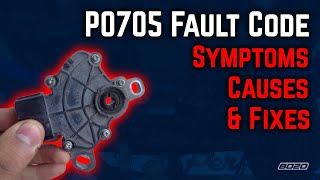
On a 2010-2017 Hyundai Tucson, code P0705 almost always points to a faulty Transmission Range Sensor, also known as an Inhibitor Switch. This part tells the car which gear you've selected. Symptoms include a Check Engine Light, no-start conditions, and erratic shifting. Replacing the switch is the most common fix, with the genuine OEM part costing between $70 and $130.
- P0705 on a 2010-2017 Tucson is almost certainly caused by a bad inhibitor switch (also called a transmission range sensor).
- Key symptoms include the car not starting, the gear indicator being wrong, or the transmission being stuck in one gear.
- This is a known issue, and Hyundai has issued service bulletins (TSBs) about it.
- The fix is to replace the inhibitor switch, which is located on top of the transmission and requires removing the battery and airbox to access.
- When replacing the switch, proper alignment using the guide hole is critical for correct operation.
What's Unique About the 2010-2017 Hyundai TUCSON
For this era of Hyundai Tucson, the inhibitor switch is a well-documented failure point. Hyundai has issued multiple Technical Service Bulletins (TSBs) that cover this exact code and symptom across many models, including the Tucson. The issue is so common that updated versions of the switch have been released to improve reliability. The failure is typically internal to the switch, where electrical contacts wear out or get contaminated over time. Some owners report having to replace the switch multiple times, indicating the issue can be recurrent.
Diagnostic Flowchart
Tap your situation to follow the diagnostic path that matches what you're seeing on this vehicle.
Generation note: The 2010-2017 range covers two Tucson generations: the second generation (LM, 2010-2015) and the start of the third generation (TL, 2016-2017). The P0705 code and its primary cause, the inhibitor switch, are common to both generations, as confirmed by Hyundai TSBs that list both 'Tucson (LM)' and 'Tucson (TL)' as affected vehicles.
Symptoms You May Notice
- Check Engine Light is on.
- Engine will not crank or start, or only starts intermittently.
- Engine only starts in Neutral, but not Park.
- Gear indicator on the dashboard is blank, incorrect, or doesn't match the selected gear.
- Transmission is stuck in one gear (fail-safe or 'limp mode'), often 4th gear.
- Harsh or erratic shifting.
- Backup camera doesn't turn on when in Reverse.
- Reduced fuel economy.
- Replacing the battery or starter motor when a no-start symptom occurs. The root cause is often the inhibitor switch preventing the computer from recognizing the car is in Park or Neutral, which is a requirement for the starter circuit to engage. 🎬 See why you shouldn't replace parts before watching this diagnosis.
Most Likely Causes
- Faulty Inhibitor Switch (Transmission Range Sensor) 🔴 High Probability → Shop Transmission Park Inhibitor Switch This is a widely documented failure point acknowledged by Hyundai through multiple TSBs (e.g., 19-AT-024H, 17-AT-005). The internal contacts of the switch wear out, get contaminated, or suffer from moisture intrusion over time, leading to incorrect voltage signals. Owner forums are filled with accounts of this specific failure.
How to confirm: A mechanic can use a scan tool to view the live data PID for the transmission range sensor. While moving the shifter through P, R, N, D, the data should change instantly and accurately. If the data is erratic, delayed, or doesn't match the gear position, the switch is bad. A multimeter can also be used to check for correct voltage or continuity at the switch's connector pins for each gear position, comparing the results to the service manual specifications.
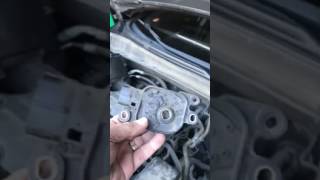
Typical fix: Replace the inhibitor switch. This involves disconnecting the battery, removing the airbox and battery tray to access the switch on top of the transmission, 🎬 Watch: How to locate and remove the Tucson range sensor. disconnecting the shift linkage cable, and installing and aligning the new switch. Applying dielectric grease to the new connector can help prevent future moisture-related issues.
Est. part cost: $45-$130 - Damaged Wiring or Connector 🟡 Medium Probability The sensor and its wiring are located on top of the transmission, exposed to engine heat, vibration, and moisture. This can lead to corrosion in the connector pins or breaks in the wiring harness over time.
How to confirm: Visually inspect the wiring harness and connector going to the inhibitor switch for any signs of green/white corrosion, frayed wires, or loose pins. A multimeter can be used to perform a voltage drop test on the power and ground circuits; a drop of more than 0.1-0.2 volts indicates a problem in the wiring.
Typical fix: Repair the damaged section of the wiring harness or clean the connector pins with a specialized contact cleaner. If the connector itself is damaged, it may need to be replaced. Apply dielectric grease to the connection to protect it from future corrosion.
Est. part cost: $5-$50 - Misaligned Inhibitor Switch or Shift Linkage ⚪ Low Probability → Shop Transmission Park Inhibitor Switch This is most likely to occur after the switch has been replaced or if the shift cable has been serviced. Improper alignment can cause the switch to send a signal that is 'between gears', confusing the computer.
How to confirm: The switch has an alignment hole. According to Hyundai TSBs, when the transmission is in Neutral, a 5mm bolt or a special tool (SST 09480-A3800) should slide smoothly through the alignment hole on the switch lever and into the transmission case. If it doesn't, the switch is misaligned.
Typical fix: Loosen the switch's mounting bolts, place the shifter and the transmission's manual shaft in the Neutral position, align the switch using the alignment hole and a 5mm bolt, and then retighten the mounting bolts to specification.
Est. part cost: $0
Rare But Worth Checking
- Faulty Powertrain Control Module (PCM) or Transmission Control Module (TCM): → Shop Transmission Assembly This is very rare and should only be considered after the switch, wiring, and alignment have been exhaustively ruled out. A PCM/TCM failure will usually be accompanied by other, unrelated trouble codes. TSB 17-AT-005 notes that if the DTC returns after replacing the switch and verifying the wiring, the PCM/TCM may be at fault.
Diagnosis Steps
- Connect an OBD-II scanner to confirm the P0705 code and check for any other related codes like P0706, P0707, or P0708.
- Using a scan tool with live data, monitor the transmission range sensor PID. As you move the gear selector through P, R, N, D, the display should match each position accurately and without delay. If it's erratic, jumps, or shows an invalid signal, the sensor is the primary suspect.
- Place the vehicle in Park and then Neutral, attempting to start the engine in both positions. If it only starts in one, or neither, this strongly points to a sensor or alignment issue.
- Visually inspect the inhibitor switch connector and wiring harness for corrosion, damage, or loose connections. Pay close attention to the pins inside the connector.
- If the wiring looks good, the next step is to replace the inhibitor switch. To do this, you will need to disconnect the battery, then remove the air intake assembly, battery, and battery tray to access the switch on top of the transmission.
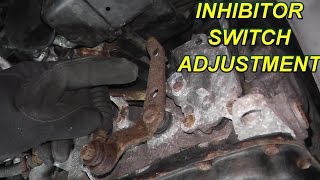
- When installing the new switch, ensure the transmission is in Neutral. Use a 5mm bolt or drill bit to pass through the alignment hole on the switch's lever and into the transmission case to ensure it is correctly positioned before tightening the mounting bolts. 🎬 Watch: A quick guide on how to adjust an inhibitor switch.
- After installation, clear the codes and perform two full drive cycles (key-on to key-off) to confirm the fix.
- If the problem persists after replacing the switch and verifying the wiring, the issue may be with the PCM, but this is highly unlikely.
Parts You'll Likely Need
- Inhibitor Switch / Transmission Range Sensor
(OEM #42700-26000, superseded by 42700-26500)— This is the most common failure part for code P0705 on this vehicle, as confirmed by numerous owner reports and Hyundai's own service bulletins. The part number 42700-26000 was superseded by 42700-26500, which is the updated version you should purchase. Another common part number for related models is 42700-3B000.
Trusted brands: Hyundai (Genuine), Dorman, Beck Arnley
OEM price range: $70-$130
Aftermarket price range: $45-$75
Related Codes That Often Appear With This One
- P0706 — This code indicates a 'Range/Performance' issue with the same sensor, often appearing with P0705 as the sensor begins to fail intermittently.
- P0707 — This code indicates a 'Low Input' or 'Open Circuit' for the range sensor, pointing to a wiring break or complete internal sensor failure.
- P0708 — This code indicates a 'High Input' or 'Short Circuit' for the range sensor, also pointing to a wiring or internal sensor issue.
Technical Service Bulletins (TSBs) & Recalls
- 19-AT-024H: Supersedes 17-AT-005. Provides updated diagnostic procedures for P0705, P0706, P0707, and P0708 on a wide range of Hyundai vehicles, including the 2010-2015 (LM) and 2016+ (TL) Tucson.
- 17-AT-005: An earlier TSB covering inhibitor switch diagnosis and replacement for P0705 on many Hyundai models, including the Tucson. Details the step-by-step removal and alignment process.
- SA317A (Kia): A Kia se
Platform-Specific Known Issues
- Hyundai has released multiple Technical Service Bulletins regarding P0705 and related codes for the inhibitor switch, indicating a known pattern of failure for this component. Bulletins include 19-AT-024H and its predecessor 17-AT-005, which cover a wide range of Hyundai models including the Tucson (LM/TL).
- A similar service action for Kia models (SA317A) also covers the P0705 code on the sister vehicle, the Kia Sportage (QL), confirming this is a widespread issue across the shared platform.
Mechanic-Grade Diagnostic Values
- PCM Input Logic from Inhibitor Switch Signals (S1, S2, S3, S4) — expected: P: (1,0,0,0), R: (1,1,0,0), N: (0,1,1,0), D: (0,0,1,1). '1' represents voltage present, '0' represents no voltage.. Failure: Any combination of signals not matching the defined pattern for the selected gear indicates a fault in the switch or wiring.
- Voltage at Inhibitor Switch Connector Pin 3 (Pink Wire) — expected: Battery Voltage (approx. 12V) with key on.. Failure: No voltage or significantly low voltage indicates a problem with the power supply circuit or the TCU/TCU2 fuse.
- Voltage Drop at Rear Combination Lamp Ground — expected: Less than 0.2 V.. Failure: Voltage greater than 0.2V indicates a poor ground connection that needs to be cleaned and tightened. This check is part of the official TSB diagnostic procedure.
Scan Tool Commands That Help
- Hyundai GDS (or equivalent professional scan tool): Live Data: 'Shift Lever Switch' PID — This is the primary diagnostic step. Use this to monitor the gear position being reported to the PCM in real-time as you move the shifter. If the displayed value is erratic, delayed, or does not match the physical gear position, it strongly indicates a fault with the inhibitor switch, its alignment, or wiring.
Wiring & Ground Locations
- Inhibitor Switch Connector Pin 3 — On the inhibitor switch connector, located on top of the transmission. The wire is typically pink.. This is the main power supply to the switch. No power here means the switch cannot send any signals to the PCM, causing a P0705 code.
- Inhibitor Switch Connector Pins 7, 8, 4 — On the inhibitor switch connector. Wires are typically Green (Signal 3), Brown (Signal 1), and another for Signal 4.. These are the four signal wires the PCM uses to determine the shifter's position. A fault on any of these wires will result in an incorrect logic pattern and trigger the code.
- TCU and TCU2 Fuses — In the main junction box located in the engine compartment.. TSB 17-AT-005 directs technicians to check these fuses as part of the P0705 diagnosis. A blown fuse will cut power to the control circuit.
- Transmission Ground Strap (T/M GND) — A thick wire or braided strap connecting the transmission case directly to the vehicle's chassis/frame.. A corroded or loose transmission ground can cause erratic voltage signals from sensors mounted on the transmission, including the inhibitor switch, leading to intermittent and hard-to-diagnose P0705 codes.
OEM Part Supersession History
42700-26000, 42700-26500→42700-26700— Part has been updated by the manufacturer to improve reliability.
Heads up: While many parts are listed as replacements, using the latest revision (e.g., 42700-26700 for LM models) is recommended. The LM (2010-2015) and TL (2016-2017) generations use physically different switches. LM models use the 42700-26xxx family, while TL models use the 42700-3Bxxx family (e.g., 42700-3B700).42700-3B100, 42700-3B500→42700-3B710— Part has been updated by the manufacturer.
Heads up: These part numbers are typically for the TL generation (2016+) Tucson and are not compatible with the earlier LM generation.
Model Year Variations Within This Range
- 2010-2015 (LM Generation): Typically uses inhibitor switch part numbers from the 42700-26xxx family (e.g., 42700-26500, 42700-26700). The transmission ground strap is part number 91880-2S100.
- 2016-2017 (TL Generation): Typically uses inhibitor switch part numbers from the 42700-3Bxxx family (e.g., 42700-3B700). The transmission ground strap is a different part number, such as 91862-CW010.
Helpful Videos

We Have This Part in Stock


The information in this article is provided for general reference and educational purposes only. Vehicle specifications, procedures, and part compatibility can vary by production date, trim level, and region. Always consult your vehicle's factory service manual and verify part numbers before purchasing or performing repairs. Safety-critical components such as airbags, seat belts, and braking systems should be installed by a qualified professional.
- Hyundai TUCSON:
- 🧭 Diagnostic Flowchart
- 🎬 Helpful Videos
- 🛍️ Shop This Part
- What's Unique About the 2010-2017 Hyundai TUCSON
- Symptoms You May Notice
- Most Likely Causes
- Rare But Worth Checking
- Diagnosis Steps
- Parts You'll Likely Need
- Related Codes That Often Appear With This One
- Technical Service Bulletins (TSBs) & Recalls
- Platform-Specific Known Issues
- Mechanic-Grade Diagnostic Values
- Scan Tool Commands That Help
- Wiring & Ground Locations
- OEM Part Supersession History
- Model Year Variations Within This Range
- 🎟️ Get 5% Off