

P0705 on 2010-2018 Kia Forte: Transmission Range Sensor Malfunction Guide
For a 2010-2018 Kia Forte, code P0705 almost always points to a faulty transmission range sensor, also known as an inhibitor switch. This part tells the car's computer which gear is selected. Replacing it is the most common fix, with the part costing between $40 and $100. This is a well-documented failure on both the Forte and its platform-mate, the Hyundai Elantra.
- P0705 on a Kia Forte is almost certainly a bad inhibitor switch (transmission range sensor).
- Symptoms include no-start, harsh shifting, and an illuminated Check Engine Light.
- This is a known issue acknowledged by Kia via a Technical Service Bulletin (TSB) for 2017 models, but it affects other years as well.
- The repair is affordable and can be done by a DIYer with moderate experience, but carries a safety risk if done incorrectly.
- Do not immediately assume a no-start condition is a bad starter; P0705 is a very likely cause on this platform.
What's Unique About the 2010-2018 Kia Forte
The 2010-2018 Kia Forte spans two generations (TD and YD), which used a variety of 4, 5, and 6-speed automatic transmissions. The P0705 issue is most prominent on models with the 6-speed automatic, which feature an externally mounted inhibitor switch that is highly prone to failure. Kia has issued Technical Service Bulletins (TSBs), such as SA317, for this exact issue on the 2017 Forte and other models, acknowledging the problem. The failure is so common that it's one of the first things mechanics check when presented with the symptoms, often before even scanning for codes.
Generation note: The 2010-2018 range covers the first generation (TD, 2010-2013) and the second generation (YD, 2014-2018). The P0705 code and its primary cause, the inhibitor switch, are a common issue across both generations, especially those with the 6-speed automatic transmission. A specific Technical Service Bulletin (SA317A/B/C) was issued for some 2017 YD models with production dates between June 28, 2016, and March 7, 2017, highlighting the prevalence of this failure.
Symptoms You May Notice
- Check Engine Light is on
- Vehicle will not start, or has an intermittent no-start condition
- Engine may only start in Neutral, not Park
- Erratic or harsh shifting between gears
- Transmission may get stuck in one gear (limp mode)
- Gear indicator on the dashboard is incorrect or does not light up
- Reverse lights do not turn on when in Reverse
- Slight engine stumble when shifting into Park after a long drive
- Replacing the starter motor when the vehicle doesn't crank. The root cause is often the inhibitor switch preventing the starter from receiving the signal to engage because the computer doesn't see that the car is in Park or Neutral.
- Assuming the entire transmission is failing due to harsh shifting, when it is simply not receiving the correct gear position information from the faulty sensor.
- Replacing the battery for an intermittent no-start. While a bad battery can cause a no-start, it will not trigger a P0705 code.
- Confusing a no-start with a faulty brake light switch. A bad brake light switch can also prevent the car from starting or shifting out of park, but it typically does not set a P0705 code.
Most Likely Causes
- Faulty Transmission Range Sensor (Inhibitor Switch) 🔴 High Probability → Shop Transmission Assembly The inhibitor switch is a known failure point on many Kia and Hyundai models from this era, as evidenced by multiple Technical Service Bulletins (TSBs). The switch is mounted externally on the transmission, exposing it to heat, moisture, and road debris that can lead to internal corrosion and wear of the electrical contacts.
How to confirm: With the vehicle in Park or Neutral, try wiggling the gear shifter while attempting to start the engine. If it starts intermittently, the switch is likely failing. A mechanic can test the sensor's output signals with a multimeter to confirm continuity for each gear position.
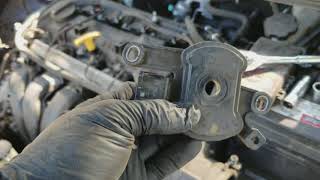
Typical fix: Replace the inhibitor switch and ensure the new one is properly aligned. 🎬 Watch: Why you should check alignment before replacing the switch This is a DIY-feasible job for many, located on top of the transmission, usually under the battery and airbox. 🎬 See this step-by-step inhibitor switch replacement walkthrough
Est. part cost: $40-$100 - Damaged Wiring or Corroded Connector 🟡 Medium Probability The wiring harness connector for the inhibitor switch is located on the front of the transmission and is susceptible to corrosion from road spray and moisture, or damage from engine vibration. Wires can also become frayed or broken.
How to confirm: Visually inspect the wiring and connector leading to the inhibitor switch. Look for green/white corrosion on the pins, frayed or broken wires, or a loose connection. Ensure the connector is fully seated.
Typical fix: Clean the connector terminals with electrical contact cleaner and apply dielectric grease. If the connector or wiring is damaged, it may need to be repaired or replaced.
Est. part cost: $10-$30 - Misadjusted Shift Linkage ⚪ Low Probability While less common, the cable linking the gear shifter inside the car to the transmission can stretch or become misaligned. This causes a mismatch between the gear lever position and the position registered by the inhibitor switch, triggering the code.
How to confirm: Check if the gear indicator on the dash perfectly matches the selected gear. If there is play or misalignment, or if the car starts in Neutral but not Park, the linkage may need adjustment.
Typical fix: Adjust the shift linkage cable at the transmission manual control lever. Sometimes, simply loosening the inhibitor switch mounting bolts and slightly rotating it can correct the alignment.
Est. part cost: $0
Rare But Worth Checking
- Faulty Powertrain Control Module (PCM) or Transmission Control Module (TCM): → Shop Transmission Assembly This is extremely rare. The PCM/TCM should only be considered after all other possibilities, including the sensor, wiring, and linkage, have been exhaustively checked and ruled out.
Diagnosis Steps
- Scan the vehicle's computer for trouble codes to confirm P0705 is present and see if any other codes are stored.
- Check the operation of the reverse lights. If they don't work when in Reverse, it's a strong indicator of a range sensor issue.
- Attempt to start the vehicle in both Park and Neutral. If it only starts in Neutral, this points to a bad switch or an alignment issue.
- Visually inspect the inhibitor switch connector and wiring harness for any signs of corrosion, damage, or loose connections.
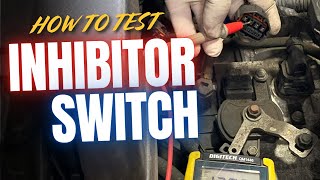
- If the wiring looks good, test the inhibitor switch. This involves checking for correct continuity across specific pins at the connector for each gear position (P, R, N, D) using a digital multimeter and the vehicle's wiring diagram.
- Check the mechanical shift linkage to ensure it is not loose, bent, or misadjusted.
- If the switch and wiring test good, the problem may be internal to the transmission or, in very rare cases, the TCM/PCM.
Parts You'll Likely Need
- Inhibitor Switch (Transmission Range Sensor)
(OEM #42700-26700)— This is the most common failure point for the P0705 code on this vehicle, as documented in Kia's own service bulletins. This part number supersedes previous versions like 42700-26500 and 42700-26000 and is used on a wide range of Hyundai/Kia vehicles.
Trusted brands: Genuine Kia/Hyundai, Rostra, Standard Motor Products (SMP)
OEM price range: $70-$120
Aftermarket price range: $40-$80
Technical Service Bulletins (TSBs) & Recalls
- SA317A/B/C: Service Action for Inhibitor Switch Replacement on various 2017 Kia models, including the Forte (YD), for issues including DTC P0705. The bulletin covers vehicles produced from June 2016 to March 2017.
- TSB Bulletin #TSBTRA072A_R2: This bulletin notes that vehicles equipped with a front wheel drive 6-speed transmission may experience a Malfunction Indicator Lamp (MIL) ON with DTC P0705 (active or history), alongside intermittent no-crank conditions and CAN-related DTCs.
Platform-Specific Known Issues
- Kia issued Technical Service Bulletin (TSB) SA317 (with revisions A, B, and C) for some 2017 Forte models to address failures of the inhibitor switch that cause P0705 and other related symptoms like no-start and erratic shifting.
Mechanic-Grade Diagnostic Values
- TCM Ground Circuit Resistance — expected: Below 1.0 Ω. Failure: A reading higher than 1.0 Ω indicates a poor ground connection, which can cause various transmission control issues.
- Inhibitor Switch Signal Voltage (at TCM/PCM connector) — expected: 10V - 14V on the specific pin for the selected gear (e.g., 'D' pin when in Drive).. Failure: Voltage below 1V on the active pin, or voltage present on multiple pins simultaneously, indicates a faulty switch or wiring.
- Inhibitor Switch Continuity Test (on bench) — expected: Continuity (near 0 Ω) between the power input pin and the specific output pin for each gear position as the switch is manually actuated.. Failure: No continuity (OL) or high resistance in a selected gear position indicates worn internal contacts.
Scan Tool Commands That Help
- Kia GDS (or equivalent professional scanner): Live Data Viewer for Transmission Input Signals — This is a primary diagnostic step. Use it to monitor the 'Shift Lever Switch' or 'Current Gear' parameter. If the displayed gear on the scan tool does not match the physical position of the shifter (e.g., scanner shows 'Drive' when the car is in 'Park'), it strongly confirms a fault in the range sensor circuit or its alignment.
Wiring & Ground Locations
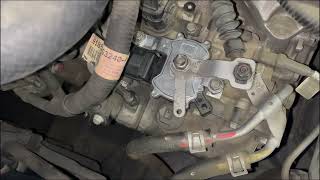
- Inhibitor Switch Connector — On top of the transmission housing, located directly beneath the battery and battery tray.. This is the primary connection point to inspect for corrosion, moisture intrusion, or physical damage, which are common causes of the P0705 code.
- ECM/PCM/TCM Fuse — In the main engine compartment fuse block.. According to a Kia owner's manual, a 25A fuse protects the Engine Control Module (ECM), Powertrain Control Module (PCM), and Transmission Control Module (TCM). While a blown fuse is unlikely to cause just a P0705, checking it is a fundamental step in any electrical diagnosis.
- TCM Ground — The ground circuit is tested at the TCM's main wiring harness connector. The TCM itself is often located in the engine bay or under the dashboard.. A poor ground connection for the Transmission Control Module can cause it to misinterpret signals from various sensors, including the inhibitor switch, leading to erratic behavior and codes like P0705.
Real Owner Repair Stories
- YouTube channel 'Pine Hollow Auto Diagnostics' (Kia Soul 2.0L (platform relative)) — No crank, no start condition. P0705 code was present. Scan tool data showed the computer believed the car was in 'Drive' even though the shifter was physically in 'Park'.
❌ Tried (didn't work) The vehicle had been to another shop that replaced the starter motor and starter relay, which did not resolve the no-start issue.
✅ What actually fixed it The root cause was a faulty inhibitor switch (transmission range sensor). Replacing the switch corrected the gear position signal, allowing the vehicle to recognize it was in Park and start correctly.
OEM Part Supersession History
42700-26000, 42700-26500→42700-26700— Part consolidation and likely minor improvements in materials or construction to improve durability.
Heads up: The new part number 42700-26700 is backward compatible and is the correct service replacement for the older numbers.42700-3B700→42700-26700— Part number consolidation across different transmission applications.
Heads up: While 42700-3B700 is listed for some 2012-2018 Forte models, parts catalogs show it is now superseded by 42700-26700, making the latter the primary replacement part.
Model Year Variations Within This Range
- 2010-2018: While different transmissions were used over the model years (e.g., 4-speed, 6-speed automatics), the external inhibitor switch design, failure mode, and replacement part are largely consistent. Early models may have been originally equipped with part number 42700-26000 or 42700-26500, while later models might have had 42700-3B700, but the current genuine replacement for all of them is 42700-26700.
Diagnostic Flowchart
Other Known Issues on This Vehicle
Issues unrelated to this code that are worth knowing about as an owner of this generation:
- Theta II Engine Failure 🔴 High — Widespread across multiple model years, particularly 2010-2015 with 2.0L and 2.4L engines. Can occur around 80,000 miles, leading to knocking, seizing, or fire risk. (Ref: Subject of a major class-action lawsuit settlement providing warranty extensions and potential engine replacement.)
- MDPS Steering Coupler Degradation 🟠 Medium — Very common across most 2010-2018 models. Owners report a distinct clicking or knocking sound from the steering column when turning the wheel, caused by the disintegration of a small, flexible rubber coupler in the electronic power steering motor. (Ref: Kia issued TSB CHA074 to address this, providing a repair procedure to replace the flexible coupling.)
- Brake Light Switch Failure 🟠 Medium — Common on 2010-2014 models. A faulty switch can cause brake lights to stay on or not illuminate, prevent shifting out of Park, and disable cruise control. It can also cause a no-start condition, similar to the P0705 fault. (Ref: Kia issued recalls (e.g., SC098, SC158) to replace the brake light switch or the brake pedal stopper pad that causes the switch to fail.)
- Excessive Oil Consumption 🟠 Medium — Reported in models with Nu and Theta II engines, often linked to piston ring defects. Owners may need to add oil between changes to prevent engine damage.
Used vs. New Parts: Buying Guide for This Vehicle
When a used part is the smart pick: A used inhibitor switch from a junkyard can be a cost-effective option, as it is a relatively simple electro-mechanical part. This is a good choice if the budget is tight and you can verify the donor vehicle's condition.
Donor-vehicle mileage cap: roughly under 75000 miles for the part to have meaningful remaining life.
What to inspect on the donor part:
- Source from a vehicle with low, documented mileage.
- Inspect the plastic housing for any cracks, especially around the mounting points.
- Check the electrical connector pins for any signs of green or white corrosion.
- If possible, choose a part from a vehicle in a dry, salt-free climate to minimize the risk of internal moisture damage.
OEM-only on this vehicle (don't cheap out):
- No parts for this specific repair are considered 'OEM-only'. The inhibitor switch is widely available from reputable aftermarket manufacturers.
Aftermarket brands forum-validated for this vehicle:
- Standard Motor Products (SMP) is a well-regarded aftermarket brand that aims for OEM quality and is a trusted choice among professionals.
- Rostra is another brand frequently sold by major auto parts retailers for this application.
Brands owners have reported issues with on this vehicle:
- Be cautious with unbranded, generic parts from online marketplaces. While they may be cheaper, their internal components and sealing may not be as robust, potentially leading to premature failure.
Real Owner Stories
Aggregated from forums and TSBs cited above. Mileages and costs reflect what owners reported in those sources.
2010 Kia Forte
Symptoms: After a car wash, the gear indicator lights (P, R, N, D) stopped showing on the dashboard and code P0705 appeared.
What fixed it: Inspection revealed water had entered the gear selector input/inhibitor switch.
Source hint: youtube_comment source_name: Hamza Autoelectric
2014 Hyundai Elantra (Platform Mate)
Symptoms: Vehicle experienced a no-start condition and confirmed code P0705 was present.
What fixed it: Replacement of the Transmission Range Sensor (inhibitor switch) located on top of the transmission below the battery tray.
Source hint: Reddit: 2014 Elantra code P0705 - Transmission Range Sensor. Anyone ever have that?
2017 Kia Forte (YD)
Symptoms: No-start condition and erratic shifting between gears.
What fixed it: Replacement of the inhibitor switch as per Technical Service Bulletin SA317A/B/C.
Source hint: TSB SA317A/B/C: Service Action for Inhibitor Switch Replacement
Related OBD-II Codes
Frequently Asked Questions
My 2017 Kia Forte is having trouble starting and shifting; is there a specific TSB for this?
Why does my Forte only start when the shifter is in Neutral but not in Park?
Can a car wash cause the P0705 code on my Kia?
Is the P0705 code related to the clicking sound in my steering wheel?
I'm having a no-start issue; could it be the brake light switch instead of the transmission sensor?
Where is the inhibitor switch located on a 2010-2018 Forte for a DIY repair?
Helpful Videos

We Have This Part in Stock


The information in this article is provided for general reference and educational purposes only. Vehicle specifications, procedures, and part compatibility can vary by production date, trim level, and region. Always consult your vehicle's factory service manual and verify part numbers before purchasing or performing repairs. Safety-critical components such as airbags, seat belts, and braking systems should be installed by a qualified professional.
- Kia Forte:
- 🧭 Diagnostic Flowchart
- 🎬 Helpful Videos
- 🛍️ Shop This Part
- What's Unique About the 2010-2018 Kia Forte
- Symptoms You May Notice
- Most Likely Causes
- Rare But Worth Checking
- Diagnosis Steps
- Parts You'll Likely Need
- Technical Service Bulletins (TSBs) & Recalls
- Platform-Specific Known Issues
- Mechanic-Grade Diagnostic Values
- Scan Tool Commands That Help
- Wiring & Ground Locations
- Real Owner Repair Stories
- OEM Part Supersession History
- Model Year Variations Within This Range
- Other Known Issues on This Vehicle
- Used vs. New Parts: Buying Guide for This Vehicle
- Real Owner Stories
- 2010 Kia Forte
- 2014 Hyundai Elantra (Platform Mate)
- 2017 Kia Forte (YD)
- Related OBD-II Codes
- Frequently Asked Questions
- 🎟️ Get 5% Off