

P0705 on 2011-2015 Kia Sorento: Transmission Range Sensor Failure Causes and Fixes
On a 2011-2015 Kia Sorento, code P0705 is almost always caused by a failed transmission range sensor, also known as an inhibitor switch. This can cause a no-start condition, incorrect gear display, or erratic shifting. Replacing the switch, which is located on the outside of the transmission, is the typical fix, costing around $50-$85 for the part.
- P0705 on a 2011-2015 Sorento points directly to a problem with the transmission range sensor (inhibitor switch) circuit.
- Key symptoms are a no-start condition (especially in Park), incorrect gear display, and no reverse lights.
- The most likely fix is replacing the inhibitor switch (p/n 42700-3B700), which is located on the outside of the transmission.
- Driving with this code is unsafe due to the risk of being stranded or having the transmission shift unpredictably.
- Before replacing the sensor, always check its wiring and connector for corrosion or damage, and verify proper adjustment, as these can be simpler fixes.
What's Unique About the 2011-2015 Kia Sorento
The 2011-2015 Sorento (second generation, XM) uses an external inhibitor switch that is a known failure point across many Kia and Hyundai models of this era. The failure is so common that Kia issued a Technical Service Bulletin (SA126) specifically for 2011 Sorento models experiencing P0705, a no-start condition, and erratic shifting, which called for installing a new bracket on the switch. Manufacturer Bulletin #TSBTRA045R1 further confirms that vehicles produced between October 27, 2009, and February 25, 2011, may experience a no-start condition or uneven engagement when shifting gears due to this fault. The switch is located on the front/top of the transmission, making it accessible for replacement without removing the transmission itself, though it does require removing the battery, its tray, and the air cleaner assembly.
Symptoms You May Notice
- Check Engine Light is illuminated.
- Engine will not crank or start, especially in 'P' (Park).
- Vehicle may only start in 'N' (Neutral) but not 'P' (Park).
- Gear indicator on the dashboard is blank, incorrect, or flashes through the positions.
- Reverse lights do not turn on when the vehicle is in Reverse.
- Harsh, delayed, or erratic automatic shifting.
- Transmission may be stuck in 'limp mode' (often 3rd gear).
- Inability to accelerate above a certain speed; one owner reported being unable to get above 60mph in NHTSA ODI #11453616.
- Replacing the starter motor when a no-start condition is present. The root cause is the inhibitor switch not telling the computer it's safe (in Park or Neutral) to engage the starter.
- Condemning the entire transmission. This code points to a specific sensor circuit, which is an external and relatively inexpensive part, not an internal transmission failure. 🎬 Watch this video to avoid replacing the wrong parts.
Most Likely Causes
- Faulty Transmission Range Sensor (Inhibitor Switch) 🔴 High Probability → Shop Transmission Assembly This component is a well-documented, high-failure item on many Kia/Hyundai platforms of this era, as evidenced by multiple service bulletins (like Kia's SA126 and Hyundai's 17-AT-005) addressing the exact symptoms of P0705. Manufacturer Bulletin #TSBTRA072A_R2 notes that front-wheel drive 6-speed transmissions may experience the MIL ON with P0705 as either an active or history code, sometimes accompanied by intermittent no-crank issues. Its location on the transmission exposes it to heat and moisture, leading to internal wear and contamination.
How to confirm: Use a scan tool to monitor the 'TRS' or 'Inhibitor Switch' data stream. The reading should match the physical gear selector position. If it's erratic, incorrect, or doesn't change, the sensor is likely bad. You can also test the switch's output signals at its connector with a multimeter, comparing voltage readings for each gear position against the service manual's specifications.
Typical fix: Replace the inhibitor switch on the side of the transmission. The new switch must be correctly aligned in the Neutral position during installation, often using a 5mm pin or alignment tool. Access requires removing the battery, battery tray, and air intake assembly.
Est. part cost: $50-$85 - Damaged Wiring or Connector 🟡 Medium Probability The sensor is located on the transmission, exposed to weather, engine bay heat, and road debris, making its wiring and connector susceptible to corrosion and damage over time. The wiring harness runs near the battery, where corrosion can also be a factor.
How to confirm: Visually inspect the wiring harness and connector going to the inhibitor switch for any signs of corrosion, frayed wires, loose pins, or heat damage. Disconnect the connector and check for bent or corroded pins inside. Perform a continuity test on the wires between the switch and the PCM if no visible damage is found.
Typical fix: Repair the damaged section of the wiring harness or clean/replace the connector. Ensure the connector has a good weather-pack seal.
Est. part cost: $5-$50 - Misadjusted Shift Cable or Sensor ⚪ Low Probability
How to confirm: Check if there is excessive play in the shifter cable at the transmission lever. Ensure the inhibitor switch itself has not loosened and rotated out of position. The gear indicated on the dash should correspond precisely with the shifter's detents. An intermittent no-start that is resolved by wiggling the shifter is a classic sign of misadjustment.
Typical fix: Adjust the shifter linkage cable or loosen the inhibitor switch mounting bolts, re-align it to the correct position (usually aligned in Neutral with a 5mm pin), and retighten.
Est. part cost: $0
Rare But Worth Checking
- Faulty Powertrain Control Module (PCM) or Transmission Control Module (TCM): → Shop Transmission Assembly This is very rare and should only be considered after the sensor, wiring, and adjustment have been definitively ruled out. On this Sorento, the TCM is integrated into the PCM, which is located behind the battery. A faulty PCM is the last resort after all other circuit components have been tested.
Diagnosis Steps
- Connect an OBD-II scanner to confirm the P0705 code and check for any other transmission-related codes like P0700.
- Using the scanner's live data function, monitor the transmission range sensor input. As you move the gear shifter through P, R, N, and D, verify that the computer's reading matches each position. An incorrect or static reading points to a problem in the circuit.
- Locate the inhibitor switch on the front of the transmission, below the battery and air cleaner assembly.
- Visually inspect the sensor's electrical connector and wiring for corrosion, damage, or loose connections. Pay close attention to the pins inside the connector for any signs of being bent or corroded.
- If the wiring appears intact, check the adjustment. Ensure the shift lever is in Neutral. Loosen the switch mounting bolts and see if it can be aligned using a 5mm pin or bolt through the alignment hole on the switch and lever.
- If the live data is bad and the wiring/adjustment is confirmed good, the inhibitor switch is the most likely culprit and should be replaced.
- After replacement, ensure the new switch is properly aligned in Neutral before tightening. Clear the trouble codes and test drive the vehicle, shifting through all gears to ensure the issue is resolved.
Parts You'll Likely Need
- Inhibitor Switch (Transmission Range Sensor)
(OEM #42700-3B700)— This is the sensor that reads the gear shifter's position and is the most common point of failure for code P0705, as documented in multiple TSBs and owner forums. Note: Part number 42700-3B010 is also listed for some models and may supersede older numbers. Always verify with VIN.
Trusted brands: Kia (OEM), Hyundai (OEM), Dorman, Rostra
OEM price range: $65-$85
Aftermarket price range: $45-$70
Related Codes That Often Appear With This One
- P0700: This is a general Transmission Control System Malfunction code that is often set alongside more specific codes like P0705 to indicate the TCM has requested the Check Engine Light.
- U0101: Lost Communication with TCM. If wiring issues are severe, it can disrupt communication with the control module, which is integrated into the PCM on this vehicle.
Technical Service Bulletins (TSBs) & Recalls
- SA126: A Kia Service Action specifically for 2011 Sorento models to address P0705, no-start, and uneven shifting by installing a bracket on the inhibitor switch.
- Bulletin #TSBTRA045R1: This bulletin details the specific production range (Oct 2009 to Feb 2011) affected by no-start conditions and P0705, mandating the installation of an inhibitor switch bracket.
- Bulletin #TSBTRA072A_R2: A 2018 update addressing P0705 and intermittent no-crank concerns for front-wheel drive 6-speed transmissions, noting that CAN-related DTCs may also be present.
- Hyundai TSB 17-AT-005: While for Hyundai, this TSB provides a detailed diagnostic procedure for P0705 on shared platforms, including the crucial 5mm pin alignment step for the inhibitor switch.
- SA317A: A service action for later 2017 Kia models that addresses inhibitor switch replacement for identical symptoms, showing the persistence of this component issue across the brand.
Platform-Specific Known Issues
- Kia issued Service Action SA126 for 2011 Sorento models (Oct 2009 - Feb 2011 production) for P0705 and no-start conditions, which involved adding a bracket to the inhibitor switch. This confirms an early acknowledgment of the problem on this platform.
- Owners on Kia-Forums.com and Reddit frequently report the first symptom being an intermittent no-start in Park, which then works in Neutral, before other shifting issues appear.
- The repair is a common DIY job. A YouTube tutorial by 'JL's Auto Solution' for a 2011 Sorento V6 shows the step-by-step process of removing the air intake, battery, and battery tray to access the switch.
Mechanic-Grade Diagnostic Values
- Voltage test at the inhibitor switch connector — expected: With the ignition ON, backprobing the connector should show battery voltage (approx. 12V) on the power supply pin and then 12V on the specific output pin for each gear as the shifter is moved (e.g., Signal 1 for Park, Signal 2 for Reverse, etc.).. Failure: No voltage on the power pin indicates a supply issue. No voltage or incorrect voltage on the signal pins when a gear is selected points to a faulty switch or wiring.
- Continuity test of the inhibitor switch (off-vehicle) — expected: With the switch removed, there should be continuity between the power input terminal and the specific output terminal for each gear position as the switch is manually rotated (e.g., continuity between power and 'P' terminal when in Park).. Failure: No continuity in a specific gear position, or continuity in multiple positions at once, indicates a failed switch.
- Voltage test at the A/T-ECU (PCM) connector — expected: System voltage (approx. 12V) should be present at specific pins corresponding to the gear position: Pin 6 for 'P', Pin 7 for 'R', Pin 21 for 'N', Pin 8 for 'D'.. Failure: If the voltage is not present at the correct pin when the corresponding gear is selected, it indicates a problem in the circuit between the switch and the ECU, assuming the switch itself has tested good.
Scan Tool Commands That Help
- Kia GDS (or advanced bidirectional scanner): Live Data - 'Shift Lever Switch' or 'Current Gear' — This is the primary diagnostic step after reading the code. It allows you to see exactly what gear position the PCM is receiving from the inhibitor switch. As you move the shifter, the display should immediately match. A mismatch, delay, or erratic reading instantly confirms a fault in the range sensor circuit.
Wiring & Ground Locations
- Inhibitor Switch Connector — On top of the transmission, below the battery tray.. This is the main connection point for the sensor. It is exposed to heat and moisture, making it a common point for corrosion or loose pins that directly cause the P0705 code.
- Transmission Ground Wiring Assembly — A specific ground wire assembly (Part No. 91865-1U010 for 2009-2012 models) connects the transmission case to the chassis. General transmission ground points are crucial for sensor operation.. A poor ground connection for the transmission can cause floating voltages and erratic signals from any sensor mounted on it, including the inhibitor switch, leading to a P0705 code even if the sensor and signal wires are good.
- Instrument Panel Fuse Box — Located behind a cover on the driver's side of the instrument panel.. The power supply for the inhibitor switch circuit originates from the fuse panel. A blown fuse (check 'A/CON MANU' or others related to the PCM) could cause the loss of signal, although this is less common than sensor failure.
Real Owner Repair Stories
- YouTube Commenter on 'How to FIX Your Transmission Range Sensor (DIY Tutorial)' (2012 Kia Sorento) — No start, P0705 code present.
❌ Tried (didn't work) Initially assumed the inhibitor switch had failed completely.
✅ What actually fixed it The large center nut holding the manual control lever onto the inhibitor switch shaft had come loose. This caused the lever to have excessive play and not properly rotate the switch, leading to an incorrect gear signal. Tightening the nut resolved the no-start and cleared the code without replacing any parts. - Reddit user in r/KiaSorento (2021 Kia Sorento (newer model, but illustrates a complex case)) — Recurring P0705, flashing gear indicator (D,R,N,P), hard shifting, intermittent loss of gear engagement.
❌ Tried (didn't work) Replacing the inhibitor switch (twice)., Replacing the PCM/ECU.
✅ What actually fixed it A forgotten software update for the new PCM was the final step that resolved the issue. This highlights that after major component replacement, software/firmware compatibility can be the root cause if symptoms persist. - NHTSA ODI #11453616 — An owner reported receiving the P0705 error code via a SyncUP drive device. The vehicle experienced a loss of power where it could not get above 60mph, though the dealership initially claimed they could not find anything wrong.
OEM Part Supersession History
42700-3B000→42700-3B010— Standard part revision and improvement.42700-3B700→42700-26700— Part consolidation and revision across multiple models (Optima, Sorento).
Heads up: While 42700-26700 replaces 42700-3B700, always verify the correct part number with the vehicle's VIN as there can be mid-generation changes.
Model Year Variations Within This Range
- 2011-2013 (Pre-facelift) vs 2014-2015 (Facelift): The 2014 Sorento received a major facelift, including chassis and powertrain revisions. While the 6-speed automatic and the general location of the inhibitor switch remained the same, wiring harness connectors and PCM software logic may differ slightly. Part numbers for the switch itself (e.g., 42700-3B010 vs 42700-3B700) can vary, making VIN verification critical when ordering a replacement.
Diagnostic Flowchart
Other Known Issues on This Vehicle
Issues unrelated to this code that are worth knowing about as an owner of this generation:
- Theta II Engine Failure and Fire Risk 🔴 High — Widespread across 2.4L MPI/GDI and some 2.0L Turbo engines, often occurring under 100,000 miles. Led to massive recalls and class-action lawsuits. (Ref: Recalls 17V-224, 23V-877; Class-action settlement providing lifetime warranty for many owners.)
- Hydraulic Electronic Control Unit (HECU) Fire Risk 🔴 High — Affects various model years. An electrical short can occur inside the HECU, potentially causing an engine compartment fire while driving or parked. (Ref: NHTSA Recalls 20V-519, 23V877000.)
- Failing Exterior Door Latches 🟠 Medium — A very common complaint for the 2011 model year in particular. A spring inside the latch mechanism breaks, preventing the door from being opened from the outside. (Ref: No recall issued, but widely documented in owner complaints.)
- Brake-Shift Interlock Failure 🟠 Medium — The mechanism can chip or crack, allowing the transmission to be shifted out of Park without depressing the brake pedal. (Ref: NHTSA Recall for 2011-2013 models.)
- Peeling 'Snow White Pearl' Paint 🟡 Low — Common on vehicles with this specific paint code (SWP). Paint bubbles, flakes, and peels in large sheets, exposing the primer or bare metal. (Ref: No recall, but numerous owner complaints and some dealer goodwill repairs reported.)
- Intermediate Shaft Whine/Failure (2.4L 2WD) 🔴 High — Affects early 2011 models with the 2.4L engine and 2WD. Misalignment of the intermediate shaft can cause noise and eventual transmission damage. (Ref: NHTSA Recall RC079.)
Used vs. New Parts: Buying Guide for This Vehicle
When a used part is the smart pick: For this specific repair, buying a used inhibitor switch is generally not recommended. It is a known high-failure electronic component due to internal wear and exposure to heat/moisture. The cost savings are minimal compared to the risk of the used part failing soon after installation.
Donor-vehicle mileage cap: roughly under 30000 miles for the part to have meaningful remaining life.
What to inspect on the donor part:
- Look for a donor vehicle from a dry, non-salt-belt region to minimize corrosion risk.
- Inspect the connector pins on the used switch for any signs of green or white corrosion or bent pins.
- If possible, test the continuity of the used switch on a bench with a multimeter before purchasing.
Aftermarket brands forum-validated for this vehicle:
- Dorman
- Rostra
Brands owners have reported issues with on this vehicle:
- No-name, unbranded parts sold on marketplaces like eBay or Amazon for extremely low prices (e.g., under $20) often have high failure rates and may not be manufactured to OEM tolerances.
Real Owner Stories
Aggregated from forums and TSBs cited above. Mileages and costs reflect what owners reported in those sources.
2011 Kia Sorento V6
Symptoms: Intermittent no-start in Park that is resolved by wiggling the shifter; eventually required starting in Neutral.
What fixed it: Replacement of the inhibitor switch after removing the air intake, battery, and battery tray.
Source hint: YouTube tutorial by 'JL's Auto Solution' and Kia-Forums.com
2011 Kia Sorento
Symptoms: Vehicle threw codes P0700, P0713, and P0705 simultaneously.
What fixed it: The user identified multiple transmission sensor failures occurring together.
Source hint: Go-Parts.com - '2011-2015 Kia Sorento P0700...'
2011 Kia Sorento
Symptoms: P0705 code, no-start condition, and uneven shifting.
What fixed it: Installation of a bracket on the inhibitor switch as per Service Action SA126.
Source hint: Kia Service Action SA126
Kia Sorento (Newer Model)
Symptoms: Recurring P0705 code even after the transmission range sensor was replaced.
What fixed it: The owner noted that even after replacement, wiring or software issues can persist, requiring further electrical diagnosis.
Source hint: Reddit r/KiaSorento - 'P0705 "TRANSMISSION RANGE SENSOR"'
Kia Sorento Owner
Symptoms: Transmission Range Sensor Circuit Malfunction (P0705) and inability to accelerate above 60mph.
What fixed it: While the dealership initially claimed the vehicle was safe, the owner documented the persistent error code and performance limitation.
Source hint: NHTSA ODI #11453616
Related OBD-II Codes
Frequently Asked Questions
Does Kia Service Action SA126 apply to my 2011 Sorento?
Why will my Sorento start in Neutral but not in Park?
Is there a specific tool needed to align the new inhibitor switch during installation?
What is the part number for the replacement inhibitor switch for a 2011-2015 Sorento?
Can I fix the P0705 code myself on a Sorento V6?
Are there other major risks I should be aware of for this generation of Sorento?
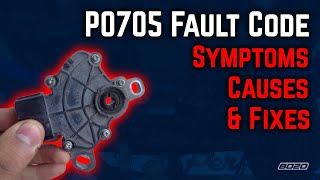
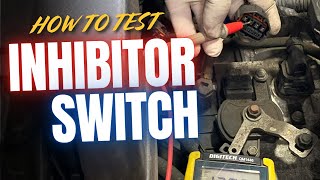
Helpful Videos


We Have This Part in Stock


The information in this article is provided for general reference and educational purposes only. Vehicle specifications, procedures, and part compatibility can vary by production date, trim level, and region. Always consult your vehicle's factory service manual and verify part numbers before purchasing or performing repairs. Safety-critical components such as airbags, seat belts, and braking systems should be installed by a qualified professional.
- Kia Sorento:
- 🧭 Diagnostic Flowchart
- 🎬 Helpful Videos
- 🛍️ Shop This Part
- What's Unique About the 2011-2015 Kia Sorento
- Symptoms You May Notice
- Most Likely Causes
- Rare But Worth Checking
- Diagnosis Steps
- Parts You'll Likely Need
- Related Codes That Often Appear With This One
- Technical Service Bulletins (TSBs) & Recalls
- Platform-Specific Known Issues
- Mechanic-Grade Diagnostic Values
- Scan Tool Commands That Help
- Wiring & Ground Locations
- Real Owner Repair Stories
- OEM Part Supersession History
- Model Year Variations Within This Range
- Other Known Issues on This Vehicle
- Used vs. New Parts: Buying Guide for This Vehicle
- Real Owner Stories
- 2011 Kia Sorento V6
- 2011 Kia Sorento
- 2011 Kia Sorento
- Kia Sorento (Newer Model)
- Kia Sorento Owner
- Related OBD-II Codes
- Frequently Asked Questions
- 🎟️ Get 5% Off