

P0705 on 2010-2015 Kia Sportage: Transmission Range Sensor Failure Causes and Fixes
On a 2010-2015 Kia Sportage, code P0705 almost always points to a failed transmission range sensor, also known as an inhibitor switch. This can prevent the car from starting, cause the gear display to be incorrect, or lead to harsh shifting. Expect to pay between $40 and $100 for a replacement switch, with the repair being moderately difficult for a DIYer due to access and alignment requirements.
- P0705 on a 2010-2015 Sportage is most commonly caused by a faulty transmission range sensor (inhibitor switch).
- Key symptoms include the engine not starting, the gear indicator being wrong, and harsh or delayed shifting.
- This is a safety-critical repair, as a faulty switch can cause the vehicle to not start when needed or shift erratically.
- The repair involves replacing the switch on the outside of the transmission and ensuring the new part is correctly aligned.
- Always check the wiring and connector to the switch for corrosion or damage before replacing the part.
What's Unique About the 2010-2015 Kia Sportage
The 2010-2015 Kia Sportage (SL generation) uses an external transmission range sensor (inhibitor switch) that is a known failure point. While the part itself is not unique to Kia, its location on the top/front of the transmission makes it susceptible to moisture, heat, and corrosion over time. Kia and its platform-mate Hyundai have issued multiple Technical Service Bulletins (TSBs) for similar models and years regarding this switch, indicating a recognized pattern of issues related to internal failure and improper adjustment that leads to code P0705.
Symptoms You May Notice
- Engine will not crank or start, or only starts in Neutral but not Park.
- Check Engine Light is on.
- Incorrect gear position displayed on the instrument cluster (e.g., shows 'D' when in 'P').
- Harsh or delayed gear engagement.
- Reverse lights do not turn on when in Reverse.
- Transmission enters 'limp mode,' getting stuck in a single gear (often 3rd).
- Inability to shift out of Park.
- Replacing the transmission valve body. The inhibitor switch is external on this model, not part of the internal valve body.
- Replacing the starter motor. A no-start condition caused by P0705 is due to the safety interlock not receiving the 'Park' or 'Neutral' signal, not a bad starter.
Most Likely Causes
- Failed Transmission Range Sensor (Inhibitor Switch) 🔴 High Probability → Shop Transmission Assembly This is a very common failure part on many Kia and Hyundai models from this era that share the 6-speed automatic transmission. The switch is exposed to the elements on the outside of the transmission case, leading to internal corrosion and electrical failure.
How to confirm: With the vehicle in the 'ON' position (engine off), move the shifter through all gears. If the gear indicator on the dash doesn't match the shifter position, the switch is likely bad. A mechanic can use a scan tool to view live data from the sensor; if the data is erratic or doesn't change as the shifter moves, the switch is confirmed bad. A multimeter can also be used to check for continuity across specific pins for each gear position as outlined in the factory service manual.
Typical fix: Replace the inhibitor switch located on the top/front of the transmission. This requires removing the battery, battery tray, and air intake assembly for access. The new switch must be correctly aligned, typically by placing the transmission's manual lever in Neutral and aligning the switch's marks before tightening the bolts.
Est. part cost: $40-$100 - Corroded or Damaged Wiring/Connector 🟡 Medium Probability The wiring harness and connector for the inhibitor switch are located in the engine bay and can be exposed to moisture, heat, and road debris, leading to corrosion (green or white powder) or physical damage to wires.
How to confirm: Visually inspect the connector and wiring going to the inhibitor switch for any signs of green corrosion, frayed wires, or loose pins. Wiggle the connector while an assistant observes the gear display for changes. A poor connection can often be identified this way.
Typical fix: Clean the connector terminals with an electrical contact cleaner and apply dielectric grease to prevent future corrosion. If wires are broken or frayed, they must be repaired or the connector pigtail replaced.
Est. part cost: $5-$50 - Misaligned Inhibitor Switch ⚪ Low Probability → Shop Transmission Park Inhibitor Switch The switch can be knocked out of alignment or may have been installed incorrectly during a previous repair. If the car starts in Neutral but not Park after a replacement, misalignment is the most likely cause. A TSB for other Kia models suggests improper adjustment is a known issue.
How to confirm: If the switch is new or has been recently serviced, check its alignment. There are specific procedures, often involving inserting a small pin or aligning marks on the switch body with the manual shaft in the Neutral position.
Typical fix: Loosen the switch's mounting bolts and carefully rotate it until the alignment marks or guide pin holes line up correctly, then retighten the bolts to the specified torque.
Est. part cost: $0
Rare But Worth Checking
- Faulty Powertrain Control Module (PCM): This is extremely rare. Before suspecting the PCM, all other causes, especially the switch and its wiring, must be definitively ruled out. A faulty PCM will usually be accompanied by other, unrelated trouble codes.
Diagnosis Steps
- Scan the vehicle for any other stored trouble codes. Address other transmission or communication (U-codes) first.
- Visually inspect the inhibitor switch, its connector, and the wiring harness for obvious signs of damage, corrosion, or loose connections.
- With the ignition on (engine off), shift the lever from Park to Low, pausing at each gear. Verify that the gear indicator on the dashboard corresponds to the selected gear. If it's incorrect or doesn't display, the switch is the primary suspect.
- Use a scan tool to view the live data PID for the Transmission Range Sensor. The data should change logically as you move the shifter. Irrational data (e.g., stuck on 'Drive') points to a bad switch or wiring issue.
- If the switch and wiring appear good, check the alignment of the switch. Ensure it is correctly positioned as per the service manual, typically aligned in the Neutral position.
- If a new switch has been installed and the problem persists, double-check the alignment and the connector pins for a secure fit.
- If the switch has been confirmed to be sending the correct signals and is properly aligned, but the code persists, the issue may lie within the PCM, though this is highly unlikely.
Parts You'll Likely Need
- Transmission Range Sensor (Inhibitor Switch)
(OEM #42700-3B700)— This is the most common failure point for the P0705 code on this vehicle, responsible for sending the gear position to the computer. The part is known to fail from internal corrosion.
Trusted brands: Kia (OEM), Hyundai (OEM), Standard Motor Products (NS639), Dorman (926-991)
OEM price range: $70-$120
Aftermarket price range: $40-$80
Technical Service Bulletins (TSBs) & Recalls
- TRA055 - Inhibitor Switch Diagnosis Information for symptoms including P0705, no-start, and erratic shifting.
- SA126 - Service action for Sorento models to install a bracket on the inhibitor switch to prevent P0705.
- TSBTRA072A_R2 (SA317A) - Service action for models equipped with a front wheel drive 6-speed transmission to replace the inhibitor switch for P0705, noting symptoms like MIL ON and intermittent no-crank.
- Hyundai TSB 17-AT-005 - Diagnostic procedure for P0705, P0706, P0707, and P0708 on multiple Hyundai/Kia vehicles with the 6-speed automatic, including the Tucson.
- TSBTRA044 (TRANS 044) - Pertains to Sportage models with P0705, recommending installation of an inhibitor switch bracket to correct no-start conditions and uneven engagement when shifting gears.
Platform-Specific Known Issues
- Kia issued Technical Service Bulletin (TSB) TRA055 in October 2014 for 2011 and newer models, providing diagnostic information for P0705 related to intermittent no-start and erratic shifting, pointing toward inhibitor switch adjustment or failure.
- A similar TSB, SA126, was issued for 2011-2012 Sorento models, which share a similar platform, to add a bracket to the inhibitor switch to prevent issues leading to P0705.
- A broader TSB from Hyundai (17-AT-005) covers diagnosis for P0705-P0708 on many models sharing this 6-speed transmission, including the sister-vehicle Hyundai Tucson, confirming the widespread nature of this issue.
- TSBTRA044 (TRANS 044) was issued for Sportage models experiencing P0705, a no-start condition, or uneven shifting, recommending the installation of an inhibitor switch bracket kit to correct the concern.
- Manufacturer Bulletin #TSBTRA072A_R2 notes that vehicles with the 6-speed transmission may experience P0705 (active or history) along with CAN-related DTCs and intermittent no-crank issues.
Mechanic-Grade Diagnostic Values
- Inhibitor Switch Input Voltage — expected: 12V (Battery Voltage) at the power supply pin with ignition ON.. Failure: Less than battery voltage indicates a wiring or fuse issue before the switch.
- Inhibitor Switch Output Voltage — expected: 12V (Battery Voltage) on the specific output signal wire corresponding to the selected gear (P, R, N, D).. Failure: 0V on the corresponding wire when a gear is selected points to an internal switch failure.
- Inhibitor Switch Continuity Test — expected: Continuity (near zero ohms) between the appropriate terminals for Park and Neutral positions.. Failure: No continuity (Open Line or 'OL') when in Park or Neutral indicates an internal failure of the switch.
Real Owner Repair Stories
- YouTube video comment section (Kia (model not specified, but behavior is identical)) — Car would not start, shifter felt loose, gear indicator on dash was blank.
❌ Tried (didn't work) Replacing the inhibitor switch (P0705 code persisted).
✅ What actually fixed it The plastic bushing on the end of the shifter cable where it connects to the transmission lever had disintegrated. This created enough slack that moving the shifter in the cabin didn't fully move the lever on the transmission, so the new inhibitor switch never saw the correct gear position. Replacing the cheap plastic bushing resolved all symptoms.
OEM Part Supersession History
42700-3B700→42700-26700— Part consolidation and potential design revision across multiple Kia/Hyundai models.
Heads up: The new part number 42700-26700 is the correct service replacement for 42700-3B700 and is backward compatible.42700-3B000→42700-3B010— Revision for Sorento and Sedona models that also fits some Sportage years.
Heads up: While multiple part numbers may physically fit, it is critical to use the one specified for the vehicle's VIN. 42700-3B700 is the most cited number for the 2010-2015 Sportage.
Model Year Variations Within This Range
- 2010-2012: For vehicles produced from April 2009 to September 2011, Kia issued TSB TRANS 044. This TSB addresses P0705 and related no-start/shifting issues by having a technician install a specific inhibitor switch bracket kit, rather than replacing the entire switch. This suggests earlier models in the generation may have had issues with switch stability or alignment that the bracket was designed to correct.
Diagnostic Flowchart
Other Known Issues on This Vehicle
Issues unrelated to this code that are worth knowing about as an owner of this generation:
- Theta II Engine Failure (Seizure) 🔴 High — Widespread across 2.0L and 2.4L GDI engines. Can occur at various mileages, often under 100,000 miles. Led to recalls and a class-action lawsuit. (Ref: NHTSA Recalls 17V224 (SC147), SC172. A class-action settlement extended the warranty for this issue.)
- Excessive Oil Consumption 🟠 Medium — Common on Theta II engines, can be a precursor to engine failure or lead to damage if the oil level is not monitored closely. (Ref: Related to engine recalls and a broader class-action lawsuit covering oil consumption.)
- GDI Carbon Buildup on Intake Valves 🟡 Low — A common characteristic of all Gasoline Direct Injection (GDI) engines. Typically becomes noticeable after 60,000-100,000 miles, causing rough idle, hesitation, and misfires.
- Hydraulic Electronic Control Unit (HECU) Fire Risk 🔴 High — Affects a wide range of Kia/Hyundai models, including the 2010-2013 Sportage. An electrical short in the HECU can cause a fire while parked or driving. (Ref: NHTSA Recall 20V519000.)
- Oil Pan Leak 🟠 Medium — A recall was issued for 2011-2012 models where the oil pan could leak, leading to oil loss and potential engine damage or fire. (Ref: NHTSA Recall 19V120000 (SC174).)
Used vs. New Parts: Buying Guide for This Vehicle
When a used part is the smart pick: A used inhibitor switch can be a cost-effective option if sourced from a low-mileage, accident-damaged vehicle from a dry climate. Since the failure mode is often internal corrosion from moisture and heat exposure over time, a newer, lower-mileage donor part can have significant life left.
Donor-vehicle mileage cap: roughly under 60000 miles for the part to have meaningful remaining life.
What to inspect on the donor part:
- Check the plastic housing for cracks or signs of extreme heat exposure.
- Inspect the electrical connector pins for any green or white corrosion.
- Ask for the VIN of the donor car to verify it's from a compatible year range.
- If possible, test continuity between the Park and Neutral pins before purchase.
Aftermarket brands forum-validated for this vehicle:
- Standard Motor Products (SMP)
- Beck/Arnley
- Rostra Powertrain
Brands owners have reported issues with on this vehicle:
- Unbranded, no-name parts from online marketplaces should be avoided, as their internal contacts may wear prematurely, leading to a repeat failure in a short time.
Real Owner Stories
Aggregated from forums and TSBs cited above. Mileages and costs reflect what owners reported in those sources.
2011 Kia Sportage
Symptoms: The vehicle experienced a no-start condition and uneven shifting, with the P0705 code present.
What fixed it: Installation of an inhibitor switch bracket kit as per TSB TRANS 044.
Source hint: TSB TRANS 044
2012 Kia Sportage
Symptoms: No-start and shifting problems; the owner confirmed the gear indicator on the dash did not always match the shifter.
What fixed it: Replacing the inhibitor switch (part 42700-3B700) and ensuring proper alignment.
Source hint: kia-forums.com
2011 Kia Sportage
Symptoms: P0705 code appeared immediately after installing aftermarket electronics.
What fixed it: Correcting a wiring fault where the user had tapped into the wrong wire in a harness.
Source hint: Reddit r/autorepair
Related OBD-II Codes
Frequently Asked Questions
My 2011 Sportage is having trouble starting and shifting; is there a specific TSB for this?
What is the specific part number I need to fix the P0705 code on my Kia Sportage?
Does the P0705 issue affect other similar Kia or Hyundai models?
I just replaced the inhibitor switch but now my Sportage starts in Neutral but not in Park. What did I do wrong?
Is there a diagnostic bulletin that covers the P0705 code for 2011 and newer Sportage models?
Can aftermarket electronics cause a P0705 code on my Sportage?
Helpful Videos

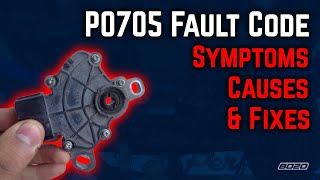
We Have This Part in Stock




The information in this article is provided for general reference and educational purposes only. Vehicle specifications, procedures, and part compatibility can vary by production date, trim level, and region. Always consult your vehicle's factory service manual and verify part numbers before purchasing or performing repairs. Safety-critical components such as airbags, seat belts, and braking systems should be installed by a qualified professional.
- Kia Sportage:
- 🧭 Diagnostic Flowchart
- 🎬 Helpful Videos
- 🛍️ Shop This Part
- What's Unique About the 2010-2015 Kia Sportage
- Symptoms You May Notice
- Most Likely Causes
- Rare But Worth Checking
- Diagnosis Steps
- Parts You'll Likely Need
- Technical Service Bulletins (TSBs) & Recalls
- Platform-Specific Known Issues
- Mechanic-Grade Diagnostic Values
- Real Owner Repair Stories
- OEM Part Supersession History
- Model Year Variations Within This Range
- Other Known Issues on This Vehicle
- Used vs. New Parts: Buying Guide for This Vehicle
- Real Owner Stories
- 2011 Kia Sportage
- 2012 Kia Sportage
- 2011 Kia Sportage
- Related OBD-II Codes
- Frequently Asked Questions
- 🎟️ Get 5% Off