

P0705 on 2003-2009 Mercedes-Benz E-Class: Shifter, Conductor Plate, and Limp Mode Causes
On a 2003-2009 E-Class (W211), P0705 is most often caused by a faulty electronic shifter module in the center console (often due to a liquid spill) or a failed conductor plate inside the transmission. Expect to pay $400-$800 for a shifter replacement or $600-$1200 for a conductor plate replacement at a shop. Before expensive repairs, always check for the much cheaper leaking 13-pin connector plug, which can send fluid into the transmission computer.
- P0705 on a W211 E-Class is almost never a simple, cheap fix; it usually points to a faulty electronic shifter module or an internal transmission conductor plate.
- Before ordering parts, check for the two most common culprits: sticky residue around the shifter from a spill, and transmission fluid in the TCM connectors in the passenger footwell.
- A generic code reader is helpful, but a Mercedes-specific scanner is invaluable for this issue, as it can provide codes that pinpoint the exact failing component (e.g., shifter vs. conductor plate).
- If your car has the 7-speed (722.9) transmission, replacing the conductor plate is not a DIY job as it requires online programming by a dealer or specialist.
- Always replace the cheap 13-pin transmission connector plug when servicing the transmission to prevent future fluid leaks that can destroy expensive electronics.
What's Unique About the 2003-2009 Mercedes-Benz E-Class
The W211 E-Class has two extremely common and well-documented failure points for this code that are less frequent on other vehicles. The first is the electronic shifter module (ESM) in the center console, which is highly susceptible to damage from spilled drinks that short out the internal circuit board. The second is the transmission's conductor plate, an electronic board inside the oil pan that houses the range sensor and other critical components like speed sensors. Unlike many cars with a simple external neutral safety switch, diagnosing P0705 on this E-Class almost always leads to one of these two more complex and expensive components. A third, very common issue is a leaking 13-pin electrical connector on the transmission, which allows fluid to wick up the wiring harness and contaminate the Transmission Control Module (TCM).
Generation note: The 2003-2009 E-Class is the W211 generation, but it used two primary automatic transmissions. Pre-2006 models often have the 5-speed 722.6, while later models typically have the 7-speed 722.9 '7G-Tronic'. The causes are similar, but the conductor plates are different. The 722.9 conductor plate requires special programming (SCN coding) upon replacement, which the 722.6 does not. Some services now offer pre-programmed 722.9 plates or repair of the original plate to simplify installation.
Symptoms You May Notice
- Transmission is stuck in one gear (usually 2nd), known as 'limp mode'.
- Check Engine Light is on.
- Cannot shift the lever past Neutral into Reverse or Park unless the engine is turned off or the brake pedal is released.
- The gear indicator on the dashboard is blank, has a box around it, or doesn't match the selected gear.
- Vehicle will not start, and the starter does not engage (crank).
- Harsh or jerky shifting.
- Reverse lights do not turn on when in Reverse.
- Receiving a "Visit Workshop" message on the instrument cluster.
- Replacing the conductor plate when the actual problem is a liquid-damaged shifter module. A Mercedes-specific scan tool can help differentiate by showing codes specific to the shifter (ESM), such as P1856.
- Replacing the entire transmission. This code rarely indicates a need for a full transmission rebuild; the fault is almost always electronic and related to the specific components listed as common causes.
Most Likely Causes
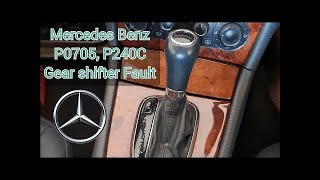
- Failed Electronic Shifter Module (ESM) 🔴 High Probability The shifter assembly's circuit board is located directly under the cup holders and is notoriously vulnerable to damage from even small liquid spills. Internal optical sensors or solder joints can also fail from age and use.
How to confirm: Check for sticky residue or signs of liquid around the shifter. Use a Mercedes-specific scanner to check for codes like P1856 ('Selector lever position detection has failed'), which specifically points to the shifter module. In live data, watch the 'selected gear' and 'actual gear' values; if they don't match or are implausible, the ESM is suspect.
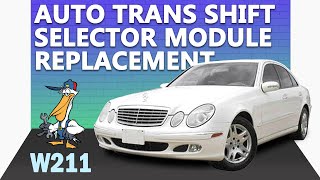
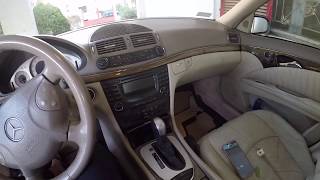
Typical fix: The entire shifter module assembly must be replaced. It is a complex job involving the removal of the center console. 🎬 Watch: Step-by-step shifter module replacement guide Some specialists can repair the circuit board by re-soldering the optical sensor ICs.
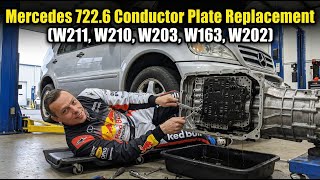
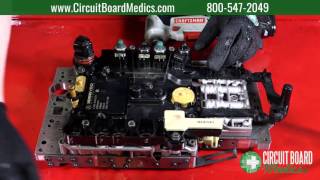
Est. part cost: $300-$700 - Failed Transmission Conductor Plate 🔴 High Probability → Shop Transmission Assembly The transmission range sensor is integrated into this electronic plate, which lives in the hot transmission fluid. The plastic and electronic components degrade over time, causing sensor failures. This is a known weak point for both 722.6 and 722.9 transmissions. 🎬 See how to replace a 722.6 conductor plate
How to confirm: This is typically diagnosed after ruling out the shifter and wiring. Fault codes for transmission speed sensors (like P0717, Y3/8N1) often accompany P0705 when the conductor plate is the cause, as these sensors are also on the plate.
Typical fix: The transmission pan is removed, the valve body is dropped, and the conductor plate is replaced. This requires new fluid, a new filter, and a new pan gasket. 722.9 plates also require dealer-level programming (SCN coding). 🎬 Watch: 722.9 conductor plate removal and repair walkthrough
Est. part cost: $200-$500 - Leaking Transmission Electrical Connector (13-pin Plug) 🟡 Medium Probability → Shop Transmission Assembly The O-rings on the electrical connector plug on the transmission case fail, allowing transmission fluid to leak. Capillary action wicks the fluid up the wiring harness into the Transmission Control Module (TCM), which on the W211 is located in the passenger footwell, shorting electronics.
How to confirm: Visually inspect the 13-pin connector on the front passenger side of the transmission for fluid leaks. Pull back the passenger-side carpet and inspect the TCM (under a metal plate against the firewall) and its connectors for oily residue.
Typical fix: Replace the connector plug and its O-rings (a very inexpensive part, OEM P/N 2035400253). If the TCM is contaminated, it must be disconnected and carefully cleaned with electronic cleaner and allowed to dry completely. If cleaning doesn't work, the TCM must be replaced.
Est. part cost: $15-$40
Rare But Worth Checking
- Low Battery Voltage: Mercedes-Benz electronics are highly sensitive to voltage. A weak or failing battery can cause a cascade of communication errors between modules, including the ESM and TCM, which can trigger a P0705 code. Always check battery health and the auxiliary battery before proceeding with expensive repairs.
- Failed Transmission Control Module (TCM): → Shop Transmission Assembly While less common than fluid intrusion causing a failure, the TCM itself can fail internally. This is usually the last part to suspect after all other causes have been eliminated. A failure is often preceded by fluid contamination from the 13-pin connector leak.
- Brake Light Switch Failure: A faulty brake light switch can sometimes cause communication issues on the CAN bus that lead to shifting problems and, in some cases, a P0705 code. This is a cheap and easy part to replace as a precautionary measure.
Diagnosis Steps
- Read fault codes with an OBD-II scanner. A Mercedes-specific scanner (like STAR/Xentry or a high-end Autel/Launch) is highly recommended to see manufacturer-specific codes (like P1856) and live data that provide more detail.
- Check and record battery voltage. Ensure it is above 12.4V. Check the auxiliary battery as well.
- Carefully inspect the shifter and center console area for any signs of sticky residue or liquid spills.
- Pull back the passenger-side footwell carpet and remove the metal cover plate to access the Transmission Control Module (TCM). The TCM is against the firewall, not on the floor. Disconnect the wiring harnesses and inspect the pins and connectors for any oily residue, which indicates fluid has wicked up from the transmission.
- Safely raise the vehicle and inspect the 13-pin electrical connector on the transmission's front passenger side. Check for active leaking or heavy fluid residue. Unplug it to check for fluid inside the connector itself.
- If codes point to the shifter (e.g., P1856) and there's evidence of a spill, the shifter is the primary suspect.
- If the wiring and shifter appear fine, and especially if other transmission sensor codes are present (e.g., P0717), the conductor plate is the next most likely cause.
- Check the brake light switch for proper operation. It's a low-cost item that can cause strange shifting behavior.
Parts You'll Likely Need
- Electronic Shifter Module (ESM)
(OEM #A2112676224 (supercedes many others))— A primary cause of P0705, this unit fails from internal wear or liquid damage. Part numbers vary by year and model, always verify with VIN.
Trusted brands: Genuine Mercedes-Benz
OEM price range: $450-$700
Aftermarket price range: $250-$400 (rebuilt) - Transmission Conductor Plate (722.6 / 5-Speed)
(OEM #1402701161)— Houses the range sensor and speed sensors which are common failure points. This version does not require programming.
Trusted brands: Genuine Mercedes-Benz, Febi, Meyle
OEM price range: $175-$250
Aftermarket price range: $120-$180 - Transmission Conductor Plate (722.9 / 7-Speed)
(OEM #Varies by VGS version (VGS1/2/3))— Integrates the TCM and range sensor. Fails due to heat and vibration. Replacement requires dealer-level programming (SCN coding).
Trusted brands: Genuine Mercedes-Benz (Continental/Siemens VDO)
OEM price range: $400-$600
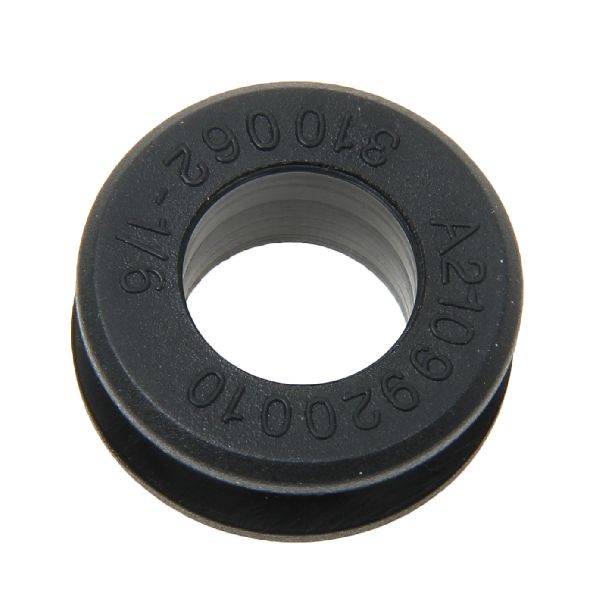
Aftermarket price range: $200-$300 (for repair service) - Transmission Connector Plug (13-pin)
(OEM #2035400253)— The O-rings fail, causing fluid to leak and wick up the harness to the TCM. A cheap, critical preventative maintenance item.
Trusted brands: Genuine Mercedes-Benz, Febi
OEM price range: $20-$40
Aftermarket price range: $10-$20
Related Codes That Often Appear With This One
- P1856 — This is a Mercedes-specific code for 'Selector lever position detection has failed', which strongly points to the electronic shifter module (ESM) as the culprit.
- P0717 — This code indicates a fault with the turbine speed sensor (Y3/8n1). Since this sensor is also located on the conductor plate, seeing both codes together makes a faulty conductor plate the most likely cause.
- P0600 — This code indicates a 'Serial Communication Link Malfunction'. It often appears with P0705 when fluid has contaminated the TCM or when there's a fault in the shifter module, disrupting communication on the CAN bus network.
Technical Service Bulletins (TSBs) & Recalls
- Mercedes-Benz Recall Campaign #2005110001: Addresses a potential ground wire issue on the SBC pump, but more importantly, extended the warranty on the SBC hydraulic unit to 10 years/unlimited miles. Some owners report a 25-year extension was later granted.
Mechanic-Grade Diagnostic Values
- CAN-C Bus Voltage (Engine/Transmission Bus) — expected: When dormant (key off), the voltage between CAN High and CAN Low should be ~0V. Against a good ground, both CAN-H and CAN-L should read ~2.5V. When active (key on), CAN-H should toggle above 2.5V and CAN-L should toggle below 2.5V.. Failure: Voltages that are stuck high (e.g., 12V) or low (0V), or one line not mirroring the other, indicates a short, open, or faulty module on the bus.
Hidden / Shadow Codes Worth Checking
- P1856: A Mercedes-specific code meaning 'Selector lever position detection has failed'. This code almost always isolates the fault to the Electronic Shifter Module (ESM) in the center console, not the conductor plate. (see via Requires a Mercedes-specific scan tool like STAR/Xentry or a high-end professional scanner (Autel/Launch). A generic OBD-II reader will only show P0705.)
- 0717 / 0718 (or P0717 / P0718): Fault codes for the Turbine Speed Sensor (Y3/8n1) or Internal Speed Sensor (Y3/8n2). Since these sensors are physically part of the conductor plate, seeing these codes alongside P0705 makes a faulty conductor plate the primary suspect. (see via Mercedes-specific scan tool.)
- P2805: Indicates that the signal from the selection range sensor (Y3/8s1) is not plausible. This is another 722.9-specific code that points directly to the conductor plate's integrated range sensor. (see via Mercedes-specific scan tool (STAR/Xentry).)
Scan Tool Commands That Help
- STAR/Xentry (or equivalent): SCN Coding (Software Calibration Number) — This is mandatory when installing a new 722.9 (7-speed) conductor plate. It 'marries' the new, virgin control unit to the vehicle's VIN and security system. Without SCN coding, the car will not start or shift.
- STAR/Xentry (or equivalent): Personalization and Activation — Part of the process for installing a new 722.9 conductor plate. It enables the module to function within the car's specific network.
- STAR/Xentry (or equivalent): Release Transport Protection / Detach Transport Protection — New 722.9 conductor plates and ISMs are shipped in a 'transport protection' mode. This function must be run to allow the module to be activated in the vehicle.
- STAR/Xentry (or equivalent): Teach-in of selection range sensor — After a new 722.9 conductor plate is installed and coded, this procedure calibrates the new range sensor to the physical positions of the shifter.
Wiring & Ground Locations
- N15/3 (TCM) & N15/5 (ESM) — Both the Transmission Control Module (ETC/N15/3) and the Electronic Shifter Module (ESM/N15/5) are nodes on the high-speed CAN-C bus.. A fault in either module or the wiring between them can disrupt communication and trigger a P0705. The CAN-C bus is critical for the shifter to communicate the selected gear to the transmission controller.
- X30/5 — This is the CAN-C bus voltage distributor, a central connector block. On a W211, it is typically located in the driver's side footwell, in the wiring channel along the sill.. This is a key access point for testing the entire CAN-C bus for correct voltage and resistance. A problem here can affect communication between the shifter, transmission, and engine computer.
- TCM Location — The Transmission Control Module (TCM) is located in the passenger-side footwell, mounted vertically against the firewall, under a protective metal plate. It is NOT on the floor.. This location is critical to inspect for transmission fluid contamination that has wicked up the wiring harness from the 13-pin connector.
Real Owner Repair Stories
- PeachParts Mercedes-Benz Forum user (2005 E500 4matic wagon) — Intermittent shifter issues, scan indicated defective ESM.
❌ Tried (didn't work) Disassembling the original shifter to check for bad solder joints or liquid damage yielded no obvious faults.
✅ What actually fixed it The owner ordered a used ESM (shifter) with a matching part number. However, the replacement unit had a straight linkage arm, while the original 4matic version had an offset arm. The straight arm caused the shift rod to rub on the transmission flex disc. The final fix was to transfer the electronics from the 'new' used shifter into the old shifter housing with the correct offset arm. - MBClub UK Forum user (2007 W211 (likely 722.9 transmission)) — Transmission issues requiring conductor plate replacement.
✅ What actually fixed it The owner removed the conductor plate themselves, sent it to a repair service (ECU Testing), and then reinstalled the repaired original plate. This successfully fixed the issue without needing to buy a new plate and have it SCN coded by a dealer. - MBWorld.org Forum user (2005 E320 CDI (W211 with 722.6 transmission)) — P0705, stuck in 1st gear (limp mode), gear indicator lights off, can't shift past N into P or R unless brake is released.
❌ Tried (didn't work) Owner was in the process of diagnosing, had checked for fluid in the TCM area but may not have looked deep enough.
✅ What actually fixed it The thread is a diagnostic process, but a key piece of mechanic-grade advice was given: a Mercedes-specific scanner is needed because electrical faults in the 722.6 TCM are stored and must be manually cleared, unlike mechanical faults that might clear with a key cycle. The user was also correctly directed to look for the P1856 sub-code to confirm an ESM failure.
OEM Part Supersession History
A2112672924→A2112676324 (and others)— Revisions to address internal component failures.
Heads up: While electronically compatible, physical differences like the shift linkage arm (straight vs. offset for 4Matic) can exist. Always compare the new part to the old one visually before installation.
Model Year Variations Within This Range
- 2003-2005/6 (approx.): Vehicles equipped with the 5-speed 722.6 transmission. For P0705, if the conductor plate is the cause, it can be replaced without special programming. The main task after replacement is clearing the stored fault codes from the TCM with a capable scanner.
- 2006-2009 (approx.): Vehicles equipped with the 7-speed 722.9 (7G-Tronic) transmission. The conductor plate integrates the TCM. If it fails and requires replacement, the new unit is a theft-relevant part and MUST be programmed to the vehicle using dealer-level tools (STAR/Xentry) via a process called SCN coding. Repairing the original plate is a common workaround to avoid this.
- All: The Electronic Shifter Module (ESM) may have different physical linkage arms, particularly between RWD and 4Matic models. An 'offset' arm may be required for clearance on some models, while others use a 'straight' arm. Using the wrong one can cause the shift rod to interfere with the transmission flex disc.
Diagnostic Flowchart
Other Known Issues on This Vehicle
Issues unrelated to this code that are worth knowing about as an owner of this generation:
- Sensotronic Brake Control (SBC) Pump Failure 🔴 High — The SBC pump has a pre-programmed service life based on brake actuations (a 'suicide counter'). Failure is expected between 80,000-150,000 miles. A red 'Brake Defective - Stop Vehicle' warning appears. (Ref: Mercedes issued a recall and an extended warranty (initially 10 years, later reported as 25 years) covering the replacement of the SBC hydraulic unit free of charge.)
- M272/M273 Engine Balance Shaft/Idler Gear Wear 🔴 High — Affects V6 (M272) and V8 (M273) engines in early production years (approx. up to 2008). The gear sprockets were made of a soft metal and wear prematurely, typically causing a check engine light (P0016/P0017) between 70,000-150,000 miles. Repair is extremely labor-intensive, requiring engine removal. (Ref: Subject of a class-action lawsuit (settled in 2015) and a technical service bulletin (LI03.30-P-050024) identifying affected engine serial numbers.)
- Airmatic Suspension Failure 🟠 Medium — Extremely common on models equipped with Airmatic. Rear air springs are the most common failure point, often leaking around 100,000-120,000 miles. The compressor also fails from being overworked by leaks. Symptoms include the car sagging overnight or a 'Visit Workshop' message.
- Valeo Radiator / Glycol Contamination 🔴 High — Affects early W211 models (approx. 2003-2004) equipped with Valeo brand radiators. A faulty crimp can cause coolant (glycol) to leak internally into the transmission cooler circuit, destroying the transmission. (Ref: A known issue, but no official recall was issued. Checking the radiator brand is a key pre-purchase inspection point.)
Used vs. New Parts: Buying Guide for This Vehicle
When a used part is the smart pick: A used Electronic Shifter Module (ESM) can be a smart, cost-effective choice, especially if the failure is from a liquid spill and not high mileage wear. For the 722.6 conductor plate, a used part is risky; aftermarket new is affordable. For the 722.9 conductor plate, a used part is only viable if you have access to specialist tools to 'virginize' and SCN code it.
Donor-vehicle mileage cap: roughly under 80000 miles for the part to have meaningful remaining life.
What to inspect on the donor part:
- For ESM: Verify the part number is an EXACT match. Visually confirm the linkage arm (straight vs. offset) matches your original part. Ask the seller if the donor car had Keyless-Go if your car has it.
- For Conductor Plates: Avoid used parts from eBay unless from a reputable rebuilder. Look for signs of previous use like tarnished contacts or residual fluid. A true new part will be clean and often in sealed OEM packaging.
OEM-only on this vehicle (don't cheap out):
- Transmission Conductor Plate (722.9): Due to the SCN coding requirement, using a new Genuine Mercedes part or having your original OEM part repaired by a specialist are the only reliable options. Most aftermarket solutions are not viable due to the programming barrier.
Aftermarket brands forum-validated for this vehicle:
- For 722.6 Conductor Plate: Febi and Meyle are generally considered reliable OE-quality alternatives. Some users report Dorman parts being re-boxed OEM parts.
Brands owners have reported issues with on this vehicle:
- Unbranded, suspiciously cheap conductor plates from marketplaces like eBay or Amazon. Many are poorly reworked used parts that fail quickly or are dead on arrival.
Real Owner Stories
Aggregated from forums and TSBs cited above. Mileages and costs reflect what owners reported in those sources.
2005 E320 CDI
Symptoms: P0705 code, vehicle is in limp mode (no shift), and the shifter is physically stuck.
What fixed it: Diagnosed as a failure requiring shifter module or conductor plate investigation, specifically looking for P1856 selector lever failure.
Source hint: https://mbworld.org/forums/e-class-w211/878204-2005-e320-cdi-p0705-code-no-shift-stuck-shifter-need-help.html
2003-2009 Mercedes-Benz E-Class (722.6 Transmission)
Symptoms: P0705 code triggered, transmission in limp mode, and oily residue found on the TCM connectors in the passenger footwell.
What fixed it: Replacement of the 13-pin electrical connector (P/N 2035400253) and cleaning the TCM with electronic cleaner.
Source hint: ARTICLE CONTEXT: common_causes (Leaking Transmission Electrical Connector)
2004-2008 Chrysler Crossfire (722.6 Platform Mate)
Symptoms: Intermittent P0705 range sensor codes and P0600 codes.
What fixed it: Replacement of the transmission conductor plate and the 13-pin connector plug.
Source hint: https://www.crossfireforum.org/forum/f25/p0705-range-sensor-intermittent-53748/
Related OBD-II Codes
Frequently Asked Questions
My 2005 E320 CDI is stuck in limp mode with code P0705; could a liquid spill in the center console cause this?
Does the SBC pump recall or warranty extension apply to my E-Class if I'm seeing brake warnings alongside transmission codes?
I found oil in my Transmission Control Module (TCM) in the passenger footwell. How did it get there?
Can I just replace the sensor for P0705 on my 722.6 or 722.9 transmission?
Is there a specific part number I should look for to fix a leaking transmission plug that might be causing my P0705 code?
My dashboard gear indicator is blank and the car won't crank. Is this related to P0705?
Helpful Videos

We Have This Part in Stock


The information in this article is provided for general reference and educational purposes only. Vehicle specifications, procedures, and part compatibility can vary by production date, trim level, and region. Always consult your vehicle's factory service manual and verify part numbers before purchasing or performing repairs. Safety-critical components such as airbags, seat belts, and braking systems should be installed by a qualified professional.
- Mercedes-Benz E-Class:
- 🧭 Diagnostic Flowchart
- 🎬 Helpful Videos
- 🛍️ Shop This Part
- What's Unique About the 2003-2009 Mercedes-Benz E-Class
- Symptoms You May Notice
- Most Likely Causes
- Rare But Worth Checking
- Diagnosis Steps
- Parts You'll Likely Need
- Related Codes That Often Appear With This One
- Technical Service Bulletins (TSBs) & Recalls
- Mechanic-Grade Diagnostic Values
- Hidden / Shadow Codes Worth Checking
- Scan Tool Commands That Help
- Wiring & Ground Locations
- Real Owner Repair Stories
- OEM Part Supersession History
- Model Year Variations Within This Range
- Other Known Issues on This Vehicle
- Used vs. New Parts: Buying Guide for This Vehicle
- Real Owner Stories
- 2005 E320 CDI
- 2003-2009 Mercedes-Benz E-Class (722.6 Transmission)
- 2004-2008 Chrysler Crossfire (722.6 Platform Mate)
- Related OBD-II Codes
- Frequently Asked Questions
- 🎟️ Get 5% Off