

P0705 on 2008-2015 Nissan Rogue: Transmission Range Sensor Causes and Fixes
On a 2008-2015 Nissan Rogue, code P0705 is most often caused by a faulty transmission range sensor, also known as the inhibitor switch. This part tells the car's computer which gear is selected. Replacing the sensor costs around $100-$180 for the part and is a moderately difficult DIY job. However, a surprisingly common cause on Nissans is water leaking into the tail light assemblies, causing an electrical short that the computer misinterprets as a range sensor fault.
- P0705 on a Nissan Rogue almost always points to a problem with the Transmission Range Sensor (Inhibitor Switch) or its wiring.
- Symptoms are serious and can prevent the car from starting or cause it to enter a fail-safe 'limp mode'.
- The most common fix is replacing the sensor, which is located on the outside of the transmission.
- Before replacing parts, check the sensor's wiring and connector for corrosion or damage, as this is a common and cheaper fix.
- In rare cases, check for water in the tail lights, as this has been documented to cause this code on other Nissans.
What's Unique About the 2008-2015 Nissan Rogue
The 2008-2015 Nissan Rogue spans two generations. The first generation (2008-2013, and continuing as the 'Rogue Select' through 2015) and the second generation (starting in 2014) both use a Continuously Variable Transmission (CVT) where this sensor is a common point of failure. While the sensor itself is a primary cause, Nissan has also issued a Technical Service Bulletin (TSB NTB15-082) for other models like the Versa, linking P0705 to water intrusion in the tail light assemblies causing electrical issues. This surprising but well-documented issue causes a voltage back-feed that the TCM misinterprets as a range sensor fault. Owners and technicians report this is a frequent cause on Rogues as well, and should be the first place to check before replacing the more difficult-to-access transmission sensor.
Generation note: This range covers the first generation Rogue (2008-2013) and the identical 'Rogue Select' (2014-2015), as well as the first two years of the redesigned second generation (2014-2015). The P0705 code and its primary causes, the transmission range sensor and tail light water intrusion, are relevant to both generations, though specific part numbers may differ.
Symptoms You May Notice
- Check Engine Light is on
- Engine will not start, or only starts in Neutral instead of Park
- Gear indicator on the dashboard is incorrect, blank, or flashing
- Transmission is stuck in one gear (limp mode)
- Harsh or delayed shifting
- Reverse lights do not turn on
- Vehicle shudders or bucks when coming to a stop
- Infotainment or center console screen flickers when braking
- Replacing the entire CVT transmission. The P0705 code is almost always related to an external sensor or wiring, not an internal transmission failure. A TSB for other models specifically warns against replacing the CVT for this code.
- Replacing the Transmission Range Sensor when the actual fault is water in the tail lights. Because the symptoms are so similar, it's crucial to check the tail lights first to avoid a costly and unnecessary repair.
Most Likely Causes
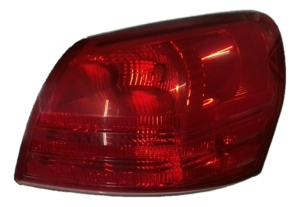
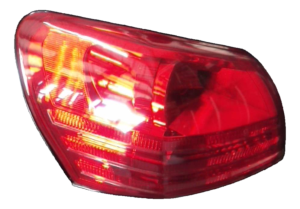
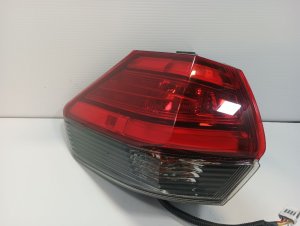
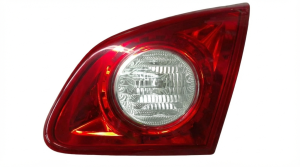
- Water Intrusion in Tail Light Assembly 🔴 High Probability → Shop Tail Light The foam gaskets on the tail light assemblies can degrade over time, allowing water to leak in and corrode the circuit boards for the bulbs. This corrosion creates a short circuit, often between the brake and reverse light circuits. When the brake is pressed, voltage back-feeds into the reverse circuit, which shares wiring with the Transmission Range Sensor. The TCM sees voltage for both Drive and Reverse simultaneously and sets the P0705 code.
How to confirm: With the engine on and shifter in Drive, have a helper press the brake pedal while you observe the gear indicator on the dash. If the indicator disappears or flashes when the brake is pressed, this is a strong sign of the tail light issue. Visually inspect the tail light assemblies by removing them and checking for water, condensation, or green/white corrosion on the bulb sockets and circuit boards.
Typical fix: Unplug the electrical connectors to both tail light assemblies and see if the symptoms disappear. If they do, replace the affected tail light assembly or, at a minimum, the corroded bulb socket circuit board. Ensure the new assembly has a good seal.
Est. part cost: $20-$150 - Failed Transmission Range Sensor (Inhibitor Switch) 🟡 Medium Probability → Shop Transmission Assembly The sensor is mounted externally on the transmission, exposing it to heat, moisture, and road debris, which can lead to internal failure or corrosion over time. The internal contacts can also simply wear out.
How to confirm: Use a multimeter to test the sensor's output voltage for each gear position against the specifications in the service manual. A capable scan tool can also show the live data from the sensor to see if it matches the shifter position.
Typical fix: Replace the transmission range sensor. This involves removing the airbox and battery tray for access, disconnecting the shift cable and electrical connector, and unbolting the old sensor. The new sensor must be correctly aligned in the Neutral position before tightening.
Est. part cost: $90-$180 - Damaged Wiring or Corroded Connector ⚪ Low Probability The wiring harness to the sensor is in an exposed location under the vehicle, making it susceptible to damage from road debris, heat from the exhaust, and moisture-induced corrosion.
How to confirm: Visually inspect the wiring harness and the connector pins for any signs of breaks, fraying, melting, or green/white corrosion. Perform a continuity test on the wires between the sensor and the TCM.
Typical fix: Repair the damaged section of wire or clean the connector terminals. If corrosion is severe, the connector pigtail may need to be replaced.
Est. part cost: $10-$50 - Misadjusted Shift Cable or Sensor ⚪ Low Probability Over time, the linkage connecting the gear shifter to the transmission can stretch or become misaligned, causing the sensor's physical position to not match the actual gear.
How to confirm: Check if the engine starts in Neutral but not Park, or vice-versa. Verify the alignment of the sensor by placing the shifter in Neutral and checking if the alignment marks on the sensor and the transmission lever line up.
Typical fix: Loosen the sensor mounting bolts or the shift cable nut, adjust the position until it is correctly aligned, and then retighten.
Est. part cost: $0
Rare But Worth Checking
- Water Intrusion in Tail Light Assembly: → Shop Tail Light Nissan issued TSB NTB15-082 for other models, where water leaking into a tail light assembly caused corrosion and electrical shorts that triggered a P0705 code. While not specific to the Rogue, it's a known, unusual cause within the brand worth checking if other diagnostics fail. This is now considered a common cause.
- Faulty Transmission Control Module (TCM) or Powertrain Control Module (PCM): → Shop Transmission Assembly This is very rare. A faulty computer is only a likely cause if multiple other transmission-related codes are present simultaneously and all wiring has been confirmed to be good. NHTSA ODI #11487823 describes a case where a mechanic retrieved code P0705 and indicated a potential ECM or TCM failure, though the vehicle was not further diagnosed.
Diagnosis Steps
- Read the fault codes with an OBD-II scanner to confirm P0705 is present.
- Crucial First Step: Inspect the rear tail light assemblies. Remove them and check for any signs of moisture, condensation, or corrosion on the bulb holders and connectors. Unplug both tail light harnesses and drive the vehicle to see if the symptoms (blank gear indicator, limp mode) are resolved. If so, the issue is in the tail light circuits.
- If tail lights are okay, proceed to check the transmission fluid level and condition. Burnt or dirty fluid can indicate larger issues, but is not a direct cause of P0705. NHTSA ODI #11286629 notes a situation where a "quick thunk like the transmission was slipping" occurred before a code reader identified P0705.
- Inspect the transmission range sensor, its connector, and the wiring harness for any visible damage, corrosion, or loose connections. The sensor is located on the side of the transmission where the shift cable attaches.
- Test the sensor's function. Using a scan tool, monitor the PRNDL input data as you move the shifter. If the data is erratic or doesn't match the gear position, the sensor is likely faulty. NHTSA ODI #11202994 documents a mechanic identifying a "Transmission Range Sensor Circuit Malfunction (P R N D L Input)" alongside P0705.
- If you don't have a scan tool, use a multimeter to check for correct voltage and ground at the sensor connector according to the factory service manual.
- Check the adjustment of the shift cable and the sensor itself. Ensure the vehicle starts in both Park and Neutral and that the reverse lights work only in Reverse.
- If the sensor, wiring, and adjustment are all confirmed to be good, the issue may be with the TCM, though this is highly unlikely.
Parts You'll Likely Need
- Transmission Range Sensor / Inhibitor Switch
(OEM #31918-1XF00)— This is a common part to fail, causing the P0705 code by sending incorrect gear position signals to the vehicle's computer. It fits a wide range of Nissan vehicles including the Rogue, Rogue Select, Juke, and Sentra.
Trusted brands: Nissan (OEM), Hitachi, Dorman, Standard Motor Products
OEM price range: $120-$180
Aftermarket price range: $80-$130 - Tail Light Assembly or Bulb Socket Board — This is the other primary cause of P0705. Water intrusion corrodes the circuit board, causing an electrical short that mimics a range sensor failure. Often only the board needs replacement, not the entire housing.
Trusted brands: Nissan (OEM), TYC, Depo
OEM price range: $150-$250
Aftermarket price range: $50-$150
Technical Service Bulletins (TSBs) & Recalls
- NTB15-082: While for the Nissan Versa, this TSB is notable as it links DTC P0705 to water intrusion and corrosion in the rear tail lamp assemblies, highlighting a potential and unusual electrical cause. It specifically warns technicians NOT to replace the CVT for this code.
Platform-Specific Known Issues
- Owner Experience: Tail Light Fix: A user on Reddit with a P0705 code on their Nissan noted that after being stumped, they unplugged their tail lights and the problem went away. Reconnecting them confirmed the issue. There was no visible water, but simply reseating the connectors or a minor internal fault was enough to cause the problem, highlighting how sensitive the system is.
- Forum Discussion on NICOclub: A 2011 Rogue owner on the NICOclub forums reported an intermittent P0705 code where the PRNDL indicator would disappear. After checking wiring continuity and replacing the neutral switch with no success, the issue remained unresolved in the thread, illustrating the diagnostic difficulty if the tail light issue is not considered.
Mechanic-Grade Diagnostic Values
- Transmission Range Sensor (Inhibitor Switch) Power Supply — expected: Battery voltage (approx. 12V) at the power input pin of the sensor connector with key on.. Failure: 0V or significantly low voltage indicates a problem with the fuse or wiring supplying power to the switch.
- Transmission Range Sensor (Inhibitor Switch) Signal Output — expected: Battery voltage (approx. 12V) on the specific signal wire for the selected gear (P, R, N, D, etc.) and 0V on the others.. Failure: 0V on all signal wires when a gear is selected, voltage on multiple signal wires at once, or voltage that doesn't match the selected gear points to a faulty switch or wiring short.
- CAN Bus Resistance at TCM Connector — expected: Approximately 60Ω between CAN-High and CAN-Low pins.. Failure: A reading of 120Ω suggests one of the two terminating resistors (in the TCM or another module) is offline. An open or shorted reading indicates a wiring fault in the CAN harness.
Scan Tool Commands That Help
- Nissan CONSULT: Data Monitor for 'TRANSMISSION' — To view the live data from the four internal position switches (PNP Switch 1, 2, 3, 4). This allows a technician to see exactly which combination of signals the TCM is receiving for each gear position and compare it to the service manual chart to pinpoint an internal switch failure without manual electrical testing.
- Nissan CONSULT or capable aftermarket scanner: CVT Special Functions - Reset — While not a direct fix for P0705, if the sensor is replaced or adjusted, resetting the TCM's adaptive memory may be necessary to clear learned shift patterns and ensure smooth operation after the repair. This is more of a post-repair procedure.
Wiring & Ground Locations
- TCM Location (Gen 1 & 2) — In the engine bay, typically mounted on or near the transmission itself, under the air filter box and battery tray area.. This is the module that receives the signal from the range sensor. The wiring harness connector at the TCM is a primary test point for checking signal integrity from the sensor.
- Main Engine Ground — A primary ground strap often runs from the intake manifold area or engine block directly to the negative battery terminal or the chassis nearby.. A poor engine or transmission ground can cause floating voltages and erratic signals for all transmission sensors, including the range sensor, leading to intermittent and hard-to-diagnose P0705 codes.
- Body Ground E13 (Example) — In the engine bay, on the driver's side near the headlight and airbox. Multiple such ground points exist on the chassis.. The tail light assemblies, a common cause of this code, ground to the vehicle's body. Corrosion at these ground points can create resistance and contribute to the electrical back-feeding issue that triggers P0705.
- Transmission Range Sensor Connector — Externally on the transmission case, where the manual shift lever and cable attach.. This is the main connector for the sensor itself. It's exposed to the elements and is a common point for corrosion or pin damage, which would directly cause a P0705 circuit malfunction.
Real Owner Repair Stories
- YouTube channel 'ugly HP' (Nissan vehicle (model not specified, but behavior is identical to Rogue issue)) — P0705 code, gear indicator light on dash disappears when brake is pressed, weird/funky transmission shifting.
❌ Tried (didn't work) Initially suspecting the transmission range sensor itself.
✅ What actually fixed it The problem was traced to corroded tail light assemblies. Unplugging the tail lights stopped the symptoms. The final fix was to replace the circuit board and bulbs in the faulty tail light assembly. The video explicitly warns not to start with the transmission sensor for this code on a Nissan. - YouTube channel 'Flat Rate Mechanic' (2015 Nissan Versa (shares TSB and tail light issue with Rogue)) — P0705 code, no reverse lights, gear indicator on dash goes blank when braking.
❌ Tried (didn't work) A previous shop had already replaced the transmission range sensor, but the problem persisted.
✅ What actually fixed it The technician identified water intrusion in the passenger side tail light assembly. The corrosion was causing a short between the brake light and reverse light circuits. Replacing the faulty tail light assembly permanently resolved the P0705 code and all related symptoms.
OEM Part Supersession History
31918-1XF00→This part number appears to be stable for the first-generation Rogue (2008-2013) and Rogue Select (2014-2015).— N/A31918-29X0A, 31918-3VX0A, 31918-3VX0B→31918-3VX0C— Part revision/update.
Heads up: The sensor for the Gen 2 Rogue (2014-on) is a different part number (e.g., 31918-3VX0C) and is not interchangeable with the Gen 1 sensor (31918-1XF00). Using the wrong part will result in a no-fit or immediate P0705 code.
Model Year Variations Within This Range
- 2008-2013 (Gen 1) vs. 2014-2015 (Gen 2): The Transmission Range Sensor part number is different between the first generation (S35 chassis) and the second generation (T32 chassis) which began in 2014. The Gen 1 and Rogue Select use P/N 31918-1XF00, while the 2014-2015 Gen 2 Rogue uses a different part, such as 31918-3VX0C. The underlying causes (sensor failure, tail light water leak) remain the same for both.
Diagnostic Flowchart
Other Known Issues on This Vehicle
Issues unrelated to this code that are worth knowing about as an owner of this generation:
- Premature CVT Transmission Failure 🔴 High → Shop Transmission Assembly — Very common across the entire 2008-2015 range. Failures can occur anywhere from 60,000 to 130,000 miles. Symptoms include shuddering, hesitation, whining, and complete loss of power. (Ref: Multiple class-action lawsuits led Nissan to extend the CVT warranty for many vehicles, but no formal recall was issued for the failure itself.)
- AC Compressor Failure 🟠 Medium — Commonly reported, especially in 2013-2016 models. The compressor clutch may fail to engage or the compressor itself may seize, resulting in no cold air.
- Rear Shock Absorber Mount Corrosion/Failure 🟠 Medium — The upper mounts for the rear shock absorbers are prone to rusting out, which can cause a clunking noise from the rear and, in severe cases, allow the shock to detach from the body.
- Electrical Glitches 🟡 Low — Owners report various minor electrical issues, including faulty fuel gauge readings, backup camera malfunctions, and keyless entry system failures.
Used vs. New Parts: Buying Guide for This Vehicle
When a used part is the smart pick: A used tail light assembly from a junkyard is an excellent, cost-effective choice. It is a simple, non-wear item where an OEM used part is often better quality than a cheap aftermarket new one.
Donor-vehicle mileage cap: roughly under 150000 miles for the part to have meaningful remaining life.
What to inspect on the donor part:
- For a tail light assembly: Inspect the foam gasket for dryness and flexibility; avoid brittle or compressed gaskets.
- Check the bulb socket circuit board for any hint of white or green corrosion.
- Look inside the lens for any signs of a 'water line' or condensation residue.
- For a used range sensor: This is risky. Only consider if from a very low-mileage vehicle, and ensure the seller offers a warranty or return policy.
OEM-only on this vehicle (don't cheap out):
- Transmission Control Module (TCM) - Used TCMs often cannot be reprogrammed to a different vehicle, making an OEM new or professionally remanufactured and programmed unit the only viable option.
Aftermarket brands forum-validated for this vehicle:
- Hitachi (often the OEM supplier for Nissan electronics)
- Standard Motor Products (SMP)
- TYC / Depo (for tail light assemblies)
Brands owners have reported issues with on this vehicle:
- Unbranded, no-name sensors from online marketplaces. These frequently have high failure rates or incorrect internal resistance, causing the code to return immediately.
Real Owner Stories
Aggregated from forums and TSBs cited above. Mileages and costs reflect what owners reported in those sources.
2011 Nissan Rogue
Symptoms: Intermittent P0705 code where the PRNDL gear indicator would disappear from the dashboard. The owner checked wiring continuity and replaced the neutral switch, but the problem persisted.
What fixed it: The issue remained unresolved in the discussion because the tail light circuit back-feeding issue was overlooked during the initial diagnostic steps.
Source hint: NICOclub Forums - P0705 transmision range switch INPUT
2008-2015 Nissan Rogue
Symptoms: Intermittent blank gear indicator, vehicle shuddering, and a flickering media screen specifically when the brakes were applied. The dealership could not find moisture or active codes.
What fixed it: Replacing the tail light assembly, which resolved the electrical back-feed causing the sensor error.
Source hint: Reddit r/MechanicAdvice - Nissan P0705 Mystery
2008-2015 Nissan Rogue
Symptoms: P0705 code present. The owner was stumped by the sensor readings.
What fixed it: Unplugged the tail light electrical connectors and the symptoms disappeared. Reconnecting them confirmed the tail lights were the source of the fault.
Source hint: Owner Experience: Tail Light Fix (Reddit)
Documented NHTSA Reports
Nissan Range Sensor Reports
Symptoms: Owners have reported various symptoms associated with P0705. One report (NHTSA ODI #11141566) mentions the engine light coming on for the transmission range sensor after a dealership previously found nothing wrong. Another owner (NHTSA ODI #11505366) noted the diagnostic machine identified code P0705 Transmission Range Sensor A Circuit while the vehicle was being used for daily commutes.
Transmission Performance Issues
Symptoms: A report (NHTSA ODI #11286629) describes a "quick thunk like the transmission was slipping" before the code reader identified a P0705 Transmission Range Sensor Circuit Malfunction. In another instance (NHTSA ODI #11202994), a mechanic confirmed both a P0757 and a P0705 Park/Neutral switch fault.
Related OBD-II Codes
Frequently Asked Questions
Why does my Nissan Rogue gear indicator disappear or flash when I step on the brake pedal?
Does TSB NTB15-082 apply to my Nissan Rogue?
Why does my infotainment screen flicker when I brake, and is it related to the P0705 code?
Can I fix the P0705 code on my Rogue without buying a new Transmission Range Sensor?
Where is the Transmission Range Sensor (Inhibitor Switch) located on the 2008-2015 Rogue?
Will my Rogue start if the Transmission Range Sensor is failing?
Helpful Videos

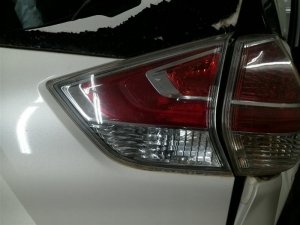
Used OEM Parts in Stock
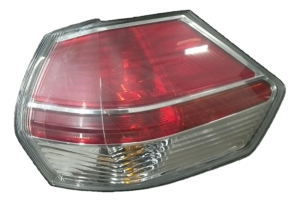
New Aftermarket Parts Available

The information in this article is provided for general reference and educational purposes only. Vehicle specifications, procedures, and part compatibility can vary by production date, trim level, and region. Always consult your vehicle's factory service manual and verify part numbers before purchasing or performing repairs. Safety-critical components such as airbags, seat belts, and braking systems should be installed by a qualified professional.
- Nissan Rogue:
- 🧭 Diagnostic Flowchart
- 🎬 Helpful Videos
- 🛍️ Shop This Part
- What's Unique About the 2008-2015 Nissan Rogue
- Symptoms You May Notice
- Most Likely Causes
- Rare But Worth Checking
- Diagnosis Steps
- Parts You'll Likely Need
- Technical Service Bulletins (TSBs) & Recalls
- Platform-Specific Known Issues
- Mechanic-Grade Diagnostic Values
- Scan Tool Commands That Help
- Wiring & Ground Locations
- Real Owner Repair Stories
- OEM Part Supersession History
- Model Year Variations Within This Range
- Other Known Issues on This Vehicle
- Used vs. New Parts: Buying Guide for This Vehicle
- Real Owner Stories
- 2011 Nissan Rogue
- 2008-2015 Nissan Rogue
- 2008-2015 Nissan Rogue
- Documented NHTSA Reports
- Nissan Range Sensor Reports
- Transmission Performance Issues
- Related OBD-II Codes
- Frequently Asked Questions
- 🎟️ Get 5% Off