

P0705 on 2012-2019 Nissan Versa: Transmission Range Sensor Explained
On a 2012-2019 Nissan Versa, code P0705 usually points to a faulty Transmission Range Sensor (also called a Neutral Safety Switch or Inhibitor Switch). However, a very common cause is actually moisture and corrosion in the tail light assemblies, which can falsely trigger this code due to electrical backfeed. Always inspect the tail lights first before replacing the sensor, as documented in Nissan TSB NTB15-082.
- Before buying any parts for a P0705 code on a 2012-2019 Versa, inspect the rear tail lights for moisture or corrosion.
- Nissan has a specific TSB (NTB15-082) stating that faulty tail lights can cause this transmission-related code.
- If the tail lights are dry and in good condition, the next most likely cause is a failed Transmission Range Sensor (Neutral Safety Switch).
- Symptoms often include the car not starting, incorrect gear indicators, or erratic shifting.
- This can be a DIY repair, but accessing the sensor requires removing the battery and air intake, and misdiagnosis is common if you don't check the tail lights first.
What's Unique About the 2012-2019 Nissan Versa
What's unique about the Nissan Versa regarding code P0705 is a widely documented issue where the root cause is often not the transmission sensor itself. Nissan issued a Technical Service Bulletin (TSB NTB15-082) on September 25, 2015, highlighting that moisture or corrosion in the rear tail light assemblies can backfeed through the electrical system and cause the computer to incorrectly flag a P0705 code. The backup lights are powered directly from the Transmission Range Sensor circuit, and corrosion in the tail light assembly increases electrical resistance or causes a short, which the TCM interprets as a fault in the sensor circuit. Many owners and technicians on forums like Reddit have confirmed that replacing the tail light assemblies, not the transmission sensor, is the correct fix.
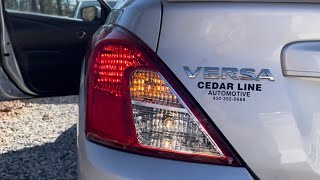
🎬 Watch: How tail light corrosion triggers code P0705Symptoms You May Notice
- Check Engine Light is on
- Vehicle will not start, or only starts intermittently
- Engine only starts in Neutral, not Park (or vice-versa)
- Incorrect or no gear indicator on the dashboard (PRNDL display)
- Poor acceleration or hesitation, especially when accelerating from a stop
- Reverse lights do not work
- Harsh or erratic shifting
- Car may feel like it's still engaged in gear when shifted to Park
- Brake lights and turn signals may flash or behave erratically together
- Media console screen flickers, especially when braking
- Replacing the Transmission Range Sensor when the actual problem is the tail light assemblies. This is the most common misdiagnosis for this specific vehicle and code, explicitly warned against in TSB NTB15-082.
- Replacing the transmission or valve body when the issue is a simple sensor or electrical fault.
Most Likely Causes
- Moisture/Corrosion in Tail Light Assembly 🔴 High Probability → Shop Tail Light A known issue documented by Nissan TSB NTB15-082. The tail light assemblies on this platform are prone to letting moisture in, which corrodes the internal circuit boards. This creates high resistance or a short in the backup light circuit, which is tied to the range sensor, causing the TCM to misinterpret the signal and throw a false P0705 code.
How to confirm: Visually inspect the tail light assemblies for any signs of moisture, fogging, or corrosion on the connectors and circuit boards inside. A common diagnostic step shared on forums is to disconnect both tail light harnesses, clear the code, and see if the gear indicator (PRNDL) returns to normal on the dash. If it does, the tail lights are the problem.
Typical fix: Replace the entire tail light assembly, which includes the problematic internal circuit board. Cleaning the corrosion is often a temporary fix at best.
Est. part cost: $60-$120 for a pair of aftermarket assemblies - Faulty Transmission Range Sensor (Neutral Safety Switch) 🟡 Medium Probability → Shop Transmission Assembly Like any electronic sensor exposed to heat and vibration on the transmission, it can fail over time due to internal wear and tear. NHTSA ODI #11141566 notes a case where a dealership initially found nothing wrong, but the engine light eventually triggered for P0705 Transmission Range Sensor.
How to confirm: After confirming the tail lights are not the issue, a technician will test the sensor's output signals with a multimeter or scan tool to see if they match the selected gear. If the signals are erratic, absent, or incorrect, the sensor is bad.
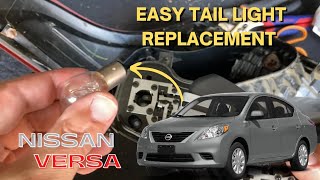
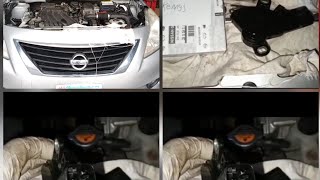
Typical fix: Replace the transmission range sensor. This requires removing the battery and air intake duct for access. The new sensor must be properly aligned. 🎬 See: DIY transmission range sensor replacement guide
Est. part cost: $70-$125 for an aftermarket sensor - Damaged Wiring or Connectors ⚪ Low Probability Wiring can be damaged by heat, vibration, or impact, but it's less common than component failure.
How to confirm: Visually inspect the wiring harness and connectors between the transmission range sensor, the tail lights, and the main computer (TCM/PCM) for any signs of damage, corrosion, or loose connections. A multimeter can be used to check for continuity and shorts.
Typical fix: Repair or replace the damaged section of the wiring harness or clean/replace the corroded connector.
Est. part cost: $10-$50 for repair supplies
Rare But Worth Checking
- Faulty Transmission Control Module (TCM) or Powertrain Control Module (PCM): → Shop Transmission Assembly This is very rare and should only be considered after all other possibilities, including the sensor, wiring, and especially the tail lights, have been exhaustively ruled out. NHTSA ODI #11487823 describes a situation where a mechanic retrieved fault code P0705 indicating a potential ECM or TCM failure, though the vehicle was not further diagnosed.
- Misadjusted or Damaged Shift Linkage: If the mechanical linkage from the shifter to the transmission is loose or bent, the sensor may not be able to accurately report the gear position. This is less common than sensor or electrical failure.
Diagnosis Steps
- Read the code with an OBD-II scanner to confirm P0705 is present.
- CRITICAL FIRST STEP: Thoroughly inspect both rear tail light assemblies for signs of moisture, condensation, or corrosion on the circuit boards, per TSB NTB15-082. Look for spotting or eroding of the chrome finish inside the housing.
- Diagnostic Test: Disconnect the electrical connectors from both rear tail light assemblies. Clear the DTCs. Turn the ignition ON and check if the gear selector display (PRNDL) on the instrument panel functions correctly. If it does, the fault is in the tail light assemblies.
- If moisture or corrosion is found (or the test in step 3 passes), replace the affected tail light assembly/assemblies. Do not attempt to just clean the board, as the problem will likely return. Clear codes and re-test.
- If the tail lights are dry and the problem persists, proceed to inspect the wiring and connector for the Transmission Range Sensor, located on the outside of the transmission. Look for corrosion or damage.
- Using a scan tool that can read live data, monitor the transmission range sensor output. Verify that the gear position displayed by the scan tool matches the gear you select with the shifter (P, R, N, D, L). NHTSA ODI #11202994 documents a case where a mechanic identified a P0705 Park/Neutral switch fault alongside a P0757 code for the range sensor circuit input.
- If the data is incorrect or erratic, the Transmission Range Sensor is likely faulty. Before replacing, check for proper voltage and ground at the sensor connector.
- If the sensor is confirmed to be faulty, replace it. Access requires removing the battery, battery tray, and air intake assembly. Ensure the new sensor is correctly aligned.
- If the sensor and wiring test good, the issue may be a rare fault with the shift linkage or the Transmission Control Module (TCM), which requires more advanced diagnostics.
Parts You'll Likely Need
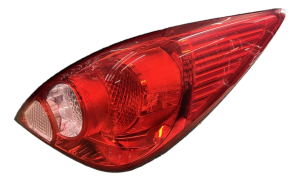
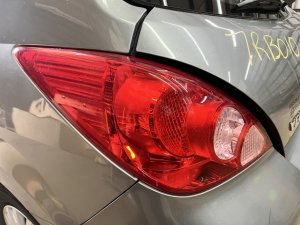
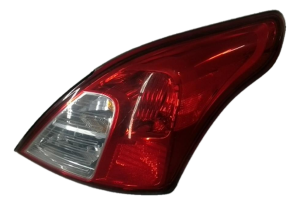
- Tail Light Assembly
(OEM #26555-3AN0A (Left), 26550-3AN0A (Right))— This is the most common, though unexpected, fix for a P0705 code on the Nissan Versa due to moisture intrusion causing electrical issues, as noted in TSB NTB15-082.
Trusted brands: TYC, Eagle Eyes, Depo, Action Crash
OEM price range: $150-$210 per side
Aftermarket price range: $50-$80 per side - Transmission Range Sensor / Neutral Safety Switch
(OEM #31918-3MX0A)— If the tail lights are not the cause, this sensor is the next most likely part to have failed, preventing the car's computer from knowing the correct gear position. Note: Some parts sites indicate this fits models with a conventional automatic, not the CVT, so verifying by VIN is critical.
Trusted brands: Rostra, Standard Ignition, Hitachi
OEM price range: $110-$160
Aftermarket price range: $70-$125
Technical Service Bulletins (TSBs) & Recalls
- NTB15-082: '2012-2014 VERSA SEDAN; HESITATION ON ACCELERATION AND/OR DTC P0705'. States that a P0705 code can be falsely triggered by moisture or corrosion in the rear tail light assemblies and explicitly advises against replacing the CVT assembly for this incident.
Platform-Specific Known Issues
- Nissan Technical Service Bulletin NTB15-082, released September 25, 2015, identifies that moisture and corrosion in the rear tail light assemblies can cause hesitation and a false P0705 code. This should be the first item checked.
Mechanic-Grade Diagnostic Values
- Transmission Range Sensor (TRS) Resistance Check — expected: With the sensor connector disconnected, there should be continuity (near 0Ω) between the ground pin and the specific gear pin when the lever is in that position (e.g., Pin 1 to Pin 2 in Park). Resistance should be infinite when not in that gear.. Failure: Any reading above 1Ω in the selected gear, or a lack of infinite resistance in other gears, indicates a faulty sensor.
- TCM Connector Pin 6 Voltage — expected: With the key on and engine off, backprobing pin 6 at the TCM connector should show ignition positive voltage.. Failure: No voltage or low voltage could indicate a wiring issue between the fuse box, TRS, and TCM.
Wiring & Ground Locations
- Transmission Range Sensor (TRS) — Mounted on the outside of the transmission, where the shift cable connects. On the Versa, it is accessed from under the hood by removing the battery, battery tray, and air intake assembly.. This is the primary sensor for the P0705 code. Its connector is a key test point.
- Transmission Control Module (TCM) — Located behind the left end of the dashboard.. The TCM receives the signals from the TRS. A fault in the TCM is rare but possible. Its connector (pin 6) is a test point for ignition voltage.
- Fuse 49 — In the fuse box, likely the IPDM E/R (Intelligent Power Distribution Module Engine Room) on the left side of the engine compartment.. This fuse supplies power to the Transmission Range Sensor on the red wire (Pin 3 of the TRS connector).
- Tail Light Assembly Connector — Behind the trunk liner, directly attached to the back of each tail light housing.. This is the most common point of failure. Disconnecting these is a key diagnostic step. Corrosion here backfeeds into the TRS circuit.
Real Owner Repair Stories
- Reddit user u/punky0513 (2016 Nissan Versa, purchased new) — Turn signal and brake light flashing alternately, car made a 'thump', check engine light came on (P0705), and it almost stalled. Harder shifting was also noted.
❌ Tried (didn't work) Initially thought bulbs were just going out.
✅ What actually fixed it The user identified corrosion on the reverse light socket inside the tail light assembly. Cleaning it and replacing the bulbs resolved the symptoms. Other users in the thread, including a former Nissan Master Tech, confirmed replacing the entire tail light assembly is the standard, permanent fix for this exact issue. - Reddit user (2014 Nissan Versa) — Check engine light with code P0705.
❌ Tried (didn't work) A mechanic diagnosed the issue and recommended a full transmission replacement.
✅ What actually fixed it The owner learned from online forums about the tail light issue. They confirmed their transmission had already been replaced just 35k miles prior. The consensus from other users was that the tail light assemblies were the actual problem, not the transmission. - YouTube video by 'Kenny's' (2013 Nissan Versa) — Check engine light on with code P0705, not shifting well.
❌ Tried (didn't work) The video directly identifies the sensor as the problem after ruling out other issues (though the tail light issue is not mentioned).
✅ What actually fixed it The video demonstrates the replacement of the Transmission Range Sensor (Neutral Safety Switch) itself. The creator recommended using an OEM part from the dealer to avoid issues with aftermarket quality. - NHTSA ODI #11286629 — An owner reported experiencing a "quick thunk" that felt like the transmission was slipping. Upon checking with a code reader, the vehicle returned code P0705 for Transmission Range Sensor Circuit Malfunction.
- NHTSA ODI #11505366 — An owner reported that a drivability issue was resolved by parking the car after a diagnostic machine identified code P0705 Transmission Range Sensor A Circuit.
OEM Part Supersession History
Unknown→26555-3AN0A (Left Tail Light Assembly)— Ongoing production part for the N17 generation.
Heads up: This part number fits the entire 2012-2019 Versa Sedan range.Unknown→31918-3MX0A (Transmission Range Sensor)— Standard production part.
Heads up: Crucially, this part is often listed for the conventional automatic transmission, not the CVT. It is vital to verify the correct part number by VIN before ordering, as fitment can be confusing.
Model Year Variations Within This Range
- 2015-2019: The official Nissan TSB NTB15-082 only lists the 2012-2014 Versa Sedan. However, numerous owner and technician reports on forums confirm the exact same failure pattern—corrosion in the tail light assembly causing a false P0705 code—occurs on 2015, 2016, 2017, and 2018 models as well. The diagnostic procedure of checking the tail lights first should be applied to the entire generation, not just the years listed in the TSB.
Diagnostic Flowchart
Other Known Issues on This Vehicle
Issues unrelated to this code that are worth knowing about as an owner of this generation:
- Jatco CVT Transmission Failure 🔴 High → Shop Transmission Assembly — Widespread issue, particularly in earlier models of the generation. Problems like slipping, hesitation, and complete failure can occur, sometimes before 100,000 miles. (Ref: Numerous TSBs exist for CVT diagnosis and repair, though no single recall covers all failure modes.)
- Ignition Lock Cylinder Wear 🟠 Medium — Common on models with a physical key. The cylinder tumblers wear out, causing the key to be hard to turn, get stuck, or result in a no-start condition. Often exacerbated by heavy keychains.
- EVAP Canister Vent Control Valve Failure 🟡 Low — A common cause for Check Engine Lights with EVAP leak codes (e.g., P0455, P0456). Can also cause difficulty refueling (gas pump clicks off repeatedly).
- Premature Front Strut and Sway Bar Link Wear 🟠 Medium — Front struts can leak and fail prematurely, and sway bar end links wear out, causing clunking or rattling noises over bumps.
- Intelligent Power Distribution Module (IPDM) Malfunction 🟠 Medium — The IPDM can fail, causing a wide range of seemingly unrelated electrical problems, such as issues with headlights, wipers, cooling fans, and the A/C clutch.
Used vs. New Parts: Buying Guide for This Vehicle
When a used part is the smart pick: For the tail light assemblies, a used OEM part from a junkyard can be a smart choice, especially if it comes from a newer, low-mileage donor vehicle from a dry climate. Given the failure is due to water intrusion, a visually pristine used part is likely to have significant life left.
Donor-vehicle mileage cap: roughly under 80000 miles for the part to have meaningful remaining life.
What to inspect on the donor part:
- Inspect the inside of the tail light housing for any signs of fogging, water lines, or condensation.
- Remove the bulb socket board and check the electrical contacts and circuit traces for any green or white corrosion.
- Ensure the foam gasket that seals the assembly to the car body is intact and pliable, not flattened or brittle.
- Check the plastic housing for cracks, especially around the seams and mounting points.
OEM-only on this vehicle (don't cheap out):
- Transmission Range Sensor. While aftermarket sensors are available, some technicians recommend using the genuine Nissan part to avoid issues with incorrect resistance values or premature failure, which could lead to doing the labor-intensive job twice.
Aftermarket brands forum-validated for this vehicle:
- TYC (for tail light assemblies)
- Depo (for tail light assemblies)
- Rostra (for transmission range sensor)
- Standard Ignition (for transmission range sensor)
Brands owners have reported issues with on this vehicle:
- Unbranded, no-name aftermarket tail light assemblies may use lower quality seals that can lead to the same moisture problem recurring sooner.
- Avoid aftermarket LED bulbs for the tail lights, as their different resistance can potentially trigger a false P0705 code.
Real Owner Stories
Aggregated from forums and TSBs cited above. Mileages and costs reflect what owners reported in those sources.
2014 Nissan Versa
Symptoms: Check engine light with code P0705. User was skeptical about how a tail light could affect the transmission, noting it seemed 'really stupid' but true.
What fixed it: Checking for leaky tail lights as per TSB NTB15-082.
Source hint: Reddit (r/MechanicAdvice) - '2014 Nissan Versa - p0705 code'
Related OBD-II Codes
Frequently Asked Questions
Does Nissan TSB NTB15-082 apply to my 2012-2014 Versa Sedan?
Why would my brake lights or media console flickering be related to a transmission code like P0705?
Can I just clean the corrosion off my Versa's tail light circuit board to fix P0705?
Is it true that a bad tail light can make my Versa feel like it has a failing CVT?
Will disconnecting my tail lights help diagnose the P0705 code?
Does the P0705 tail light issue also affect the Nissan Versa Note?
Helpful Videos


Used OEM Parts in Stock
New Aftermarket Parts Available

The information in this article is provided for general reference and educational purposes only. Vehicle specifications, procedures, and part compatibility can vary by production date, trim level, and region. Always consult your vehicle's factory service manual and verify part numbers before purchasing or performing repairs. Safety-critical components such as airbags, seat belts, and braking systems should be installed by a qualified professional.
- Nissan Versa:
- 🧭 Diagnostic Flowchart
- 🎬 Helpful Videos
- 🛍️ Shop This Part
- What's Unique About the 2012-2019 Nissan Versa
- Symptoms You May Notice
- Most Likely Causes
- Rare But Worth Checking
- Diagnosis Steps
- Parts You'll Likely Need
- Technical Service Bulletins (TSBs) & Recalls
- Platform-Specific Known Issues
- Mechanic-Grade Diagnostic Values
- Wiring & Ground Locations
- Real Owner Repair Stories
- OEM Part Supersession History
- Model Year Variations Within This Range
- Other Known Issues on This Vehicle
- Used vs. New Parts: Buying Guide for This Vehicle
- Real Owner Stories
- 2014 Nissan Versa
- Related OBD-II Codes
- Frequently Asked Questions
- 🎟️ Get 5% Off