

P0705 on 2005-2010 Pontiac G6: Transmission Range Sensor Failure Causes and Fixes
On a 2005-2010 Pontiac G6, code P0705 almost always means the Transmission Range Sensor (also called a neutral safety switch) has failed. This part tells the car's computer which gear is selected. Expect to pay $45-$80 for a replacement part and 1-2 hours of labor for the repair. Before replacing parts, check for recalls related to the shift cable and BCM, as these can cause identical symptoms.
- P0705 on a Pontiac G6 points to a problem with the car knowing what gear it's in.
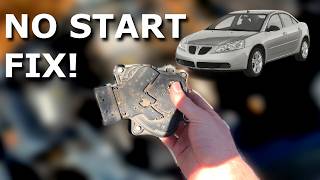
- The most common fix is replacing the Transmission Range Sensor, an affordable part located on the outside of the transmission.
- Before buying parts, check the wiring and connector for corrosion or damage, as this is also a frequent cause.
- Verify that recalls for the shift cable and BCM have been performed, as they can cause the same symptoms.
- This repair requires careful alignment of the new sensor, so professional installation is recommended if you are not comfortable with the procedure.
What's Unique About the 2005-2010 Pontiac G6
The Pontiac G6, sharing its Epsilon platform with other GM vehicles like the Chevrolet Malibu and Saturn Aura, uses a common transmission range sensor that is mounted externally on the transmission case for the 4-speed automatic transmission. This location makes it susceptible to corrosion and damage from road debris and moisture over time. While the sensor itself is a frequent failure point, it's also critical to check for related GM recalls concerning the shift cable (NHTSA 12V-460) and Body Control Module (BCM) (NHTSA 14V-252), as these can produce identical symptoms and lead to misdiagnosis. A key variation exists for models with the 6-speed automatic transmission, where the sensor is an Internal Mode Switch (IMS) located inside the transmission on the valve body, making replacement significantly more labor-intensive.
Symptoms You May Notice
- Check Engine Light is on
- Engine will not start, or only starts in Neutral
- Inability to shift out of Park
- Harsh or delayed transmission shifting
- Transmission is stuck in a single gear (limp mode)
- Gear indicator on the dashboard is incorrect or does not display
- Reverse lights do not work
- Reduced fuel economy
- Replacing the starter when a no-start condition is present. The no-start is often because the faulty range sensor isn't telling the computer the car is in Park or Neutral, which is a safety requirement for starting.
- Condemning the entire transmission. Because symptoms include harsh shifting or being stuck in gear, an inexperienced technician might suspect a major internal transmission failure when it is only the inexpensive external sensor or its wiring.
Most Likely Causes
- Failed Transmission Range Sensor (Neutral Safety Switch) 🔴 High Probability → Shop Transmission Assembly The sensor is mounted externally on the 4-speed transmission, exposing it to heat, moisture, and road debris, which can lead to internal corrosion and failure over time. This is a well-documented failure point on the G6 and its platform mates.
How to confirm: Use a scan tool to monitor the transmission range data while moving the shifter. If the displayed gear does not match the shifter position or the signal is erratic, the sensor is likely bad. You can also test the sensor's output circuits with a multimeter to check for correct voltage patterns for each gear position as specified in the service manual.
Typical fix: Replace the Transmission Range Sensor. The new sensor must be carefully aligned during installation, typically by placing the shifter and transmission lever in Neutral before tightening the sensor's mounting bolts.
Est. part cost: $45-$80 - Damaged Wiring or Corroded Connector 🟡 Medium Probability The wiring harness leading to the sensor is located under the vehicle and can be damaged by road debris, heat from the exhaust, or corrosion from water and salt. GM also issued TSB 08-07-30-021H for GMLAN communication issues, which can be caused by terminal corrosion in transmission connectors on various models.
How to confirm: Visually inspect the entire wiring harness and the connector at the sensor for any signs of corrosion (green crust), frayed or broken wires, or loose pins. Perform a continuity test on the wires between the sensor connector and the PCM/TCM. Wiggle the harness while testing to check for intermittent breaks.
Typical fix: Repair the damaged section of wiring or clean the connector terminals with an electrical contact cleaner. If corrosion is severe, the connector pigtail may need to be replaced.
Est. part cost: $5-$50 - Misadjusted or Damaged Shift Linkage/Cable ⚪ Low Probability Recall NHTSA 12V-460 (GM #12106) was issued for 2007-2010 G6 models with the 4-speed automatic transmission because the tabs on the shift cable end could fracture. This causes a mismatch between the shifter's position and the actual gear selected at the transmission, directly mimicking a P0705 fault.
How to confirm: Check for excessive play in the gear shifter. With the help of an assistant, observe the transmission lever on the side of the transmission while the shifter is moved. Ensure the lever moves to each detent position corresponding to the gear selected. Verify recall 12V-460 has been performed on your vehicle via the NHTSA website.
Typical fix: Adjust the shift linkage or replace the damaged shift cable. If the recall is open, the repair should be performed by a GM dealer at no cost.
Est. part cost: $50-$150
Rare But Worth Checking
- Faulty Powertrain Control Module (PCM) or Transmission Control Module (TCM): → Shop Transmission Assembly This is very rare and should only be considered after all other possibilities (sensor, wiring, linkage) have been definitively ruled out. A faulty module will typically set other trouble codes as well.
- Body Control Module (BCM) Malfunction: Recall NHTSA 14V-252 (GM #13036) addresses increased resistance in a BCM connector that can cause voltage fluctuations. While the primary symptoms relate to brake lights and shift interlock, these electrical issues can sometimes be confused with a range sensor problem.
Diagnosis Steps
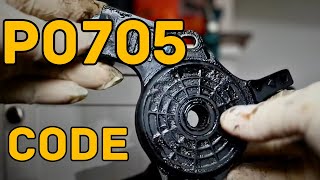
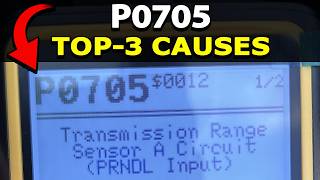
- Scan for all stored trouble codes with an OBD-II scanner. Note any other codes present alongside P0705, 🎬 Watch: P0705 code causes and fixes explained especially P0706 or P0707.
- Check for any open recalls on your vehicle's VIN using the NHTSA website. Specifically check for the shift cable (NHTSA 12V-460) and BCM connection (NHTSA 14V-252), as these can cause identical symptoms.
- Using a scan tool with live data capability, observe the Transmission Range (TR) sensor parameter. Move the gear shifter slowly through all positions (P, R, N, D, L). The reading on the scan tool should match the shifter position exactly and without hesitation.
- If the live data is incorrect or erratic, perform a thorough visual inspection of the TR sensor, its electrical connector, and the wiring harness. Look for green corrosion, loose or backed-out pins, and any physical damage to the wires. Pay close attention to the area where the harness may rub against the chassis or other components.
- Inspect the mechanical shift linkage. Ensure the cable is securely attached at both the shifter and the transmission lever and is not bent, frayed, or binding. Check for fractured plastic tabs at the cable ends, as noted in the recall.
- If wiring and linkage appear good, test the sensor circuits. Using a digital multimeter and a wiring diagram for your specific vehicle, back-probe the connector to verify the correct voltage signals are being sent from the sensor for each gear position.
- If the sensor's output is incorrect, it is faulty and must be replaced. The Transmission Range Sensor is the most likely culprit.
- After replacement, the new sensor must be properly aligned. This is typically done by placing the transmission lever in Neutral before tightening the sensor's mounting bolts. Confirm alignment by ensuring the vehicle only starts in Park and Neutral.
- Clear the trouble codes and perform a test drive, shifting through all gears to confirm the repair is successful.
Parts You'll Likely Need
- Transmission Range Sensor / Neutral Safety Switch
(OEM #24229422)— This sensor is the most common failure point for code P0705 due to its location and function. It contains internal contacts that wear out over time. Note: This part number may be superseded by 24298931. Always verify with the dealer.
Trusted brands: ACDelco, Dorman, Standard Motor Products
OEM price range: $60-$90
Aftermarket price range: $45-$70
Related Codes That Often Appear With This One
- P0706 — This code indicates a 'Range/Performance' issue with the sensor, often meaning the signal is irrational (e.g., between gears). It can be triggered by a misadjusted or failing sensor along with P0705.
- P0707 — This code indicates a 'Circuit Low Input', meaning the signal from the sensor is weaker than expected. It often appears with P0705 if the sensor or wiring is failing.
Technical Service Bulletins (TSBs) & Recalls
- TSB 08-07-30-021H: While not specific to P0705, this bulletin addresses loss of GMLAN communication which can cause a wide array of issues including no-start, no-shift, and various warning lights. It points to potential corrosion in transmission harness connectors, which is a relevant possibility
Platform-Specific Known Issues
- Recall NHTSA 12V-460 / GM 12106: Affects some 2007-2010 models with the 4-speed automatic. The tabs on the transmission shift cable end may fracture, preventing proper gear selection and causing a mismatch between the shifter and the transmission's actual gear, which can mimic a P0705 fault.
- Recall NHTSA 14V-252 / GM 13036: Increased resistance in a Body Control Module (BCM) connection can cause voltage fluctuations that may prevent shifting out of Park, cause brake light issues, or disable traction/stability control. These widespread electrical symptoms can be confused with a range sensor failure.
Mechanic-Grade Diagnostic Values
- TR Switch Signal Voltage Combination (4-Speed 4T45-E) — expected: The PCM reads a unique combination of high (12V) and low (0V/Ground) signals from four circuits (A, B, C, P) for each gear. Park: C=Low, A/B/P=High. Reverse: B=Low, A/C/P=High. Neutral: B/C=Low, A/P=High. Drive 4: A/B/C=Low, P=High. An invalid combination (e.g., all high or all low) for over 20 seconds sets the code.. Failure: Any voltage combination not matching the official logic table for the selected gear, or a signal that is stuck high or low across all positions.
- Ground Circuit Voltage Drop at TR Sensor Connector — expected: Less than 0.1V (100mV) between the ground pin (typically a Black/White wire) at the sensor connector and a known good chassis ground with the key on.. Failure: A reading significantly higher than 0.1V, especially a reading of 12V, indicates a loss of ground connection at a splice or ground point like G105.
Wiring & Ground Locations
- G105 — On a transmission-to-engine mounting stud, located on the driver's side rear of the engine compartment, often below the upper coolant hose.. This is a primary ground point for the Transmission Range Sensor, TCM, and ECM. Corrosion or a broken wire at this stud is a known cause of P0705, often presenting as a no-start condition where the ground wire at the sensor incorrectly shows 12V.
- Park/Neutral Position (PNP) Switch Connector — On the external Transmission Range Sensor, which is located on the transmission itself, typically below the master cylinder on the driver's side for the 4-speed automatic.. This is the main connection point for the sensor. The four signal wires (A, B, C, P) and the ground wire must have perfect continuity. The connector is exposed to the elements and is a common point for corrosion and pin damage.
- G109 — Located on the left front of the engine compartment, on the rear side of the core support.. While G105 is the primary ground, wiring diagrams show G109 is also part of the transmission control circuit. A poor connection here could contribute to intermittent electrical issues, though it is a less common culprit for P0705 than G105.
Real Owner Repair Stories
- ScannerDanner YouTube Case Study (Pontiac G6 with no-crank, no-start condition.) — Vehicle would not crank or start. After warming up, it would die and then refuse to restart. P0705 was likely present due to invalid range signal.
❌ Tried (didn't work) Initial diagnosis pointed towards a bad Park/Neutral switch (Transmission Range Sensor) because the car would not start.
✅ What actually fixed it The ground wire for the Transmission Range Sensor circuit was broken at the G105 ground stud connector. The technician measured 12V on the ground wire at the sensor, indicating an open circuit. The final fix was repairing the bad ground connection at the G105 stud on the transmission.
OEM Part Supersession History
24229422→24298931— Standard part revision and consolidation by the manufacturer. The new part number is a direct replacement for the original.
Heads up: The new part number 24298931 also replaces GM part 12450016, indicating it covers a wide range of GM applications. No known incompatibilities when used on the specified Pontiac G6.
Model Year Variations Within This Range
- 2005-2010 (4-Cylinder and 3.5L V6): These models typically use the 4-speed (4T45-E) automatic transmission with an EXTERNAL Transmission Range Sensor mounted on the case. This is the most common scenario for a P0705 code and involves the part (24229422 / 24298931) discussed in this article.
- 2007-2010 (Primarily 3.6L V6 and some 3.9L V6): Models equipped with the 6-speed automatic transmission (6T40/6T70 family) have an INTERNAL Mode Switch (IMS) on the valve body. A P0705 on these vehicles is a much more involved repair requiring transmission pan removal and is not a simple external part swap.
Diagnostic Flowchart
Other Known Issues on This Vehicle
Issues unrelated to this code that are worth knowing about as an owner of this generation:
- Sudden Loss of Electric Power Steering (EPS) 🔴 High — Very common across all model years, often occurring between 70,000 and 100,000 miles. (Ref: NHTSA Recalls 14V153, 14772, and others. GM campaign N140115.)
- Leaking Sunroof Drain Tubes 🟠 Medium — Widespread issue where drain tubes disconnect or clog, causing water to leak into the cabin, typically soaking the rear floorboards or A-pillar/seatbelt area.
- Clunking Noise from Intermediate Steering Shaft 🟠 Medium — A common complaint is a 'clunk' or popping noise felt in the steering wheel during low-speed turns. (Ref: GM TSB 06-02-32-007G addresses this noise, often caused by the intermediate shaft sticking or slipping.)
- Faulty Body Control Module (BCM) Connection 🔴 High — Affects a large number of vehicles, causing various electrical problems including brake light failure, inability to shift from park, and disabled stability control. (Ref: NHTSA Recall 14V-252 (GM #13036).)
- Prematurely Worn Headlight Wiring/Connectors 🟡 Low — Many owners report repeated low-beam headlight failure due to the wiring harness plug and/or bulb socket melting.
Used vs. New Parts: Buying Guide for This Vehicle
When a used part is the smart pick: For this specific P0705 repair, a used part is almost never a smart choice for the sensor itself. However, sourcing a used wiring harness pigtail from a junkyard can be a cost-effective solution if only the connector is damaged and a new pigtail is unavailable or expensive.
Donor-vehicle mileage cap: roughly under 80000 miles for the part to have meaningful remaining life.
What to inspect on the donor part:
- For a wiring pigtail, inspect for any signs of green or white corrosion inside the connector.
- Check that the plastic is not brittle or cracked.
- Ensure the wire insulation is flexible and not hardened or melted from heat.
- Verify the locking tab on the connector is intact and functional.
OEM-only on this vehicle (don't cheap out):
- Transmission Range Sensor (Neutral Safety Switch) - While aftermarket is available, the OEM ACDelco part is highly recommended for this critical sensor to avoid premature failure or alignment issues.
Aftermarket brands forum-validated for this vehicle:
- ACDelco (OEM)
- Standard Motor Products (SMP)
Brands owners have reported issues with on this vehicle:
- Ultra-cheap, no-name brands from online marketplaces are a significant gamble and often fail quickly or have incorrect internal logic, causing the code to return immediately.
Real Owner Stories
Aggregated from forums and TSBs cited above. Mileages and costs reflect what owners reported in those sources.
2006 Pontiac G6
Symptoms: The vehicle experienced shifting issues and the door locks were behaving erratically.
What fixed it: The issue was linked to the P0705 code, indicating that incorrect gear position signals were affecting body control functions.
Source hint: 2CarPros.com
2005-2010 Pontiac G6
Symptoms: The car would not start and exhibited erratic shifting behavior.
What fixed it: Replacing the neutral safety switch (transmission range sensor) resolved the no-start and shifting issues.
Source hint: G6ownersclub.com thread titled 'p0705-code-and-car-wont-start.38889/'
Related OBD-II Codes
Frequently Asked Questions
Could the shift cable recall on my 2007-2010 Pontiac G6 be causing the P0705 code?
My G6 won't start and the gear indicator on the dash is missing. Is this related to P0705?
Does TSB 08-07-30-021H apply to my transmission shifting issues?
Can a problem with the Body Control Module (BCM) cause symptoms that look like a range sensor failure?
Where is the Transmission Range Sensor located on the 4-speed Pontiac G6?
How do I properly align the new sensor after replacement?
Helpful Videos



We Have This Part in Stock

The information in this article is provided for general reference and educational purposes only. Vehicle specifications, procedures, and part compatibility can vary by production date, trim level, and region. Always consult your vehicle's factory service manual and verify part numbers before purchasing or performing repairs. Safety-critical components such as airbags, seat belts, and braking systems should be installed by a qualified professional.
- Pontiac G6:
- 🧭 Diagnostic Flowchart
- 🎬 Helpful Videos
- 🛍️ Shop This Part
- What's Unique About the 2005-2010 Pontiac G6
- Symptoms You May Notice
- Most Likely Causes
- Rare But Worth Checking
- Diagnosis Steps
- Parts You'll Likely Need
- Related Codes That Often Appear With This One
- Technical Service Bulletins (TSBs) & Recalls
- Platform-Specific Known Issues
- Mechanic-Grade Diagnostic Values
- Wiring & Ground Locations
- Real Owner Repair Stories
- OEM Part Supersession History
- Model Year Variations Within This Range
- Other Known Issues on This Vehicle
- Used vs. New Parts: Buying Guide for This Vehicle
- Real Owner Stories
- 2006 Pontiac G6
- 2005-2010 Pontiac G6
- Related OBD-II Codes
- Frequently Asked Questions
- 🎟️ Get 5% Off