

P0705 on 2010-2014 Subaru Legacy: Transmission Range Sensor Failure Causes and Fixes
On a 2010-2014 Subaru Legacy with a 5EAT automatic transmission (found in 3.6R and some 2.5GT models), code P0705 is almost always caused by a failed internal Transmission Range Sensor. This sensor is integrated into the transmission valve body, making replacement a complex and expensive job. The fix requires replacing the entire valve body assembly, a procedure best left to a professional.
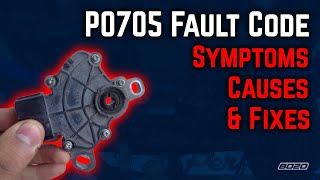
- P0705 on a 2010-2014 Legacy with the 5EAT transmission indicates a problem with the car's ability to know what gear it is in.
- The most likely cause is a failed sensor, but unlike many cars, this sensor is inside the transmission and part of the valve body.
- This is not a simple or cheap fix. Do not attempt this repair at home unless you are an experienced transmission technician.
- Before condemning the expensive valve body, ensure a technician has thoroughly checked the external wiring and transmission connector.
- This problem is specific to the 3.6R and 2.5GT models with the 5-speed automatic, not the 2.5i models with the CVT.
What's Unique About the 2010-2014 Subaru Legacy
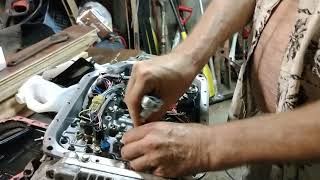
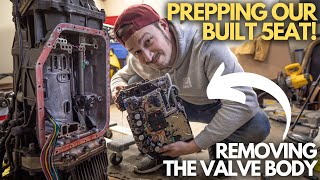
On many vehicles, the transmission range sensor (or inhibitor switch) is a simple, externally mounted switch that is easy to replace. However, on the 2010-2014 Subaru Legacy equipped with the 5EAT automatic transmission (used in 3.6R and 2.5GT models), this sensor is integrated directly into the main valve body inside the transmission oil pan. Subaru service literature confirms the switch is non-serviceable and part of the control valve assembly. This design means that fixing the most common cause of a P0705 code requires a much more involved repair: removing and replacing the entire valve body 🎬 See this step-by-step guide on removing the 5EAT valve body, which is a job best left to a professional.
Symptoms You May Notice
- Check Engine Light is on
- Flashing 'AT OIL TEMP' light on the dashboard
- Vehicle will not start, or will only start in Neutral
- Inability to shift out of Park
- Incorrect or no gear selection displayed on the instrument cluster
- Transmission is stuck in 'limp mode' (usually 2nd or 3rd gear)
- Harsh or delayed shifting between gears
- Reverse lights do not turn on when in Reverse
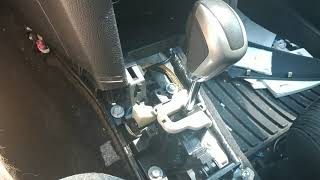
- Replacing the gear shifter assembly. The sensor is in the transmission, not the shifter inside the car.
- Assuming the sensor is an inexpensive, external part. On this specific Legacy with the 5EAT, it is internal and complex to replace.
- Replacing other transmission solenoids. While solenoid issues can cause other transmission problems, the P0705 code specifically points to the range sensor circuit.
Most Likely Causes
- Failed Internal Transmission Range Sensor (Inhibitor Switch) 🔴 High Probability → Shop Transmission Assembly The sensor is integrated into the valve body, exposed to heat and potentially contaminated fluid over its lifespan. The sensor itself contains magnetic components that can attract fine metallic debris from normal transmission wear, potentially leading to malfunction. Forum and video evidence strongly points to this as the primary failure point for this code on this platform.
How to confirm: After confirming external wiring and fluid are good, a technician will use a scan tool to monitor the sensor's output data while shifting. If the data is erratic, does not match the gear selection, or is absent, and the wiring tests fine, the internal sensor is condemned. Subaru's own diagnostic tree for P0705 points to a valve body replacement if external checks pass.
Typical fix: Replace the entire transmission valve body assembly. 🎬 Watch: How replacing the valve body solves the range sensor code The range sensor is not sold as a separate component for this model.
Est. part cost: $650-$900 for a new OEM valve body. - Damaged Wiring or Corroded Connector ⚪ Low Probability
How to confirm: Visually inspect the main transmission wiring harness and the connector where it plugs into the transmission case. Check for corrosion, bent pins, or frayed/burnt wires. Perform a continuity test on the wires from the TCM to the transmission connector.
Typical fix: Repair the damaged section of the wiring harness or clean/replace the corroded connector.
Est. part cost: $10-$150 - Low or Contaminated Transmission Fluid ⚪ Low Probability → Shop Transmission Assembly While less likely to be the sole cause, dirty fluid can restrict hydraulic passages within the valve body, potentially affecting sensor operation over time.
How to confirm: Check the transmission fluid level and condition using the dipstick. The fluid should be at the correct level, pink/red in color, and not smell burnt. Dark or gritty fluid indicates a problem.
Typical fix: Perform a transmission fluid drain and fill. If the fluid is severely contaminated, this often indicates a more significant internal problem, and a valve body replacement may still be necessary.
Est. part cost: $70-$150 for fluid
Rare But Worth Checking
- Faulty Transmission Control Module (TCM): → Shop Transmission Assembly This is very uncommon. The TCM should only be suspected after all other possibilities, especially the valve body and wiring, have been definitively ruled out. A faulty TCM will often present with multiple other transmission-related codes, not just P0705 in isolation. One owner on a forum reported replacing the TCM as part of a long diagnostic process, but this was after multiple other parts were already changed.
Diagnosis Steps
- Connect an OBD-II scanner to confirm the P0705 code and check for any other codes like P0700.
- Check the level and condition of the automatic transmission fluid. Burnt or low fluid can cause a variety of issues and should be addressed first.
- Thoroughly inspect the external transmission wiring harness and the main electrical connector at the transmission case. Look for any signs of corrosion, damage from road debris, or melting from contact with the exhaust.
- If a factory service manual is available, test the resistance of the range sensor circuits at the main transmission connector to determine if the fault is inside or outside the transmission.
- Using an advanced scan tool (like the Subaru Select Monitor), monitor the live data from the transmission range sensor while moving the gear selector through all positions. Confirm that the gear displayed on the scanner (and on the dash) matches the shifter position. If the display is blank, erratic, or incorrect, the fault is likely in the sensor or its circuit.
- If all external wiring, connectors, and fluid are confirmed to be in good condition, the problem is almost certainly the internal range sensor, which requires the replacement of the valve body assembly.
Parts You'll Likely Need
- Automatic Transmission Valve Body Assembly
(OEM #31705AA662)— This assembly contains the integrated transmission range sensor, which is the most common point of failure for a P0705 code on this vehicle. This part number supersedes previous versions 31705AA661 and 31705AA660.
Trusted brands: Subaru (Genuine OEM)
OEM price range: $650-$900
Aftermarket price range: $450-$600 (Remanufactured)
Related Codes That Often Appear With This One
- P0700 — P0700 is a generic code that simply means the Transmission Control Module (TCM) has stored a fault code. It almost always appears alongside a more specific transmission code like P0705 to alert the main engine computer (ECU) of the issue.
Technical Service Bulletins (TSBs) & Recalls
- 16-86-12 — Addresses an AT OIL TEMP light and provides instructions for reprogramming the TCM. If reprogramming and a fluid flush do not resolve the issue, it directs the technician to replace the valve body.
Platform-Specific Known Issues
- The Transmission Range Sensor (Inhibitor Switch) is internal to the 5EAT transmission and integrated with the valve body, making it a difficult and expensive part to replace compared to vehicles with an external sensor.
- This issue specifically affects the 3.6R and 2.5GT models with the 5-speed automatic (5EAT), not the 2.5i models with the Lineartronic CVT.
Mechanic-Grade Diagnostic Values
- Resistance check of inhibitor switch circuits at the external transmission connector. — expected: A generic service manual for a similar (though external) switch shows continuity (Below 1 Ω) between the signal pin for the selected gear and the ground/common pin, and high resistance (10 kΩ or higher) for all other gear positions. This test confirms if the internal switch is making proper contact for each gear selection.. Failure: Resistance values that are infinite (open circuit) or do not change when the gear is shifted indicate a failed internal switch or wiring.
Scan Tool Commands That Help
- Autel MaxiSYS (or similar advanced scanner, including Subaru Select Monitor): AT Learning / Transmission Relearn Procedure — This procedure is necessary after replacing the valve body to calibrate the new component and clear old adaptive values. A similar procedure, called a 'Dynamic Check Mode', is also specified in a TSB to be performed after a fluid flush, before condemning the valve body. The process involves a specific sequence of warming the ATF to a target temperature, shifting through gears while holding the brake, and sometimes driving at specific speeds.
Wiring & Ground Locations
- Main Transmission Harness Connector — On the side of the transmission case. On front-wheel drive based Subarus, this is often on the top or driver's side of the transaxle.. This is the primary external test point for the internal range sensor. A technician can perform resistance and voltage checks at the pins leading from this connector to the TCM to isolate the fault to the transmission itself without opening it.
- Engine/Transmission Ground Straps — Key grounds are typically located from the chassis to the engine block (often near the alternator or starter) and from the chassis to the transmission housing. One common location is a braided strap near the radiator support.. Subaru ground straps are known to corrode and break, especially in salt-belt regions. A poor ground connection can cause erratic behavior in electronic modules, including the TCM, potentially leading to incorrect fault codes or communication errors that could mimic a sensor failure.
Real Owner Repair Stories
- YouTube - Stephen Reilly (2010 Subaru (model not specified, but with 5EAT)) — P0705 code, vehicle immobilized, no gear position indicator on the dash.
❌ Tried (didn't work) Initial diagnosis pointed directly to the internal range sensor.
✅ What actually fixed it The owner purchased a complete used transmission from a 2012 model for approximately $330, removed the valve body assembly from the donor unit, and swapped it into their vehicle. The final video shows the car starting, the gear position indicator functioning correctly (P, R, N, D all display), and the car driving, confirming the fix was successful. - Reddit user on r/Subaru_Outback (2012 Subaru Outback 3.6R (platform mate with 5EAT)) — Intermittent no-start, inability to shift from Park to Reverse, 'Christmas tree' dash lights with flashing AT OIL TEMP light, and finally a solid P0705 code.
❌ Tried (didn't work) Changing the transmission fluid.
✅ What actually fixed it The user's mechanic diagnosed the issue by checking wiring first, then concluded the valve body needed replacement. The post confirms this was the recommended final repair path, aligning with the known common failure. - NHTSA ODI #11317541 (Subaru XV Crosstrek cross-reference) — An owner reported that their vehicle was completely unresponsive, requiring a tow to the dealership. Diagnostic codes P0851, P0705, and P0700 were found, which the owner noted were related to the transmission.
OEM Part Supersession History
31705AA660, 31705AA661→31705AA662— Not specified in public-facing documents, but part supersessions typically indicate minor improvements in manufacturing, materials, or internal components to increase reliability.
Heads up: While the valve bodies are physically interchangeable across the 2010-2014 5EAT range, it is always best practice to use the latest superseded part number (31705AA662) when purchasing new to get the most recent revisions.
Diagnostic Flowchart
Other Known Issues on This Vehicle
Issues unrelated to this code that are worth knowing about as an owner of this generation:
- CVT Transmission Failure (2.5i models) 🔴 High → Shop Transmission Assembly — Common enough to warrant a warranty extension from Subaru to 10 years/100,000 miles. Issues include shuddering, stalling, and hesitation. (Ref: TSB 16-90-13R addresses a torque converter lock-up issue causing stalling.)
- Excessive Oil Consumption (2.5i FB25 engine) 🟠 Medium — A well-documented issue leading to a class-action lawsuit. Affects 2013-2014 Legacy 2.5i models. Owners may need to add oil between changes. (Ref: Subaru issued TSBs and extended warranties for affected vehicles, sometimes replacing the engine short block.)
- Premature Headlight Burnout 🟡 Low — Prevalent in 2010-2011 models. Owners report replacing low-beam headlight bulbs far more frequently than normal, sometimes every few months.
- Turbocharger Failure (2.5GT models) 🔴 High — Can occur due to oil starvation issues, sometimes related to a banjo bolt filter getting clogged. A known issue on many turbo Subarus of this era.
- Melting Dashboards 🟡 Low — In hot climates, the dashboard material on some 2010-2014 models can become sticky and appear to 'melt'. This was also subject to a warranty extension in some cases. (Ref: Subaru Warranty Extension)
Used vs. New Parts: Buying Guide for This Vehicle
When a used part is the smart pick: A used valve body from a reputable auto recycler is a very common and cost-effective solution for this specific P0705 failure. Since the failure is electronic (the sensor) and not typically a hydraulic wear issue within the valve body itself, a good used unit from a lower-mileage, accident-damaged vehicle is a viable alternative to a new OEM part costing over $800.
Donor-vehicle mileage cap: roughly under 120000 miles for the part to have meaningful remaining life.
What to inspect on the donor part:
- Request the VIN of the donor vehicle to check its history and confirm mileage.
- Purchase from a dismantler that offers at least a 30-90 day warranty.
- Inspect the part upon arrival for any physical damage to the solenoids or connectors that may have occurred during removal or shipping.
- Before installation, clean the magnetic range sensor component of any fine metallic paste that may have accumulated.
OEM-only on this vehicle (don't cheap out):
- New Valve Body Assembly
Brands owners have reported issues with on this vehicle:
- Remanufactured / Rebuilt Valve Bodies: Multiple sources, including professional transmission builders, strongly advise against using 'rebuilt' or 'remanufactured' valve bodies from non-OEM sources. These units often use non-genuine solenoids and components that are prone to quick failure, leading to a repeat repair. It is better to buy a known-good used OEM unit or a brand new OEM unit.
Real Owner Stories
Aggregated from forums and TSBs cited above. Mileages and costs reflect what owners reported in those sources.
2012 Subaru Outback 3.6R
Symptoms: Intermittent no-start and no-shift issues, eventually leading to a P0705 code.
What fixed it: The mechanic recommended a valve body replacement after checking the wiring.
Source hint: Reddit - r/Subaru_Outback
2010 Subaru Legacy (5EAT)
Symptoms: Vehicle would not start and the gear position indicator on the dashboard was not working correctly.
What fixed it: Replacement of the internal valve body assembly using a unit from a donor transmission.
Source hint: YouTube - Stephen Reilly
2008 Subaru Legacy GT (5EAT)
Symptoms: A complex diagnostic journey involving P0705 and P0817 codes.
What fixed it: The owner went through an extensive process replacing the valve body, TCU, ECU, and multiple wiring harnesses.
Source hint: LegacyGT.com
Related OBD-II Codes
Frequently Asked Questions
Does TSB 16-86-12 apply to my 2010-2014 Subaru Legacy with the P0705 code?
Can I just replace the Transmission Range Sensor (Inhibitor Switch) on my 3.6R Legacy?
Why is my Legacy only starting when the shifter is in Neutral?
Does this P0705 issue affect the Legacy 2.5i models with the CVT?
How much should I expect to pay for the parts to fix a P0705 on my 2012 Legacy 3.6R?
Is it possible that dirty transmission fluid is causing my P0705 code?
Helpful Videos

We Have This Part in Stock

The information in this article is provided for general reference and educational purposes only. Vehicle specifications, procedures, and part compatibility can vary by production date, trim level, and region. Always consult your vehicle's factory service manual and verify part numbers before purchasing or performing repairs. Safety-critical components such as airbags, seat belts, and braking systems should be installed by a qualified professional.
- Subaru Legacy:
- 🧭 Diagnostic Flowchart
- 🎬 Helpful Videos
- 🛍️ Shop This Part
- What's Unique About the 2010-2014 Subaru Legacy
- Symptoms You May Notice
- Most Likely Causes
- Rare But Worth Checking
- Diagnosis Steps
- Parts You'll Likely Need
- Related Codes That Often Appear With This One
- Technical Service Bulletins (TSBs) & Recalls
- Platform-Specific Known Issues
- Mechanic-Grade Diagnostic Values
- Scan Tool Commands That Help
- Wiring & Ground Locations
- Real Owner Repair Stories
- OEM Part Supersession History
- Other Known Issues on This Vehicle
- Used vs. New Parts: Buying Guide for This Vehicle
- Real Owner Stories
- 2012 Subaru Outback 3.6R
- 2010 Subaru Legacy (5EAT)
- 2008 Subaru Legacy GT (5EAT)
- Related OBD-II Codes
- Frequently Asked Questions
- 🎟️ Get 5% Off