

P0705 on 2003-2008 Toyota Corolla: Transmission Range Sensor Causes and Fixes
P0705 on a 2003-2008 Corolla almost always points to a faulty Transmission Range Sensor, also known as the Neutral Safety Switch. Expect to pay $80-$150 for an aftermarket part and around $200 for the OEM part, with DIY replacement being a common and cost-effective solution.
- The P0705 code on a 2003-2008 Corolla is most often caused by a failed Transmission Range Sensor (Neutral Safety Switch).
- A key symptom is the car failing to start in Park but starting successfully in Neutral.
- Before buying parts, visually inspect the sensor's wiring and connector for corrosion or damage, as this is a common and cheaper fix.
- If replacing the sensor, proper alignment is critical. Ensure the transmission and the new sensor are both in the Neutral position during installation.
- This repair is considered DIY-friendly and can save a significant amount on labor costs.
- The Toyota Matrix and Pontiac Vibe from the same years use the identical part and suffer from the same P0705 issue.
What's Unique About the 2003-2008 Toyota Corolla
For the ninth-generation Corolla (E130) and its platform mates, the Toyota Matrix and Pontiac Vibe, the P0705 code is a very common and well-documented issue. The Transmission Range Sensor, also called the Neutral Safety Switch, is mounted externally on the transmission, making it accessible for DIY replacement without major disassembly. While wiring issues can occur, the sensor itself is the most frequent point of failure due to age and exposure to heat, moisture, and road debris.
Symptoms You May Notice
- Check Engine Light is on
- Vehicle will not start
- Vehicle only starts in Neutral, but not in Park
- Reverse lights do not illuminate when in Reverse
- Harsh or delayed shifting between gears
- Transmission is stuck in a single gear (limp mode)
- Gear indicator on the dashboard is incorrect or does not display
- Engine revving on its own while stopped at a light.
- A common misdiagnosis for a no-start symptom is a bad starter motor. If the car starts in Neutral but not Park, the issue is almost certainly the neutral safety switch circuit, not the starter itself. One owner replaced the neutral safety switch only to find the starter was the actual culprit, as the auto parts store test was inconclusive.
Most Likely Causes
- Faulty Transmission Range Sensor (Neutral Safety Switch) 🔴 High Probability → Shop Transmission Assembly The sensor is exposed to the elements on the outside of the transmission case, and its internal contacts can wear out or corrode over time, leading to incorrect signal outputs.
How to confirm: Use a multimeter to test the sensor's output signals at the connector while shifting through the gears. Compare continuity readings for each gear position to the vehicle's service manual specifications. An OBD-II scanner with live data can also show if the computer's perceived gear position (PRNDL input) matches the actual shifter position. If the data is erratic or shows multiple gears selected at once, the sensor is likely bad.
Typical fix: Replace the Transmission Range Sensor. This requires disconnecting the battery, removing the shift linkage from the sensor, unbolting the old sensor, and installing the new one with careful alignment. The transmission should be in Neutral, and the new switch aligned to the neutral mark before tightening.
Est. part cost: $80-$230 - Damaged Wiring or Corroded Connector 🟡 Medium Probability The wiring harness to the sensor is located in the engine bay and can be susceptible to heat damage, vibration, or rodent damage. Connectors can also accumulate moisture and corrode, especially if the vehicle is in a wet climate. Water intrusion into the engine room junction block has also been noted as a cause on other Toyota models with P0705.
How to confirm: Visually inspect the entire length of the wiring harness from the sensor to the firewall for any signs of fraying, melting, or breaks. Unplug the connector and check for green or white corrosion on the pins. A severed ground wire at the transmission case 🎬 See how to diagnose a P0705 no-start wiring issue. has also been found to cause intermittent P0705 codes.
Typical fix: Repair the damaged section of wire or replace the connector pigtail. Clean any corrosion from the connector pins using an electrical contact cleaner. Ensure the ground connection is clean and secure.
Est. part cost: $10-$50 - Misadjusted Sensor or Shift Linkage ⚪ Low Probability
How to confirm: Check that the shift cable is securely attached and not loose. When installing a new sensor, it must be properly aligned. The transmission is typically set to Neutral, and the new switch is installed to match that position before the bolts are tightened. If the cable is out of adjustment, the sensor may not correctly report the gear position even if the sensor itself is good.
Typical fix: Loosen the sensor's mounting bolts and rotate it slightly to align it correctly. Adjust the shift linkage cable if it is loose or has been serviced recently.
Est. part cost: $0
Rare But Worth Checking
- Faulty Powertrain Control Module (PCM): This is extremely rare. Before condemning the PCM, all other possibilities, including the sensor, wiring, and adjustments, must be exhaustively ruled out. This is often accompanied by other seemingly unrelated trouble codes. One owner on a forum reported a mechanic diagnosed a bad PCM after the sensor was confirmed to be sending a good signal.
Diagnosis Steps
- Read the code with an OBD-II scanner to confirm P0705 is present. Note any other codes, as multiple electrical codes could point to a PCM issue.
- Check for basic issues: try starting the car in both Park and Neutral. If it starts in Neutral but not Park, the sensor circuit is the likely culprit.
- Visually inspect the Transmission Range Sensor, its connector, and the wiring harness for any obvious damage, corrosion, or loose connections. The sensor is located on the front of the transmission, where the shift cable attaches.
- If you have a scanner with live data, monitor the gear position (PRNDL) input as you move the shifter. If the data is erratic, doesn't match the shifter position, or shows multiple inputs at once, the sensor or its circuit is faulty.
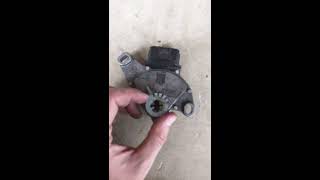
- If visual inspection is inconclusive, use a multimeter to test the sensor. Disconnect the sensor and test for continuity and resistance across the pins for each gear position, comparing your readings to the factory service manual. 🎬 Watch: How to test and replace the inhibitor switch.
- Test the wiring harness for power and ground to ensure the sensor is receiving the correct voltage. Check for voltage at the appropriate pins on the harness-side connector with the key on.
- If the sensor and wiring test good, check the adjustment of the shift linkage and the sensor itself. Ensure the sensor is correctly aligned in the Neutral position.
- If all other tests pass, the issue may be a rare failure of the PCM.
Parts You'll Likely Need
- Transmission Range Sensor / Neutral Safety Switch
(OEM #84540-46010)— This is the most common failure point for the P0705 code on this vehicle due to internal wear and tear from use and exposure to the elements.
Trusted brands: Toyota (OEM), Standard Motor Products, WVE, Aisin
OEM price range: $150-$215
Aftermarket price range: $80-$150
Technical Service Bulletins (TSBs) & Recalls
- While no TSB is specific to the Corolla for P0705, Toyota TSB T-SB-0300-09 for 2005-2009 Tacoma trucks details a similar P0705 issue caused by water intrusion into the engine room main wire harness and junction block, leading to corrosion. This highlights a potential failure point in the wiring system that could be relevant to Corollas experiencing the same code, especially in wet climates.
Platform-Specific Known Issues
- Seized Sensor Removal: Some owners performing a DIY replacement have reported that the sensor can become seized onto the transmission housing shaft due to rust and time. One owner noted in a YouTube repair video that it required several minutes of wiggling and application of penetrating oil to remove the old sensor without breaking it.
Mechanic-Grade Diagnostic Values
- Continuity test of the Park/Neutral Position Switch connector pins. — expected: With the sensor disconnected, there should be continuity between specific pins only when the shifter is in the corresponding gear. For example: Park (P) = continuity between pins 1-3 and 6-9. Reverse (R) = continuity between pins 1-2 and 6-9. Neutral (N) = continuity between pins 1-4 and 6-9. Drive (D) = no continuity on pin 1-8.. Failure: No continuity in the specified position, or continuity in an incorrect position, indicates a faulty switch.
- Voltage test at the ECM connector for the range sensor signals. — expected: With the ignition ON, the voltage should be between 10-14V at the specific pin for the selected gear (e.g., pin 'L' at the ECM when in Low gear) and below 1V for all other gear signal pins.. Failure: No voltage, low voltage, or voltage present on multiple signal wires at the same time indicates a wiring or sensor fault.
Scan Tool Commands That Help
- Toyota Techstream: DATA LIST for Engine and ECT ECU — This function is used to monitor the live data from the Transmission Range Sensor. A technician can observe the 'PNP switch status' while moving the gear selector. If the status shown on the scan tool (e.g., 'ON' for Reverse) does not match the physical gear position, it confirms a fault in the sensor or circuit without needing to physically test wires first.
Wiring & Ground Locations
- B26 — On the front of the transaxle housing, where the shift linkage connects.. This is the main electrical connector for the Park/Neutral Position (PNP) Switch. All diagnostic voltage and continuity tests of the sensor begin at this connector.
- EB — On the left rear of the engine block.. This is a primary engine ground point. A loose or corroded ground at this location can cause various electrical issues, including intermittent and incorrect signals from the transmission range sensor, potentially triggering a P0705 code.
- ECM (Engine Control Module) — Behind the right side of the dashboard, below the glove box.. The ECM receives the gear position signals from the PNP switch. Final wiring checks involve testing for correct voltage signals at the ECM's input pins to differentiate between a sensor/wiring issue and a rare ECM fault.
Real Owner Repair Stories
- YouTube channel 'Repairs and Stuff' (2005 Toyota Corolla, mileage not specified) — Check engine light with code P0705, car would not start in Park but would start in Neutral.
❌ Tried (didn't work) The owner first replaced the Transmission Range Sensor (Neutral Safety Switch), but the P0705 code and symptoms persisted.
✅ What actually fixed it The owner used a multimeter to test the wiring harness. He discovered a broken wire leading to the pin for the Neutral signal. After repairing the broken wire, the car started correctly in Park and Neutral, and the code was cleared.
OEM Part Supersession History
84540-46010→N/A— This part number appears to be stable for the specified vehicle range.
Heads up: While this is the primary OEM number, it is cross-referenced with GM part number 88973596 for the Pontiac Vibe, which shares the same platform. Aftermarket parts may list compatibility with both numbers.
Diagnostic Flowchart
Other Known Issues on This Vehicle
Issues unrelated to this code that are worth knowing about as an owner of this generation:
- Excessive Oil Consumption 🔴 High — Very common on 2003-2005 models with the 1ZZ-FE engine. Caused by a design flaw in the pistons/piston rings that was corrected in mid-2005. Can start as early as 60,000 miles. (Ref: TSB-0134-08 was issued, which updated the dipstick and increased the recommended oil capacity to mitigate the issue. Another TSB detailed a repair method using an updated engine short block.)
- Leaking Intake Manifold Gasket 🟠 Medium — Common across the 2003-2008 generation. The original black rubber gasket shrinks and hardens with age, causing vacuum leaks. (Ref: No official TSB, but Toyota released an updated, more durable orange silicone gasket that resolves the problem.)
- Timing Chain Tensioner Oil Leak 🟡 Low — A common age-related oil leak from the O-ring on the timing chain tensioner.
- Engine Control Module (ECM) Failure 🟠 Medium — Some 2005-2008 models were recalled for potential ECM issues that could cause harsh shifting, engine stalling, or a no-start condition. (Ref: Yes, a recall was issued for certain 2005-2008 models.)
Used vs. New Parts: Buying Guide for This Vehicle
When a used part is the smart pick: A used Transmission Range Sensor from a junkyard can be a cost-effective option for this repair, as it is a simple, external, and easily accessible component. Given the high failure rate is due to wear and corrosion, a part from a lower-mileage, accident-damaged vehicle is a reasonable gamble.
Donor-vehicle mileage cap: roughly under 80000 miles for the part to have meaningful remaining life.
What to inspect on the donor part:
- Check the donor vehicle's mileage; prefer parts from cars under 80,000 miles.
- Inspect the plastic housing for cracks, brittleness, or signs of extreme heat exposure.
- Look at the electrical connector pins. Avoid any sensor with visible green or white corrosion.
- If possible, check the manual shaft lever; it should rotate smoothly without excessive binding or looseness.
Aftermarket brands forum-validated for this vehicle:
- Aisin (Often the OEM supplier for Toyota)
- Standard Motor Products (SMP)
- WVE
Brands owners have reported issues with on this vehicle:
- Unbranded, 'white-box' parts from online marketplaces can be a risk due to inconsistent quality control and may fail prematurely.
Real Owner Stories
Aggregated from forums and TSBs cited above. Mileages and costs reflect what owners reported in those sources.
2005 Pontiac Vibe 1.8L 1ZZ-FE
Symptoms: The engine died immediately when shifting into neutral after the owner washed the engine bay.
What fixed it: The problem resolved itself after a few days of drying out, indicating a temporary short caused by water intrusion.
Source hint: GenVibe.com (Pontiac Vibe Forum) thread titled '05 vibe base auto dies when shifted to neutral'
2006 Toyota Corolla 1.8L 1ZZ-FE
Symptoms: A persistent P0705 code was triggered immediately after the owner tapped into a wire in a 20-pin connector on the passenger side for an aftermarket accessory.
What fixed it: The source identifies the cause as interference or damage to the sensitive wiring harness during the accessory installation.
Source hint: Reddit r/autorepair thread 'dont know how to fix my p0705 code'
2009 Pontiac Vibe GT (1ZZ-FE Platform Mate)
Symptoms: P0705 code appeared simultaneously with an airbag light, a blank gear indicator on the dash, and the engine revving on its own while stopped.
What fixed it: The issues were tied to a low voltage condition (12.2V while running), suggesting a failing alternator or battery was the root cause.
Source hint: Car Talk Community thread 'dtc code p0705 prndl input engine and ect low voltage and other weird stuff'
2003-2008 Toyota Corolla 1.8L 1ZZ-FE
Symptoms: The Transmission Range Sensor was stuck and would not come off the shaft.
What fixed it: Application of penetrating oil and several minutes of wiggling the sensor to break it free from rust and corrosion on the transmission housing shaft.
Source hint: YouTube repair video cited in vehicle_specific_issues
Documented NHTSA Reports
Toyota Manufacturer Reference (Cross-Model)
Symptoms: An owner reported that moving through the gear positions (R, D, 3, 2, 1) required significant physical strength, and the check engine light with code P0705 began coming and going on the dashboard display.
Diagnostic Note: While reported on a different model, NHTSA ODI #11195754 highlights how physical resistance in the shifter can coincide with intermittent P0705 codes.
Related OBD-II Codes
Frequently Asked Questions
Does Toyota TSB T-SB-0300-09 apply to my 2003-2008 Corolla?
I'm replacing the sensor myself; is there a specific part number for the 2003-2008 Corolla and Matrix?
Why does my Corolla only start in Neutral but not in Park?
Can I just adjust the sensor instead of buying a new one for $80-$230?
Is the P0705 code related to the common oil consumption issue on 2003-2005 Corollas?
I'm having trouble removing the old sensor from my transmission. Is this common?
Helpful Videos


We Have This Part in Stock

The information in this article is provided for general reference and educational purposes only. Vehicle specifications, procedures, and part compatibility can vary by production date, trim level, and region. Always consult your vehicle's factory service manual and verify part numbers before purchasing or performing repairs. Safety-critical components such as airbags, seat belts, and braking systems should be installed by a qualified professional.
- Toyota Corolla:
- 🧭 Diagnostic Flowchart
- 🎬 Helpful Videos
- 🛍️ Shop This Part
- What's Unique About the 2003-2008 Toyota Corolla
- Symptoms You May Notice
- Most Likely Causes
- Rare But Worth Checking
- Diagnosis Steps
- Parts You'll Likely Need
- Technical Service Bulletins (TSBs) & Recalls
- Platform-Specific Known Issues
- Mechanic-Grade Diagnostic Values
- Scan Tool Commands That Help
- Wiring & Ground Locations
- Real Owner Repair Stories
- OEM Part Supersession History
- Other Known Issues on This Vehicle
- Used vs. New Parts: Buying Guide for This Vehicle
- Real Owner Stories
- 2005 Pontiac Vibe 1.8L 1ZZ-FE
- 2006 Toyota Corolla 1.8L 1ZZ-FE
- 2009 Pontiac Vibe GT (1ZZ-FE Platform Mate)
- 2003-2008 Toyota Corolla 1.8L 1ZZ-FE
- Documented NHTSA Reports
- Toyota Manufacturer Reference (Cross-Model)
- Related OBD-II Codes
- Frequently Asked Questions
- 🎟️ Get 5% Off