

P0705 on 2004-2009 Toyota Prius: Transmission Range Sensor Fault Causes and Fixes
On a 2004-2009 Prius, code P0705 almost always points to a failed Transmission Range Sensor, also known as the Neutral Safety Switch. This can cause a no-start condition, inability to shift, or erratic gear selection. Expect to pay $150-$220 for an OEM sensor; replacement is a moderately difficult DIY that requires careful alignment.
- P0705 on a Gen 2 Prius means the car's computer is confused about which gear is selected.
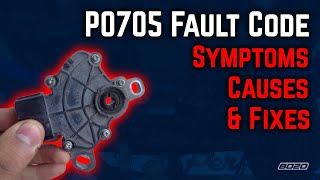
- The most common cause by far is a failed Neutral Safety Switch (Transmission Range Sensor) located on the transaxle.
- Symptoms are serious and include the car not starting or being stuck in gear. Do not drive the vehicle.
- Before replacing the sensor, always inspect its electrical connector and nearby wiring for corrosion or damage, as this is a cheaper fix.
- The correct OEM part number is 89451-47030, and proper alignment during installation is critical for the repair to succeed.
What's Unique About the 2004-2009 Toyota Prius
The second-generation Prius uses a 'shift-by-wire' system, meaning the gear selector in the cabin is an electronic joystick, not a mechanical lever connected to the transmission. The actual gear position is monitored by a sensor, called the Neutral Safety Switch or Transmission Range Sensor, mounted directly on the transaxle. This design means there is no shift linkage to adjust or fail, which is a common cause for this code on other vehicles. Therefore, diagnosis on the Prius almost immediately focuses on the sensor itself and its electrical circuit. Some forum discussions incorrectly state the sensor is part of the dashboard shifter assembly, but for the Gen 2 Prius, it is on the transaxle.
Symptoms You May Notice
- Vehicle will not start (no 'Ready' light)
- Check Engine Light is on
- Master Warning Light (Red Triangle) may be on
- Gear indicator on the dashboard does not match the selected gear
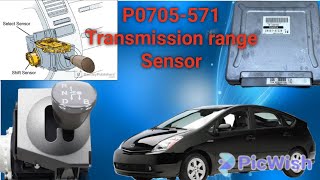
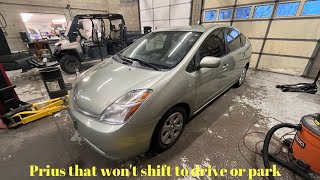
- Inability to shift out of Park 🎬 Watch this video to fix a Prius that won't start or shift
- Vehicle enters 'limp mode' with reduced power
- Reverse lights do not turn on when in Reverse
- Car starts in Neutral but not in Park (a 'wiggle test' on the shifter may temporarily work)
- Replacing the 12V auxiliary battery, as a no-start condition is a common symptom of a weak battery.
- Assuming an internal transaxle failure without first diagnosing the external sensor and its wiring.
- Replacing the in-dash shifter assembly 🎬 Watch this before replacing any parts for a P0705 code; the sensor is on the transaxle itself.
Most Likely Causes
- Failed Transmission Range Sensor (Neutral Safety Switch) 🔴 High Probability → Shop Transmission Assembly The sensor is mounted externally on the transaxle, exposing it to moisture, heat, and road debris, which can lead to internal corrosion and failure over time. It is the most common point of failure for this code.
How to confirm: Use a scan tool to monitor the live data from the sensor while moving the gear selector. If the displayed gear position does not match the shifter's position, the sensor is likely faulty. You can also test the sensor's internal resistance with a multimeter according to the service manual.
Typical fix: Replace the Neutral Safety Switch. This requires accessing the sensor on the transaxle, removing the old one, and installing and aligning the new one. Alignment is critical; the sensor must be installed with the transmission in Neutral. The bolts should be torqued to 8-10 Nm to avoid cracking the plastic housing.
Est. part cost: $150-$220 - Damaged Wiring or Corroded Connector 🟡 Medium Probability The wiring harness leading to the sensor is located underneath the vehicle and can be damaged by road debris or develop corrosion at the connector from water intrusion. A visual inspection is key.
How to confirm: Visually inspect the wiring harness and the electrical connector at the Neutral Safety Switch for any signs of physical damage, frayed wires, or green/white corrosion on the pins. Check for 12V power at the correct pin on the connector with the ignition on.
Typical fix: Repair the damaged section of wiring or clean the connector terminals with an electrical contact cleaner. If corrosion is severe, the connector pigtail may need to be replaced.
Est. part cost: $10-$50
Rare But Worth Checking
- Faulty Hybrid Control ECU: This is extremely rare. Before considering ECU replacement, all other possibilities, including the sensor and its entire circuit, must be exhaustively tested and ruled out. An ECU failure will typically be accompanied by other trouble codes.
Diagnosis Steps
- Connect an OBD-II scanner and confirm the P0705 code is present. Check for any other related codes, like P0706 or P3102.
- Using the scanner's live data function, monitor the parameter for 'Transmission Range' or 'Gear Position'.
- Slowly move the gear selector through P, R, N, D, and B. Verify that the scanner's reading matches the selected gear instantly and accurately.
- If the reading is incorrect, intermittent, or does not change, proceed to inspect the sensor.
- Safely raise and support the vehicle. Locate the Neutral Safety Switch on the front of the transaxle.
- Inspect the electrical connector and wiring harness for any signs of corrosion, moisture, or physical damage.
- If wiring is good, test the sensor. Disconnect the connector and test resistance across the pins as you shift gears (requires a helper or specific service manual values).
- If the sensor tests bad or the wiring is intact, the Neutral Safety Switch is the most likely culprit and should be replaced. Ensure the new sensor is properly aligned before tightening.
Parts You'll Likely Need
- Transmission Range Sensor / Neutral Safety Switch
(OEM #89451-47030)— This is the primary component responsible for reporting the gear position. It is a known failure point on this vehicle, leading directly to the P0705 code.
Trusted brands: Toyota (OEM), Standard Motor Products (SMP), BAIXINDE (Aftermarket)
OEM price range: $150-$220
Aftermarket price range: $40-$120
Related Codes That Often Appear With This One
- P0706 — P0706 indicates a 'Transmission Range Sensor Performance' issue. Since both codes relate to the same sensor, they often appear together when the sensor's signal is erratic or out of the expected range.
- P3102 — This code can be set by the Hybrid Control module when it receives a report of a shifter problem from the transmission control module, directly linking it to the P0705 fault.
Platform-Specific Known Issues
- Owner Experience: DIY Replacement Fixes No-Start: A user on PriusChat with a 2008 model experienced a P0705 code and a rough running condition. After a technician initially replaced the gear selector to no avail, the problem returned. The ultimate cause was found to be the wiring to the park/neutral position switch on the transaxle, which had become damaged. Repairing the wiring resolved the code and restored normal operation. This highlights the importance of checking the wiring harness thoroughly before replacing parts.
- Alignment is Critical During Installation: When replacing the sensor, it is crucial to align it correctly. The transmission should be placed in Neutral, and the new sensor installed to match. Some repair guides suggest using a special alignment tool or simply ensuring the lever and sensor marks line up before tightening the bolts to the specified torque of 8-10 Nm. Over-tightening can crack the sensor's plastic housing, leading to a repeat failure.
Mechanic-Grade Diagnostic Values
- Continuity test of the Park/Neutral Position Switch — expected: With the switch connector disconnected, there should be continuity between specific terminals when the shift lever is in each position (P, R, N, D, etc.). The exact pin combinations require a service manual.. Failure: No continuity in a specific gear position, or continuity in multiple positions at once, indicates a faulty switch.
- Voltage at Select Sensor Connector (S4) — expected: With the connector disconnected and ignition ON, the voltage between terminals VCX3 (S4-3) and body ground should be 9 to 14 V. The voltage between VCX4 (S4-6) and body ground should also be 9 to 14 V.. Failure: Voltage outside the 9-14V range points to a problem in the wiring harness or the HV Control ECU.
Hidden / Shadow Codes Worth Checking
- INF 571: Open or Ground short in shift main sensor circuit. (see via Toyota Techstream or equivalent advanced diagnostic tool.)
- INF 572: +B short in shift main sensor circuit. (see via Toyota Techstream or equivalent advanced diagnostic tool.)
- INF 573: Open or Ground short in select main sensor circuit. (see via Toyota Techstream or equivalent advanced diagnostic tool.)
- INF 574: +B short in select main sensor circuit. (see via Toyota Techstream or equivalent advanced diagnostic tool.)
Scan Tool Commands That Help
- Toyota Techstream: Data List / Live Data Monitoring — Essential for initial diagnosis. Allows the technician to view the gear position ('Shift Sensor Main', 'Shift Sensor Select Main') as reported by the sensor in real-time while moving the shifter. An incorrect or non-changing value confirms a fault in the sensor or its circuit.
Wiring & Ground Locations
- EA1 — Connector joining the Engine Wire and Engine No.4 Wire, located near the radiator fan.. This is a key junction connector for wiring in the engine bay. While not directly for the NSS, damage or corrosion here can cause various electrical issues. A thorough visual inspection of nearby harnesses is prudent.
- Park/Neutral Position Switch Connector — On the front of the transaxle, connected to the Neutral Safety Switch itself.. This is the primary connection point for the sensor. It is exposed to road debris and moisture, making it a common point for corrosion, pin damage, or wiring breaks that directly cause P0705.
Real Owner Repair Stories
- Ford-Trucks.com forum user (2001 Ford F-150 5.4L (Similar P0705 issue, demonstrates a non-sensor failure)) — Flickering O/D light, high idle on startup, and P0705 code only when starting in Park (not Neutral).
❌ Tried (didn't work) Replacing the transmission range sensor with a new Dorman unit.
✅ What actually fixed it The owner found a bent male connector pin in the 36-pin firewall harness connector that he had disconnected while replacing valve cover gaskets. The pin had folded into an 'S' shape upon reassembly, causing a poor connection. Straightening the pin and carefully reconnecting the harness resolved all symptoms. - Toyota Tacoma Owner (NHTSA ODI #11195754) — An owner of a similar Toyota model reported that moving through gear positions required significant strength, and the P0705 code began coming and going on the dashboard display. Despite multiple trips to the dealership, the intermittent nature of the code made it difficult to properly diagnose.
Model Year Variations Within This Range
- 2006-2009: The 2006 model year introduced a minor facelift with cosmetic changes to lights, grille, and interior finishes, plus new options like a backup camera and revised airbags. However, the core powertrain, including the 1.5L 1NZ-FXE engine, transaxle, and the Neutral Safety Switch (P/N 89451-47030), remained unchanged, meaning the causes and fixes for P0705 are consistent across the entire 2004-2009 range.
Diagnostic Flowchart
Other Known Issues on This Vehicle
Issues unrelated to this code that are worth knowing about as an owner of this generation:
- Combination Meter Failure 🔴 High — Very common issue where the entire digital dashboard (speedometer, fuel gauge) goes blank. Often intermittent at first and worse in cold weather. Can cause a no-start or inability to turn the car off. (Ref: Toyota issued a Warranty Enhancement Program (ZEP) for this, but it has since expired. Repair involves replacing a capacitor on the circuit board.)
- Inverter Coolant Pump Failure 🔴 High — A frequent failure item, typically occurring after 100,000 miles. Leads to overheating of the hybrid system, triggering the master warning light (red triangle) and codes like P0A93. If ignored, can cause catastrophic inverter failure. (Ref: Toyota issued a Limited Service Campaign and later a recall (Safety Recall C0U) to replace the pump.)
- Brake Actuator Assembly Failure 🔴 High — Internal malfunction of the brake actuator is common, causing multiple brake-related warning lights (ABS, VSC, BRAKE) and a loud, repetitive buzzing noise. Can lead to a change in brake feel or, in severe cases, reduced braking performance. (Ref: Toyota issued a Warranty Enhancement Program (ZG1) extending coverage to 10 years/150,000 miles, but this has expired for most vehicles.)
- Excessive Oil Consumption 🟠 Medium — The 1NZ-FXE engine is known to consume oil, often starting around 100,000-150,000 miles. This is attributed to low-tension piston rings getting clogged with carbon deposits. Toyota considers consumption up to 1.1 quarts per 600 miles to be 'normal'.
- Unintended Acceleration due to Floor Mat 🔴 High — A well-known issue where an unsecured or incompatible driver's floor mat could trap the accelerator pedal. (Ref: Toyota issued a major safety recall to address this by modifying the pedal and providing redesigned floor mats.)
Used vs. New Parts: Buying Guide for This Vehicle
When a used part is the smart pick: A used part is generally NOT recommended for this repair. The Neutral Safety Switch is an electronic component exposed to significant heat and environmental stress, and its failure is often due to internal wear and corrosion over time. A used part from a junkyard carries a high risk of having a similar level of wear and a short remaining lifespan, making the labor of replacement not worthwhile.
Donor-vehicle mileage cap: roughly under 100000 miles for the part to have meaningful remaining life.
What to inspect on the donor part:
- If considering a used part, inspect the plastic housing for any cracks, especially around the mounting holes.
- Check the electrical connector pins for any signs of green or white corrosion or moisture intrusion.
- Ensure the lever arm moves smoothly without excessive play.
OEM-only on this vehicle (don't cheap out):
- Transmission Range Sensor / Neutral Safety Switch
Aftermarket brands forum-validated for this vehicle:
- Standard Motor Products (SMP) is a widely available aftermarket alternative, often listed as NS-627 or NS684 for this application, and is generally considered a reliable choice if OEM is unavailable.
Brands owners have reported issues with on this vehicle:
- Unnamed, low-cost brands from online marketplaces may have questionable quality control and are often cited in forums as failing prematurely. Sticking to OEM or a reputable aftermarket brand like SMP is a safer investment.
Real Owner Stories
Aggregated from forums and TSBs cited above. Mileages and costs reflect what owners reported in those sources.
2008 Toyota Prius 1.5L — 200000 miles
Symptoms: The vehicle threw a P0705 code and the engine was running rough while slowing down at low speeds. A technician previously replaced the gear selector, but the problem returned.
What fixed it: The issue was ultimately traced to damaged wiring leading to the park/neutral position switch (Neutral Safety Switch) on the transaxle. Repairing the wiring harness resolved the code.
Source hint: PriusChat: 'Rough Engine when slowing down and error code P0705'
Related OBD-II Codes
Frequently Asked Questions
Can I just 'wiggle' the shifter to get my 2004-2009 Prius to start with a P0705 code?
Is there a specific part number I should look for when replacing the Neutral Safety Switch?
I'm installing a new Transmission Range Sensor; what is the torque spec for the bolts?
Does the 2004-2009 Prius have any direct platform mates that share this P0705 failure mode?
Why does my Prius gear indicator on the dashboard not match the shifter position?
Is the P0705 code related to the common dashboard 'Combination Meter' failure?
Helpful Videos

We Have This Part in Stock


The information in this article is provided for general reference and educational purposes only. Vehicle specifications, procedures, and part compatibility can vary by production date, trim level, and region. Always consult your vehicle's factory service manual and verify part numbers before purchasing or performing repairs. Safety-critical components such as airbags, seat belts, and braking systems should be installed by a qualified professional.
- Toyota Prius:
- 🧭 Diagnostic Flowchart
- 🎬 Helpful Videos
- 🛍️ Shop This Part
- What's Unique About the 2004-2009 Toyota Prius
- Symptoms You May Notice
- Most Likely Causes
- Rare But Worth Checking
- Diagnosis Steps
- Parts You'll Likely Need
- Related Codes That Often Appear With This One
- Platform-Specific Known Issues
- Mechanic-Grade Diagnostic Values
- Hidden / Shadow Codes Worth Checking
- Scan Tool Commands That Help
- Wiring & Ground Locations
- Real Owner Repair Stories
- Model Year Variations Within This Range
- Other Known Issues on This Vehicle
- Used vs. New Parts: Buying Guide for This Vehicle
- Real Owner Stories
- 2008 Toyota Prius 1.5L — 200000 miles
- Related OBD-II Codes
- Frequently Asked Questions
- 🎟️ Get 5% Off