

P0705 on 2006-2012 Toyota RAV4: Transmission Range Sensor Failure Causes and Fixes
On a 2006-2012 RAV4, code P0705 is almost always caused by a faulty Transmission Range Sensor (also called a Neutral Safety Switch). This can cause a no-start condition, erratic gear indication on the dash, or the vehicle getting stuck in one gear. Expect to pay $40-$100 for an aftermarket sensor or $150-$250 for an OEM part, with DIY replacement being manageable for those with basic tools.
- P0705 on a 2006-2012 RAV4 points directly to a problem with the Transmission Range Sensor circuit.
- The most common symptom is a no-start condition or an erratic gear display on the dashboard, often accompanied by VSC and 4WD lights.
- The fix is almost always replacing the external Transmission Range Sensor (OEM Part #84540-42010), which fails due to corrosion.
- While driving is not recommended, the issue can often be temporarily mitigated by jiggling the shifter or, in some cases, cleaning the switch's exterior.
- This is a well-known issue across many Toyota models from the same era that use the U-series automatic transmissions.
What's Unique About the 2006-2012 Toyota RAV4
On this generation of RAV4, the P0705 code is a very common and well-documented failure of the external Transmission Range Sensor, also known as the Neutral Safety Switch. Unlike some vehicles where the sensor is internal and requires transmission disassembly, the sensor on the 2006-2012 RAV4 is mounted on top of the transmission case. This location, while making it accessible for replacement after removing the battery and air filter housing, also exposes it to water, road salt, and debris, leading to corrosion and failure. Owners frequently report confusing gear indicators on the dashboard as the primary symptom before a no-start condition develops.
Symptoms You May Notice
- Check Engine Light is on
- Vehicle will not start, or only starts in Neutral
- Gear indicator on the dashboard is blank or shows incorrect/multiple gears selected at once (e.g., 'R' and 'D' lit up simultaneously)
- VSC (Vehicle Stability Control) and/or 4WD warning lights are on, often with the 'slippery road' icon
- Reverse lights do not turn on when in Reverse
- Delayed or harsh gear engagement
- Transmission may enter 'limp mode', stuck in a single gear
- Car may 'slip' into neutral while driving, losing acceleration
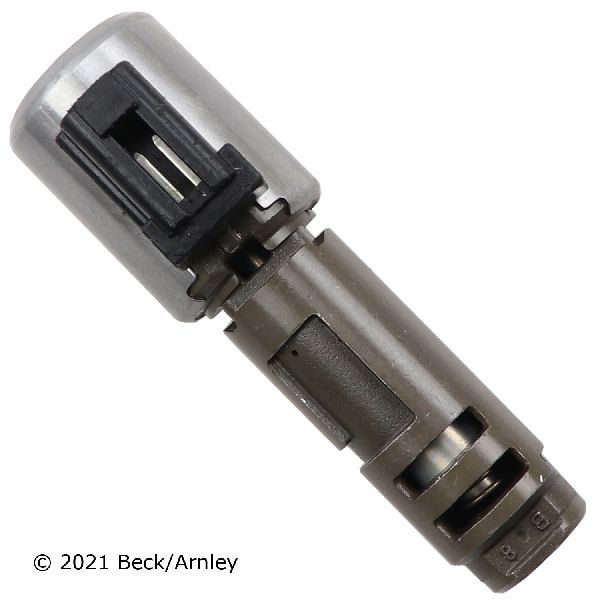
- Replacing the transmission solenoid body when the issue is the external range sensor.
- Replacing the starter motor for a no-start symptom without first checking for transmission-related codes like P0705.
- Assuming a major internal transmission failure due to limp mode or harsh shifting.
Most Likely Causes
- Faulty Transmission Range Sensor (Neutral Safety Switch) 🔴 High Probability → Shop Transmission Assembly The sensor is mounted externally on the transmission, where it is exposed to heat, vibration, and road elements. Water and salt can penetrate the unsealed unit, causing internal corrosion of the copper contact plates and electrical failure over time.
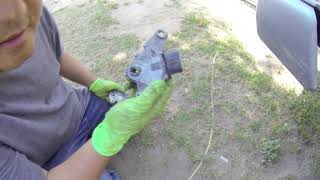
How to confirm: With the key on, move the shifter through all gears. If the dash display is blank, erratic, or doesn't match the shifter position, the sensor is the likely culprit. A multimeter can be used to test for correct continuity between specific pins for each gear position at the sensor's electrical connector, as specified in the service manual. 🎬 See how to test and replace the inhibitor switch yourself A failure to show continuity for a selected gear points to a bad sensor.
Typical fix: Replace the Transmission Range Sensor. This involves removing the battery and air filter housing to access the sensor on top of the transmission, disconnecting the shift cable, and unbolting the old sensor. 🎬 Watch: How to replace the range sensor without special tools
Est. part cost: $40-$100 - Damaged Wiring or Corroded Connector 🟡 Medium Probability The wiring harness leading to the sensor can become brittle from engine heat or damaged by vibration. The connector pins can also corrode from moisture intrusion, causing a poor connection.
How to confirm: Visually inspect the wiring harness and connector for any signs of cracking, fraying, melting, or green/white corrosion on the pins. Perform a continuity test on the wires between the sensor connector and the ECM if damage is suspected. Check for 12V power at the appropriate pin on the connector.
Typical fix: Repair the damaged section of wire or clean the connector terminals with an electrical contact cleaner. If the connector itself is damaged, it may need to be replaced.
Est. part cost: $5-$50 - Misadjusted Sensor or Shift Linkage ⚪ Low Probability
How to confirm: Check if the shift lever position feels loose or doesn't align with the gear indicators (P, R, N, D). During installation of a new sensor, it must be properly aligned. For many Toyotas, this involves aligning marks on the sensor body with the neutral position.
Typical fix: Loosen the sensor mounting bolts and rotate it slightly to align it correctly before tightening. Adjust the transmission shift cable at the transmission lever if necessary.
Est. part cost: $0
Rare But Worth Checking
- Faulty Engine Control Module (ECM): This is very rare. The ECM should only be considered after the sensor, wiring, and adjustment have all been confirmed to be good. The presence of multiple other unrelated fault codes could point towards an ECM issue. It requires professional diagnosis.
Diagnosis Steps
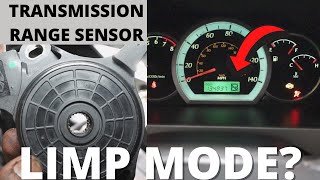
- Scan the vehicle for trouble codes to confirm P0705 is present. 🎬 Watch: A detailed breakdown of the P0705 code on a RAV4 Note any other codes, as their absence strongly points to the sensor itself.
- With the ignition ON (engine off), slowly move the gear selector through each position (P, R, N, D, L). Observe the gear indicator on the instrument cluster. If it is blank, incorrect, or shows multiple gears (e.g., 'R' and 'D' simultaneously), the sensor is highly suspect.
- Visually inspect the Transmission Range Sensor's electrical connector for corrosion, damage, or loose pins. Check the wiring harness for chafing, melting, or breaks.
- If wiring appears intact, use a multimeter to check for 12V power and good ground at the sensor connector.
- Test the sensor itself. Disconnect the connector and use a multimeter to check for continuity between specific pins for each gear position, comparing the readings to the vehicle's service manual specifications. An open circuit where there should be continuity indicates a failed sensor.
- If the sensor fails the test, it needs to be replaced. Ensure the new sensor is properly aligned during installation.
- If the sensor and its direct wiring test good, the problem may lie further up the harness or, rarely, with the ECM. This requires more advanced circuit tracing.
Parts You'll Likely Need
- Transmission Range Sensor / Neutral Safety Switch
(OEM #84540-42010)— This sensor, officially named 'Switch Assy, Neutral Start' by Toyota, is the most common point of failure for the P0705 code on this vehicle due to its exposed location leading to internal corrosion and wear.
Trusted brands: Toyota (Genuine OEM), Aisin (OEM supplier), Standard Motor Products (SMP), WVE
OEM price range: $150-$250
Aftermarket price range: $40-$100
Technical Service Bulletins (TSBs) & Recalls
- T-SB-0277-09 - Issued August 18, 2009, for various Toyota models. This TSB addresses a MIL ON condition with DTC P0705. While it covers a broader range of vehicles and years, it confirms that Toyota is aware of this failure pattern with the transmission range sensor and provides diagnostic steps for technicians. It instructs them to verify the sensor's output signals.
Mechanic-Grade Diagnostic Values
- Continuity check of the Neutral Start Switch connector terminals — expected: With the switch connector disconnected, there should be continuity (less than 1 ohm) between specific pairs of terminals depending on the gear selector position. For example, in 'P' (Park), there should be continuity between terminals 5 and 6. In 'R' (Reverse), between terminals 1 and 9. In 'N' (Neutral), between terminals 5 and 6.. Failure: No continuity (open circuit) between the specified terminals for a given gear position indicates a faulty switch.
- Voltage check at the ECM connector — expected: With the ignition ON, the voltage between specific ECM terminals (e.g., NSW, P, R, D) and ground (E1) should be approximately 9-14 volts only when the corresponding gear is selected. For all other gear positions, the voltage should be below 1.5 volts.. Failure: Incorrect voltage readings (e.g., voltage present when it shouldn't be, or no voltage when it should) points to a problem in the circuit or the switch itself.
Scan Tool Commands That Help
- Toyota Techstream: Data List > All Data > Park/Neutral Position SW — This is the primary method to use before physical inspection. A technician can monitor the live data stream from the switch while moving the gear selector. If the displayed gear position on the scan tool does not match the physical gear selector position, or if multiple positions show as 'ON' simultaneously, it strongly confirms a faulty sensor or circuit without needing to access the component physically.
Wiring & Ground Locations
- Neutral Start Switch Connector (B26/E40) — On top of the transmission housing, underneath the air filter box assembly.. This is the main connector for the sensor. It is a common point for corrosion or damage due to its exposed location. All electrical tests for the sensor (continuity, voltage) begin at this connector.
Real Owner Repair Stories
- YouTube user 'All Tsab' (Toyota RAV4 (specific year in 2006-2012 range)) — Check Engine Light, VSC, and other warning lights on. Gear indicator on the dash was 'confusing', showing both 'R' and 'D' lit up at the same time. The code read was P0705.
✅ What actually fixed it The user replaced the transmission range sensor (neutral safety switch). After replacement, the gear indicator functioned correctly and the check engine light went away. The user noted the old sensor's internal copper plates were likely burnt out. He also mentioned that a sensor from a 4-cylinder Camry is interchangeable. - NHTSA ODI #11195754 (Toyota Tacoma - Cross-Manufacturer Reference) — While reported on a different Toyota model, an owner described a scenario where moving the shifter through positions like R, D, 3, 2, and 1 required significant strength, and the P0705 code would intermittently appear on the dashboard.
OEM Part Supersession History
84540-42010→84540-42010— No supersession found. The part number appears to be consistent for the entire 2006-2012 generation.
Heads up: A user reported that a sensor for a 4-cylinder Toyota Camry is interchangeable, but this should be verified by part number before purchase.
Diagnostic Flowchart
Other Known Issues on This Vehicle
Issues unrelated to this code that are worth knowing about as an owner of this generation:
- Excessive Oil Consumption (2.4L 2AZ-FE Engine) 🔴 High — Very common in 2006-2008 models, typically noticeable after 60,000-100,000 miles due to faulty piston ring design. (Ref: Toyota issued a Warranty Enhancement Program (ZE7) to address this issue.)
- Steering Intermediate Shaft Clunk 🟠 Medium — A common issue across the generation, causing a clunking or knocking noise when turning the steering wheel.
- Water Pump Failure (V6 2GR-FE Engine) 🟠 Medium — Premature water pump failure was common on earlier V6 models (pre-2010), often resulting in coolant leaks. Replacement is labor-intensive.
- Rubber Oil Cooler Line Rupture (V6 2GR-FE Engine) 🔴 High — Pre-2009 V6 models were equipped with a rubber section in the VVT-i oil cooler line that is prone to rupturing, which can cause catastrophic engine failure from rapid oil loss. An all-metal replacement line was issued. (Ref: A Technical Service Bulletin was issued to replace the rubber line with an all-metal part.)
- AWD/Viscous Coupler Failure 🟠 Medium — The rear differential viscous coupler can leak or fail, leading to a whining noise from the rear of the vehicle and potential loss of AWD function. Repair is costly.
Used vs. New Parts: Buying Guide for This Vehicle
When a used part is the smart pick: A used part is generally NOT recommended for this specific repair. The failure mode is wear and corrosion from exposure to the elements. A used part from a junkyard will have similar exposure and an unknown remaining lifespan, making it a risky choice that could lead to doing the job twice.
Donor-vehicle mileage cap: roughly under 40000 miles for the part to have meaningful remaining life.
What to inspect on the donor part:
- If a used part must be considered, source it from a low-mileage, accident-damaged vehicle from a dry, salt-free climate.
- Inspect the electrical connector pins for any signs of green or white corrosion.
- Ensure the plastic housing is not cracked or showing signs of extreme heat damage.
OEM-only on this vehicle (don't cheap out):
- While not strictly 'OEM-only', the genuine Toyota part (84540-42010) or the OEM-supplier part (Aisin) offers the highest probability of a long-lasting repair.
Aftermarket brands forum-validated for this vehicle:
- Aisin (often the original manufacturer for Toyota)
- Standard Motor Products (SMP)
Brands owners have reported issues with on this vehicle:
- While no specific brands were cited for this part on the RAV4, be cautious of unbranded, 'white-box' parts or brands with a poor general reputation like Dorman, as quality can be inconsistent.
Real Owner Stories
Aggregated from forums and TSBs cited above. Mileages and costs reflect what owners reported in those sources.
2006-2012 Toyota RAV4
Symptoms: Check Engine, VSC, and 4WD lights all coming on at once, followed by a no-start or erratic shifting.
What fixed it: Replacing the neutral safety switch (P/N 84540-42010).
Source hint: RAV4World Forums - Multiple threads describe the classic P0705 scenario
2006-2012 Toyota RAV4
Symptoms: Multiple gear indicators being lit at once on the dash; internal copper contacts of the old switch were burnt and corroded.
What fixed it: Replacement of the Transmission Range Sensor.
Source hint: YouTube - A video titled 'Toyota Rav4 P0705 code...'
Toyota 4Runner (Platform Mate)
Symptoms: Blinking 4lo, tight shifter, and P0705 code.
What fixed it: Spraying the switch with penetrating oil provided a temporary fix.
Source hint: r/4Runner on Reddit - In a thread titled 'Neutral safety switch issues'
Toyota Tacoma (Cross-Manufacturer Reference)
Symptoms: An owner reported that shifting between positions like R, D, 3, 2, and 1 required significant strength, and the P0705 code began coming and going on the dashboard (NHTSA ODI #11195754).
What fixed it: Diagnostic verification of the range sensor circuit.
Related OBD-II Codes
Frequently Asked Questions
Is there a specific Toyota technical service bulletin for the P0705 code on my RAV4?
My dashboard shows 'R' and 'D' lit up at the same time. Is this related to P0705?
What is the specific part number I need to fix the P0705 code on my 2006-2012 RAV4?
Can I just clean the sensor instead of replacing it?
Why does my RAV4 only start when I move the shifter to Neutral?
Does the V6 RAV4 have the same sensor issues as the 4-cylinder model?
Helpful Videos

We Have This Part in Stock

The information in this article is provided for general reference and educational purposes only. Vehicle specifications, procedures, and part compatibility can vary by production date, trim level, and region. Always consult your vehicle's factory service manual and verify part numbers before purchasing or performing repairs. Safety-critical components such as airbags, seat belts, and braking systems should be installed by a qualified professional.
- Toyota RAV4:
- 🧭 Diagnostic Flowchart
- 🎬 Helpful Videos
- 🛍️ Shop This Part
- What's Unique About the 2006-2012 Toyota RAV4
- Symptoms You May Notice
- Most Likely Causes
- Rare But Worth Checking
- Diagnosis Steps
- Parts You'll Likely Need
- Technical Service Bulletins (TSBs) & Recalls
- Mechanic-Grade Diagnostic Values
- Scan Tool Commands That Help
- Wiring & Ground Locations
- Real Owner Repair Stories
- OEM Part Supersession History
- Other Known Issues on This Vehicle
- Used vs. New Parts: Buying Guide for This Vehicle
- Real Owner Stories
- 2006-2012 Toyota RAV4
- 2006-2012 Toyota RAV4
- Toyota 4Runner (Platform Mate)
- Toyota Tacoma (Cross-Manufacturer Reference)
- Related OBD-II Codes
- Frequently Asked Questions
- 🎟️ Get 5% Off