

P0705 on 2007-2021 Toyota Tundra: Transmission Range Sensor Guide
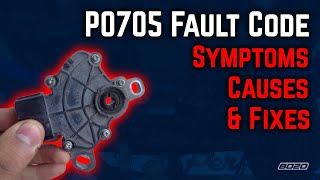
Code P0705 on a 2007-2021 Toyota Tundra almost always points to a faulty Transmission Range Sensor, also known as the Neutral Safety Switch. This part tells the truck's computer what gear is selected. Symptoms include a Check Engine Light, 'Traction Control Off' warning, and no-start or shifting issues. Replacing the sensor, which is located externally on the transmission, is the most common fix, costing around $150-$300 for the part.
- P0705 on a Tundra points directly to a problem with the Transmission Range Sensor (Neutral Safety Switch) circuit.
- Symptoms are often more than just a Check Engine Light; expect a cluster of warnings including 'Traction Control Off' and issues with the gear display and reverse camera.
- The fix is almost always replacing the externally-mounted sensor (Part No. 84540-04010), a job that is manageable for a DIYer with basic tools.
- Before starting the repair, check the simple things first: the 10A backup light fuse under the hood.
- When replacing the sensor, proper alignment in the Neutral position is crucial for correct operation.
What's Unique About the 2007-2021 Toyota Tundra
The 2007-2021 Toyota Tundra (Second Generation) uses an external Transmission Range Sensor mounted on the driver's side of the transmission housing. This is good news for DIYers, as it's accessible without dropping the transmission. However, its location makes it vulnerable to road grime, moisture, and corrosion, which are common failure points. Owners frequently report this code appearing with other warnings like "Traction Control Off," and it often causes intermittent issues with the reverse camera and dash gear display before failing completely. The failure is so common that many owners on forums advise soaking the sensor's mounting bolts in penetrating oil for a few days prior to removal to avoid issues with seized hardware. A corroded and severed braided grounding wire near the sensor is also a common related finding that should be replaced at the same time.
Generation note: The 2007-2021 model years cover the entire second generation of the Toyota Tundra. While there was a significant refresh in 2014, the location and function of the Transmission Range Sensor and the common causes for code P0705 remain consistent across this generation. The associated transmissions (A750E/F 5-speed, A760E/F 6-speed, AB60E/F 6-speed) all use a similar externally mounted sensor. However, it's critical to verify the part number by VIN as there are variations.
Symptoms You May Notice
- Check Engine Light is on.
- "Traction Control Off" message displayed on the dash.
- Gear indicator on the dashboard is blank or incorrect (especially for 'D').
- Vehicle will not start, or will only start in Neutral.
- Reverse lights do not work.
- Backup camera does not engage when in Reverse.
- Transmission enters "limp mode," often stuck in a single gear.
- Manual shifting in 'S' mode is disabled or does not display the selected gear.
- A "clunk" noise may be heard when shifting into or out of reverse.
- 4-Lo light may blink.
- Sluggish acceleration, feels like starting in 2nd or 3rd gear.
- Replacing the transmission valve body or entire transmission. The P0705 code is almost always related to the external sensor or its wiring, not a major internal transmission failure. Some shops may even refuse the repair, believing the transmission is failing.
Most Likely Causes
- Faulty Transmission Range Sensor (Neutral Safety Switch) 🔴 High Probability → Shop Transmission Assembly The sensor is mounted externally on the transmission, exposing it to heat, moisture, and road debris, which can lead to internal failure or corrosion over time. Water intrusion is a common failure mode.
How to confirm: Use a scan tool to monitor the sensor's output data while shifting through gears. If the data is erratic or doesn't match the selected gear (e.g., 'D' does not register), the sensor is likely bad. You can also test the sensor's resistance with a multimeter according to the service manual specifications. Many forum users confirm that intermittent symptoms that worsen over time almost always point to a failing sensor.
Typical fix: Replace the Transmission Range Sensor. Ensure the new sensor is properly aligned during installation, typically by aligning marks on the sensor body with the transmission in Neutral.
Est. part cost: $150-$300 - Damaged Wiring or Corroded Connector 🟡 Medium Probability The wiring harness and connector for the sensor are located under the vehicle and are susceptible to damage from road debris, moisture intrusion, and corrosion. In some rare cases, coolant from a separate leak (like from the heater core) has dripped down and corroded connectors in the passenger kick panel, causing this code.
How to confirm: Visually inspect the wiring harness leading to the sensor for any signs of fraying, melting, or breaks. Disconnect the connector and check for corrosion, bent pins, or moisture inside. Check for continuity between the sensor connector and the ECM.
Typical fix: Repair the damaged section of wiring or clean/replace the connector. The electrical connector can sometimes be harder to remove than the sensor itself.
Est. part cost: $10-$50 - Misadjusted Transmission Range Sensor ⚪ Low Probability → Shop Transmission Assembly
How to confirm: This usually occurs after a recent repair. Check if the sensor's alignment marks line up correctly when the transmission is in Neutral. A scan tool can also show if the computer's reading matches the physical gear position. A symptom can be the engine only starting in Neutral but not Park.
Typical fix: Loosen the sensor's mounting bolts and adjust its position until it is correctly aligned. This is often done with the shifter and transmission in the Neutral position.
Est. part cost: $0 - Blown Fuse ⚪ Low Probability
How to confirm: A Tundra forum user suggested checking the 10A back up lights fuse under the hood as a potential cause. Check the relevant fuses in the fuse box that are associated with the transmission controls and backup lights.
Typical fix: Replace the blown fuse. If it blows again, there is an underlying short circuit that must be diagnosed.
Est. part cost: $1-$5
Rare But Worth Checking
- Faulty Powertrain Control Module (PCM): This is extremely rare. Before condemning the PCM, all other possibilities, including the sensor, wiring, and adjustment, must be exhaustively ruled out. A faulty PCM will typically set other trouble codes as well.
Diagnosis Steps
- Scan for Codes: Use an OBD-II scanner to confirm P0705 is present and note any other codes.
- Check Symptoms: Verify symptoms like an incorrect gear display, no-start condition, or no reverse lights.
- Inspect Fuses: Check fuses related to the transmission and backup lights, specifically the 10A backup light fuse in the under-hood fuse box.
- Visual Inspection: Get under the truck and locate the Transmission Range Sensor on the driver's side of the transmission. Inspect the electrical connector and wiring for any obvious signs of damage, corrosion, or looseness. Also inspect the nearby braided ground strap, as they are known to corrode and sever.
- Live Data Scan: With a capable scan tool (like Toyota Techstream), view the live data for the Transmission Range Sensor. Shift the lever through P, R, N, D and observe if the scanner's reading matches the shifter position. If the reading is erratic, incorrect, or shows multiple gears at once, the sensor is the primary suspect.
- Test the Sensor Circuit: If you have a multimeter and service manual, perform continuity checks on the sensor itself. Disconnect the sensor and check for continuity between specific terminals for each gear position as outlined in the repair manual.
- Check Adjustment: Ensure the sensor has not come loose and is properly aligned. The alignment is critical for proper operation. The standard procedure involves loosening the mounting bolt, placing the shifter in Neutral, and aligning the groove on the sensor with the neutral basic line on the transmission body.
- Replace the Sensor: If the sensor is confirmed to be faulty, replace it. Many owners recommend soaking the mounting bolts with penetrating oil (like PB Blaster) for a few days beforehand, as they can be difficult to remove. Be careful not to move the gear selector shaft inside the transmission while the sensor is off, as this can cause internal linkage issues.
Parts You'll Likely Need
- Transmission Range Sensor / Neutral Safety Switch
(OEM #84540-04010)— This is the electronic switch that fails, causing the P0705 code. It is the most direct and common fix. This part number replaces the older 84540-71010.
Trusted brands: Toyota (OEM), Aisin
OEM price range: $125-$200
Aftermarket price range: $80-$150
Platform-Specific Known Issues
- source — A user on Tundras.com with a 2014 Tundra reported getting the P0705 code along with the 'Traction Control Disabled' light. Symptoms were intermittent at first, with the gear indicator for 'D' going blank. After checking fuses and connections, they replaced the neutral safety switch, which solved the problem. They noted that spraying the bolts with PB Blaster for three days prior made removal very easy, and the total job took about 1.5 hours.
- source — Another Tundras.com user with a 2013 Tundra described a cascade of symptoms including a flashing 4-Lo light, 'Trac Off' light, no backup camera, and no cruise control. An AutoZone scan pointed to P0705. The fix was replacing the transmission range sensor.
- source — A forum member on Tundras.com shared a critical tip after replacing their sensor: be careful not to move the transmission's selector shaft while the switch is removed. They also noted that replacing a corroded and severed braided ground wire located near the sensor was a good idea while access was available.
Mechanic-Grade Diagnostic Values
- Continuity Test of Park/Neutral Position Switch — expected: With the sensor connector disconnected, there should be continuity (near zero ohms) between specific terminals depending on the gear selected. For example, in Park, there should be continuity between the 'P' terminal and the ground/common terminal. The exact pinout must be referenced from the vehicle's specific service manual.. Failure: No continuity when there should be, or continuity in the wrong gear positions, indicates a faulty switch.
- Techstream Live Data - Shift Position — expected: The 'Shift Position' value in the ECT Data List should display 'P', 'R', 'N', 'D', etc., and match the physical position of the gear selector exactly as it is moved.. Failure: The data display is blank, shows an incorrect gear, or shows multiple gears simultaneously. A common failure is for 'D' to not register while other gears do.
Scan Tool Commands That Help
- Toyota Techstream: Data List for ECT (Electronically Controlled Transmission) — This is the primary diagnostic step after retrieving the P0705 code. It allows the technician to see exactly what gear position the ECM is receiving from the sensor in real-time, without removing any parts. This can instantly confirm if the sensor is sending faulty signals.
Wiring & Ground Locations
- D35 (example connector) — The main electrical connector for the Park/Neutral Position Switch, located on the driver's side of the transmission housing where the sensor is mounted.. This connector is the primary point for electrical testing (voltage and continuity checks) of the sensor and its harness. It is exposed to the elements and prone to corrosion.
- Braided Ground Strap — Near the transmission range sensor, connecting the transmission/engine block to the vehicle frame.. Multiple owners have found this ground strap corroded or completely severed while replacing the range sensor. A bad ground can cause a host of electrical issues, and while not a direct cause of P0705, it's a critical 'while you're in there' check and replacement item.
Real Owner Repair Stories
- Tundras.com forum user (2017 Tundra SR5 CrewMax) — Intermittent Check Engine Light, 'Traction Control Disabled' message, gear indicator blank when in 'D', manual 'S' mode not working. Wiggling the shifter sometimes helped temporarily.
❌ Tried (didn't work) Clearing the code (it would return).
✅ What actually fixed it Replacing the Transmission Range Sensor (Neutral Safety Switch). The owner noted that several repair shops were hesitant to do the job, suspecting a larger transmission failure, but the sensor was the true cause. - Tundras.com forum user (2011 Tundra 4x4 4.6L) — P0705 code, no 'D' light on dash, flashing 4HI and 4LO lights, ABS light on.
❌ Tried (didn't work) Replacing the range sensor., Changing transmission fluid., Checking all fuses., Visually inspecting wiring harness., Replacing the main battery ground wire.
✅ What actually fixed it The user was still diagnosing but found high resistance (20+ ohms) on the OBD2 port's ground pin (pin 4) and high resistance from the BCM ground. This points to a rare but possible cause: a bad ground connection somewhere in the chassis or a faulty Body Control Module (BCM) or ECM, rather than the sensor itself. This highlights the need for electrical diagnosis when a new part doesn't solve the problem. - Toyota Owner Report — In a similar manufacturer case, an owner reported that shifting into various positions like R, D, 3, 2, or 1 required significant physical strength, and the P0705 code would intermittently appear and disappear on the dashboard display (NHTSA ODI #11195754).
OEM Part Supersession History
84540-71010→84540-04010— Standard part number consolidation and update by Toyota.
Heads up: These parts are generally considered interchangeable for the applicable Tundra models.84540-0C010→N/A— This is a different part number also listed for 2007-2021 Tundras, likely for a different transmission (e.g., AB60F 6-speed vs A750F 5-speed).
Heads up: This highlights the critical need to verify the correct part number using the vehicle's VIN, as multiple sensors were used across the generation.
Model Year Variations Within This Range
- 2007-2021: The second-generation Tundra used several different automatic transmissions, including the 5-speed A750E/F (with the 4.7L V8) and the 6-speed A760E/F (4.6L V8) and AB60E/F (5.7L V8). While the P0705 code applies to all, the specific part number for the range sensor may differ. For example, 84540-04010 is common, but 84540-0C010 is also used. Always confirm with the VIN.
Diagnostic Flowchart
Other Known Issues on This Vehicle
Issues unrelated to this code that are worth knowing about as an owner of this generation:
- Secondary Air Injection Pump (AIP) Failure 🔴 High — Common, especially in earlier years of the generation (2007-2012). Often triggers limp mode. (Ref: Multiple TSBs exist, such as T-SB-0144-14 and T-SB-0230-12, addressing the issue with updated parts or ECM logic. A warranty enhancement program was also offered.)
- Cam Tower Oil Leak 🟠 Medium — A well-known issue on the 5.7L V8 (3UR-FE), where the sealant for the cam housing fails, causing an oil leak, often onto the exhaust manifold. Can occur at various mileages. (Ref: No official recall, but it is a widely documented repair. Repair is labor-intensive and can cost $3,000-$5,000 at a dealership.)
- Frame Rust / Corrosion 🔴 High — Particularly prevalent in vehicles from the 'salt belt'. While earlier Tundras had more severe recalls, the 2nd gen is also susceptible. Toyota extended warranty coverage for this issue on 2007-2008 models under program ZH7. (Ref: Warranty Enhancement Program ZH7 for 2007-2008 models. Earlier recalls (for 1st gen) set a precedent for Toyota addressing frame rust.)
- Cracked Exhaust Manifolds 🟠 Medium — The stock manifolds, particularly on the 5.7L V8, are prone to cracking due to heat cycles, causing a ticking noise on startup.
- Water Pump Failure 🟠 Medium — The water pump on the 5.7L V8 is a known failure point, often starting with a slow leak of pink, dried coolant from the weep hole.
Used vs. New Parts: Buying Guide for This Vehicle
When a used part is the smart pick: A used sensor from a reputable auto recycler is a reasonable option if on a tight budget, especially if it comes from a low-mileage, accident-damaged vehicle. The failure is often due to environmental exposure over time, so a newer, cleaner part has a good chance of success.
Donor-vehicle mileage cap: roughly under 80000 miles for the part to have meaningful remaining life.
What to inspect on the donor part:
- Check for a clean, corrosion-free electrical connector and pins.
- Ensure the sensor body is not cracked or physically damaged.
- Ask for the donor vehicle's mileage and check for signs of water or mud intrusion.
- If possible, test the part for continuity with a multimeter before purchasing.
OEM-only on this vehicle (don't cheap out):
- While not strictly OEM-only, the genuine Toyota or Aisin (the OEM manufacturer) part is highly recommended. The price difference is often minimal compared to the labor involved, and their reliability is proven.
Aftermarket brands forum-validated for this vehicle:
- Aisin (OEM supplier)
Brands owners have reported issues with on this vehicle:
- Unnamed, low-cost brands from online marketplaces have a higher risk of premature failure or incorrect signaling, potentially leading to repeat repairs. It's generally advised to avoid them for this specific part.
Real Owner Stories
Aggregated from forums and TSBs cited above. Mileages and costs reflect what owners reported in those sources.
2014 Toyota Tundra
Symptoms: Intermittent symptoms where the gear indicator for 'D' would go blank and the 'Traction Control Disabled' light would illuminate.
What fixed it: Replacement of the neutral safety switch (Transmission Range Sensor) after soaking mounting bolts in PB Blaster for three days.
Source hint: Tundras.com: P0705 help - https://www.tundras.com/threads/p0705-help.138403/
2013 Toyota Tundra
Symptoms: Flashing 4-Lo light, 'Trac Off' light, no backup camera, and no cruise control.
What fixed it: Replacing the transmission range sensor.
Source hint: Tundras.com: Transmission range sensor - https://www.tundras.com/threads/transmission-range-sensor.12457/
2007-2021 Toyota Tundra
Symptoms: Sudden onset of multiple warning lights including 4-low flashing, no backup camera/lights, and no cruise control.
What fixed it: Replacing the transmission range sensor.
Source hint: Tundras.com: Transmission range sensor - https://www.tundras.com/threads/transmission-range-sensor.12684/
Toyota Owner Report (NHTSA ODI #11195754)
Symptoms: The owner reported that shifting between moving positions (R, D, 3, 2, 1) required significant physical strength. Additionally, the check engine light code P0705 began appearing and disappearing intermittently on the dashboard display.
What fixed it: The report noted multiple failed attempts at dealership diagnosis for the intermittent code and physical shifting difficulty.
Related OBD-II Codes
Frequently Asked Questions
Why is my Tundra's 'Traction Control Off' light on along with the Check Engine Light for P0705?
My gear indicator for 'D' is blank on the dash, but other gears show up. Is this related to P0705?
Can a blown fuse cause my Tundra to throw a P0705 code?
Is there a specific part number for the Transmission Range Sensor I should look for?
Why does my Tundra only start when the shifter is in Neutral?
I'm replacing the sensor myself; is there anything I should be careful of?
Helpful Videos

We Have This Part in Stock

The information in this article is provided for general reference and educational purposes only. Vehicle specifications, procedures, and part compatibility can vary by production date, trim level, and region. Always consult your vehicle's factory service manual and verify part numbers before purchasing or performing repairs. Safety-critical components such as airbags, seat belts, and braking systems should be installed by a qualified professional.
- Toyota Tundra:
- 🧭 Diagnostic Flowchart
- 🎬 Helpful Videos
- 🛍️ Shop This Part
- What's Unique About the 2007-2021 Toyota Tundra
- Symptoms You May Notice
- Most Likely Causes
- Rare But Worth Checking
- Diagnosis Steps
- Parts You'll Likely Need
- Platform-Specific Known Issues
- Mechanic-Grade Diagnostic Values
- Scan Tool Commands That Help
- Wiring & Ground Locations
- Real Owner Repair Stories
- OEM Part Supersession History
- Model Year Variations Within This Range
- Other Known Issues on This Vehicle
- Used vs. New Parts: Buying Guide for This Vehicle
- Real Owner Stories
- 2014 Toyota Tundra
- 2013 Toyota Tundra
- 2007-2021 Toyota Tundra
- Toyota Owner Report (NHTSA ODI #11195754)
- Related OBD-II Codes
- Frequently Asked Questions
- 🎟️ Get 5% Off