

P0706 on 2002-2005 Ford Explorer: Transmission Range Sensor Causes and Fixes
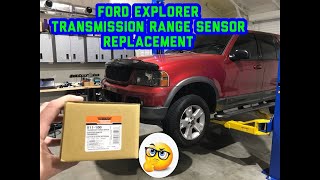
On a 2002-2005 Explorer, P0706 is almost always caused by a faulty external Transmission Range Sensor (TRS) located on the side of the 5R55W/S transmission. A key symptom is the engine not starting in Park but starting in Neutral. The part is relatively inexpensive (~$50-$100) and can be replaced by a DIYer with moderate skills. Proper alignment of the new sensor is critical.
- P0706 on a 2002-2005 Explorer points directly to a problem with the Transmission Range Sensor (TRS).
- The most common symptom is the engine not starting in Park but starting correctly in Neutral.
- Unlike newer Explorers, the sensor is located externally on the side of the transmission, making it a relatively simple and inexpensive DIY repair.
- Before replacing the sensor, always inspect its electrical connector for corrosion or damage, as this can cause the same code.
- Proper alignment of the new sensor during installation, by lining up the hash marks in Neutral, is critical for it to function correctly.
What's Unique About the 2002-2005 Ford Explorer
For the 2002-2005 (third generation) Ford Explorer equipped with the 5R55W or 5R55S transmission, the Transmission Range Sensor (TRS) is an external component bolted to the driver's side of the transmission case. This makes it significantly easier and cheaper to diagnose and replace compared to the 2006 and newer models, where the sensor is integrated inside the transmission as part of a 'molded lead frame' assembly that requires dropping the transmission pan. This external placement makes it a common and accessible DIY repair for owners of these specific model years.
Symptoms You May Notice
- Check Engine Light is on
- Engine will not start when the shifter is in Park, but starts in Neutral
- Erratic or harsh shifting
- Delayed engagement when shifting into Drive or Reverse
- Transmission may go into 'limp mode' (stuck in a single gear, often 2nd or 3rd)
- Incorrect gear selection indicator on the dashboard
- Reverse lights may not work
- Vehicle may start in a gear other than Park or Neutral
- Replacing the transmission valve body or entire transmission when only the inexpensive external sensor is faulty.
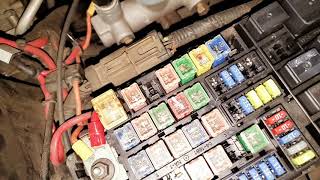
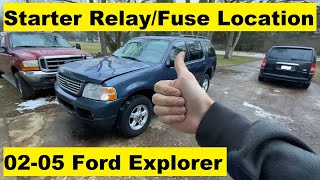
- Replacing the starter or ignition switch for a no-start condition, when the root cause is the TRS preventing the starter from engaging in Park. 🎬 Watch: How to locate the starter relay and fuse
Most Likely Causes
- Faulty Transmission Range Sensor (TRS) 🔴 High Probability → Shop Transmission Assembly The external sensor is exposed to road grime, moisture, and heat from the transmission and exhaust, leading to internal wear and electrical failure over time. Water intrusion is a common failure mode.
How to confirm: With the key on, shift through the gears and check if the gear indicator on the dash corresponds correctly. The most definitive test is a no-start in Park but a successful start in Neutral. A scan tool can also monitor the sensor's output PID to check for erratic readings or values that don't match the shifter position.
Typical fix: Replace the Transmission Range Sensor. This involves disconnecting the wiring, removing the shift linkage from the sensor, unbolting the old sensor, and installing the new one. The new sensor must be properly aligned by lining up the hash marks with the transmission in Neutral.
Est. part cost: $50-$120 - Corroded or Damaged Wiring/Connector 🟡 Medium Probability The connector for the TRS is located on the side of the transmission and is susceptible to water intrusion, road salt, and physical damage, leading to poor electrical contact and green/white corrosion on the pins.
How to confirm: Visually inspect the wiring harness and connector going to the TRS for any green/white corrosion, bent pins, or frayed wires. Wiggle the connector while an assistant monitors for changes in symptoms or live data on a scan tool.
Typical fix: Clean the connector terminals with an electrical contact cleaner. If corrosion is severe or wires are broken, the connector pigtail may need to be replaced.
Est. part cost: $15-$40 - Misaligned Transmission Range Sensor ⚪ Low Probability → Shop Transmission Assembly This typically only occurs after a recent transmission service or if the sensor's mounting bolts have loosened over time. It can also happen if the internal linkage was bent during service.
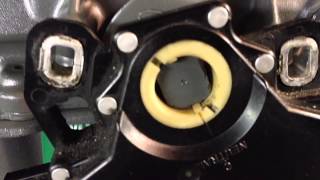
How to confirm: Place the transmission manually in Neutral. Check if the sensor's alignment marks (two fine lines) line up perfectly. The vehicle may start in a gear other than Park or Neutral if misaligned.
Typical fix: Loosen the sensor's two mounting bolts, place the transmission shifter and the sensor lever in the Neutral position, align the marks on the sensor's inner and outer body, and retighten the bolts to specification.
Est. part cost: $0
Rare But Worth Checking
- Worn or Damaged Shift Linkage: If the cable or bushings connecting the gear shifter to the transmission are worn, the TRS may not be able to accurately report the selected gear because the transmission's manual valve isn't fully in position. Check for excessive play in the shifter.
- Dirty Transmission Fluid: → Shop Transmission Assembly Extremely dirty or contaminated transmission fluid can potentially interfere with the movement of the manual valve, which the TRS is connected to, leading to an indirect fault.
Diagnosis Steps
- Verify the Code: Use an OBD-II scanner to confirm P0706 is the active code. Note any other transmission-related codes like P0705 or P0707.
- Check for Obvious Symptoms: Test if the vehicle starts in Park and then in Neutral. A 'no-start in Park, yes-start in Neutral' is a strong indicator of a bad TRS. Also check if the reverse lights work.
- Inspect the Connector: Locate the TRS on the driver's side of the transmission. Carefully inspect its electrical connector and wiring for corrosion, damage, or loose connections. This is a common point of failure.
- Check Sensor Alignment: Place the shifter in Neutral. Locate the two small alignment hash marks on the body of the TRS. They should be perfectly aligned. If not, alignment is the issue.
- Test the Sensor (Optional): Using a multimeter, you can back-probe the sensor connector to check for correct voltage signals for each gear position, comparing it to the specifications in a service manual.
- Replace the Sensor: If the sensor is suspected to be faulty, replace it. Disconnect the battery, remove the shift linkage lever (usually a single nut), unplug the connector, and remove the two mounting bolts.
- Align New Sensor: Install the new sensor, leaving the bolts slightly loose. Ensure the transmission is in Neutral, then rotate the sensor until the alignment marks line up perfectly before tightening the bolts.
- Clear Codes and Test Drive: After any repair, clear the OBD-II codes and perform a test drive, shifting through all gears to ensure the problem is resolved and the code does not return.
Parts You'll Likely Need
- Transmission Range Sensor (Neutral Safety Switch)
(OEM #1L2Z-7F293-AA)— This is the most common failure point for code P0706 on this specific vehicle generation due to its external location and exposure to the elements.
Trusted brands: Motorcraft (OEM P/N: SW5978, which supersedes 1L2Z-7F293-AA and is now replaced by 5L2Z-7F293-AA), Standard Motor Products (SMP), Dorman
OEM price range: $90-$130
Aftermarket price range: $40-$80
Related Codes That Often Appear With This One
- P0705 — This code for 'Transmission Range Sensor Circuit Malfunction' points to a general electrical fault in the same sensor circuit and is often seen with P0706.
- P0707 — This code for 'Transmission Range Sensor Circuit Low Input' indicates a specific type of electrical failure (low voltage) within the same sensor or circuit.
- P1702 — A Ford-specific code for an intermittent signal from the TRS, which directly correlates with the range/performance issue of P0706.
Technical Service Bulletins (TSBs) & Recalls
- While no TSB is specifically for P0706 on this platform, a technical service document for the 5R55W transmission notes that a bent internal linkage (caused by improper service) can lead to a P0705 code and misalignment of the TRS, which could also manifest as a P0706 performance issue.
Platform-Specific Known Issues
- Real Owner Experience: No Start in Park: A user on Ford Truck Enthusiasts forum with a 2002 Explorer reported the classic P0706 symptom: the truck would not crank in Park but started fine in Neutral. The issue was resolved by replacing the external TRS on the side of the transmission.
- Alignment is Critical: A technical guide for the 5R55W transmission emphasizes that proper alignment of the TRS is mandatory. The two score marks on the inner and outer body of the sensor must be perfectly aligned when the transmission is in Neutral to ensure correct operation. A popular YouTube tutorial demonstrates how to perform this alignment without special tools. 🎬 Watch: How to align the sensor without special tools
Mechanic-Grade Diagnostic Values
- Digital TR Sensor Switch State Logic (Live Data) — expected: The PCM monitors four on/off switches (TR1, TR2, TR3, TR4) inside the sensor. Each gear position has a unique combination of open and closed switches.. Failure: A scan tool showing a combination of switch states that does not correspond to any valid gear position indicates a faulty sensor or a problem in the wiring between the sensor and PCM. For example, if the shifter is in Drive but the switch pattern is invalid or intermittent.
- TR Sensor Circuit Voltage to Ground — expected: Greater than 9 volts on all four signal circuits with the Key On, Engine Off, when tested at the transmission harness connector.. Failure: Voltage less than 9 volts on any of the four circuits points to a wiring issue (open/short) or a problem with the PCM, rather than the sensor itself.
Scan Tool Commands That Help
- Ford IDS (or equivalent like FORScan): Live Data PID Monitoring (TR1, TR2, TR3, TR4) — This is the most effective way to diagnose an intermittent P0706. By watching the real-time status (Open/Closed) of the four internal range switches while an assistant moves the shifter, you can spot the exact moment the signal becomes irrational. Wiggling the harness connector at the same time can help differentiate a bad sensor from a bad connection.
- Ford IDS (or equivalent): Key ON Engine OFF (KOEO) Self-Test — Running a KOEO self-test commands the PCM to check all its inputs. This can sometimes flag an intermittent fault in the TRS circuit that isn't currently active but has been stored, helping to confirm the TRS system as the source of the problem.
Wiring & Ground Locations
- C167 — The main 16-pin electrical connector for the transmission, located on the driver's side of the transmission case, where the Digital Transmission Range Sensor connects to the main vehicle harness.. This is the primary point for all diagnostic testing of the TRS. Corrosion or pushed-out pins in this connector are a common cause of P0706 and related codes. All voltage and resistance tests should be performed at this connector to isolate the fault between the PCM, wiring, and the sensor.
- G101 & G104 — G101 is located on the left (driver's) side front of the engine compartment, near the battery junction box. G104 is located behind the left front headlamp assembly.. These are primary ground points for the Powertrain Control Module (PCM). A corroded or loose ground at these locations can cause erratic behavior and incorrect voltage readings across multiple sensors, including the TRS, leading to a P0706 code even if the sensor and wiring are good. Intermittent scanner communication issues can also be a symptom of a bad PCM ground.
- PCM Power and Signal Return Pins — At the 104-pin PCM connector, typically located in the engine bay near the firewall.. Specifically, pins 76, 77, and 103 are power grounds for the PCM. Pin 91 is the Signal Return (sensor ground). If the TRS and its direct wiring test good, a fault must be traced back to the PCM. Verifying a solid ground at these specific pins is a critical step before condemning the PCM itself.
Real Owner Repair Stories
- ExplorerForum.com (2005 Ford Explorer) — Vehicle would not start in Park, but would start in Neutral. Check engine light was on with code P0706.
❌ Tried (didn't work) Initially suspected a starter or battery issue.
✅ What actually fixed it The owner replaced the Transmission Range Sensor (TRS) on the side of the transmission. After replacement and proper alignment, the vehicle started correctly in Park and the code was resolved. - Ford-Trucks.com (2002 Ford Explorer 4.0L) — Transmission would not shift out of 1st gear, check engine light and 'O/D Off' light flashing. Codes P0706 and P0705 were present.
❌ Tried (didn't work) Clearing the codes would only provide temporary relief.
✅ What actually fixed it The problem was a worn-out shift cable bushing at the transmission connection point. The bushing had disintegrated, causing excessive play in the linkage. This slack prevented the TRS from getting a clear reading of the gear position. Replacing the small plastic bushing restored proper shifter feel and resolved all codes and symptoms.
OEM Part Supersession History
1L2Z-7F293-AA→5L2Z-7F293-AA (Motorcraft Service P/N SW6253)— Standard part revision and replacement over time. The original part number is no longer available from Ford.
Heads up: The new part number 5L2Z-7F293-AA is the correct and direct replacement for the original 1L2Z-7F293-AA for all 2002-2005 Explorer models. There are no known incompatibility issues.
Model Year Variations Within This Range
- 2002-2005: This generation of Explorer could be equipped with either the 5R55W ('W' for Wide ratio) or 5R55S ('S' for Synchronous) transmission. However, for the purposes of diagnosing P0706, this distinction is not critical as both transmissions use the same external Digital Transmission Range (DTR) sensor and share the same diagnostic and repair procedures for this specific code.
Diagnostic Flowchart
Other Known Issues on This Vehicle
Issues unrelated to this code that are worth knowing about as an owner of this generation:
- Cracked Rear Tailgate Panel 🟠 Medium — Extremely common. Cracks typically appear below the rear window glass, often near the emblem. Caused by material stress and thermal expansion. (Ref: Multiple TSBs issued (e.g., TSB 02-25-6), but no recall. This was the subject of a class-action lawsuit.)
- 4.0L SOHC V6 Timing Chain Cassette Failure 🔴 High — Very common, especially on higher-mileage engines (typically over 100k miles). Presents as a rattling or ticking noise ('death rattle') from the engine, particularly at startup or certain RPMs. (Ref: TSB 04-15-04 was issued for this issue on related vehicles. Repair is extremely labor-intensive as the rear cassette requires engine or transmission removal.)
- 5R55W/S Transmission Solenoid Body/Servo Bore Wear 🔴 High → Shop Transmission Assembly — Common as vehicles age. Can cause harsh/delayed shifts, slipping, or failure to engage gears. Often requires replacement of the solenoid block or repair of worn servo bores.
- Thermostat Housing Cracks 🟠 Medium — The original plastic thermostat housing is prone to cracking and leaking coolant over time. An updated metal design is available in the aftermarket.
Used vs. New Parts: Buying Guide for This Vehicle
When a used part is the smart pick: A used Transmission Range Sensor from a junkyard is a reasonable option for this repair if on a tight budget. Since the part is external to the transmission, it can be easily inspected and swapped. It is not a high-wear mechanical item, but rather an electronic switch that fails from exposure.
Donor-vehicle mileage cap: roughly under 120000 miles for the part to have meaningful remaining life.
What to inspect on the donor part:
- Inspect the electrical connector pins for any signs of green or white corrosion.
- Check the plastic housing for cracks or heat damage.
- Ensure the manual lever arm moves smoothly without binding.
- If possible, choose a donor vehicle from a dry, salt-free climate to minimize the risk of corrosion.
Aftermarket brands forum-validated for this vehicle:
- Motorcraft (OEM)
- Standard Motor Products (SMP) is generally considered a high-quality aftermarket alternative.
Brands owners have reported issues with on this vehicle:
- While Dorman offers a budget-friendly option, owner reviews on forums for their electronic parts are mixed. For a critical part like a range sensor that can leave you stranded, it may be worth spending more for an OEM or premium aftermarket brand if the budget allows.
Documented NHTSA Reports
While the following reports involve other Ford models, they describe the same P0706 and P0707 range sensor failures common to this era of Ford electronics. NHTSA ODI #11337934 notes a vehicle failed to start due to a transmission range sensor fault with codes P0706 and P0707. Another report, NHTSA ODI #11725706, describes a vehicle becoming unsafe and unstable to drive after triggering P0706 and P0707 codes. In some instances, such as NHTSA ODI #11694428, owners experienced a sudden downshift at highway speeds accompanied by a wrench icon and code P0706. Moisture has also been cited as a potential factor in these failures, as seen in NHTSA ODI #11470882, where a mechanic suspected moisture caused intermittent P0706 and P1702 codes. Finally, NHTSA ODI #11650215 describes a case where a dealership recommended replacing the molded lead frame and transmission fluid after diagnosing codes P0706 and P0707.
Real Owner Stories
Aggregated from forums and TSBs cited above. Mileages and costs reflect what owners reported in those sources.
2002 Ford Explorer XLT
Symptoms: The truck would not crank while the shifter was in Park, but it started fine when moved to Neutral.
What fixed it: Replacement of the external Transmission Range Sensor (TRS) on the side of the transmission.
Source hint: ExplorerForum.com thread: '2002 XLT, No start in Park, Starts in Neutral.'
2002 Ford Explorer
Symptoms: Classic P0706 symptom: the truck would not crank in Park but started fine in Neutral.
What fixed it: Replacing the external TRS on the side of the transmission.
Source hint: Ford-Trucks.com (Ford Truck Enthusiasts) 'Real Owner Experience: No Start in Park'
Related OBD-II Codes
Frequently Asked Questions
My 2002 Explorer won't start in Park but starts fine in Neutral. Is this related to P0706?
Does TSB 04-15-04 apply to the P0706 code on my 4.0L V6 Explorer?
I just replaced my TRS but the code is still there. Do I need a special tool for alignment?
Can a P0706 cause my Explorer to get stuck in one gear?
Is the Transmission Range Sensor on the 2002-2005 Explorer internal or external?
Could a bent internal linkage cause a P0706 on my 5R55W transmission?
Helpful Videos
We Have This Part in Stock


The information in this article is provided for general reference and educational purposes only. Vehicle specifications, procedures, and part compatibility can vary by production date, trim level, and region. Always consult your vehicle's factory service manual and verify part numbers before purchasing or performing repairs. Safety-critical components such as airbags, seat belts, and braking systems should be installed by a qualified professional.
- Ford Explorer:
- 🧭 Diagnostic Flowchart
- 🎬 Helpful Videos
- 🛍️ Shop This Part
- What's Unique About the 2002-2005 Ford Explorer
- Symptoms You May Notice
- Most Likely Causes
- Rare But Worth Checking
- Diagnosis Steps
- Parts You'll Likely Need
- Related Codes That Often Appear With This One
- Technical Service Bulletins (TSBs) & Recalls
- Platform-Specific Known Issues
- Mechanic-Grade Diagnostic Values
- Scan Tool Commands That Help
- Wiring & Ground Locations
- Real Owner Repair Stories
- OEM Part Supersession History
- Model Year Variations Within This Range
- Other Known Issues on This Vehicle
- Used vs. New Parts: Buying Guide for This Vehicle
- Documented NHTSA Reports
- Real Owner Stories
- 2002 Ford Explorer XLT
- 2002 Ford Explorer
- Related OBD-II Codes
- Frequently Asked Questions
- 🎟️ Get 5% Off