

P0706 on 2011-2019 Ford Explorer: Transmission Range Sensor Fault Causes and Fixes
On a 2011-2019 Ford Explorer, code P0706 is most often caused by a faulty Transmission Range Sensor, which is integrated into the transmission's internal molded lead frame assembly. This part has a high failure rate and was subject to a warranty extension program (19N01). Repair involves replacing the lead frame inside the transmission pan and is a moderately difficult job.
- P0706 on a 2011-2019 Explorer indicates a problem with the Transmission Range Sensor signal.
- The most likely cause is a failure of the internal transmission lead frame, which contains the sensor.
- Before condemning the lead frame, always inspect the external wiring harness and connector for damage or corrosion, as this is a known secondary cause.
- This repair is not recommended for beginners, as it requires working inside the transmission.
- Check with a Ford dealer for any open warranty extensions or recalls related to the lead frame before paying for the repair.
What's Unique About the 2011-2019 Ford Explorer
The 2011-2019 Ford Explorer uses a 6F-series automatic transmission (the 6F35 with the 2.3L EcoBoost or the 6F50/55 with the 3.5L V6). Unlike older vehicles with an easily accessible external neutral safety switch, the Transmission Range Sensor (TRS) in these models is integrated into a component called the molded lead frame. This lead frame is a plastic and metal assembly containing sensors and electrical pathways, located inside the transmission and mounted to the valve body. Failures of this lead frame assembly are a well-documented and common problem across many Ford models that use this transmission family, making it the primary suspect for a P0706 code.
Symptoms You May Notice
- Check Engine Light or Wrench Light is on
- Erratic, harsh, or delayed shifting
- Transmission enters 'limp mode' (stuck in one gear, often 3rd or 5th)
- Incorrect or missing gear selection indicator on the instrument cluster
- Vehicle will not start, or only starts in Neutral
- Reverse lights do not illuminate
- Sudden, unexpected downshift while driving
- Shift indicator light flashing and then going off (NHTSA ODI #11458070)
- Vehicle stalling or failing to restart for several minutes after a fault (NHTSA ODI #11482536)
- Replacing the entire transmission. One documented case shows a dealer recommended a full transmission replacement when the ultimate fault was a simple wiring issue in the engine harness.
- Replacing the valve body. The lead frame is often replaced with the valve body, but the valve body itself is not typically the cause of a P0706 code.
Most Likely Causes
- Faulty Internal Transmission Lead Frame Assembly 🔴 High Probability → Shop Transmission Assembly The Transmission Range Sensor is integrated into the lead frame on the 6F-series transmissions. This part has a high failure rate due to heat cycles, vibration, and fluid exposure inside the transmission, which can cause internal circuit or sensor failure. This issue was so common Ford issued Customer Satisfaction Program 19N01. NHTSA ODI #11729234 notes that this failure can result in the vehicle being unable to read the transmission gear.
How to confirm: Use a high-end scan tool to monitor the Transmission Range Sensor (TRS) PID while shifting through the gears. If the reading is erratic, drops out, or doesn't match the selected gear, the lead frame is the likely culprit. A more definitive test is to measure resistance at the transmission connector C168 per TSB 13-5-27. This diagnosis is often made after ruling out external wiring issues and checking for other specific DTCs like P0720 or P0722 which were also covered under program 19N01.
Typical fix: Replace the entire molded lead frame assembly, which is located inside the transmission oil pan. This also requires draining and replacing the transmission fluid (Mercon LV), replacing the pan gasket, and often the transmission filter.
Est. part cost: $150-$350 - Wiring Harness or Connector Damage 🟡 Medium Probability The main wiring harness connector at the transmission case is exposed to road debris, moisture, and heat. This can lead to corrosion on the pins, pushed-out pins, or breaks in the wires, causing an intermittent or lost signal.
How to confirm: Visually inspect the main circular connector at the transmission case (C168) for any signs of corrosion, damage, or loose pins. A technician may perform a continuity or pin-out test from the Transmission Control Module (TCM) connector C175T to the transmission connector C168 to find an open or shorted wire.
Typical fix: Repair the damaged section of the wiring harness or clean/replace the corroded connector. In some cases, the entire engine harness may need repair if the break is further up.
Est. part cost: $10-$100 for connector cleaning supplies or wire repair, significantly more if a harness section needs replacement.
Rare But Worth Checking
- Misaligned Shifter Cable: If the shifter cable is stretched or has been incorrectly adjusted after a previous repair, the manual valve lever on the transmission may not perfectly align with the sensor's detents, causing an out-of-range reading. This is less common but possible.
- Faulty Powertrain Control Module (PCM): This is very rare. The PCM should only be considered after all other possibilities, including the lead frame and all wiring, have been definitively ruled out by a professional. NHTSA ODI #11715240 mentions P0706 occurring alongside PCM processor faults (P0606, P0607), suggesting that in complex cases, the PCM may be involved.
Diagnosis Steps
- Connect an OBD-II scanner and confirm P0706 is present, noting any other transmission-related codes (especially P0707, P0720, P0722).
- Check for eligibility under Ford's Customer Satisfaction Program 19N01 by contacting a dealer with the VIN, even if expired, as it confirms the commonality of the issue.
- Check the level and condition of the transmission fluid. Burnt or dirty fluid can indicate larger internal problems, but is not a direct cause of P0706.
- Visually inspect the main electrical connector (C168) and wiring harness going to the transmission for obvious signs of damage, corrosion, or fluid intrusion.
- Use a scan tool with live data capability to monitor the Transmission Range Sensor (TRS) parameter. Shift the lever slowly through P-R-N-D-L and watch the data. The reading should be stable and match the gear position. Jumps, glitches, or incorrect readings point to a problem.
- If live data is erratic or unavailable, perform a resistance test as outlined in Ford TSB 13-5-27. With the key off and connector C168 disconnected, measure resistance between pin 8 and pins 4, 5, 6, and 7. Any reading over 5.0 Ohms indicates a faulty internal lead frame/TR sensor.
- If the resistance test passes, perform a continuity and short-to-ground/power test on the wiring harness between the PCM connector (C175T) and the transmission connector (C168) to rule out an external wiring fault.
- If the wiring harness tests good and the resistance test failed, the fault is confirmed to be the internal lead frame assembly.
Parts You'll Likely Need
- Transmission Molded Lead Frame Assembly
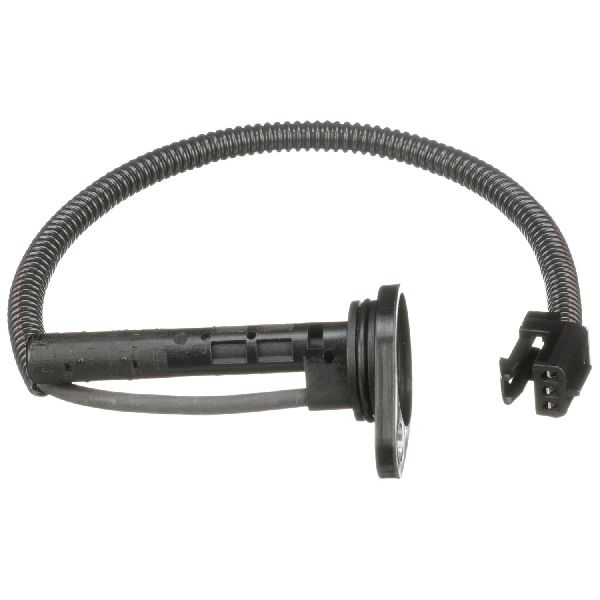
(OEM #AL3Z-7G276-D (latest), supersedes AL3Z-7G276-A and AL3Z-7G276-B.)— This assembly, officially called a 'Connector' by Ford, contains the integrated Transmission Range Sensor, which is the most common failure point for code P0706 on this vehicle.
Trusted brands: Motorcraft, Dorman
OEM price range: $200-$350
Aftermarket price range: $150-$250 - Automatic Transmission Fluid (Mercon LV)
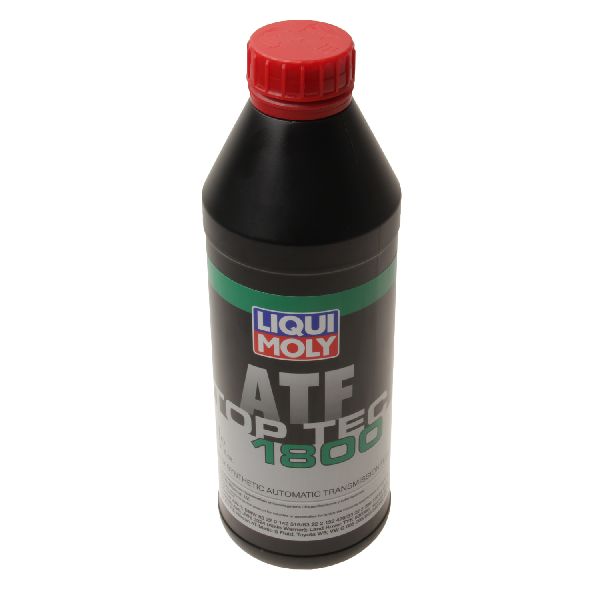
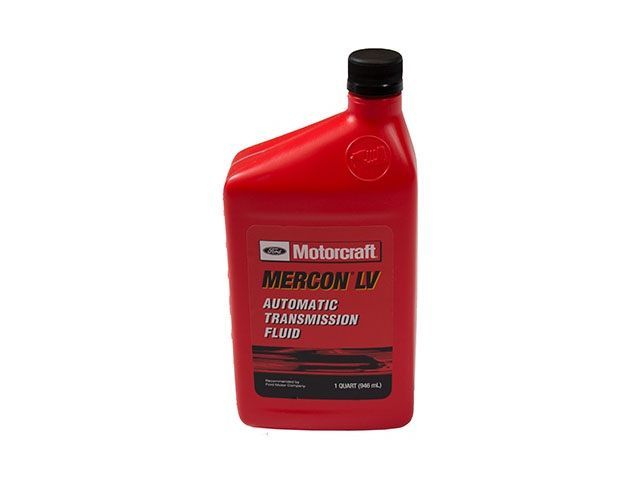
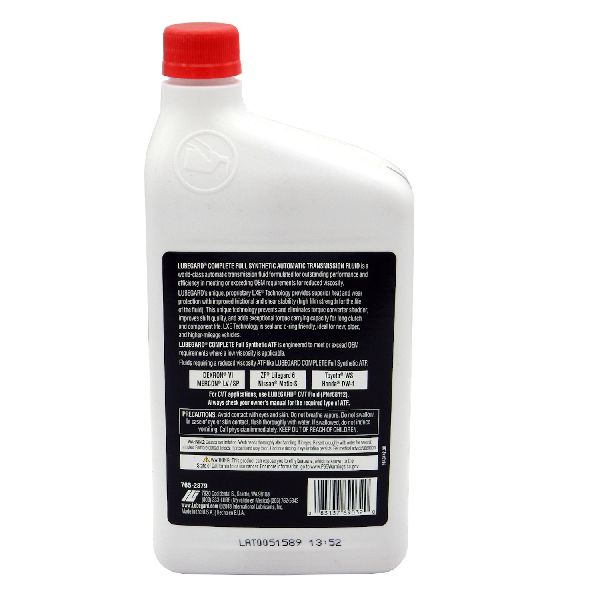
(OEM #XT-10-QLVC)— The transmission fluid must be drained to access the lead frame and should be replaced with 5-7 quarts of new fluid during the repair.
Trusted brands: Motorcraft, Valvoline, Castrol
OEM price range: $8-$12 per quart
Aftermarket price range: $7-$10 per quart - Transmission Pan Gasket and Filter — The pan gasket should always be replaced when the pan is removed, and it is best practice to replace the filter at the same time.
Trusted brands: Motorcraft, Fel-Pro, Wix
OEM price range: $40-$70
Aftermarket price range: $25-$50
Related Codes That Often Appear With This One
- P0707 — This code means 'Transmission Range Sensor Circuit Low Input' and often appears with P0706, pointing strongly to a fault in the sensor or its wiring.
- P1702 — A Ford-specific code for 'Transmission Range Sensor Circuit Intermittent,' which is another indicator of a failing sensor or wiring connection.
- P0720 / P0722 — These codes relate to the Output Speed Sensor (OSS), which is also part of the molded lead frame. The presence of these codes alongside P0706 makes a faulty lead frame diagnosis almost certain. These codes were specifically mentioned in Ford's 19N01 program.
- P1921 — Transmission Range Signal issue; often found in conjunction with P0706 and P0707 during lead frame failures (NHTSA ODI #11650215).
Technical Service Bulletins (TSBs) & Recalls
- TSB 13-5-27: Addresses intermittent slipping, neutral-out, or 5th gear start from stop due to high resistance in the digital TR sensor for early models (through 2011). It provides a specific resistance test procedure at the C168 connector to condemn the sensor.
- TSB 16-0009: While not directly for P0706, this TSB addresses reprogramming modules and highlights the complexity of the vehicle's electronic systems, which can sometimes be related to transmission communication issues.
Platform-Specific Known Issues
- Ford issued Customer Satisfaction Program 19N01 which extended the warranty on the molded lead frame to 10 years or 150,000 miles for certain vehicles. While this program has expired for most or all vehicles, its existence is a strong confirmation of the widespread nature of this specific part failure. The program covered replacement if specific DTCs like P0720, P0722, P0731, or P1500 were present.
Mechanic-Grade Diagnostic Values
- TR Sensor Circuit Resistance (at connector C168) — expected: Less than 5.0 Ohms. Failure: Any measurement greater than 5.0 Ohms indicates a faulty TR sensor (internal lead frame).
- Digital TR Sensor Switch State Logic (Live Data) — expected: The combination of four switches (TR1, TR2, TR3, TR4) should show a unique Open/Closed pattern for each gear position (e.g., Park: Closed, Open, Open, Closed).. Failure: An incorrect or intermediate pattern that doesn't match a valid gear selection indicates a sensor or shifter alignment issue.
- TR Sensor Circuit Voltage to Ground (at connector C168) — expected: Greater than 9 volts on all four signal circuits with Key On.. Failure: Voltage less than 9 volts on any of the circuits points to a wiring or PCM issue, not necessarily the lead frame itself.
Scan Tool Commands That Help
- Ford IDS (or equivalent): Key ON Engine OFF (KOEO) and Key ON Engine Running (KOER) Self-Tests — To command the PCM to run a full system check, which can help identify related transmission codes that may not be present as active DTCs but are stored from intermittent events.
- Ford IDS (or equivalent): Live Data PID Monitoring (TR1, TR2, TR3, TR4) — To view the real-time status (Open/Closed) of the four internal range switches. Wiggling the harness or shifting gears while watching these PIDs can reveal intermittent faults that a static resistance test might miss.
Wiring & Ground Locations
- C168 — The main external vehicle harness connector at the transmission case.. This is the primary test point for checking resistance and voltage to determine if the fault is internal (lead frame) or external (wiring/PCM).
- C175T — The main harness connector at the Powertrain Control Module (PCM).. This is the other end of the circuit, used for performing continuity tests on the harness wires between the PCM and the transmission.
- TR Sensor Pins at C168 — Within the C168 connector on the transmission side.. TSB 13-5-27 specifies testing resistance between Pin 8 (ground reference) and Pins 4, 5, 6, and 7 (the four signal circuits) to diagnose the sensor.
Real Owner Repair Stories
- Reddit user in r/f150 (2015 Ford F-150 3.5L EcoBoost (with 6R80, similar to 6F50)) — Codes P0720 and P0722 (Output Speed Sensor), which are also on the lead frame.
❌ Tried (didn't work) Installed a used lead frame from a 2012 model out of a pick-and-pull yard.
✅ What actually fixed it The problem became worse after installing the used part, with the transmission slamming into gear. This serves as a cautionary tale against using salvaged electronic components for this repair, as they may be faulty or incompatible. The final resolution was not posted. - NHTSA ODI #11650215 — An owner reported a wrench light appearing on the dashboard specifically when a downshift occurred. A dealership diagnosis confirmed codes P0706, P0707, P1702, and P1921, leading to a recommendation to replace the molded lead frame, main control, gaskets, and filter.
OEM Part Supersession History
AL3Z-7G276-A, AL3Z-7G276-B→AL3Z-7G276-D— Revisions to improve reliability and address the high failure rate of the integrated sensors.
Heads up: While a forum user reported issues when swapping a 2012 part into a 2015 truck, it is generally understood that the latest revision 'D' is the correct and backward-compatible service part. Always use the latest revision and avoid old stock or used parts.
Diagnostic Flowchart
Other Known Issues on This Vehicle
Issues unrelated to this code that are worth knowing about as an owner of this generation:
- Power Transfer Unit (PTU) Failure 🔴 High — Common on AWD models, often after 60,000 miles. Caused by overheating of the non-serviceable 'lifetime' fluid. Symptoms include a burning/propane smell, whining/grinding noises, and fluid leaks. (Ref: TSB 19-2017 for fluid leaks from the intermediate shaft seal.)
- A-Pillar Exterior Trim Detachment 🟠 Medium — Widespread issue where the exterior trim on either side of the windshield becomes loose or detaches completely, creating a road hazard. (Ref: Ford Safety Recall 24S02)
- Rear Suspension Toe Link Fracture 🔴 High — Affects 2013-2019 models, especially in regions with road salt. Seizure of the cross-axis ball joint can cause the toe link to fracture, leading to a loss of steering control. (Ref: Recalls 16V-245, 19V-435, 20V-675 (20S62), 21S32)
- Water Leaks into Cabin/Spare Tire Well 🟠 Medium — Commonly reported, especially in earlier years (2011-2015). Leaks originate from clogged sunroof drains, poorly sealed body seams, or liftgate grommets, causing wet carpets and potential electrical issues. (Ref: TSB 23-2181, TSB 22-2074)
- Electronic Throttle Body Failure 🟠 Medium — Common on 5th generation models, causing sudden power loss, hesitation, and the vehicle entering 'limp mode' with a wrench light.
- Internal Water Pump Failure (3.5L V6) 🔴 High — The water pump is located internally and driven by the timing chain. When it fails, it can leak coolant directly into the engine oil, leading to catastrophic engine damage if not caught immediately.
Used vs. New Parts: Buying Guide for This Vehicle
When a used part is the smart pick: For this specific repair, using a salvaged or used part is NEVER recommended. The molded lead frame is a known high-failure component due to its design and internal location. A used part has an unknown history and a high probability of either being faulty already or failing shortly after installation.
What to inspect on the donor part:
- Not applicable. Do not source this part from a donor vehicle.
OEM-only on this vehicle (don't cheap out):
- Molded Lead Frame Assembly. Given the critical function and high failure rate, a new OEM Motorcraft part (AL3Z-7G276-D) is the most reliable choice to ensure a lasting repair.
Aftermarket brands forum-validated for this vehicle:
- Dorman offers a replacement (part # 601-111) that is often considered when the OEM part is on backorder or unavailable. However, forum discussions show a preference for OEM if available.
Brands owners have reported issues with on this vehicle:
- Unbranded, no-name parts from online marketplaces should be avoided due to the lack of quality control for such a sensitive electronic component.
Real Owner Stories
Aggregated from forums and TSBs cited above. Mileages and costs reflect what owners reported in those sources.
2013 Ford F-150 (6R80 Transmission) — ~150000 miles
Symptoms: Sudden, unexpected downshifts while driving and issues occurring after the 19N01 warranty extension expired.
What fixed it: Replacement of the lead frame assembly.
Cost: $1,600-$3,000
Source hint: Reddit - r/f150: 'Recall 19N01 expire, what now?'
Ford Fusion (6F35 Transmission)
Symptoms: Repeated transmission failures where dealer 'rebuild' kits only postponed the inherent problems.
What fixed it: The owner noted that standard dealer rebuild kits were often temporary fixes for the chronic issues of this transmission family.
Source hint: Reddit - r/fordfusion: 'Ford 6F35 transmission warning!'
Documented NHTSA Reports
Ford F-150 (6R80 Transmission)
Symptoms: An owner reported that the shift indicator light would flash and go off, accompanied by the check engine and wrench lights for codes P0706, P0707, P1702, and P1921. The vehicle shifted erratically and eventually quit altogether before starting back up (NHTSA ODI #11458070).
Ford F-150 (6R80 Transmission)
Symptoms: A dangerous incident was reported where the vehicle stalled in the middle of an intersection and took almost two minutes to restart, generating codes P0706 and P0707. The owner noted difficulty in sourcing the replacement Transmission Lead Frame assembly (NHTSA ODI #11482536).
Related OBD-II Codes
Frequently Asked Questions
Does Ford's Customer Satisfaction Program 19N01 apply to my 2011-2019 Explorer?
My Explorer is starting in 5th gear from a stop; does TSB 13-5-27 address this?
Can I just replace the Transmission Range Sensor (TRS) on my 6F-series transmission?
What is the specific resistance test for the lead frame mentioned in TSB 13-5-27?
Is the P0706 code related to the common PTU failures on AWD Explorers?
Helpful Videos
We Have This Part in Stock



The information in this article is provided for general reference and educational purposes only. Vehicle specifications, procedures, and part compatibility can vary by production date, trim level, and region. Always consult your vehicle's factory service manual and verify part numbers before purchasing or performing repairs. Safety-critical components such as airbags, seat belts, and braking systems should be installed by a qualified professional.
- Ford Explorer:
- 🧭 Diagnostic Flowchart
- 🎬 Helpful Videos
- 🛍️ Shop This Part
- What's Unique About the 2011-2019 Ford Explorer
- Symptoms You May Notice
- Most Likely Causes
- Rare But Worth Checking
- Diagnosis Steps
- Parts You'll Likely Need
- Related Codes That Often Appear With This One
- Technical Service Bulletins (TSBs) & Recalls
- Platform-Specific Known Issues
- Mechanic-Grade Diagnostic Values
- Scan Tool Commands That Help
- Wiring & Ground Locations
- Real Owner Repair Stories
- OEM Part Supersession History
- Other Known Issues on This Vehicle
- Used vs. New Parts: Buying Guide for This Vehicle
- Real Owner Stories
- 2013 Ford F-150 (6R80 Transmission) — ~150000 miles
- Ford Fusion (6F35 Transmission)
- Documented NHTSA Reports
- Ford F-150 (6R80 Transmission)
- Ford F-150 (6R80 Transmission)
- Related OBD-II Codes
- Frequently Asked Questions
- 🎟️ Get 5% Off