

P0706 on 2012-2016 Ford Focus: Transmission Range Sensor Causes and Fixes
On a 2012-2016 Ford Focus, code P0706 usually points to a failing Transmission Control Module (TCM), a widespread issue with the DPS6 transmission. While the code blames the Transmission Range Sensor, the root cause is often the TCM not providing power to it. A new sensor is cheap (~$40), but a TCM replacement can cost over $1,000 if not covered by Ford's warranty extension program 14M02.
- P0706 on your Focus is a serious code that likely points to a problem with the infamous PowerShift transmission's control system.
- The most probable cause is a failed Transmission Control Module (TCM), not the sensor itself.
- Before authorizing any repairs, check with a Ford dealer using your VIN to see if your vehicle is covered by an extended warranty for the TCM (Program 14M02). This could save you over $1,000.
- A key diagnostic step is to confirm if the range sensor is receiving a 5-volt signal; if not, the TCM is the problem.
- Do not be surprised if a mechanic recommends replacing the TCM, as this is the definitive fix for this code on these cars in a majority of cases.
What's Unique About the 2012-2016 Ford Focus
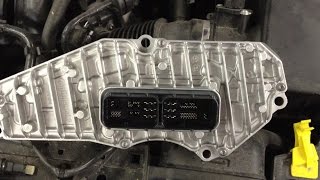
The 2012-2016 Ford Focus uses the DPS6 'PowerShift' transmission, a dry dual-clutch automatic that is infamous for widespread issues. While P0706 points to the range sensor, on this specific car, the most common culprit is actually the Transmission Control Module (TCM) that is bolted to the outside of the transmission. These TCMs have an extremely high failure rate, often due to internal solder joints cracking from heat and vibration, which led to a class-action lawsuit and extended warranty programs from Ford. The TCM often fails internally and stops sending the required 5-volt reference signal to the range sensor, which triggers the P0706 code even if the sensor itself is perfectly fine.
Symptoms You May Notice
- Check Engine Light is on
- Vehicle will not start or is difficult to start
- Inability to shift out of Park
- Harsh or delayed gear engagement
- Transmission gets stuck in one gear ('limp mode')
- Incorrect gear selection displayed on the instrument cluster (e.g., all positions lit up)
- Sudden loss of power while driving 🎬 Watch: Common symptoms of a failing PowerShift TCM explained.
- Replacing the Transmission Range Sensor when the TCM is the actual cause. Many owners and shops replace the sensor first because the code points to it, only to find the problem persists because the underlying issue was a lack of power from the faulty TCM. This is the most common misdiagnosis for P0706 on a DPS6-equipped Ford.
Most Likely Causes
- Faulty Transmission Control Module (TCM) 🔴 High Probability → Shop Transmission Assembly The TCM used with the DPS6 transmission has a well-documented history of premature failure due to internal electrical faults, such as cracked solder joints. Ford has issued warranty extensions (like program 14M02) covering this part for up to 10 years or 150,000 miles due to the high failure rate.
How to confirm: With the key on, engine off, disconnect the Transmission Range Sensor connector and use a multimeter to check for a 5-volt reference signal on the correct wire (typically a white wire with a green tracer, but always verify with a wiring diagram for your specific vehicle). If there is no voltage, the TCM is almost certainly faulty. 🎬 See how to diagnose and solve 5-volt reference issues.
Typical fix: Replace the Transmission Control Module. This part must be programmed to the vehicle's VIN, which requires a dealer or a shop with specialized tools like Ford's IDS software.
Est. part cost: $500-$1000+ - Faulty Transmission Range Sensor (TRS) ⚪ Low Probability → Shop Transmission Assembly The sensor is an external electromechanical part exposed to heat and vibration. While it can fail, it is far less common than TCM failure on this platform. It's often replaced unnecessarily.
How to confirm: If a 5-volt reference is confirmed at the connector, the sensor itself is the next suspect. You can test its internal resistance or check for a changing signal as the shift lever is moved. Given the low cost of the part (~$40), replacement is a common, though often incorrect, diagnostic step.
Typical fix: Replace the Transmission Range Sensor. It is located on the front of the transmission and is accessible after removing the battery and battery tray.
Est. part cost: $30-$80 - Damaged Wiring or Connector ⚪ Low Probability The wiring harness runs near the hot transmission and can be subject to heat, vibration, and potential chafing over time. The connector pins can also corrode.
How to confirm: Visually inspect the wiring harness and connector between the TCM and the TRS for any signs of melting, chafing, corrosion, or broken wires. Perform a continuity test on each wire in the circuit from the TCM connector to the TRS connector.
Typical fix: Repair the damaged section of the wiring harness or replace the connector pigtail. Use dielectric grease on the connector to prevent future corrosion.
Est. part cost: $10-$50
Diagnosis Steps
- Scan the vehicle for all stored trouble codes in the PCM and TCM. Note any other codes that are present, especially U0100, P0902, or P0606.
- Check for any applicable warranty extensions or recalls from Ford. Contact a Ford dealer with your VIN and specifically ask about Customer Satisfaction Program 14M02 for the TCM and 19N08 for the clutch assembly. Your vehicle may be eligible for a free replacement.
- Gain access to the Transmission Range Sensor (TRS) on the front of the transmission. This typically requires removing the airbox, battery, and battery tray.
- With the ignition ON and engine OFF, disconnect the TRS electrical connector.
- Using a multimeter set to DC Volts, probe the power supply wire in the harness connector (verify with a diagram, but it is often a White wire with a Green tracer). Check for a 5-volt reference signal from the TCM.
- If 5 volts are NOT present, the problem is almost certainly a failed TCM or a break in the power wire. Given the platform's history, the TCM is the primary suspect.
- If 5 volts ARE present, the TCM is likely powering the circuit correctly. The problem is likely the TRS itself, the ground wire, or the signal wires back to the TCM.
- Inspect the connector and wiring for any visible damage, corrosion, or loose pins. Repair as needed.
- If no wiring damage is found and 5V is present, replacing the Transmission Range Sensor is the next logical step.
- After any repair involving the TCM or clutch, clear the codes and perform the transmission adaptive learning procedure using a capable scan tool to ensure proper shifting.
Parts You'll Likely Need
- Transmission Control Module (TCM)
(OEM #AE8Z-7Z369-F (and subsequent revisions))— This is the most common point of failure on the 2012-2016 Focus for transmission-related codes, including P0706.
Trusted brands: Motorcraft
OEM price range: $600-$1000+
Aftermarket price range: $300-$700 (Remanufactured) - Transmission Range Sensor
(OEM #AE8Z-7F293-A)— This is the component directly named by the trouble code. While less common than a TCM failure, the sensor can fail and is often replaced as part of the diagnosis.
Trusted brands: Motorcraft, Standard Motor Products (SMP), Dorman
OEM price range: $50-$90
Aftermarket price range: $30-$60
Related Codes That Often Appear With This One
- P0705 — This code for 'Transmission Range Sensor Circuit Malfunction' is a very similar code that can be triggered by the same faults, namely a bad TCM or wiring issue.
- U0100 — Lost Communication With ECM/PCM 'A'. This code frequently appears alongside P0706 when the TCM is failing and causing communication issues on the vehicle's CAN bus network.
- P0902 — Clutch Actuator 'A' Circuit Low. This is another common DPS6 code directly related to TCM failure, as the TCM also controls the electric clutch actuators.
- P0606 — ECM/PCM Processor Fault. This code can be stored when the TCM has an internal microprocessor failure, which is a common failure mode for these units.
Technical Service Bulletins (TSBs) & Recalls
- Customer Satisfaction Program 14M02: Extends the warranty on the Transmission Control Module (TCM) to 10 years or 150,000 miles for certain vehicles due to high failure rates causing no-start, loss of power, and other shifting symptoms.
- Customer Satisfaction Program 19N08: Extends the warranty on the clutch assembly and provides a software update due to complaints of shuddering, slipping, and vibration. This is separate from the TCM issue but affects the same transmission.
Platform-Specific Known Issues
- The DPS6 PowerShift transmission in this vehicle is subject to numerous customer satisfaction programs, warranty extensions, and a class-action lawsuit. Ford extended the warranty on the clutches (Program 19N08) and Transmission Control Module (TCM) (Program 14M02) for many of these vehicles. Before paying for a repair, owners should always check with a Ford dealer with their VIN to see if their vehicle is covered. Long wait times for the TCM part have been a common complaint.
- Even if the check engine light is intermittent, a dealership can still diagnose the issue and perform warranty work if a fault code like P0706 or P0902 is stored in the module's history.
Mechanic-Grade Diagnostic Values
- Scan Tool Live Data - Transmission Range (TR) Sensor Switches — expected: On a scan tool, the status of four switches (C1, C2, C3, C4) should change in a specific pattern as the shifter is moved through PRNDL. For example, the 'C3' switch should change state (e.g., from 'Closed' to 'Open') when moving out of Park.. Failure: If one of the switches, like C3, does not change state when moving the shifter, it indicates a fault in the sensor, wiring, or the TCM's ability to read the signal.
- Transmission Range Sensor (TRS) Voltage - General Test — expected: The sensor signal voltage should vary predictably between approximately 0.5V and 4.5V as the gear selector is moved. While specific values vary, a common pattern is Park ≈ 0V, Reverse ≈ 5V, Neutral ≈ 2.5V, Drive ≈ 4V.. Failure: A signal that is stuck at 0V, 5V, or does not change when the shifter is moved points to a fault in the sensor, wiring, or a missing reference voltage from the TCM.
Scan Tool Commands That Help
- Ford IDS or FORScan: TCM Adaptive Learning — This procedure is mandatory after replacing the TCM or the clutch assembly. It allows the module to learn the clutch engagement points and shift drum positions. Skipping this step will result in poor shifting, harsh engagement, or non-operation.
- Ford IDS: TR Sensor Learn — As part of the broader adaptive learning process, this specific function calibrates the TCM to the new range sensor's positions (P, R, N, D, S). The tool prompts the user to move the shifter to each position to learn its value.
- FORScan: TCM Module Programming — FORScan with an extended license can be used to program a new or used TCM. This involves reading the configuration data from the old module (if possible) and writing it to the replacement, or loading a known-good calibration file for the vehicle. This is a cost-effective alternative to the dealer's IDS software.
Wiring & Ground Locations
- Primary Chassis Grounds — Located under the airbox assembly, in front of the battery. There are typically two ground wires bolted to the chassis here with 10mm bolts.. These are critical ground points for the transmission electronics. Corrosion or looseness here can cause a voltage drop, leading to erratic TCM behavior, communication codes, and shifting problems that mimic a failed TCM. Cleaning these grounds is a crucial first step in diagnosing any DPS6 issue.
- Main Battery Ground — The main negative battery cable grounds to a post on the driver's side strut tower area.. The factory design relies on this single point for the main chassis ground. Paint under the grounding plate can create a poor connection over time. Sanding the paint to ensure metal-to-metal contact and adding a supplemental ground strap from this point to the transmission case or engine block is a common modification to improve electrical stability.
- Engine/Transmission Ground — A ground cable runs from the main harness to a bell housing stud, often near the starter motor, secured with a 13mm nut.. Provides a direct ground path for the transmission case and starter. While less commonly a problem than the chassis grounds under the airbox, it should be checked for tightness and corrosion if electrical issues persist.
Real Owner Repair Stories
- YouTube comment on 'Big Ben's Cars & Cycles' video (2014 Ford Focus) — Transmission shudder, skipping gears, and occasionally would not go into reverse.
❌ Tried (didn't work) Took it to a Ford dealership who diagnosed a completely shot clutch and quoted $4,000 for the repair.
✅ What actually fixed it The owner cleaned the chassis ground points located under the airbox. After cleaning the grounds, the car 'works better than ever' and 'shifts beautifully,' saving them from an expensive and likely unnecessary clutch replacement. - YouTube channel 'ScannerDanner' (2004 Chrysler Town & Country (Note: Different vehicle, but same P0706 code and diagnostic principle demonstrated)) — P0706 code, all gear indicator lights on the dash were lit up simultaneously, transmission in fail-safe mode.
❌ Tried (didn't work) Another shop had already replaced the Transmission Range Sensor (TRS), which did not fix the problem.
✅ What actually fixed it The technician verified the wiring harness had good continuity from end to end. With the sensor and wiring confirmed good, the only remaining possibility was an internal fault in the computer (TCM/PCM). The final diagnosis was a bad computer.
Documented NHTSA Reports
- An owner reported that their vehicle failed to start due to a transmission range sensor fault, specifically citing codes P0706 and P0707 (NHTSA ODI #11337934).
- A report describes a "wrench" light appearing on the dashboard when a downshift occurred, leading to a diagnosis of P0706 and a recommendation to replace the molded lead frame (NHTSA ODI #11650215).
- NHTSA ODI #11725706 notes a vehicle became unsafe and unstable to drive with stored transmission range sensor codes P0706 and P0707.
- An owner experienced a wrench light and the vehicle would not read the transmission gear, with codes P0706 and P0707 pointing toward a lead frame or sensor failure (NHTSA ODI #11729234).
- A manufacturer service bulletin/report mentions a failed transmission lead frame causing intermittent loss of gear engagement and sudden shift issues associated with DTCs P0706 and P0707 (NHTSA ODI #11728628).
OEM Part Supersession History
AE8Z-7Z369-B, AE8Z-7Z369-C, AE8Z-7Z369-D, AE8Z-7Z369-E→AE8Z-7Z369-F (and later revisions like -AN)— Ford has released multiple revisions of the TCM to address the high failure rate of the internal components. Later versions are intended to be more durable.
Heads up: While TCMs from 2012-2018 may be physically interchangeable, there are different software calibrations for 2012-2014 models versus 2015-2018 models. Installing a TCM from the wrong year group without reprogramming it with the correct vehicle calibration can result in harsh shifting or other performance issues.
Model Year Variations Within This Range
- 2012-2014 vs. 2015-2016: The factory software calibration loaded onto the Transmission Control Module (TCM) differs between the pre-facelift (2012-2014) and facelift (2015+) models. While the hardware may be swappable, installing a used TCM from a 2015-2018 car into a 2012-2014 car (or vice-versa) without reprogramming it with the correct calibration file can cause firm shifts or other drivability complaints.
Diagnostic Flowchart
Other Known Issues on This Vehicle
Issues unrelated to this code that are worth knowing about as an owner of this generation:
- Transmission Shudder, Slipping, and Hesitation 🔴 High → Shop Transmission Assembly — Extremely common. This is the primary complaint against the DPS6 transmission. It can occur at very low mileage and often recurs even after repairs. (Ref: Ford Customer Satisfaction Program 19N08 (previously 14M01) extended warranty on clutch assembly to 7 years / 100,000 miles.)
- Complete Loss of Power Steering (EPAS Failure) 🔴 High — Common. Often occurs suddenly and without warning, displaying a 'Steering Assist Fault' message. Can be caused by a faulty steering rack motor or water ingress into the electronics. (Ref: Multiple TSBs exist. A common fault code is U3000. Repair often requires replacing the entire steering rack, which is very expensive.)
- Faulty Door Latches 🟠 Medium — Widespread, leading to multiple recalls. Latches may fail to secure, causing doors to open while driving, or may fail to open. (Ref: Recalls like 20V177 and 15S16 were issued to address failing door latch components.)
- Engine Mount Failure 🟠 Medium — The passenger-side hydraulic engine mount is prone to leaking and collapsing, leading to excessive engine vibration felt in the cabin, especially at idle.
Used vs. New Parts: Buying Guide for This Vehicle
When a used part is the smart pick: A used TCM from a junkyard can be a cost-effective way to get a vehicle running, especially if new or remanufactured parts are on backorder. However, it is a significant gamble, as the used part suffers from the same inherent design flaw and could fail at any time. It should be considered a temporary fix or a budget-conscious risk.
Donor-vehicle mileage cap: roughly under 80000 miles for the part to have meaningful remaining life.
What to inspect on the donor part:
- Match the year range: Prioritize a donor TCM from a similar year group (2012-2014 or 2015-2018) to have a better chance of the base calibration being compatible.
- Check for physical damage: Inspect the case and connectors for any cracks, corrosion, or signs of tampering.
- Ask for a warranty: Even a 30-day warranty from a salvage yard provides some protection if the part is dead on arrival.
OEM-only on this vehicle (don't cheap out):
- Transmission Control Module (TCM): While remanufactured units exist, a new OEM Motorcraft TCM is the most reliable, albeit most expensive, option. Given the high failure rate and the need for programming, using a trusted source is critical to avoid repeat failures.
Aftermarket brands forum-validated for this vehicle:
- Freedom Injection: This brand is cited as a remanufacturer of DPS6 TCMs, claiming to use upgraded, soldered connections to improve durability over the original design.
- Nexenzo: Sells remanufactured and pre-programmed TCMs for this application.
Brands owners have reported issues with on this vehicle:
- Unbranded, 'as-is' modules from online marketplaces without a clear programming plan or warranty. The risk of receiving a faulty, locked, or incompatible module is extremely high.
Real Owner Stories
Aggregated from forums and TSBs cited above. Mileages and costs reflect what owners reported in those sources.
2014 Ford Focus
Symptoms: Classic DPS6 problems including shifting issues and fault codes.
What fixed it: The dealer replaced the TCM under the warranty extension after diagnostic testing.
Source hint: Reddit r/FordFocus - Thread: '2012-2016 Powershift Transmission Improvements Question'
2012-2016 Ford Focus
Symptoms: P0706 code and no 5v reference to range sensor.
What fixed it: Replacement of the TCM after confirming the 5V reference was absent at the TRS connector.
Source hint: FocusFanatics.com - Thread: 'P0706 and no 5v reference to range sensor'
Related OBD-II Codes
Frequently Asked Questions
Is my 2012-2016 Ford Focus covered for TCM failure under a warranty extension?
What is the difference between Customer Satisfaction Program 14M02 and 19N08?
My Focus won't start and the instrument cluster shows all gear positions lit up; is this related to P0706?
Can I check if the TCM is the cause of my P0706 code without special tools?
Does the Ford Fiesta share this same P0706 issue?
Will the dealership diagnose my P0706 code if the Check Engine Light is currently off?
Helpful Videos
We Have This Part in Stock


The information in this article is provided for general reference and educational purposes only. Vehicle specifications, procedures, and part compatibility can vary by production date, trim level, and region. Always consult your vehicle's factory service manual and verify part numbers before purchasing or performing repairs. Safety-critical components such as airbags, seat belts, and braking systems should be installed by a qualified professional.
- Ford Focus:
- 🧭 Diagnostic Flowchart
- 🎬 Helpful Videos
- 🛍️ Shop This Part
- What's Unique About the 2012-2016 Ford Focus
- Symptoms You May Notice
- Most Likely Causes
- Diagnosis Steps
- Parts You'll Likely Need
- Related Codes That Often Appear With This One
- Technical Service Bulletins (TSBs) & Recalls
- Platform-Specific Known Issues
- Mechanic-Grade Diagnostic Values
- Scan Tool Commands That Help
- Wiring & Ground Locations
- Real Owner Repair Stories
- Documented NHTSA Reports
- OEM Part Supersession History
- Model Year Variations Within This Range
- Other Known Issues on This Vehicle
- Used vs. New Parts: Buying Guide for This Vehicle
- Real Owner Stories
- 2014 Ford Focus
- 2012-2016 Ford Focus
- Related OBD-II Codes
- Frequently Asked Questions
- 🎟️ Get 5% Off