

P0706 on 2005-2010 Ford Mustang: Transmission Range Sensor Causes and Fixes
On a 2005-2010 Mustang, code P0706 is almost always caused by a faulty or misaligned Transmission Range Sensor (TRS) on the side of the 5R55S automatic transmission. Expect to pay $70-$120 for a new sensor, and it's a DIY-friendly fix for many owners.
- P0706 on a 2005-2010 Mustang points directly to a problem with the Transmission Range Sensor (TRS) circuit.
- The most likely fix is replacing the externally mounted TRS, a DIY-friendly job for many.
- Before replacing the sensor, always inspect the wiring and connector for damage, as its location makes it vulnerable.
- Proper alignment of the new sensor during installation is critical to prevent shifting issues and ensure the vehicle starts correctly.
What's Unique About the 2005-2010 Ford Mustang
The 2005-2010 Ford Mustang (S197 generation) with an automatic transmission uses the 5R55S model. Unlike some newer Ford transmissions that have the range sensor integrated inside the oil pan on a 'lead frame' (like the Explorer or later Edge models), the sensor on this Mustang is a separate, externally-mounted part on the driver's side of the transmission case. This makes it much easier to access and replace, as it doesn't require dropping the transmission pan. The external location, however, does expose the sensor and its wiring to road debris, moisture, and heat, which can contribute to its failure.
Symptoms You May Notice
- Check Engine Light is on
- Flashing 'O/D Off' (overdrive off) light on the instrument cluster
- Vehicle will not crank or start (as the computer cannot confirm it is in Park or Neutral)
- Vehicle may start in Neutral but not in Park
- Harsh or delayed gear engagement
- Transmission may be stuck in a single gear (limp mode)
- Incorrect or no gear selection shown on the dashboard display
- Reverse lights may not work.
- Replacing the entire transmission when only the external sensor is faulty.
- Replacing the PCM without first testing the sensor and wiring circuits.
- Replacing the sensor without checking for a simpler wiring or connector issue first.
- Condemning the sensor when it is simply misaligned.
Most Likely Causes
- Faulty Transmission Range Sensor (TRS) 🔴 High Probability → Shop Transmission Assembly The sensor is an electronic component with moving parts that can wear out over time. Its external location on the transmission makes it susceptible to heat, vibration, and moisture. Water intrusion is a known potential cause of failure.
How to confirm: After checking wiring, test the sensor's output voltage at the connector for each gear position using a multimeter. 🎬 Watch: How to test a range sensor The voltage should change smoothly and correspond to the values specified in the vehicle's service manual. If the readings are erratic or out of spec, the sensor is bad. A diagnostic scan tool can also be used to monitor the sensor's output data in real-time while shifting through the gears.
Typical fix: Replace the Transmission Range Sensor.
Est. part cost: $70 - $120 - Wiring or Connector Damage 🟡 Medium Probability The wiring harness leading to the sensor is located under the vehicle and can be damaged by road debris, heat from the exhaust, or corrosion from water and salt. The connector pins themselves can also become corroded or loose.
How to confirm: Visually inspect the wiring harness and the connector at the TRS for any signs of cracking, melting, corrosion, or loose pins. A forum user noted a similar code after the car bottomed out, which jarred the connector. Perform a continuity test on the wires between the sensor connector and the PCM if visible damage is not apparent.
Typical fix: Repair the damaged section of wiring or clean/replace the connector.
Est. part cost: $10 - $50 - Misaligned Transmission Range Sensor ⚪ Low Probability → Shop Transmission Assembly
How to confirm: This usually occurs after the sensor has been replaced or the shift linkage has been serviced. If the vehicle starts in a gear other than Park or Neutral, the sensor is likely misaligned. The alignment procedure involves placing the shifter in Neutral and rotating the sensor until the two fine alignment marks line up before tightening the mounting bolts.
Typical fix: Adjust the sensor's rotational position correctly. This can be done without a special Ford tool by lining up the hash marks on the sensor body and its inner rotating part. 🎬 Watch: Align the sensor without special tools
Est. part cost: $0
Rare But Worth Checking
- Faulty Powertrain Control Module (PCM): This is very uncommon and should only be considered a last resort. The PCM should only be suspected after all other possibilities, including the sensor, wiring, and alignment, have been thoroughly ruled out with proper testing.
- Dirty or Low Transmission Fluid: → Shop Transmission Assembly While not a direct cause of an electrical range/performance code, extremely dirty or low fluid can cause erratic transmission behavior that may be confused with sensor issues. It's always a good first check.
Diagnosis Steps
- Verify the code with a reliable OBD-II scanner. Note any other accompanying codes.
- Check the transmission fluid level and condition. Low or burnt fluid can cause a host of transmission issues, though it's not a direct cause of P0706.
- Raise and safely support the vehicle on jack stands.
- Locate the Transmission Range Sensor (TRS) on the driver's side of the transmission, where the shift linkage connects.
- Visually inspect the sensor, its connector, and the wiring harness for any obvious damage, corrosion, or loose connections. Pay close attention to the wiring near the exhaust.
- Disconnect the sensor and inspect the pins in the connector for corrosion or damage.
- If the wiring looks good, the next step is to test the sensor. Using a wiring diagram and a multimeter, back-probe the connector to check for correct reference voltage from the PCM and test the signal wire's output as you manually move the shift lever through each gear. Compare the readings to the specifications in a service manual.
- If the sensor's output is incorrect or erratic, it needs to be replaced.
- If the sensor tests good, the problem is likely in the wiring between the sensor and the PCM, or in a rare case, the PCM itself.
Parts You'll Likely Need
- Transmission Range Sensor / Neutral Safety Switch
(OEM #5W4Z-7F293-AA)— This is the most common failure point for code P0706 on this vehicle.
Trusted brands: Motorcraft, Dorman, Standard Motor Products
OEM price range: $100-$130
Aftermarket price range: $60-$90
Related Codes That Often Appear With This One
- P0705 — This code indicates a general malfunction in the TRS circuit and often appears with P0706.
- P0707 — This code for 'Transmission Range Sensor Circuit Low Input' points to a short or open in the sensor or wiring.
- P0708 — This code for 'Transmission Range Sensor Circuit High Input' points to a short to power in the sensor or wiring.
- P1702 — A Ford-specific code for an intermittent signal from the TRS, which reinforces the diagnosis of a failing sensor or loose connection.
Platform-Specific Known Issues
- The external mounting of the TRS on the 5R55S makes it vulnerable to physical damage from road debris or bottoming out the vehicle, which can crack the housing or damage the connector.
- While the sensor itself is easy to access, some sources note that the transmission may need to be lowered slightly due to the close proximity of the sensor to the transmission tunnel, making access to the bolts more difficult.
- Across the Ford lineup, range sensor faults (P0706, P0707) are frequently documented as causes for a vehicle failing to start, as seen in NHTSA ODI #11337934.
Mechanic-Grade Diagnostic Values
- Digital TR Sensor Switch State via Scan Tool (PIDs TR1, TR2, TR3A, TR4) — expected: PARK: 0000, REVERSE: 1000, NEUTRAL: 0100, DRIVE(OD): 1111, MANUAL 3: 1101, MANUAL 2: 0111, MANUAL 1: 1011. A '1' indicates an open switch, '0' is closed.. Failure: Any state that does not match the chart for the selected gear, or an 'In Between' reading on the scan tool, indicates a sensor, alignment, or circuit failure.
- TR1, TR2, TR4 Circuit Voltage at PCM (Breakout Box) — expected: 9.0 - 14.0 Volts for an open switch ('1' state), 0.0 Volts for a closed switch ('0' state).. Failure: Voltage that is low on an open circuit or present on a closed circuit.
- TR3A Circuit Voltage at PCM (Pin 64 to Signal Return) — expected: 1.3 - 1.8 Volts for an open switch ('1' state), 0.0 Volts for a closed switch ('0' state).. Failure: This circuit uses a different reference voltage, so readings outside this specific range indicate a fault.
- Continuity Check on PCM Harness — expected: Resistance should be less than 5 ohms between the PCM connector pins and the TR sensor connector pins for the corresponding circuits.. Failure: Resistance greater than 5 ohms indicates high resistance or an open in the harness.
Hidden / Shadow Codes Worth Checking
- P1702: Often found alongside P0706, this code indicates an intermittent signal from the range sensor circuit, as noted in NHTSA ODI #11681756.
- P1705: Ford-specific code for 'Manual Lever Position Sensor Out of Self-Test Range'. This indicates the PCM test of the TRS sensor at startup failed, strongly pointing to a sensor or circuit issue. (see via Ford-compliant scanner (like Ford IDS) or high-end professional scan tools.)
- P1706: Ford-specific code for 'High Vehicle Speed Observed in Park'. This illogical code (vehicle moving while in Park) is a classic indicator that the TRS is sending bad data to the PCM. (see via Ford-compliant scanner (like Ford IDS) or high-end professional scan tools.)
Scan Tool Commands That Help
- Ford IDS (or equivalent): Live Data PID Monitoring (TR1, TR2, TR3A, TR4) — This is the primary diagnostic function for P0706. It allows a technician to view the real-time open/closed status of the four internal switches within the TRS as the shifter is moved, directly showing if the sensor's output matches the expected state for each gear.
Wiring & Ground Locations
- C175T — The 12-pin connector located directly on the body of the Transmission Range Sensor on the driver's side of the transmission.. This is the primary connection point to test the sensor itself and inspect for corrosion or damage.
- C167 — The main 16-pin transmission harness connector, which connects the transmission assembly harness to the main vehicle body harness.. A problem here can interrupt the signals from the TRS to the PCM. It's a critical point to check for continuity back to the PCM. Pins 10 and 12 are specifically involved in the starter interlock (neutral safety) function.
- G102 — A chassis ground point located on the right front of the engine compartment.. A poor ground at this location can cause various electrical issues for engine and transmission sensors, potentially leading to erratic signal readings.
Real Owner Repair Stories
- Synthesized from multiple forum reports and technical documents (2007 Ford Mustang V6 Automatic) — Vehicle would not crank or start in Park, but would start in Neutral. Check engine light was on with code P0706. Flashing O/D Off light was also present.
❌ Tried (didn't work) Checking battery and starter., Clearing the code, which would return immediately upon trying to start in Park.
✅ What actually fixed it The Transmission Range Sensor (TRS) on the side of the 5R55S transmission was replaced. The new sensor was carefully aligned by putting the transmission in Neutral and lining up the hash marks on the sensor body before tightening the bolts. After replacement, the vehicle started normally in Park and the code did not return.
OEM Part Supersession History
XW4Z-7F293-AA→5W4Z-7F293-AA— Standard part revision and improvement by the manufacturer.
Heads up: None. 5W4Z-7F293-AA is the correct and direct replacement for the original part on all 2005-2010 Mustangs with the 5R55S transmission.
Diagnostic Flowchart
Other Known Issues on This Vehicle
Issues unrelated to this code that are worth knowing about as an owner of this generation:
- Passenger-Side Water Leak 🟠 Medium — Very common. Clogged cowl drains allow water to enter the cabin through the cabin air filter opening, potentially damaging the Smart Junction Box (SJB) and causing widespread electrical issues. (Ref: TSB 08-26-7.)
- 4.0L SOHC V6 Timing Chain Rattle 🔴 High — A well-known and potentially catastrophic issue. Worn timing chain tensioners and guides cause a rattling noise, often heard around 2000-3000 RPM. If left unaddressed, it can lead to engine failure. The issue was more prevalent in earlier models but improved by 2005-2006. (Ref: TSB 04-15-4 (for earlier models, but relevant to the engine family).)
- 4.6L 3V V8 Spark Plug Breakage 🟠 Medium — Common on pre-2008 models. The original two-piece spark plugs are notorious for separating during removal, leaving the lower portion stuck in the cylinder head. A special extraction tool is often required.
- Hood Paint Corrosion/Bubbling 🟡 Low — Extremely common. The aluminum hood is prone to corrosion, especially along the leading edge and seams, causing paint to bubble and peel.
- 5R55S Transmission Overdrive Servo Failure 🟠 Medium → Shop Transmission Assembly — A common internal failure point for this transmission. A broken overdrive servo retaining snap ring or piston can cause shifting problems, particularly a lack of overdrive or harsh shifts.
- Parasitic Battery Drain from Shaker Radio 🟡 Low — Common on 2005-2010 models with the factory Shaker 500/1000 audio systems. The radio can fail to shut down completely, leading to a dead battery after the vehicle sits for a few days.
Used vs. New Parts: Buying Guide for This Vehicle
When a used part is the smart pick: Only as a last resort for a temporary, budget-constrained repair. This is an electro-mechanical part with moving contacts exposed to significant heat and moisture under the car. Failure is common due to wear and contamination, so a used part carries a high risk of premature failure.
Donor-vehicle mileage cap: roughly under 50000 miles for the part to have meaningful remaining life.
What to inspect on the donor part:
- Inspect the connector pins for any signs of green or white corrosion.
- Check the plastic housing for cracks or signs of physical impact.
- Ensure the manual lever arm rotates smoothly without binding or excessive looseness.
- Ask for the donor vehicle's mileage, if possible.
Aftermarket brands forum-validated for this vehicle:
- Motorcraft (OEM)
- Standard Motor Products (SMP)
- Dorman
Brands owners have reported issues with on this vehicle:
- Unbranded, no-name parts from online marketplaces may have lower quality control and a higher failure rate.
Documented NHTSA Reports
Manufacturer-Related Range Sensor Failures
Symptoms: A wrench icon appeared on the dashboard during a downshift, accompanied by codes P0706, P0707, and P1702. In another instance, the shift indicator light flashed and the vehicle shifted erratically before quitting altogether.
What fixed it: Dealerships recommended replacing the range sensor or the molded lead frame with main control and gaskets to restore gear engagement (NHTSA ODI #11650215, #11458070).
Intermittent Gear Loss and Starting Issues
Symptoms: An owner reported that the dashboard display would "lose" the gear position column, with codes P0707, P0706, and P1702 appearing randomly. Another report noted a total failure to start due to a transmission range sensor fault.
What fixed it: Replacement of the failed transmission lead frame or range sensor was required to resolve the intermittent loss of gear engagement and starting faults (NHTSA ODI #11681756, #11337934, #11728628).
Real Owner Stories
Aggregated from forums and TSBs cited above. Mileages and costs reflect what owners reported in those sources.
2005-2010 Ford Mustang (5R55S Transmission)
Symptoms: The vehicle bottomed out, which jarred the connector and resulted in a transmission-related code.
What fixed it: Inspecting and securing the Transmission Range Sensor (TRS) connector.
Source hint: s197forum.com
2005-2010 Ford Mustang (5R55S Transmission)
Symptoms: A blinking O/D OFF light appeared, which served as a warning before a total transmission failure.
What fixed it: The source highlights this as a serious symptom requiring immediate diagnosis of the 5R55S transmission system.
Source hint: S197Forum.com thread titled '5R55S Transmission Problems AGAIN!'
2005-2010 Ford Mustang
Symptoms: Encountered codes P0706 and P0707 after replacing a transmission bulkhead connector sleeve to fix a leak.
What fixed it: Correcting the installation of the transmission bulkhead connector, which is a known potential point of failure in the circuit.
Source hint: reddit.com/r/Mustang
Related OBD-II Codes
Frequently Asked Questions
Do I need the special Ford alignment tool 307-351 to replace the Transmission Range Sensor on my Mustang?
My Mustang won't start in Park but starts in Neutral; is this related to P0706?
Can bottoming out my Mustang cause the P0706 code?
Is there a specific Ford part number for the Transmission Range Sensor for the 5R55S transmission?
Why is my 'O/D Off' light flashing along with the Check Engine Light?
Could a water leak in my Mustang's cabin cause transmission codes?
Helpful Videos
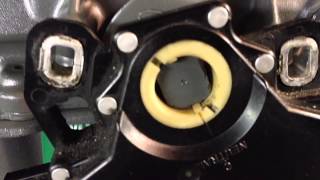


We Have This Part in Stock



The information in this article is provided for general reference and educational purposes only. Vehicle specifications, procedures, and part compatibility can vary by production date, trim level, and region. Always consult your vehicle's factory service manual and verify part numbers before purchasing or performing repairs. Safety-critical components such as airbags, seat belts, and braking systems should be installed by a qualified professional.
- Ford Mustang:
- 🧭 Diagnostic Flowchart
- 🎬 Helpful Videos
- 🛍️ Shop This Part
- What's Unique About the 2005-2010 Ford Mustang
- Symptoms You May Notice
- Most Likely Causes
- Rare But Worth Checking
- Diagnosis Steps
- Parts You'll Likely Need
- Related Codes That Often Appear With This One
- Platform-Specific Known Issues
- Mechanic-Grade Diagnostic Values
- Hidden / Shadow Codes Worth Checking
- Scan Tool Commands That Help
- Wiring & Ground Locations
- Real Owner Repair Stories
- OEM Part Supersession History
- Other Known Issues on This Vehicle
- Used vs. New Parts: Buying Guide for This Vehicle
- Documented NHTSA Reports
- Manufacturer-Related Range Sensor Failures
- Intermittent Gear Loss and Starting Issues
- Real Owner Stories
- 2005-2010 Ford Mustang (5R55S Transmission)
- 2005-2010 Ford Mustang (5R55S Transmission)
- 2005-2010 Ford Mustang
- Related OBD-II Codes
- Frequently Asked Questions
- 🎟️ Get 5% Off