

P0706 on 1998-2002 Honda Accord: Transmission Range Sensor Circuit Fixes
On a 1998-2002 Honda Accord, code P0706 is almost always caused by a faulty Transmission Range Sensor (also called a Neutral Safety Switch). This can cause a no-start condition or a flashing 'D' light. Replacing the sensor is the most common fix. The sensor is located on the exterior of the transmission.
- P0706 on a 1998-2002 Accord almost always means the Transmission Range Sensor has failed.
- A flashing 'D' or 'D4' light combined with a no-start or erratic shifting is the classic symptom set for this issue.
- The most common cause of failure is a cracked sensor housing allowing water intrusion and corrosion.
- Properly aligning the new sensor to the Neutral position during installation is absolutely critical to a successful repair.
- This is a very common problem on not just the Accord, but also the Acura TL/CL and Honda Odyssey of the same era.
What's Unique About the 1998-2002 Honda Accord
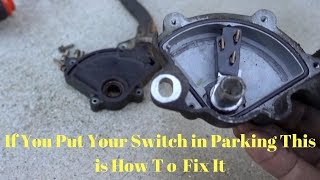
The 1998-2002 (6th generation) Honda Accord is known for the reliability of its powertrain, but like any component exposed to heat and vibration, the externally-mounted transmission range sensor is a common failure point as the vehicle ages. The fix is well-documented by DIYers for this specific generation, as the sensor is relatively accessible on the side of the transmission case. 🎬 Watch: 1998-2002 Accord range sensor replacement walkthrough A critical aspect of the repair on this platform is ensuring both the new sensor and the transmission itself are in the Neutral position during installation to ensure proper alignment. The flashing 'D4' light is a hallmark symptom on this platform that immediately points to this type of electronic fault.
Symptoms You May Notice
- Flashing 'D' or 'D4' light on the instrument cluster
- Engine will not crank or start
- Engine only starts when the shifter is in Neutral, but not Park (or vice-versa)
- Inability to shift out of Park
- Harsh or delayed gear engagement
- Transmission enters 'limp mode' (stuck in one gear)
- Reverse lights do not work when in Reverse
- Check Engine Light is on
- Ability to start the engine while in gear (a significant safety hazard)
- Cruise control may shut off intermittently or not engage.
- Replacing the transmission or torque converter. The P0706 is an electrical circuit code, not a mechanical failure code. The issue lies with the sensor or its wiring, not the internal mechanics of the transmission itself.
- Replacing the starter. A no-start condition caused by P0706 can be mistaken for a bad starter. However, a key symptom is being able to start in Neutral but not Park (or vice-versa), which points to the range sensor, not the starter motor.
Most Likely Causes
- Faulty Transmission Range Sensor (Neutral Safety Switch) 🔴 High Probability → Shop Transmission Assembly The sensor is mounted externally on the transmission, exposing it to heat, moisture, and vibration. Over time, the plastic housing can crack, allowing water intrusion which corrodes the internal contacts. This is a very common failure mode.
How to confirm: With the key on, shift through all gears. If the gear indicator on the dash does not match the shifter position, the sensor is likely bad. You can also test for continuity at the sensor's electrical connector pins; for example, with the shifter in Reverse, there should be continuity between terminals #3 and #9. If the vehicle starts in Neutral but not Park, wiggling the shifter in Park may allow it to start, confirming a bad switch.
Typical fix: Replace the Transmission Range Sensor. It is critical to have the transmission in Neutral and the new sensor aligned to the Neutral position before tightening the mounting bolts.
Est. part cost: $40-$150 - Damaged Wiring or Corroded Connector 🟡 Medium Probability The wiring harness leading to the sensor is located under the vehicle and is susceptible to road debris, moisture, and heat from the engine and transmission, which can cause wires to break or the connector pins to corrode.
How to confirm: Visually inspect the wiring harness and connector for any signs of damage, such as frayed wires, melted plastic, or green/white corrosion on the pins. Perform a continuity test on each wire from the sensor connector to the PCM to check for breaks.
Typical fix: Repair the damaged section of wire or clean the connector terminals with an electrical contact cleaner. If the connector itself is damaged, it will need to be replaced.
Est. part cost: $5-$50 - Misadjusted Shift Cable ⚪ Low Probability
How to confirm: Verify that when the gear shifter inside the car is in a specific gear (e.g., Neutral), the manual lever on the transmission itself is also fully in the Neutral detent. If there is a mismatch, the cable needs adjustment.
Typical fix: Adjust the shift cable linkage at the transmission or shifter assembly to ensure the sensor's position accurately reflects the selected gear.
Est. part cost: $0
Rare But Worth Checking
- Dirty or Low Transmission Fluid: → Shop Transmission Assembly While less common for causing a P0706, very old, contaminated fluid can affect the operation of internal transmission components, and low fluid can cause a variety of shifting issues. Some sources list it as a possible, though indirect, cause.
- Loose Control Shaft: An Acura service tip for platform-mates notes that if the control shaft that the range switch mounts to becomes loose or worn, the switch will not fit snugly, leading to intermittent signals and a P0706 code. The shaft diameter should be 6.1 mm.
- Faulty Powertrain Control Module (PCM): This is extremely rare. The PCM should only be considered after all other possibilities, including the sensor, wiring, and connections, have been thoroughly tested and ruled out.
- Poor PCM Ground (G101): The main ground for the PCM, designated G101, is located on the driver's side of the intake manifold plenum, often near the thermostat housing. A loose or corroded connection at this point can cause a wide range of intermittent electrical issues, including erratic sensor readings that could trigger a P0706 code.
Diagnosis Steps
- Check for other stored trouble codes. Address any other transmission or communication codes first.
- Visually inspect the Transmission Range Sensor connector and wiring harness for any obvious signs of damage, corrosion, or loose connections.
- With the ignition on (engine off), move the shifter through all gear positions (P, R, N, D4, etc.) and observe the gear indicator on the dashboard. Note if the indicator fails to light up for certain positions or shows the wrong gear.
- Try starting the engine in both Park and Neutral. If it only starts in one gear, or if wiggling the shifter allows it to start, this strongly points to a faulty or misaligned range sensor.
- If the sensor and wiring appear intact, the next step is to test the sensor's circuit. This involves using a multimeter to check for continuity at the sensor's connector pins for each gear position, as specified in the vehicle's service manual.
- If the sensor tests bad, replace it. CRITICAL: Ensure the transmission is in Neutral and the new sensor is set to its Neutral position before installation. The new sensor should have alignment marks for the neutral position.
- If the sensor tests good, perform a continuity test on the wiring between the sensor connector and the PCM to find any open or shorted wires.
- Check the main PCM ground point, G101, on the intake manifold plenum for corrosion or looseness.
- Clear the codes and test drive the vehicle to ensure the repair was successful.
Parts You'll Likely Need
- Transmission Range Sensor / Neutral Safety Switch
(OEM #28900-P6H-013)— This is the most common component to fail, triggering the P0706 code. Internal wear and tear or damage to the housing causes it to send incorrect signals to the car's computer. This part number also supersedes the older 28900-P6H-003.
Trusted brands: Honda (OEM), Rostra, Standard Motor Products (Intermotor)
OEM price range: $100-$150
Aftermarket price range: $40-$80
Related Codes That Often Appear With This One
- P0705 — P0705 (Transmission Range Sensor Circuit Malfunction) is a closely related code that often appears with P0706, indicating a general failure in the sensor's circuit.
- P1705 — This is a Honda-specific code for 'Short in Transmission Range Switch Circuit'. It points to the same component and may be set if the PCM detects a short to ground.
- P1706 — This is a Honda-specific code for 'A/T Gear Position Switch Open,' which is functionally identical to P0706 and points to the same component.
Technical Service Bulletins (TSBs) & Recalls
- Acura Service News, June 2005: While not a formal TSB for Honda, a service tip for the Acura CL/TL (a platform mate) specifically addresses troubleshooting P0706/P1706. It points to a potentially loose or worn control shaft that the switch mounts to, preventing a snug fit and causing the code.
Platform-Specific Known Issues
- Water Intrusion: A common real-world failure is a crack forming in the sensor's plastic housing, allowing moisture inside. This leads to corrosion on the internal contacts, causing the erratic signals that trigger P0706. One owner noted a visible crack on the old part after replacement.
- Loose Control Shaft: On high-mileage vehicles, the transmission control shaft that the sensor mounts on can wear down. This prevents the new sensor from fitting tightly, leading to intermittent connections and the code returning. An Acura TSB suggests measuring the shaft diameter; it should be 6.1mm.
Mechanic-Grade Diagnostic Values
- Continuity test of the Transmission Range Sensor's 10-pin connector. — expected: With the shifter in PARK, there should be continuity between pins 1, 3, and 10. In REVERSE, continuity should be between pins 3 and 9. In NEUTRAL, continuity should be between pins 1, 3, and 8.. Failure: No continuity (Open Line / infinite resistance) on the specified pins for a given gear position indicates a faulty sensor.
Scan Tool Commands That Help
- Honda Diagnostic System (HDS) or equivalent professional scanner: Live Data / Data List Monitoring for 'ATP Switch' or 'Transmission Range Switch' — Use this to view the gear position that the PCM is seeing in real-time. As you move the shifter, the value on the scan tool should change accordingly. This is the fastest way to confirm if the PCM is receiving an incorrect or illogical signal, pointing the diagnosis toward the sensor or its wiring.
Wiring & Ground Locations
- G101 — On the driver's side of the intake manifold plenum, sometimes attached to the thermostat housing.. This is a main power and logic ground for the PCM. A loose or corroded G101 can cause a host of bizarre, intermittent electrical problems, including incorrect sensor readings that could trigger a P0706 or P0705 code.
- Transmission Range Sensor Connector — On the front or side of the transmission housing, where the sensor is located. It is a 10-pin connector.. This connector is the primary interface for testing the sensor and the wiring harness going back to the PCM. All continuity and voltage tests for the sensor circuit are performed here.
Real Owner Repair Stories
- Reddit user in r/HondaElement (Honda Element (shares similar powertrain logic)) — Check Engine Light with P0706 code, cruise control not working.
❌ Tried (didn't work) Replaced the transmission range sensor with an aftermarket part., Replaced the sensor again with an OEM Honda part.
✅ What actually fixed it The user found a short sub-harness between the main harness and the range sensor. While wiggling the wires, one broke off easily from the connector pin. The final fix was soldering the broken wire back onto the pin in the connector. This restored the connection and fixed both the P0706 code and the cruise control. - NHTSA ODI #10544028 — An owner reported that their transmission was identified as failing due to codes P0705 and P0706, with a dealership quote of $4,800 for replacement, noting this as a long-standing issue.
OEM Part Supersession History
28900-P6H-003→28900-P6H-013— Standard part revision and improvement by the manufacturer.
Heads up: The new part number (28900-P6H-013) is a direct replacement for the old one and is fully compatible with all 1998-2002 Accords.
Model Year Variations Within This Range
- 1998-2002: The transmission range sensor part number is different for 4-cylinder and V6 models. The OEM part 28900-P6H-013 is specified for both KA 4AT (4-cylinder) and KL 4AT (V6) transmissions within this generation. However, aftermarket suppliers often list different part numbers (e.g., Standard Motor Products NS-156 for 2.3L 4-Cyl vs. a different part for the 3.0L V6). It is critical to verify the part number with the vehicle's VIN.
Diagnostic Flowchart
Other Known Issues on This Vehicle
Issues unrelated to this code that are worth knowing about as an owner of this generation:
- Automatic Transmission Failure 🔴 High → Shop Transmission Assembly — Very common, often occurring between 60,000 and 100,000 miles. Affects both 4-cylinder and V6 models. (Ref: While no specific recall covered all failures, Honda did face class-action lawsuits and offered some warranty extensions. The issue is widely documented as a design flaw.)
- Faulty Ignition Switch 🔴 High — Widespread enough to trigger multiple recalls across millions of Honda/Acura vehicles of the era. (Ref: Yes, multiple recalls were issued (e.g., NHTSA campaign 02V120000, 05V025000) for ignition switches that could cause the engine to stall or allow the key to be removed when not in Park.)
- Clogged EGR Ports 🟠 Medium — Common on both 4-cylinder and V6 models as they age, typically causing a P0401 code, rough idle, or stalling. (Ref: No recall, but it is a very well-known issue with extensive documentation in DIY forums and repair guides.)
- Leaking/Failed Hydraulic Motor Mounts 🟠 Medium — The fluid-filled motor mounts are prone to leaking and collapsing, leading to excessive engine vibration and noise.
Used vs. New Parts: Buying Guide for This Vehicle
When a used part is the smart pick: A used part is generally not recommended for this repair. The transmission range sensor is an electronic component with internal moving contacts that wears out over time and is susceptible to failure from heat and moisture. A used part from a junkyard carries a high risk of having the same wear or developing the same fault shortly after installation.
Donor-vehicle mileage cap: roughly under 80000 miles for the part to have meaningful remaining life.
What to inspect on the donor part:
- Check for cracks in the plastic housing, especially around the seams and mounting points.
- Inspect the electrical connector pins for any signs of green or white corrosion, or water intrusion.
- If possible, ask for the mileage of the donor vehicle; lower is always better.
- Ensure the lever arm moves smoothly without binding.
OEM-only on this vehicle (don't cheap out):
- While not strictly 'OEM-only', many forum users report issues with cheap, no-name aftermarket sensors failing prematurely. Sticking with the OEM Honda part or a reputable aftermarket brand is strongly advised for reliability.
Aftermarket brands forum-validated for this vehicle:
- Standard Motor Products (SMP)
- Rostra
- Wells
Brands owners have reported issues with on this vehicle:
- Unbranded, low-cost sensors from online marketplaces are frequently cited as failing quickly or being dead-on-arrival. Brands like 'Garage-Pro' are often just rebranded generic parts with questionable quality control.
Real Owner Stories
Aggregated from forums and TSBs cited above. Mileages and costs reflect what owners reported in those sources.
1998-2002 Honda Accord
Symptoms: The owner noticed a visible crack on the old sensor's plastic housing after removal, which had allowed moisture to get inside and cause erratic signals.
What fixed it: Replacement of the Transmission Range Sensor, ensuring the new sensor was aligned to the Neutral position before tightening.
Source hint: vehicle_specific_issues - Water Intrusion
1999 Acura TL
Symptoms: The owner experienced a repeating P1706 code (a related range sensor code) even after the neutral safety switch had already been replaced.
What fixed it: The context suggests troubleshooting the transmission control shaft for wear/looseness as per the Acura Service News tip.
Source hint: AcuraZine - 'P0706 And P1717 Error Codes?'
Related OBD-II Codes
Frequently Asked Questions
Why does my 1998-2002 Accord start in Neutral but not in Park?
Is there a specific part number for the range sensor on my Accord?
My 'D4' light is flashing and the car feels stuck in one gear. Is this related to P0706?
Does the Acura Service News from June 2005 apply to my Honda Accord P0706 issue?
Can a bad ignition switch cause symptoms similar to the P0706 range sensor failure?
What is the most common reason the range sensor fails on this specific Honda?
Helpful Videos

We Have This Part in Stock

The information in this article is provided for general reference and educational purposes only. Vehicle specifications, procedures, and part compatibility can vary by production date, trim level, and region. Always consult your vehicle's factory service manual and verify part numbers before purchasing or performing repairs. Safety-critical components such as airbags, seat belts, and braking systems should be installed by a qualified professional.
- Honda Accord:
- 🧭 Diagnostic Flowchart
- 🎬 Helpful Videos
- 🛍️ Shop This Part
- What's Unique About the 1998-2002 Honda Accord
- Symptoms You May Notice
- Most Likely Causes
- Rare But Worth Checking
- Diagnosis Steps
- Parts You'll Likely Need
- Related Codes That Often Appear With This One
- Technical Service Bulletins (TSBs) & Recalls
- Platform-Specific Known Issues
- Mechanic-Grade Diagnostic Values
- Scan Tool Commands That Help
- Wiring & Ground Locations
- Real Owner Repair Stories
- OEM Part Supersession History
- Model Year Variations Within This Range
- Other Known Issues on This Vehicle
- Used vs. New Parts: Buying Guide for This Vehicle
- Real Owner Stories
- 1998-2002 Honda Accord
- 1999 Acura TL
- Related OBD-II Codes
- Frequently Asked Questions
- 🎟️ Get 5% Off