

P0706 on 2017-2022 Honda CR-V: Transmission Range Sensor Circuit Causes and Fixes
This code typically points to a faulty transmission range sensor (neutral safety switch) on the CVT. The most common fix is replacing the sensor itself. Expect to pay $50-$150 for the part and 1-2 hours of labor. Always check wiring first, as a damaged wire can mimic sensor failure.
- P0706 on a 2017-2022 CR-V means the computer is getting a bad signal from the gear position sensor.
- Symptoms can be severe, including the vehicle not starting or getting stuck in gear.
- The most likely cause is a failed transmission range sensor, located on the outside of the transmission.
- Always check the wiring, connector, and shift cable adjustment before replacing the sensor.
- Due to the risk of incorrect diagnosis and safety concerns with shifting, professional diagnosis is recommended.
What's Unique About the 2017-2022 Honda CR-V
The 2017-2022 Honda CR-V uses a 🎬 Watch: Diagnostic walkthrough for the 2017-2022 CR-V range switch Continuously Variable Transmission (CVT). The transmission range sensor is mounted externally on the transmission case, making it more accessible than on some other vehicles where it might be internal. While the code is generic, on this platform it almost always relates directly to the sensor itself or its wiring, rather than a more complex internal transmission failure. No specific recalls or Technical Service Bulletins (TSBs) directly address the P0706 code for this CR-V generation, however, it is a known issue across many Honda 🎬 Watch: How this common Honda CVT range switch issue is diagnosed models with CVTs.
Symptoms You May Notice
- Check Engine Light is on
- Transmission warning light may be illuminated
- Vehicle will not start, or starts in a gear other than Park or Neutral
- Inability to shift the gear selector out of Park
- Harsh or delayed gear engagement
- Incorrect gear position shown on the dashboard indicator
- Vehicle enters a 'limp mode,' often getting stuck in a single gear
- Reverse lights may not function
- Replacing the transmission valve body or entire transmission when the issue is a simple external sensor or wiring fault.
- Assuming the sensor is bad without first checking the wiring and shift cable adjustment, which can lead to the new sensor not fixing the problem.
- Replacing the sensor with a cheap aftermarket part, which often fails to resolve the issue on Honda vehicles.
Most Likely Causes
- Faulty Transmission Range Sensor (Neutral Safety Switch) 🔴 High Probability → Shop Transmission Assembly The sensor is an electro-mechanical part exposed to heat and vibration on the transmission housing, leading to eventual wear and failure of its internal contacts. It is a common failure point across many 🎬 See how this sensor fails on similar Honda CR-V models Honda models.
How to confirm: After confirming the wiring is intact, use a scan tool to monitor the sensor's output while moving the shifter. If the reading is erratic, doesn't change, or is incorrect for the selected gear, the sensor is bad. You can also perform a continuity test on the sensor's pins through the gear ranges with a multimeter; a lack of continuity in any gear position indicates a faulty sensor.
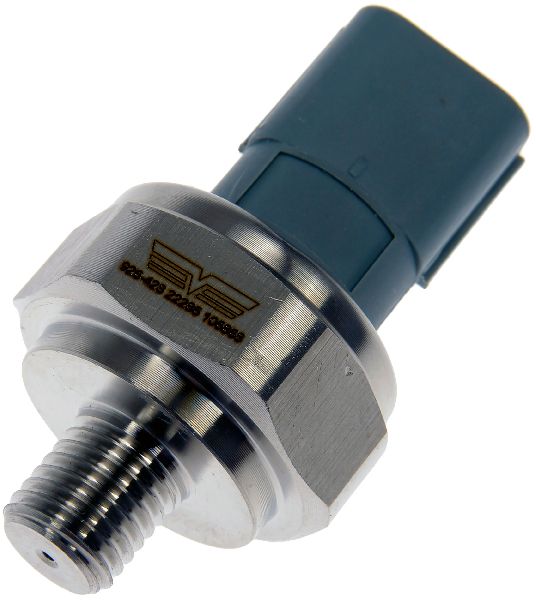
Typical fix: Replace the transmission range sensor. It is highly recommended to use a genuine OEM Honda part (Part No. 28900-R9L-004, which supersedes 28900-R9L-003) to ensure compatibility and avoid repeat failures, a common issue with aftermarket sensors on Honda vehicles.
Est. part cost: $50-$150 - Wiring or Connector Issue 🟡 Medium Probability The wiring harness leading to the sensor is located in the engine bay and can be susceptible to damage from heat, vibration, or corrosion over time. On some Honda models, engine movement from worn motor mounts has been known to stress and break wires in this specific harness.
How to confirm: Visually inspect the wiring harness and the connector at the range sensor for any signs of fraying, breaks, corrosion, or loose pins. Perform a continuity test with a multimeter from the sensor connector to the PCM connector to check for an open or shorted wire. Wiggling the harness while testing can help reveal intermittent breaks.
Typical fix: Repair the damaged section of wire or clean/replace the corroded connector. In some cases, a single wire needs to be soldered and re-pinned at the connector.
Est. part cost: $5-$50 - Misadjusted Shift Cable ⚪ Low Probability While less common, stretching or improper adjustment of the cable that connects the gear shifter to the transmission can cause a mismatch between the shifter's position and the sensor's rotational position.
How to confirm: Check that the gear indicated on the dashboard and the physical detent of the shifter align perfectly. A technician can verify the cable's adjustment at the transmission lever according to the service manual.
Typical fix: Adjust the shift cable linkage at the transmission.
Est. part cost: $0
Rare But Worth Checking
- Faulty Powertrain Control Module (PCM): This is very rare. The PCM should only be considered as the cause after the sensor, wiring, and adjustment have all been thoroughly tested and confirmed to be good.
Diagnosis Steps
- Read the fault codes with an OBD-II scanner to confirm P0706 and check for any other related codes like P0700 or P0705.
- Check the transmission fluid level and condition. While not a primary cause, low or dirty fluid can cause various transmission issues and should be ruled out.
- Visually inspect the transmission range sensor's electrical connector and wiring harness for any obvious signs of damage, corrosion, or loose connections. Pay close attention to the harness for any stretching or stress, especially if other work like motor mount replacement has been done recently.
- Inspect the shift cable to ensure it is properly adjusted and not binding.
- Connect a scan tool that can read live data. Monitor the parameter for the transmission range sensor while slowly moving the gear selector through all positions (P, R, N, D, L). The reading should change smoothly and correspond correctly to each gear position.
- If the live data is erratic or incorrect, perform a voltage and continuity test at the sensor's connector with a multimeter to verify power, ground, and signal integrity.
- If wiring tests good but the signal is still incorrect, the transmission range sensor is faulty and should be replaced. Using a genuine Honda part is strongly recommended.
- If the sensor and wiring are good, the problem may be a rare fault with the Powertrain Control Module (PCM).
Parts You'll Likely Need
- Transmission Range Sensor
(OEM #28900-R9L-004 (supersedes 28900-R9L-003))— This sensor is the most common point of failure for the P0706 code, as its internal components wear out over time.
Trusted brands: Honda (Genuine OEM)
OEM price range: $100-$150
Aftermarket price range: $50-$90
Related Codes That Often Appear With This One
- P0700 — P0700 is a generic code that means the Transmission Control Module (TCM) has stored a fault. It often appears alongside more specific transmission codes like P0706 to signal a general transmission-related issue.
- P0705 — P0705 ('Transmission Range Sensor Circuit Malfunction') is a closely related code that can appear if the PCM receives multiple, conflicting signals from the sensor simultaneously, whereas P0706 is more about the signal being out of the expected performance range.
Mechanic-Grade Diagnostic Values
- Sensor Supply Voltage — expected: 5 to 12 Volts DC at the sensor connector with key ON, engine OFF.. Failure: No voltage or significantly low voltage points to a wiring or PCM power supply issue, not the sensor itself.
- Live Data Voltage (General) — expected: Park ≈ 0V, Reverse ≈ 5V, Neutral ≈ 2.5V, Drive ≈ 4V.. Failure: Readings that deviate more than ±0.5V from the expected value for a given gear.
- PCM Connector Voltage Test (Drive) — expected: With key ON and shifter in Drive, voltage should be present between PCM connector terminal C20 and ground terminals A23 or A24.. Failure: No voltage indicates an open in the wire between PCM terminal C20 and the sensor.
- PCM Connector Voltage Test (Reverse) — expected: With key ON and shifter in Reverse, voltage should be present between PCM connector terminal C10 and ground terminals A23 or A24.. Failure: No voltage indicates a circuit fault related to the Reverse position signal.
- Sensor Ground Circuit Continuity — expected: Continuity should exist between PCM connector terminals A23 and body ground, and between A24 and body ground.. Failure: No continuity indicates an open wire between the PCM and ground point G101, or a poor ground at G101.
- Sensor Alignment Tool — expected: A 2.0 mm (0.08 in.) feeler gauge should fit into the alignment cutouts on the new sensor to lock it in the Neutral position during installation.. Failure: Not applicable; this is an installation procedure.
Scan Tool Commands That Help
- Honda Diagnostic System (HDS): Check Transmission Range Switch Signal Inputs — Used to view the live status (ON/OFF) of each individual gear position signal as reported by the sensor to the PCM. This is the primary way to confirm if the PCM is receiving an incorrect or conflicting signal.
- Honda Diagnostic System (HDS): Jump SCS (Service Check Signal) Line — This is a diagnostic mode used in conjunction with manual circuit tests (like checking for shorts to ground at the PCM connector) to safely test the wiring without damaging the PCM.
- Professional Scan Tool (e.g., HDS): Transmission Adaptation Procedure — May be required after replacing the TCM or updating its software to re-calibrate the parameters and expected voltage windows for the range sensor circuit.
Wiring & Ground Locations
- Transmission Range Switch 10P Connector — On the transmission range sensor itself, which is mounted externally on the side of the CVT case.. This is the primary access point for all electrical testing. Technicians disconnect it to isolate the sensor from the harness and test continuity, voltage, and for shorts on both sides of the circuit.
- G101 — On the transmission housing, often near where the main harness connects.. This is the main body ground point for the transmission range sensor circuit. If this ground connection is loose or corroded (often appearing as crusty green oxidation), it can cause an open in the ground circuit, leading to a P0706 code.
- PCM Connectors A (31P) and C (22P/51P) — At the Powertrain Control Module (PCM), typically located in the engine bay.. These connectors contain the specific pins (e.g., A23, A24 for ground; C10, C12, C20 for gear signals) that must be tested for voltage and continuity during advanced diagnostics to determine if a fault is in the wiring or the PCM itself.
Real Owner Repair Stories
- Reddit user 'modessitt' in r/HondaElement (Honda Element (related model with similar known issue)) — Check Engine Light with P0706 code, non-functional cruise control.
❌ Tried (didn't work) Replaced the transmission range sensor with an aftermarket part., Replaced the sensor a second time with a genuine OEM Honda part.
✅ What actually fixed it The issue was a broken wire inside the short sub-harness between the main wiring harness and the range sensor. The break was found by wiggling the wires at the connector, which caused the wire to fall out. Soldering the wire back to the connector pin permanently resolved the P0706 code and restored cruise control function. - NHTSA ODI #10544028 (Honda Accord Reference) — An owner reported a transmission failure involving codes P0705 and P0706. In this instance, a dealership suggested a full transmission replacement at a high cost, highlighting the importance of verifying if the issue is actually a simple sensor or wiring fault before committing to major repairs.
OEM Part Supersession History
28900-R9L-003→28900-R9L-004— Not specified in public documentation, but supersessions typically involve improvements to durability, materials, or internal contacts to address known failure patterns.
Model Year Variations Within This Range
- 2017-2022: The 5th generation CR-V received a facelift for the 2020 model year, which included updated styling and the introduction of a hybrid model. The Honda Sensing safety suite became standard on all trims in 2021. However, for the P0706 fault, the Continuously Variable Transmission (CVT) and the external range sensor design remained consistent, with no significant changes to the diagnostic or repair procedure noted across this year range.
Diagnostic Flowchart
Other Known Issues on This Vehicle
Issues unrelated to this code that are worth knowing about as an owner of this generation:
- Engine Oil Dilution (1.5L Turbo) 🔴 High — Most common in 2017-2018 models, especially in cold climates with frequent short trips. Fuel mixes with engine oil, reducing lubrication. (Ref: Honda issued product updates (e.g., TSB 18-114) with software changes and extended warranties for affected vehicles.)
- Parasitic Battery Drain 🟠 Medium — Common on 2017-2019 models. The battery dies after the vehicle sits for a few days due to a software flaw in the Powertrain Control Module (PCM) or Body Control Module (BCM) that prevents them from fully powering down. (Ref: Honda TSB A19-039 addresses a PCM software update to fix the drain caused by the Vehicle Stability Assist (VSA) system.)
- Infotainment System Malfunctions 🟡 Low — Widespread reports on 2017-2019 models of the screen freezing, going black, flickering, or registering phantom touches. (Ref: No specific recall, but dealers may perform software updates. A class-action lawsuit was filed regarding the issue.)
- Fuel Pump Failure 🔴 High — Affects certain 2018-2019 models. The low-pressure fuel pump can fail, potentially causing the engine to stall while driving. (Ref: Honda Recall 20V-314 (and subsequent expansions) was issued to replace the fuel pump assembly free of charge.)
- Fuel Injector Failure / Cold Start Misfire 🟠 Medium — Some vehicles may experience a rough idle and misfire on a cold startup, sometimes triggering a check engine light. This has been attributed to faulty fuel injectors.
Used vs. New Parts: Buying Guide for This Vehicle
When a used part is the smart pick: A used wiring harness connector or 'pigtail' from a junkyard is a viable option if the original plastic connector is physically broken or corroded. The part itself is simple and its condition is easy to verify visually.
Donor-vehicle mileage cap: roughly under 150000 miles for the part to have meaningful remaining life.
What to inspect on the donor part:
- For a wiring connector: check for the absence of green/white corrosion on the pins.
- Ensure the plastic locking tab is intact and clicks securely.
- Inspect the wires at the back of the connector for any signs of brittleness, cracking, or previous repairs.
OEM-only on this vehicle (don't cheap out):
- Transmission Range Sensor: Forum and mechanic consensus strongly advises against aftermarket sensors for this part on Honda vehicles, as they are a frequent cause of repeat failures or immediate incompatibility.
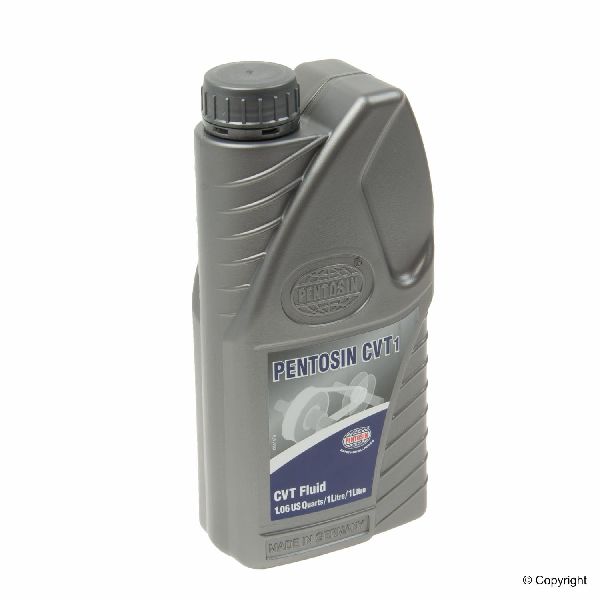
- CVT Fluid: Only use Genuine Honda HCF-2 fluid. Only use Genuine Honda HCF-2 fluid. Using any other type of transmission fluid can cause severe damage to the CVT.
Aftermarket brands forum-validated for this vehicle:
- No aftermarket brands are consistently recommended for the transmission range sensor on this platform.
Brands owners have reported issues with on this vehicle:
- Generic, unbranded sensors from major online marketplaces or store-brand parts should be avoided, as they are frequently cited in forums as not fixing the problem or failing shortly after installation.
Real Owner Stories
Aggregated from forums and TSBs cited above. Mileages and costs reflect what owners reported in those sources.
Honda Element (Related Model)
Symptoms: The owner replaced the range sensor twice, but the code persisted and cruise control stopped working. Wiggling the wiring harness caused a wire to break off completely.
What fixed it: Soldering a broken wire in the short sub-harness between the main harness and the sensor and re-pinning it at the connector.
Source hint: Reddit r/HondaElement
Honda Civic (Related Model)
Symptoms: The owner encountered a P0706 code and faced confusion at the dealership because the part was referred to by different names, such as the 'A/T gear position switch'.
What fixed it: Verifying the correct OEM part number to ensure the correct transmission range sensor was purchased.
Source hint: Honda-Tech.com
Honda Accord (Related Model)
Symptoms: An owner reported that the transmission was failing due to codes P0705 and P0706, and was quoted $4800 for a replacement by a local dealership.
What fixed it: This case (NHTSA ODI #10544028) highlights that while dealerships may suggest a full transmission replacement, these codes are often related to the range sensor circuit.
Source hint: NHTSA ODI #10544028
Related OBD-II Codes
Frequently Asked Questions
What is the specific Honda part number I should use to fix P0706 on my CR-V?
My 2017 CR-V won't start and the dashboard shows the wrong gear. Is this related to P0706?
Could my CR-V's parasitic battery drain be related to this transmission code?
Is the P0706 code common on other Honda models besides the CR-V?
Can a bad motor mount cause a P0706 code on my Honda?
Why is my CR-V stuck in one gear and the reverse lights aren't working?
Helpful Videos
We Have This Part in Stock



The information in this article is provided for general reference and educational purposes only. Vehicle specifications, procedures, and part compatibility can vary by production date, trim level, and region. Always consult your vehicle's factory service manual and verify part numbers before purchasing or performing repairs. Safety-critical components such as airbags, seat belts, and braking systems should be installed by a qualified professional.
- Honda CR-V:
- 🧭 Diagnostic Flowchart
- 🎬 Helpful Videos
- 🛍️ Shop This Part
- What's Unique About the 2017-2022 Honda CR-V
- Symptoms You May Notice
- Most Likely Causes
- Rare But Worth Checking
- Diagnosis Steps
- Parts You'll Likely Need
- Related Codes That Often Appear With This One
- Mechanic-Grade Diagnostic Values
- Scan Tool Commands That Help
- Wiring & Ground Locations
- Real Owner Repair Stories
- OEM Part Supersession History
- Model Year Variations Within This Range
- Other Known Issues on This Vehicle
- Used vs. New Parts: Buying Guide for This Vehicle
- Real Owner Stories
- Honda Element (Related Model)
- Honda Civic (Related Model)
- Honda Accord (Related Model)
- Related OBD-II Codes
- Frequently Asked Questions
- 🎟️ Get 5% Off